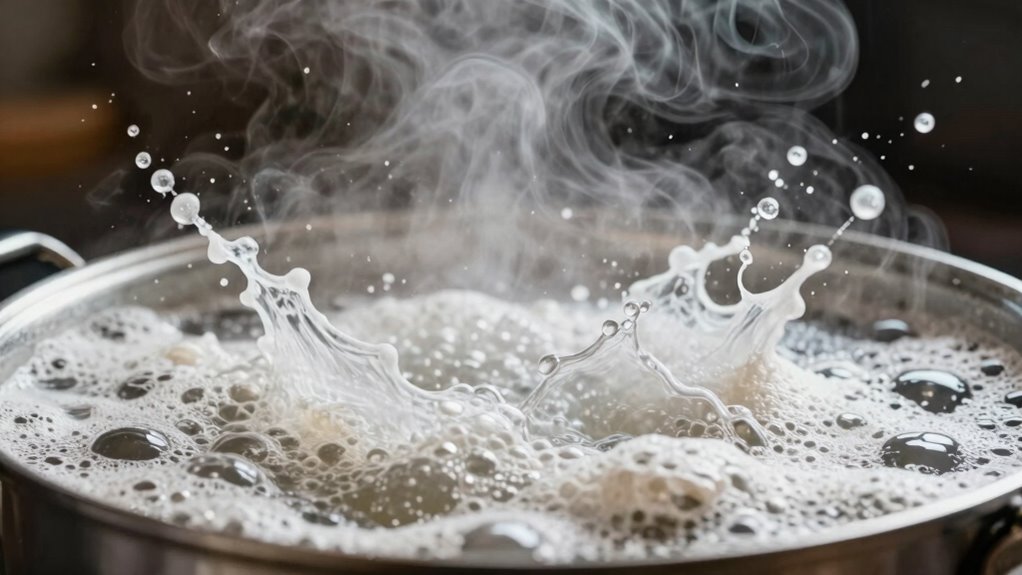
Foaming, splattering, and boil-overs happen because when liquids heat up, bubbles form due to surface tension and the ingredients involved, like starches or proteins. As the temperature rises, these bubbles burst, causing splatters or foam buildup. Excess foam can quickly overflow if not controlled. By understanding how heat, ingredients, and cookware affect these processes, you can better prevent spills and accidents. Keep exploring to learn more tips for managing these common kitchen mishaps.

Get kitchen staples and gadgets delivered free with Prime
- Fast, free delivery on millions of items
- Prime Video, Amazon Music and more included
- Member-only deals all year
Key Takeaways
- Foaming occurs when proteins, starches, or foaming agents trap air during heating.
- Splattering results from bubbles bursting and ejecting droplets when liquids boil vigorously.
- Boil-overs happen when foam or bubbles rapidly build up, exceeding the pot’s capacity.
- Rapid heat increases bubble formation and surface tension, leading to splatters and spills.
- Inadequate stirring and improper cookware can exacerbate foam, splattering, and boil-over issues.
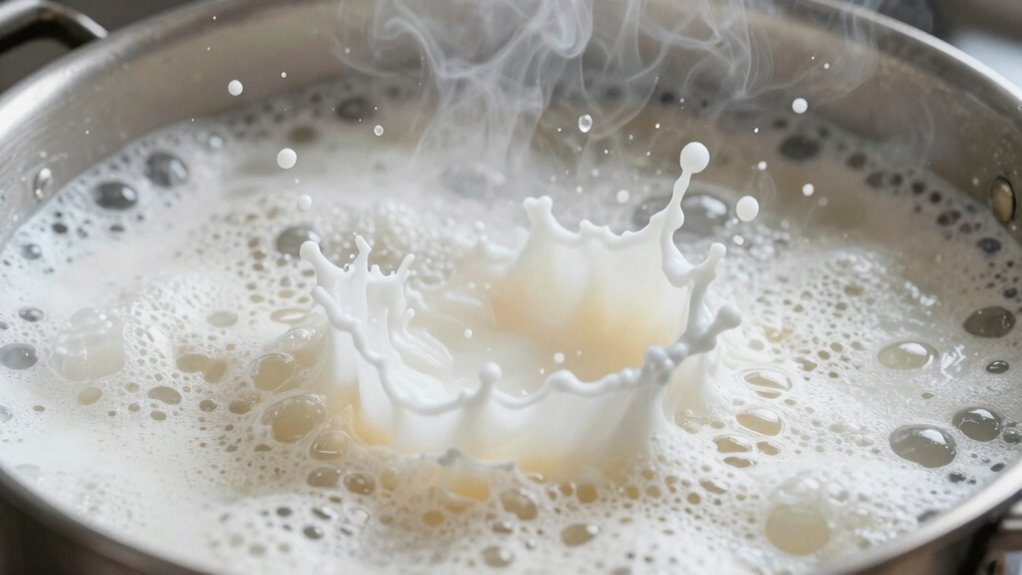
When you’re boiling liquids like milk or pasta, you might notice foam forming, splatters flying, or even sudden boil-overs. These common kitchen mishaps happen because of the way heat interacts with the ingredients and cookware materials. Understanding why they occur can help you prevent messes and stay safe while cooking. First, it’s essential to prioritize kitchen safety. Boiling over can cause hot liquid to spill onto the stove or floor, risking burns or slips. The key is to monitor your pots and pans closely, especially when they’re at a rolling boil. Using a lid can help control splatters, but be careful when removing it—steam and boiling liquids can escape suddenly, causing burns. Keeping your workspace organized and wearing protective gear like oven mitts adds extra safety.
Monitor boiling liquids closely to prevent spills, burns, and kitchen accidents. Use lids carefully and stay organized for safety.
The type of cookware materials you use plays a significant role in how likely you are to experience foaming, splattering, or boil-overs. For instance, pots made from metal like stainless steel or aluminum conduct heat quickly and evenly, which can lead to rapid boiling and more vigorous bubbling. On the other hand, non-stick cookware can sometimes help reduce splattering because of their smoother surfaces, but they don’t necessarily prevent foam or boil-overs. Glass or ceramic cookware heats more slowly, giving you more control, but they can still boil over if left unattended. The thickness and design of the cookware also matter—thicker pots distribute heat more evenly and are less prone to localized hotspots that cause sudden boiling. Heat conduction plays a crucial role in how quickly and vigorously liquids boil over.
Foaming occurs when the liquid contains proteins, starches, or other foaming agents that trap air and form bubbles. Milk, for example, is notorious for foaming because of its proteins. When heated, these proteins unfold and create foam, which rises rapidly. If the foam gets too high, it can spill over the edges of your pot. Splatters happen when boiling liquids bubble up and burst, sending tiny droplets flying in all directions. This is especially common with starchy foods like pasta or rice, which release bubbles that can pop unexpectedly. Boil-overs happen when the foam or bubbles build up faster than the liquid can escape, causing the liquid to spill over the sides of the cookware. Managing heat levels, stirring regularly, and using appropriate cookware can help minimize these issues. Additionally, understanding the role of surface tension in boiling liquids can help you better predict and prevent these mishaps.
In essence, understanding the science behind foaming, splattering, and boil-overs helps you prevent them. Paying attention to your cookware materials and practicing good kitchen safety means fewer messes, fewer burns, and a more enjoyable cooking experience.
As an affiliate, we earn on qualifying purchases.
Frequently Asked Questions
Can Using a Lid Prevent Boil-Overs Completely?
Using a lid can help with boil-over prevention, but it doesn’t prevent it completely. Lid effectiveness varies; a loose-fitting lid might trap steam and cause splattering, while a tight lid can contain boiling bubbles. To better prevent boil-overs, you should monitor your pot, reduce heat as needed, and leave a small gap for steam. Relying solely on a lid isn’t foolproof, so stay attentive during boiling.
Do Different Types of Cookware Affect Foaming and Splattering?
Imagine cooking pasta in a stainless steel pot versus a non-stick one. Material effects influence foaming and splattering, as different surfaces alter surface tension. Non-stick cookware reduces sticking and splatter because its surface minimizes foam formation, while stainless steel may promote more vigorous boiling and splattering. Your choice of cookware impacts how much foaming and splattering occurs, making it easier to control or prevent boil-overs during cooking.
How Does Adding Oil Influence Boiling Over?
Adding oil influences boiling over because it creates a thin barrier on the water’s surface, reducing surface tension. This can make bubbles form and burst more easily, increasing the risk of boiling over. Oil also prevents the water from sticking to the pot, which might otherwise help control the bubbling. So, when you add oil, you might notice more frequent splattering and a higher chance of your pot boiling over.
Are There Specific Ingredients That Cause More Splattering?
Certain ingredients, like high-moisture vegetables or sugary items, cause more splattering because of their ingredient interactions and chemical reactions during cooking. When these ingredients heat up, the water or sugar rapidly vaporize, leading to vigorous bubbling and splattering. You’ll notice more splattering with ingredients like tomatoes, spinach, or syrup, as their moisture content and chemical makeup intensify the reactions, making your stovetop messier.
Can Temperature Control Minimize Foam Formation?
Proper temperature regulation can help minimize foam formation. Keeping the heat steady prevents sudden boiling and reduces the chances of foam and splattering. By controlling the temperature, you promote foam reduction, making cooking safer and cleaner. Think of it as taming a wild horse—you stay calm and steady, and the process becomes much smoother. So, always monitor your heat to prevent those messy boil-overs and enjoy a more controlled cooking experience.
As an affiliate, we earn on qualifying purchases.
Conclusion
So, now that you understand why foaming, splattering, and boil-overs happen, you’re better equipped to prevent them. Remember, it’s all about paying attention and adjusting your heat when needed. Don’t let these kitchen mishaps get the best of you—stay vigilant and keep a close eye on your pots. After all, it’s better to nip problems in the bud than let them blow up in your face. Happy cooking!
As an affiliate, we earn on qualifying purchases.
As an affiliate, we earn on qualifying purchases.
Halloween Picks
halloween
As an affiliate, we earn on qualifying purchases.