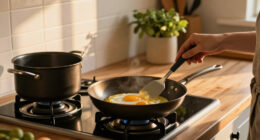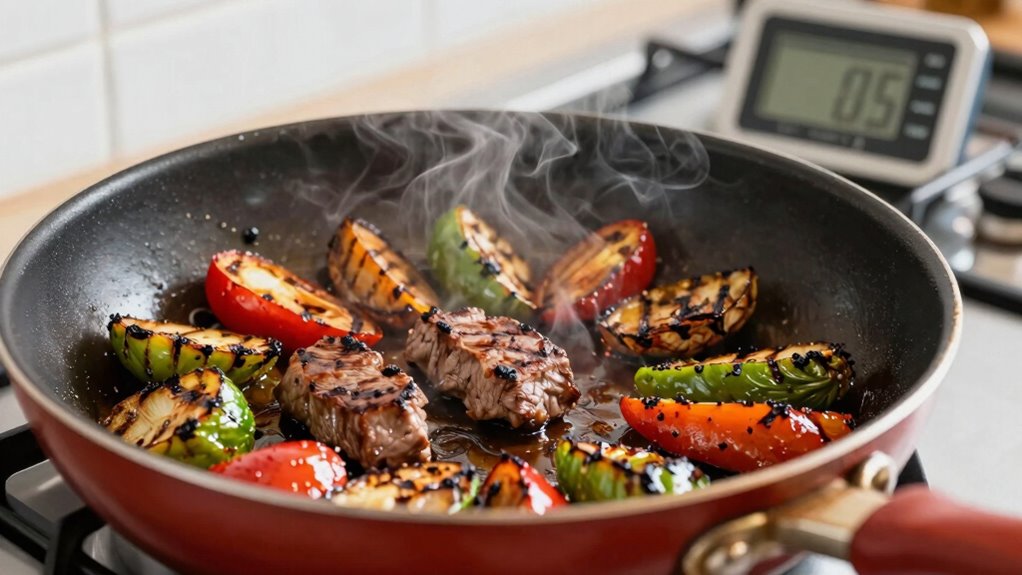
When you manage heat properly, food sticks less because consistent, even heating creates a stable surface that prevents hot spots. This prevents food from burning or tearing, especially on non-stick or cast iron cookware. Proper temperature control also helps achieve ideal oil application, forming a barrier that facilitates smooth release. Combining good heat management with surface prep and oil use makes your cooking more effective. Keep exploring to discover more tips for perfect non-stick results.

Get kitchen staples and gadgets delivered free with Prime
- Fast, free delivery on millions of items
- Prime Video, Amazon Music and more included
- Member-only deals all year
Key Takeaways
- Even heat distribution prevents hot spots that cause food to stick and burn.
- Proper temperature control maintains a consistent surface temperature, reducing sticking and tearing.
- Correct heat management minimizes sudden temperature changes that lead to sticking issues.
- When combined with surface preparation, optimal heat control ensures a smooth, non-stick cooking surface.
- Proper heat management helps oil and cookware materials perform effectively, enhancing food release.
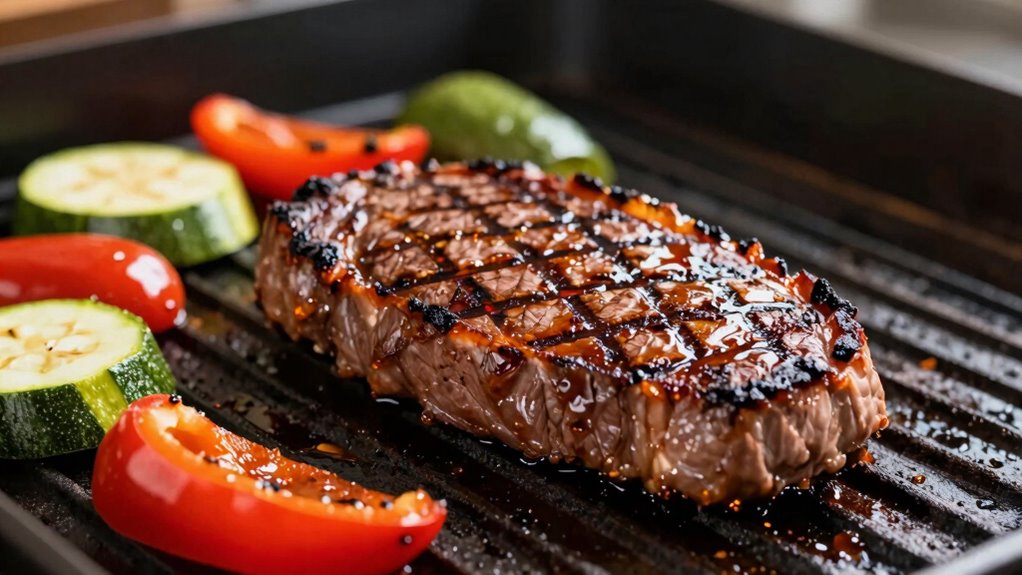
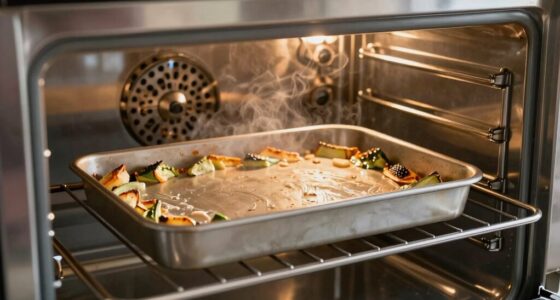
When heat is managed properly during cooking, food tends to stick less to surfaces like pans and grills. This is because controlling the temperature ensures that your cookware heats evenly, preventing hot spots that can cause food to stick or burn. When you maintain the right temperature, you give your food a better chance to cook uniformly, which minimizes the chances of it sticking to the surface. Proper temperature control also helps you avoid sudden temperature changes that can cause food to stick or tear apart when flipping or stirring. It’s a simple yet crucial step in achieving a non-stick cooking process. Additionally, understanding the thermal properties of your cookware can help you better manage heat distribution for optimal results. Knowing how different materials conduct heat allows for more precise heat management, leading to fewer sticking issues. Surface preparation plays a vital role in ensuring your dishes don’t stick. Before you start cooking, always clean your cookware thoroughly to remove any residual food particles or oils from previous use. If you’re using a pan or grill, seasoning or lightly oiling the surface can create a natural barrier that reduces sticking. For example, cast iron pans benefit from a well-maintained layer of seasoning, which not only prevents sticking but also improves heat distribution. Similarly, non-stick cookware needs a light coating of oil or butter to enhance its non-stick properties. Proper surface preparation helps create a smooth, even layer that prevents food from bonding to uneven or dirty surfaces. Additionally, surface conditioning can further improve non-stick performance and extend the lifespan of your cookware. Using the right type of oil and applying it correctly is another key aspect of surface preparation. You don’t need a lot—just enough to coat the surface thinly. When your pan is at the right temperature, the oil will shimmer but won’t smoke excessively, indicating it’s ready for cooking. This helps the food slide off more easily, reducing the risk of sticking and tearing. Remember, if your surface isn’t prepared properly, no amount of heat control will fully prevent sticking. It’s about creating a combination of good surface preparation and precise temperature management. Additionally, paying attention to oil application techniques ensures an even, effective coating that enhances non-stick properties.
As an affiliate, we earn on qualifying purchases.
Frequently Asked Questions
Does the Type of Food Affect Sticking When Cooking?
Yes, the type of food affects sticking when cooking. Foods with a smooth, moist surface tend to stick less, especially if you use proper cooking techniques like preheating the pan and adding enough oil. Foods with a sticky or porous surface, like certain meats or vegetables, may stick more. Adjusting your cooking methods and understanding the food surface helps prevent sticking, ensuring a better cooking experience.
How Does Moisture Content Influence Sticking?
Moisture content can make or break your cooking! When moisture evaporates quickly, food is less likely to stick because surface adhesion weakens. High moisture levels create a barrier, preventing food from bonding to the pan. But if moisture evaporates too fast, food can stick worse as the surface becomes rough and uneven. Managing moisture guarantees a perfectly smooth surface, reducing sticking and helping your dishes turn out flawlessly every time.
Can Cookware Material Impact Food Sticking?
Yes, cookware material impacts food sticking. Non-stick coatings, like Teflon, reduce sticking, but their effectiveness depends on proper application and maintenance. Metal compatibility is essential; some metals, such as cast iron, work well with certain coatings, while others, like aluminum, may cause damage. Using cookware suited for your non-stick coating guarantees even heat distribution and prevents sticking, helping you cook more effortlessly and prolong the lifespan of your cookware.
What Role Does Oil Play in Preventing Sticking?
In the age of dial-up internet, oil plays a vital role in preventing food from sticking by creating a barrier between the pan and your ingredients. Its viscosity helps it spread evenly, while maintaining proper frying temperature guarantees the oil forms a protective layer. When you keep the heat controlled, the oil stays effective, reducing sticking and helping your food cook smoothly without tearing or breaking apart.
Does Cooking Temperature Affect Food Texture Besides Sticking?
Cooking temperature greatly affects food texture beyond just preventing sticking. When you use proper cooking techniques and guarantee even heat distribution, you help maintain the food’s moisture and structure. High heat can make foods tough or dry, while low, controlled temperatures preserve tenderness and juiciness. By managing heat carefully, you enhance texture, ensuring your dishes come out with the right consistency and mouthfeel, making your cooking more successful.
As an affiliate, we earn on qualifying purchases.
Conclusion
When you master heat management, cooking becomes smoother—like a well-rehearsed dance—rather than a frustrating battle with sticking ingredients. It’s the quiet difference between burnt, stuck food and perfectly seared bites. Just as a gentle touch guides a brush, controlling heat guides your food to stay intact and flavorful. So, next time you cook, think of heat as your silent partner—making your dishes glide effortlessly, instead of cling stubbornly, to the pan.
As an affiliate, we earn on qualifying purchases.
As an affiliate, we earn on qualifying purchases.
Halloween Picks
halloween
As an affiliate, we earn on qualifying purchases.