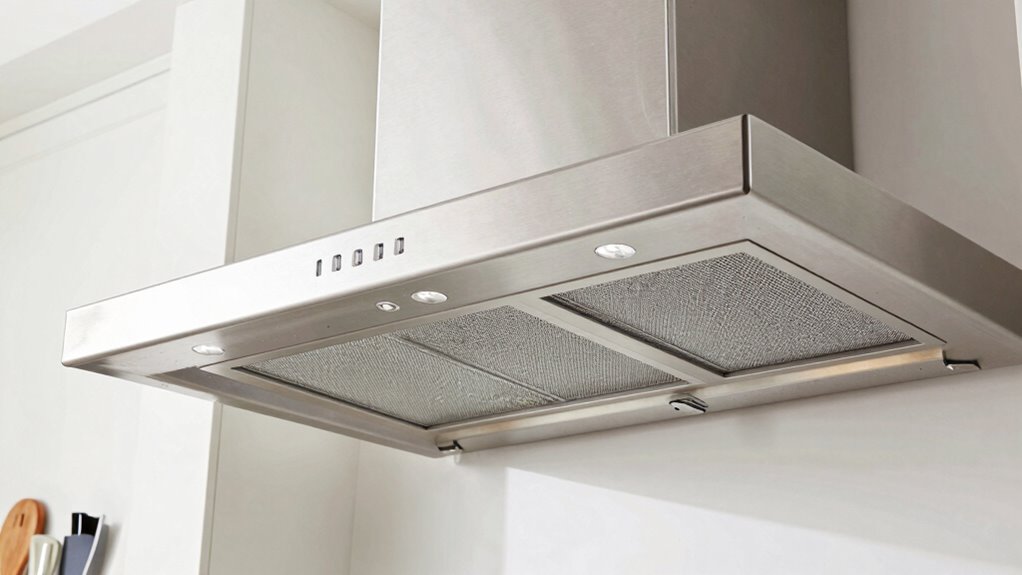

To keep your range hood performing well, regularly inspect and replace grease filters every 1-3 months and charcoal filters every 3-6 months. Clean the exterior with a gentle cleaner, and check fan blades for grease buildup, cleaning them to prevent strain. Keep vents clear and make certain ductwork is clean. Consistent maintenance boosts airflow, prolongs the lifespan, and keeps your kitchen air fresh. Continue exploring for more tips to maintain peak performance.

Get kitchen staples and gadgets delivered free — and shop member deals
- Fast, free delivery on millions of items
- Access to Prime Big Deal Days deals on October 6–7
- Prime Video, Amazon Music and more included
Key Takeaways
- Regularly inspect and replace or clean grease and charcoal filters based on manufacturer recommendations.
- Clean exterior surfaces and remove grease buildup with gentle cleaners and soft cloths.
- Periodically clean fan blades and vents to prevent airflow obstruction and motor strain.
- Ensure vents and ductwork are free of obstructions to maintain proper airflow and efficiency.
- Use reminders or calendars to adhere to maintenance schedules, prolonging range hood performance and lifespan.
Keeping your range hood clean and well-maintained is essential for both safety and performance. A dirty or neglected range hood can reduce your kitchen air quality, making it harder to breathe comfortably and increasing the risk of grease buildup and fires. To keep your range hood functioning properly, you’ll need to pay attention to its filters and regular cleaning routines. One of the most important steps is following a consistent filter replacement schedule. Over time, grease, dust, and other particles accumulate on the filters, blocking airflow and diminishing the hood’s ability to trap smoke and odors effectively. If you neglect this schedule, your range hood won’t perform at its best, and the air in your kitchen may become stale or contaminated.
Regular filter replacement is essential for optimal range hood performance and air quality.
Regularly inspecting and replacing filters is straightforward but essential. How often you need to replace them depends on your cooking habits and the type of filters you have. For example, grease filters often require replacement or cleaning every one to three months, especially if you cook frequently or prepare greasy foods. Charcoal filters, used in ductless range hoods, typically need replacing every three to six months because they absorb odors and become saturated over time. Setting a reminder or marking your calendar helps make certain you don’t forget, maintaining ideal kitchen air quality and preventing the buildup of airborne contaminants. Additionally, understanding the importance of airflow maintenance** can help you keep your range hood working efficiently. Proper airflow not only improves air quality but also minimizes the strain on the motor, extending its lifespan. Regular cleaning of ventilation systems can further enhance overall airflow and performance. Incorporating air quality** awareness into your routine can motivate you to stay consistent with your cleaning routine.
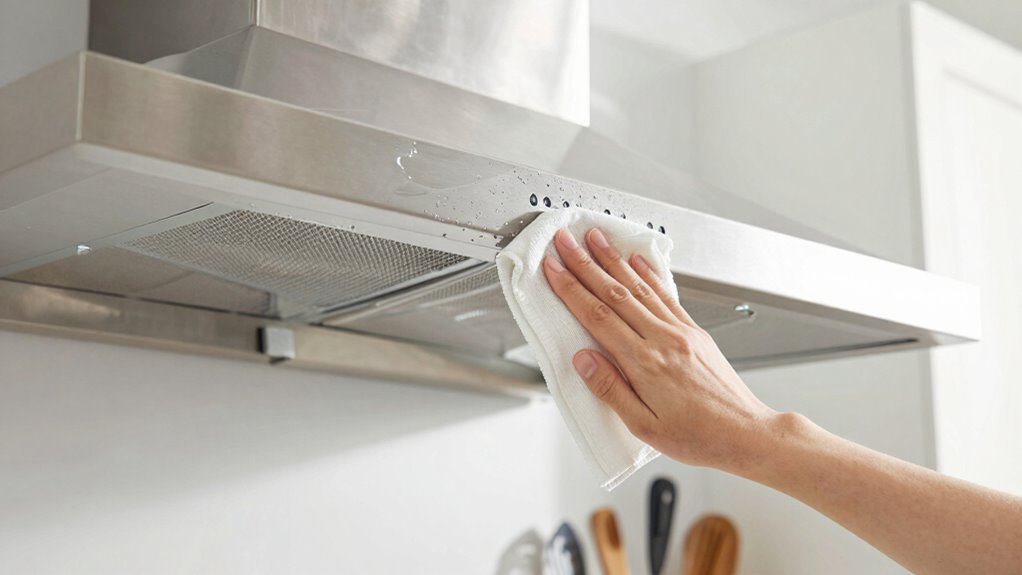
Cleaning the exterior and interior parts of the range hood also plays an important role. Use a gentle cleaner and a soft cloth to wipe down the exterior surfaces regularly, removing grease splatter and dust. For the interior, carefully remove and clean the filters as recommended by the manufacturer. Some filters are dishwasher safe, which makes cleaning easier, but always double-check to avoid damage. When cleaning, pay attention to the fan blades and vents, removing grease and debris that can hamper airflow and cause the motor to work harder, leading to premature wear. Incorporating regular filter inspection into your routine ensures you catch potential issues early before they impact performance or safety.
Maintaining good airflow is key to making sure your range hood operates efficiently. Keep the vents clear of obstructions, and ensure the ductwork is clean if you have a vented system. This proactive approach not only improves kitchen air quality but also prolongs the life of your appliance. Proper airflow and consistent care, including adhering to the filter replacement schedule and cleaning routines, guarantee that your range hood continues to perform well and keeps your kitchen environment safe and fresh. The effort you put into maintenance pays off with better air quality, fewer repairs, and a more pleasant cooking experience.
range hood grease filter replacement
As an affiliate, we earn on qualifying purchases.
As an affiliate, we earn on qualifying purchases.
Frequently Asked Questions
How Often Should I Replace the Range Hood Filters?
You should replace your range hood filters every 6 to 12 months, depending on how often you cook. Follow a consistent cleaning schedule, and replace filters when they become greasy, clogged, or lose effectiveness. Regular filter replacement guarantees peak performance and air quality. Keep an eye on their condition, and don’t wait too long—this helps maintain proper ventilation and prevents unpleasant odors or grease buildup.
Can I Use Regular Household Cleaners on My Range Hood?
You can’t just splash any household cleaner onto your range hood like a magic potion; instead, stick to gentle, degreasing cleaning tips. Regular dish soap or vinegar solutions work wonders, cutting through grease without damage. Skip abrasive cleaners that can scratch surfaces and hinder performance. For DIY repairs, always unplug first and use soft cloths. Proper cleaning keeps your range hood shining and running smoothly, preserving its power and prolonging its life.
What Are the Signs of a Malfunctioning Range Hood?
You’ll notice a malfunctioning range hood if airflow is restricted, making it less effective at removing smoke and odors. Strange noises or persistent vibrations also signal issues. Electrical problems, like the fan not turning on or flickering lights, are clear signs of malfunction. Regularly check for these signs, and if you see airflow restrictions or electrical issues, it’s time to clean or repair your range hood to keep it running efficiently.
Is Professional Maintenance Necessary for My Range Hood?
You might find that professional maintenance isn’t always necessary, especially if you’re diligent with DIY cleaning and regularly check your range hood. Coincidentally, staying on top of cleaning can save you money by preventing costly repairs. Cost considerations play a big role—routine DIY efforts often suffice for peak performance, but if your hood shows persistent issues or complex problems, calling in a professional guarantees thorough maintenance and keeps your appliance running efficiently longer.
How Do I Troubleshoot Strange Noises From My Range Hood?
If your range hood makes strange noises, start troubleshooting by inspecting the fan blade for debris or misalignment, which can cause unusual sounds. Listen closely to the motor noise—if it’s loud or rattling, the motor might need lubrication or replacement. Tighten any loose screws or parts, and make certain nothing is obstructing the fan. Regular maintenance can prevent noise issues and keep your range hood running smoothly.
charcoal filter for ductless range hood
As an affiliate, we earn on qualifying purchases.
As an affiliate, we earn on qualifying purchases.
Conclusion
By keeping your range hood clean and well-maintained, you’re practically giving it a gust of fresh air—much like tending to your car’s oil keeps it running smoothly. I once ignored a greasy filter, and my hood’s performance dropped faster than I expected. Regular cleaning isn’t just about appearance; it’s about preserving efficiency and preventing costly repairs. Stay proactive, and your range hood will serve you reliably, just like a well-tuned engine that keeps your kitchen running smoothly.
As an affiliate, we earn on qualifying purchases.
As an affiliate, we earn on qualifying purchases.
Halloween Picks
halloween
As an affiliate, we earn on qualifying purchases.