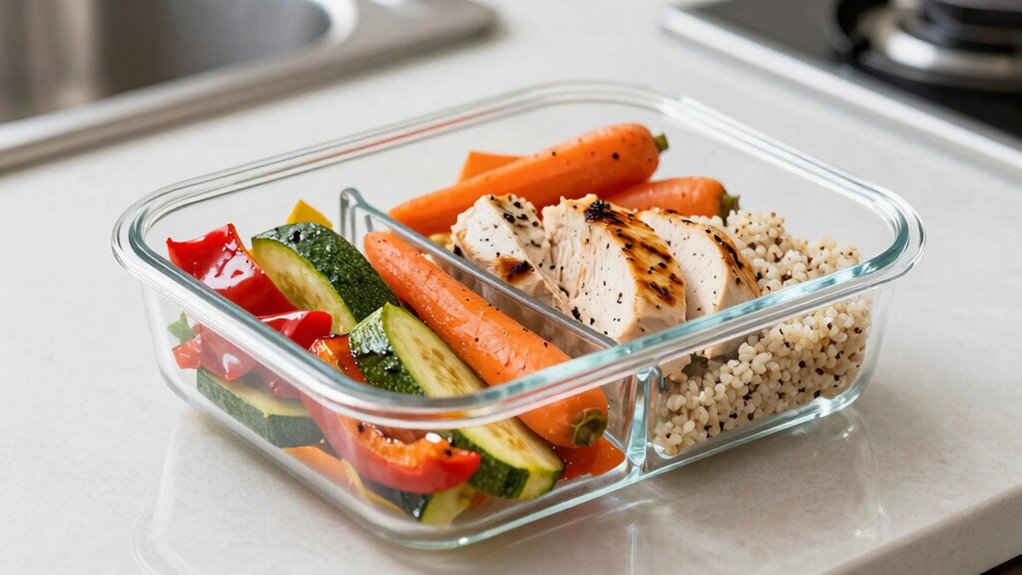

To prevent overeating without counting calories, focus on visual and mindful portioning strategies. Use smaller plates, fill half with vegetables, and include a balance of lean proteins, fiber-rich carbs, and healthy fats. Pre-portion snacks into small containers and pay attention to your hunger cues. Consistently applying these simple techniques helps you control portions naturally, support fullness, and build healthier habits—if you want to learn more, keep exploring these effective methods.
Key Takeaways
- Use visual cues like plate dividers and appropriate plate sizes to naturally guide balanced portions without measuring.
- Fill half your plate with vegetables and include fiber-rich foods to promote fullness and prevent overeating.
- Pre-portion snacks and meals into small containers to avoid mindless munching and maintain portion control.
- Recognize hunger and fullness cues, such as stomach growls or satisfaction, to eat intuitively without calorie counting.
- Limit beverages and snacks with standard-sized servings, using smaller containers to help manage intake effortlessly.
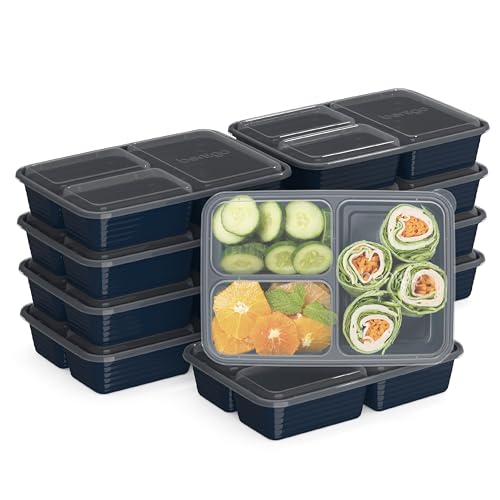
Bentgo Prep 3-Compartment Meal Prep Containers with Lids, 20 Piece Set
- Top Brand for Meal Prep: Bentgo is the leading meal prep brand
- Complete 20-Piece Set: Includes ten 3-compartment trays and lids
- Portion-Control Capacity: Each container holds 4 cups with measurements
As an affiliate, we earn on qualifying purchases.
As an affiliate, we earn on qualifying purchases.
Why Is Smart Portioning Key to Prevent Overeating?
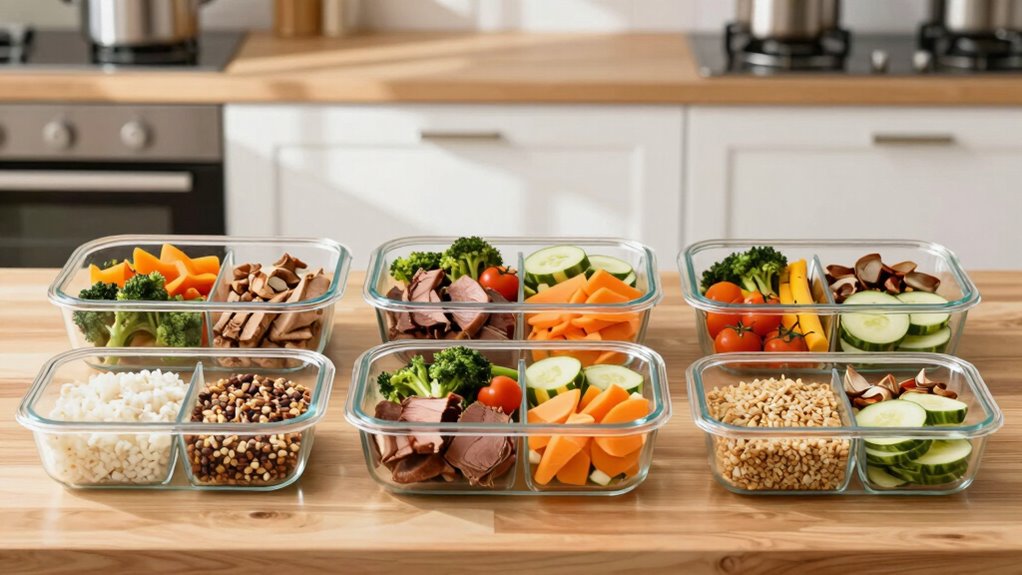
Smart portioning is essential because it helps you control your food intake and avoid overeating. When you practice mindful eating, you become more aware of your body’s hunger and fullness cues, making it easier to recognize true hunger versus emotional hunger. Emotional hunger often triggers cravings for comfort foods, leading to larger portions and overeating. By intentionally portioning your meals, you prevent mindless eating and reduce the chance of consuming more than your body needs. This approach encourages you to slow down, savor each bite, and listen to your body’s signals. Over time, smart portioning supports healthier habits, keeps your energy levels steady, and reinforces a balanced relationship with food. Incorporating portion control techniques into your lifestyle can also promote overall well-being by reducing stress and supporting sustainable habits. Recognizing hunger cues is a key part of developing mindful eating habits that can prevent overeating. Additionally, proper filtration and pump protection ensure your tools work efficiently, making it easier to prepare healthy meals consistently. It’s a simple but powerful tool to help you eat better and stay in control.

Root: Small vegetable plates, a little meat on the side
As an affiliate, we earn on qualifying purchases.
As an affiliate, we earn on qualifying purchases.
How Can You Find Your Ideal Plate Portions Without Counting Calories?

You can determine your ideal plate portions by using visual guides and plate dividers to balance your food groups. Paying attention to your hunger cues helps you eat until satisfied, not stuffed. These simple tools keep you on track without the need to count calories. For those interested in safeguarding their savings, understanding Gold IRA markets can provide valuable insights into secure investment options. Incorporating mindful eating techniques, such as listening to your body’s signals, can further enhance your ability to avoid overeating naturally. Being aware of portion control methods supported by nutritional research can help you develop sustainable eating habits. Additionally, considering natural pool designs can inspire ways to create more harmonious and eco-friendly meal portions that blend seamlessly with your environment.
Visual Portion Guides
Visual portion guides offer an easy way to determine the right amount of food on your plate without relying on calorie counting. By understanding different plate sizes, you can adjust your portion sizes to meet your needs. For example, a standard dinner plate typically holds about 10-12 inches, which helps you visualize appropriate servings. Using visual cues like filling half your plate with vegetables, a quarter with protein, and a quarter with grains makes portion control simple. This method allows you to gauge portion sizes quickly and intuitively, reducing overeating. You don’t need to weigh or measure every bite — just become familiar with the visual proportions that work for you. Plate size can impact how much food you serve yourself, so choosing the right size helps with portion control. Recognizing your portion perception can help you develop healthier habits over time without obsessing over exact measurements. Over time, these cues help you develop healthy habits without obsessing over exact measurements.
Use of Plate Dividers
Plate dividers are practical tools that help you portion your meals accurately without the need to count calories. They facilitate meal segmentation, making it easier to balance your plate visually and physically. By dividing your plate into sections—such as one for vegetables, one for protein, and another for grains—you create a clear structure that guides your portion sizes. This method encourages mindful eating and prevents overeating by providing a visual cue for each food group. Using plate dividers simplifies meal prep, helping you develop consistent portions over time. Instead of guessing, you rely on the physical boundaries of the divider to regulate intake. This approach makes healthy portioning intuitive, supports balanced meals, and reduces the risk of overeating without tracking every calorie. Visual cues from plate dividers can enhance your ability to maintain balanced meals naturally. Additionally, portion control techniques like these are supported by scientific insights into behavioral habits and personal traits that influence eating patterns. Incorporating behavioral strategies such as these can further improve your eating habits and help you achieve your health goals. Moreover, understanding the importance of contrast ratio in visual presentation can help you better appreciate the clarity and distinction between different food groups on your plate. Recognizing how visual perception influences our eating choices can also support mindful portioning.
Recognize Hunger Cues
Understanding your body’s hunger signals is key to finding the right portion sizes without counting calories. Developing hunger awareness helps you distinguish between true hunger and emotional or habitual eating. Practice mindful eating by paying close attention to how your body feels before, during, and after a meal. Notice subtle cues like a gentle stomach growl or a sense of satisfaction, rather than eating until you’re overly full. Slow down, chew thoroughly, and pause between bites to check in with your hunger levels. Over time, this awareness guides you to eat just enough, preventing overeating and fostering a healthier relationship with food. Recognizing these signals allows you to adjust portion sizes naturally, making meal prep more intuitive and aligned with your body’s needs. Incorporating mindful eating techniques can further enhance your ability to listen to your body’s cues and make better portion choices. Developing hunger cues through consistent practice strengthens your intuitive eating and reduces reliance on external measures like calorie counting. Paying attention to internal cues helps you build a more sustainable and satisfying approach to eating that respects your body’s natural rhythms. Additionally, being attentive to physical sensations of fullness can help prevent overeating and support long-term health.

VIYNRAN 4 Pcs Portion Control Plates & Bowls Set (9 Inch), Self-Measuring for Weight Loss, Gastric Bypass, LapBand, Diabetes, & Healthy Diets, Divided Nutrition Plates for Adults & Children
- Effective Portion Control: Supports weight loss and health management
- Ideal Size for Portions: 9-inch plates and 1.5-cup bowls
- Easy to Measure: Clear measuring lines for accurate servings
As an affiliate, we earn on qualifying purchases.
As an affiliate, we earn on qualifying purchases.
Easy Meal Prep Tricks for Balanced and Manageable Serving Sizes
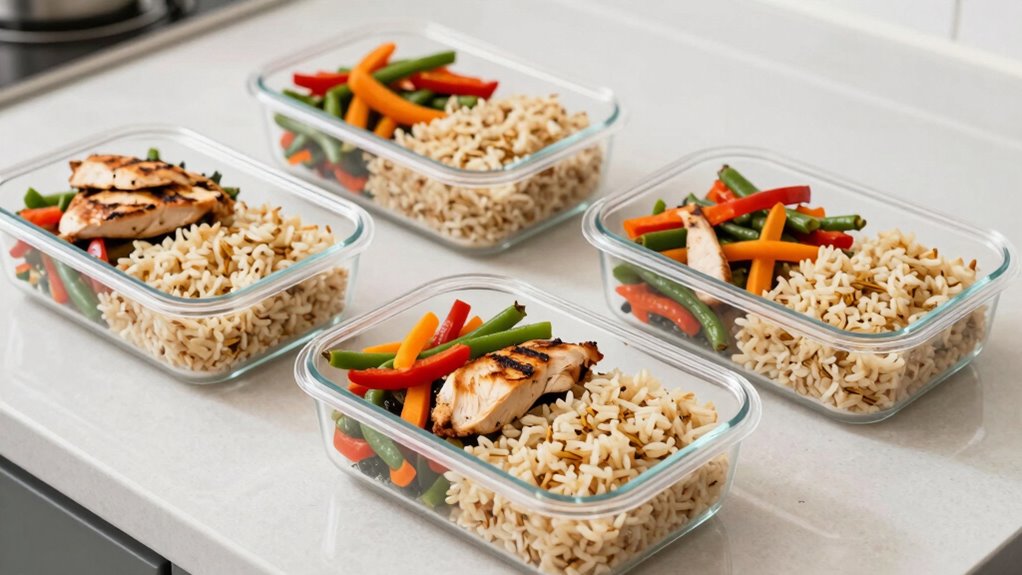
Using simple portion control techniques can make a big difference in managing your meals. Visual cues, like filling half your plate with vegetables, help you keep your servings balanced without counting everything. These easy tricks keep your meals manageable and satisfying. Incorporating standardized serving sizes can further support your efforts to prevent overeating naturally.
Portion Control Techniques
Controlling portion sizes is essential for maintaining a balanced diet and preventing overeating, especially when meal prepping. One effective technique is snack portioning: divide snacks into small, pre-portioned containers or bags so you avoid mindless munching. This helps you enjoy treats without overeating. When it comes to beverage sizes, stick to standard portions like 8-ounce glasses or small bottles rather than large containers. Using smaller glasses naturally limits your intake and reduces calorie consumption. Additionally, measure liquids with a jigger or measuring cup to guarantee consistency. These simple steps keep your servings manageable and prevent you from consuming excess calories. By consciously controlling snack portions and beverage sizes, you create a sustainable habit that supports your health goals without the need for calorie counting.
Visual Cues for Balance
Visual cues are powerful tools that can help you maintain balanced portion sizes effortlessly during meal prep. By paying attention to food presentation and plate aesthetics, you create visual signals that guide your serving sizes. For example, using smaller plates or dividing your plate into sections can make portions look fuller and more satisfying. Incorporate a variety of colors and textures to enhance visual appeal, which naturally encourages mindful eating. A well-organized plate with clear separation between protein, carbs, and vegetables not only looks appealing but also helps you gauge appropriate amounts. These simple visual cues serve as subconscious reminders to keep your servings balanced, preventing overeating without the need for calorie counting. Good food presentation enhances your meal experience and supports your portion control goals.

Pawbena Reusable Snack Containers with Lids, Snack Containers, 20-Pack Snack Pack Containers, meal prep containers Double Compartment, Container Portion Control for On the Go Travel Essentials
- Versatile & Organized: 20-pack reusable snack containers with double compartments
- Leak-Proof & Secure: Tight-fitting lids prevent spills and keep food fresh
- Portion Control: Designed for serving management and waste reduction
As an affiliate, we earn on qualifying purchases.
As an affiliate, we earn on qualifying purchases.
Using Visual Cues and Plate Layouts to Control Your Portions?
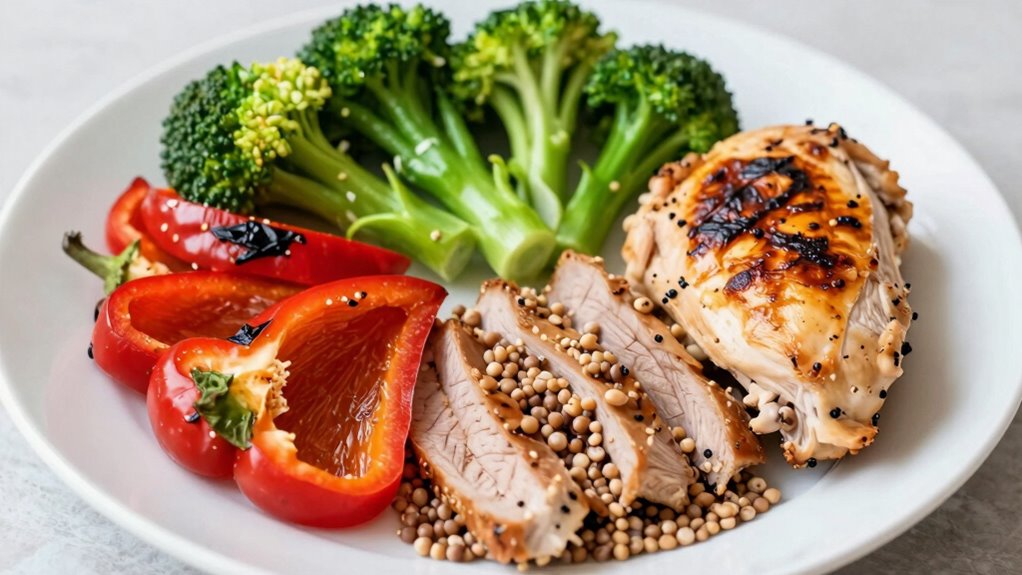
To keep your portions in check, paying attention to plate layout and visual cues can make a big difference. Use plate aesthetics and color contrast to create visual boundaries, helping your brain recognize appropriate portions without calorie counting. For example, placing colorful vegetables on one side and lean proteins on the other creates a clear visual cue, signaling fullness. The table below shows how different plate designs can influence perception:
| Plate Layout | Emotional Impact |
|---|---|
| Brightly colored sections | Invites appetite, feels balanced |
| Sharp color contrast | Clarifies portion boundaries |
| Minimalist design | Reduces overwhelm |
| Symmetric arrangement | Creates harmony and satisfaction |
| Divided sections | Guides portion sizes naturally |
These simple visual cues reinforce portion control effortlessly.
Why Filling Your Plate With Protein, Fiber, and Healthy Fats Keeps You Full
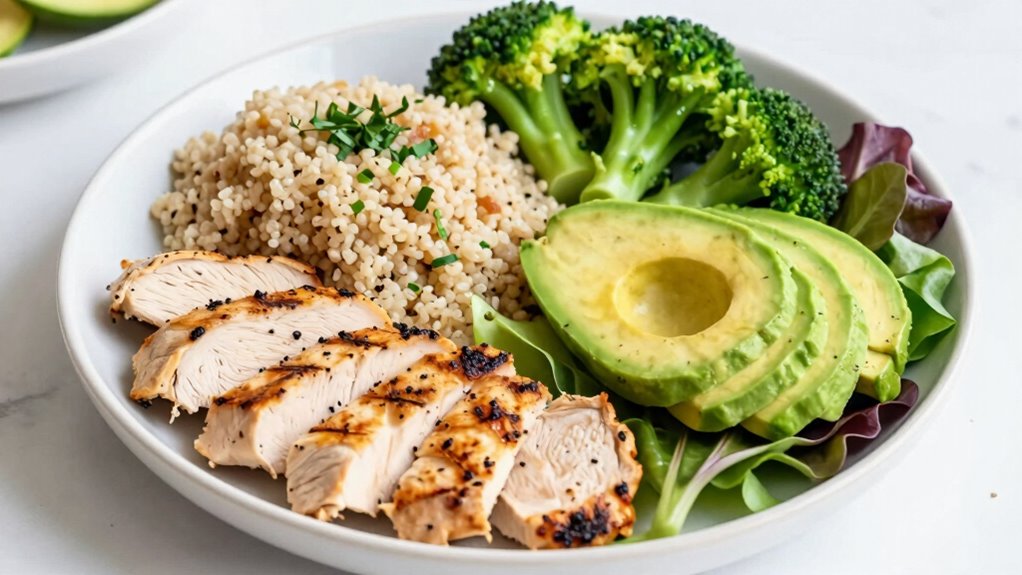
Filling your plate with protein, fiber, and healthy fats is one of the most effective ways to stay full longer and curb overeating. This approach leverages protein power and fiber focus to stabilize blood sugar and reduce cravings. Imagine your meal with:
- Lean chicken or tofu for lasting protein power
- Steamed vegetables or whole grains for fiber focus
- Avocado or nuts for healthy fats
- A side of beans or seeds to boost fiber and healthy fats
How to Pre-Portion Snacks and Sides for Better Portion Control?

Pre-portioning snacks and sides helps you take control of your portions and avoid mindless overeating. Using snack containers allows you to manage serving sizes ahead of time, making it easier to stick to your goals. When planning side dishes, consider dividing larger portions into smaller, grab-and-go containers. This not only prevents overeating but also simplifies your meal routine. For example, pre-portion nuts, cut vegetables, or fruit into individual containers, so you’re less tempted to snack impulsively. Incorporate a variety of healthy options to satisfy different cravings. By prepping snacks and sides in advance, you create a visual cue to eat only what you’ve portioned, making it easier to maintain control and avoid overeating throughout the day.
Adjusting Your Meal Portions Based on Your Goals and Activity Level?
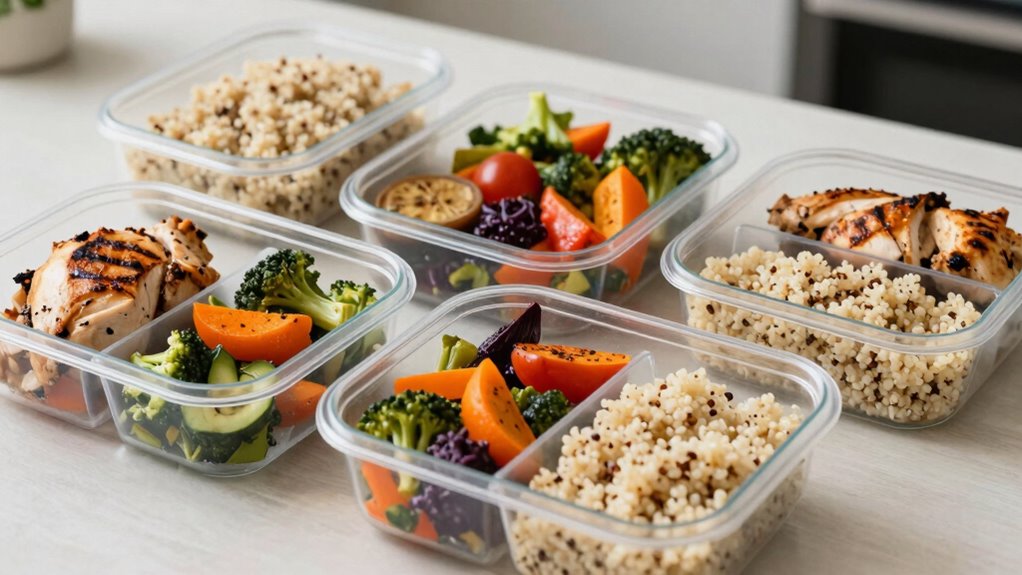
How should you adjust your meal portions to align with your personal goals and activity level? First, consider your activity level—more active days call for larger portions, especially around meal timing, to fuel your body. Second, tailor portion sizes based on your goals: weight loss might mean smaller servings, while muscle gain could require larger ones. Third, plan your grocery shopping accordingly, buying nutrient-dense foods that support your needs. Fourth, listen to your hunger cues; don’t rely solely on portion sizes but adjust as you go. By syncing your meal portions with activity levels and goals, you prevent overeating and optimize energy. Remember, small tweaks in grocery shopping and meal timing make a big difference in maintaining balanced portions.
Common Portioning Mistakes to Watch Out For and How to Fix Them
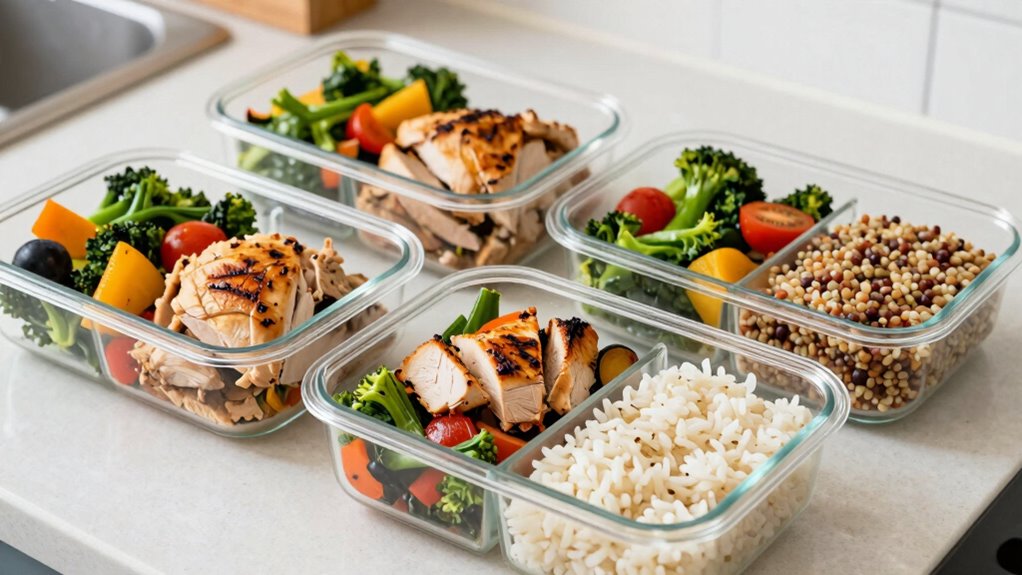
One common mistake in portioning is relying solely on visual cues or guesswork instead of measuring your food, which can easily lead to overeating or under-eating. Portion distortion occurs when your perception of a proper serving size is off, often making you think you’re eating less than you actually are. This can cause you to consume more calories than intended, even if you’re not counting them. To fix this, use measuring tools or compare your portions to standard serving sizes on packaging. Be aware that restaurant servings and packaged foods tend to be larger than recommended, so dividing or pre-portioning helps maintain accurate control. Avoiding portion distortion ensures your meal sizes align with your goals, preventing unintentional overeating.
Frequently Asked Questions
How Can I Stay Consistent With Portion Control Long-Term?
To stay consistent with portion control long-term, focus on mindful eating and habit formation. Pay close attention to your hunger cues, eat slowly, and savor each bite. Prepare your meals with pre-portioned servings and stick to a routine. Over time, these mindful practices become habits, making it easier to control portions naturally. Stay patient and consistent, and you’ll find portion control becomes second nature without counting calories.
What Are Simple Tools to Measure Portion Sizes Accurately?
Measuring cups and portion scales are your best tools for accurate portion sizes. Studies show these tools effectively prevent overeating by providing precise measurements. Use measuring cups for liquids and small ingredients, and a portion scale for meats or bulk foods. These simple tools help you stay consistent without calorie counting, making it easier to control your intake naturally. Incorporate them into your routine for long-term success.
How Do I Adapt Meal Prep for Specific Dietary Restrictions?
You can adapt meal prep for specific dietary restrictions by creating custom meal plans tailored to your needs. Focus on ingredient substitutions that meet your restrictions, like swapping dairy for plant-based alternatives or using gluten-free grains. Plan your portions carefully, ensuring each meal aligns with your goals. This way, you maintain variety and balance without sacrificing your dietary requirements, making healthy eating easier and more enjoyable.
Can Flexible Eating Habits Still Support Portion Control?
Absolutely, flexible eating habits can still support portion control when you practice mindful eating and intuitive portioning. Think of your plate as a canvas—you decide what feels right, listening to your body’s hunger cues. By slowing down and savoring each bite, you prevent overeating while honoring your cravings. Flexibility allows you to enjoy your favorite foods without guilt, making mindful choices that nurture both your body and your happiness.
How Do I Handle Eating Out or Social Events Without Overdoing It?
When eating out or at social events, practice mindful dining by savoring each bite and paying attention to your hunger cues. Use social strategies like choosing smaller portions, sharing dishes, or politely setting limits if portions are large. Stay hydrated and avoid rushing through your meal. These habits help you enjoy the experience without overeating, keeping your portion control intact while still engaging socially.
Conclusion
By mastering smart portioning, you can keep overeating at bay just like a skilled captain steers clear of rough seas. Focus on visual cues, balanced plates, and pre-portioned snacks to stay on track without counting calories. Remember, it’s about creating sustainable habits, not perfection. With these simple tricks, you’ll find your eating habits smoother and more satisfying, making healthy choices feel natural—like second nature—so you can enjoy your meals without guilt.