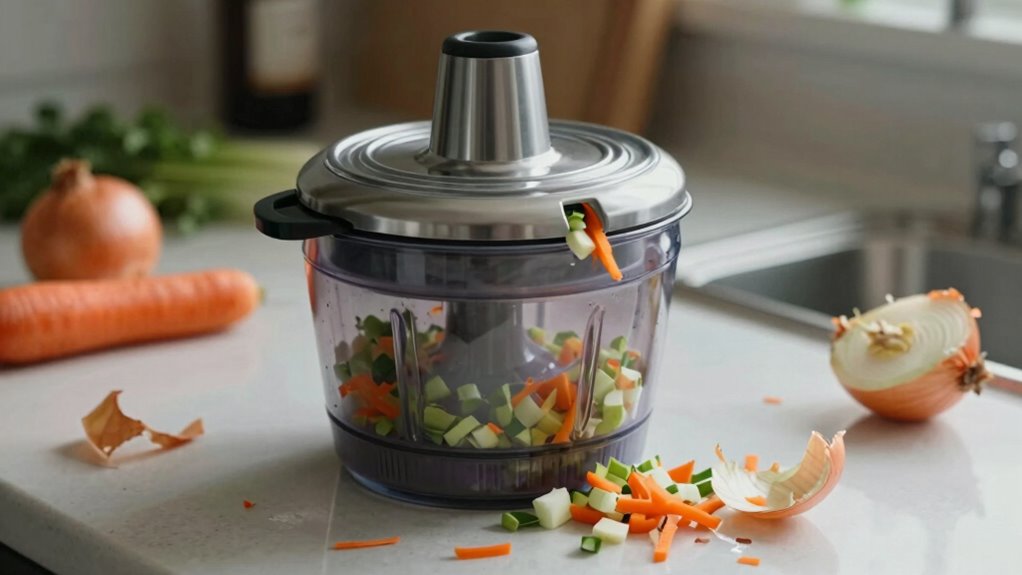
When setting up your food processor for the first time, you might rush through attaching parts or overlook the importance of secure fittings. Failing to properly check blades, bowls, and lids can lead to safety hazards or poor results. Avoid overloading the machine right away or using dull blades, as these can damage the equipment. Taking your time with setup helps prevent common mistakes, and if you keep going, you’ll discover how to avoid these pitfalls entirely.

Get kitchen staples and gadgets delivered free — and shop member deals
- Fast, free delivery on millions of items
- Access to Prime Big Deal Days deals on October 6–7
- Prime Video, Amazon Music and more included
Key Takeaways
- Rushing through ingredient prep, leading to improper chopping, overloading, and blade damage.
- Assembling parts hastily without double-checking for secure attachment or correct alignment.
- Using dull or damaged blades without inspecting or cleaning them beforehand.
- Forgetting to securely latch the bowl, lid, or feed tube before operation.
- Ignoring manufacturer instructions and neglecting regular maintenance checks.
Setting up your food processor correctly from the start can save you time and prevent frustration later on. One of the most common first setup mistakes is rushing through ingredient preparation without paying attention to the details. Before you even plug in your machine, you need to verify all ingredients are properly prepared. This means peeling, chopping, or slicing items to fit the processor’s requirements. If you ignore this step, you risk overloading the machine or damaging its blades. Proper ingredient preparation also helps guarantee even processing, giving you better results and reducing the chance of jamming or uneven textures.
Proper ingredient prep prevents overloads, protects blades, and ensures smooth, even processing results.
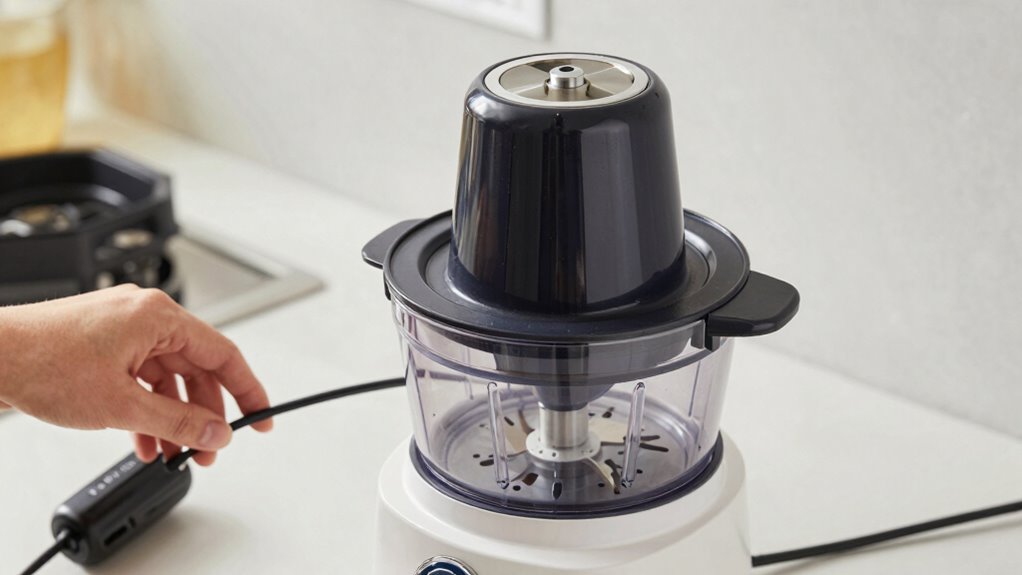
Another mistake people often make is neglecting safety precautions during setup. It’s tempting to simply assemble the parts quickly, but you should always double-check that the bowl and lid are securely attached before turning the machine on. Many food processors won’t operate unless everything is correctly aligned, which is a safety feature, but it’s easy to overlook. Failing to follow these precautions can cause the lid to fly off or parts to come loose during operation, risking injury or mess. Always read your manufacturer’s instructions carefully to understand how each part fits and locks into place. Don’t force components together; if they don’t fit easily, check for obstructions or misalignments.
Another common oversight is not inspecting the blades and discs for cleanliness or damage before setup. Dull or damaged blades can compromise safety and efficiency. Make sure the blades are sharp and properly seated in their holders. Clean any residue or manufacturing oils from the blades and bowl before use to avoid contamination and ensure smooth operation. Using damaged or improperly installed blades can lead to uneven processing and potential safety hazards. Additionally, inspecting the blades and discs regularly helps prolong their lifespan and maintain optimal performance. Being aware of the machine’s safety features can also help you operate your food processor more confidently and securely. It’s also wise to verify that the motor housing is free of dust or debris to prevent overheating during use.
Many beginners forget to secure the feed tube or chute if your model has one. Leaving it loose can cause ingredients to spill or get caught during processing. Always verify that all attachments are firmly in place and that the bowl is properly latched onto the base. This not only assures safety but also ensures your appliance functions correctly. Additionally, inspecting the power cord for damage before use can prevent electrical hazards. Familiarizing yourself with and adhering to the proper setup procedures can significantly reduce the risk of accidents and improve your overall experience with the food processor.
As an affiliate, we earn on qualifying purchases.
Frequently Asked Questions
Can I Use My Food Processor for Hot Ingredients?
Yes, you can use your food processor for hot ingredients, but it’s important to follow cooking tips and safety precautions. Allow hot foods to cool slightly before processing to prevent damage to the appliance and avoid splatters. Always remove the central blade and vent the lid if possible. Check your user manual for specific instructions, and never process boiling liquids without proper safety measures to prevent accidents.
How Do I Safely Clean the Blades After Use?
To safely clean the blades, handle them carefully, avoid direct contact with sharp edges, and use a brush or sponge. Always unplug your food processor before cleaning, and wear cut-resistant gloves if needed. Follow cleaning tips like soaking blades in warm, soapy water, rinsing thoroughly, and drying completely. Remember, blade safety and proper cleaning tips keep you safe and your appliance in top shape, preventing accidents and prolonging its lifespan.
Is It Necessary to Read the Manual Before First Use?
Yes, reading the manual before your first use is essential. The manual’s importance lies in guiding you through proper setup, operation, and safety precautions to prevent accidents or damage. By understanding the safety features and correct assembly, you guarantee safe usage from the start. Skipping this step could lead to mishandling, which might cause injuries or reduce your food processor’s lifespan. Always prioritize the manual for a smooth, safe experience.
What’s the Best Way to Store Attachments?
Like a well-organized library, storing attachments properly makes your food processor more efficient. Keep your attachments in a designated drawer or container with designated compartments for each piece. Use storage tips like sealing them in airtight bags or containers to prevent dust and damage. Attachment organization is key—consider magnetic strips or labeled bins to easily find what you need, reducing clutter and ensuring your accessories stay in top condition.
Can I Replace Parts Myself if They Break?
Yes, you can often replace parts yourself if they break, but it depends on your food processor’s model. Many manufacturers offer DIY repairs with available replacement parts. Check the user manual or the manufacturer’s website for guidance. Be sure to follow safety precautions, and if you’re unsure, consult a professional. Doing your own repairs can save money and extend your appliance’s lifespan.
As an affiliate, we earn on qualifying purchases.
Conclusion
Avoiding setup mistakes guarantees your food processor works smoothly and lasts longer. For example, imagine you ignore the manual and overfill the bowl, causing motor strain. This common mistake can damage your appliance and waste ingredients. Take a moment to follow the correct assembly steps, double-check your parts, and start with small quantities. Proper setup not only saves you time and money but also guarantees consistent, delicious results every time you use it.
As an affiliate, we earn on qualifying purchases.
As an affiliate, we earn on qualifying purchases.
NFL season / tailgating Picks
team gear
As an affiliate, we earn on qualifying purchases.