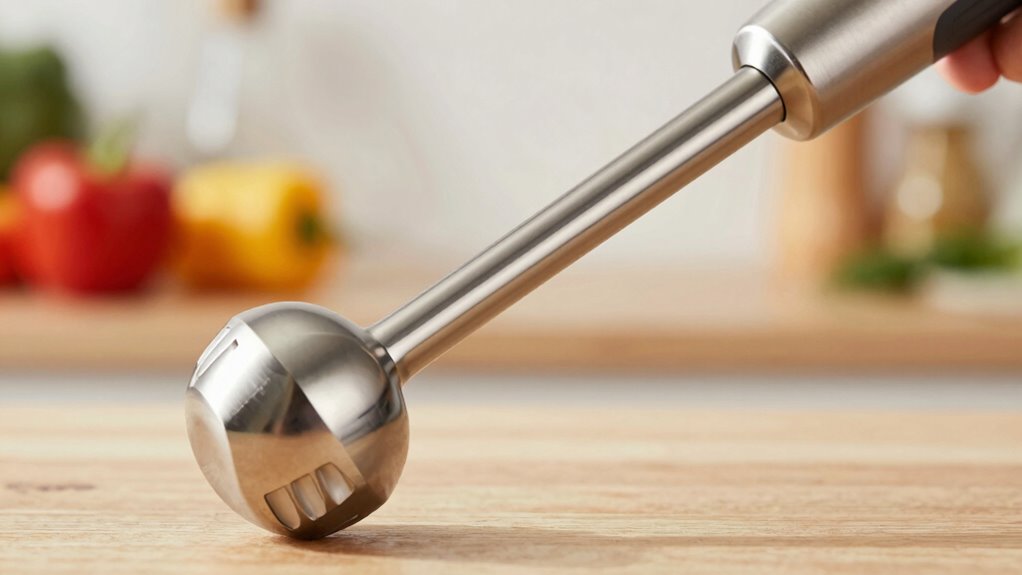

A metal shaft on an immersion blender helps protect the motor, reduces vibrations, and dampens noise, making your blending smoother and quieter. It’s especially useful when blending tough ingredients or for frequent use, offering durability and easier cleaning since it resists stains and odors. While some marketing highlights its sleek look, the real benefit depends on quality construction. Stay tuned to learn how choosing the right metal shaft can improve your blending experience.
Key Takeaways
- Metal shafts protect the motor, enhance durability, and assist in efficient blending by absorbing vibrations and reducing noise.
- They are especially helpful for blending tough ingredients and when quieter operation is desired.
- Metal shafts are easier to clean, resistant to stains and odors, and prevent buildup of sticky ingredients.
- High-quality metal shafts resist corrosion and maintain shape, ensuring long-term durability and performance.
- Marketing emphasizes their durability and sleek appearance, but quality construction is essential for true benefits.
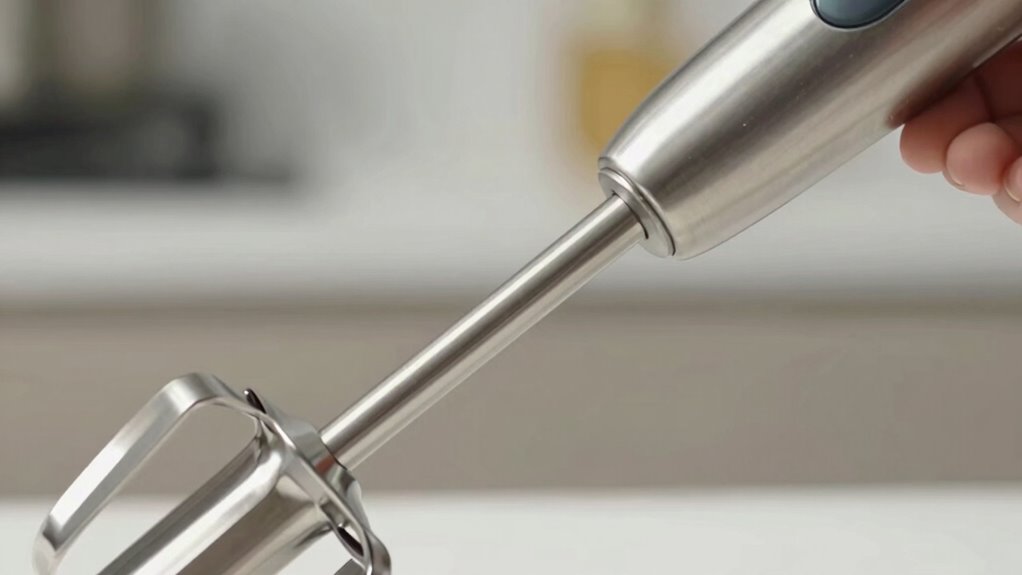
Have you ever wondered why many immersion blenders feature a metal shaft? It’s a feature that often catches your eye, but understanding its purpose can help you decide if it’s worth the investment. The metal shaft primarily serves to protect the motor and facilitate blending, but it also influences factors like motor noise and ease of cleaning. When you’re using an immersion blender with a metal shaft, you might notice that the motor noise is slightly different compared to plastic-shaft models. Usually, a metal shaft can help dampen some of the vibrations, resulting in a quieter operation. That’s beneficial if you’re blending early in the morning or late at night and don’t want to disturb others. Additionally, the sturdy metal can absorb some of the sound waves, making the motor noise less intense.
Another advantage of the metal shaft is its ease of cleaning. Unlike plastic or rubber components, metal shafts are less porous and less likely to harbor bacteria or odors. You can rinse them thoroughly under running water or wipe them down without worrying about staining or degradation over time. Many models also feature removable metal shafts, which simplifies cleaning even further. You can detach the shaft from the motor unit and clean it separately, ensuring no food residue gets trapped in hard-to-reach areas. This ease of cleaning is especially helpful when working with sticky ingredients like nut butter or thick sauces, as it prevents buildup and makes maintenance quick and straightforward. Moreover, the material quality of the metal shaft impacts its resistance to corrosion and wear, which is crucial for long-term durability.
However, it’s important to note that not all metal shafts are created equal. Some cheaper models might use thinner or lower-quality metals that could bend or dent with heavy use. When shopping, look for a solid, well-constructed metal shaft that feels sturdy in your hand. This not only ensures longevity but also maintains the aesthetic appeal of your blender. While marketing often emphasizes the durability and sleek look of metal shafts, remember that these features are most beneficial when paired with quality construction.
Frequently Asked Questions
Can a Metal Shaft Cause Metallic Taste in Food?
Yes, a metal shaft can cause a metallic taste in food if it leaches tiny metal particles, leading to food contamination. This usually happens if the shaft is made from low-quality or corroded metal, especially with acidic ingredients. To avoid this, make certain your immersion blender’s metal shaft is durable and well-maintained. Regular cleaning and choosing high-quality, food-grade materials can prevent metallic taste and keep your food safe.
Is a Metal Shaft Safer Than Plastic for High-Temperature Blending?
Ever wondered if a metal shaft is safer than plastic for high-temperature blending? Generally, metal shafts are more durable and withstand high heat better, reducing risk of melting or warping. Plus, they often look sleeker and more professional, enhancing the aesthetic appeal of your tools. Isn’t it smarter to choose a material that’s both reliable and stylish? So, yes, a metal shaft is usually the safer, more durable option for hot blending.
Does the Metal Shaft Impact the Blender’s Noise Level?
A metal shaft can make your immersion blender slightly louder than plastic, but the noise comparison isn’t drastic. The metal shaft’s durability means it resists wear and tear better, so you might notice less vibration and smoother operation over time. While it may produce a bit more noise initially, its strength and longevity often outweigh the minor increase, making it a solid choice if you want durability and reliable performance.
Can the Metal Shaft Be Replaced or Upgraded?
Yes, you can usually replace or upgrade the metal shaft on your immersion blender. Look for shaft replacement options from your manufacturer or third-party vendors to extend your blender’s lifespan. Upgrading might involve purchasing a more durable or longer-lasting shaft, which can improve performance or comfort. Always check compatibility with your model before buying replacement parts or upgrade options to guarantee a proper fit and safe operation.
How Does the Metal Shaft Affect Cleaning and Maintenance?
Think of the metal shaft as the backbone of your immersion blender. It makes cleaning easier because it’s usually dishwasher safe, but it’s also prone to corrosion if not dried properly. Regular maintenance involves rinsing and drying thoroughly to prevent rust. A sturdy metal shaft can withstand frequent cleaning, reducing corrosion risk, but neglecting proper care can turn it into a weak link, making maintenance more challenging over time.
Conclusion
So, next time you grasp that sleek metal shaft, imagine it as the steady hand guiding your culinary creations through silky soups and vibrant sauces. Its sturdy presence transforms blending into an artful dance, ensuring smooth, consistent results. When used wisely, that gleaming shaft opens up flavors and textures you’d struggle to achieve otherwise. But remember, sometimes it’s just a marketing shine—a reminder to look beyond the surface and trust your true kitchen skills.