To avoid ruining food and damaging your juicer, start by thoroughly washing all fruits to remove dirt and pesticides. Cut softer fruits into manageable pieces and peel items like peaches or mangoes for better processing. Remove seeds, pits, and stems to prevent jams and machine damage. Always clean your juicer thoroughly after each use to prevent buildup and odors. Staying mindful of these steps helps protect your equipment and improves your juice quality—keep going to learn even more tips.
Key Takeaways
- Thoroughly wash and select ripe, undamaged fruits to prevent contamination and ensure optimal juice quality.
- Peel and cut soft fruits into uniform pieces to avoid jams and reduce motor strain.
- Remove seeds, pits, and stems before juicing to prevent flavor issues and machine damage.
- Disassemble and clean all juicer components after each use to prevent buildup and maintain efficiency.
- Follow the manufacturer’s instructions for proper assembly, cleaning, and storage to prolong your juicer’s lifespan.

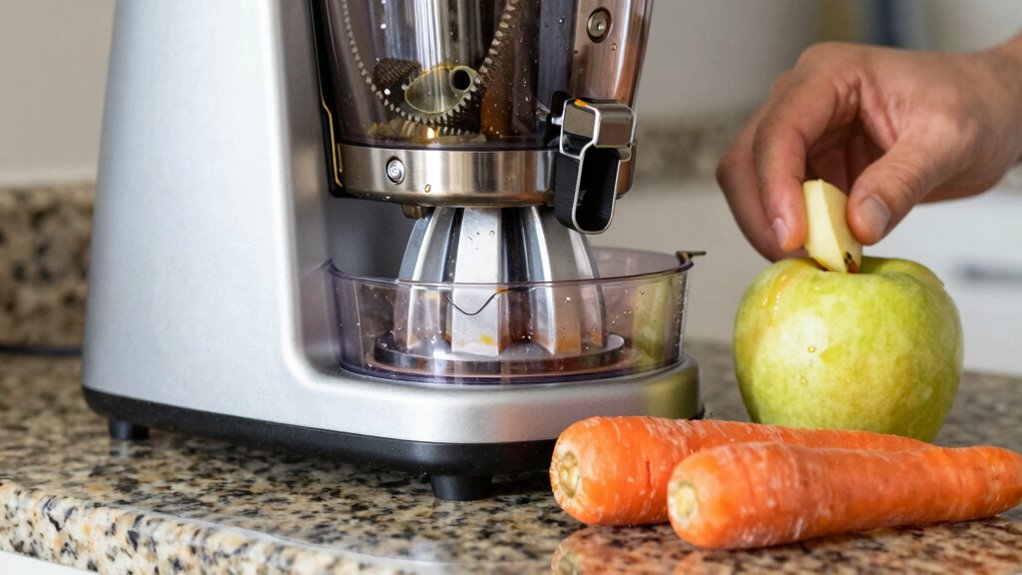
Starting with a masticating juicer can be exciting, but many beginners make simple mistakes that affect their results and frustration levels. One of the most common errors is neglecting proper fruit prep. Before feeding produce into your machine, you need to wash all fruits thoroughly to remove dirt, pesticides, and residues. This step ensures you’re not introducing contaminants or debris that could clog or damage your juicer. When it comes to softer fruits like berries or peeled fruits such as peaches and mangoes, cutting them into manageable sizes helps the machine process them more efficiently. Larger chunks can cause jams or put unnecessary strain on the motor, leading to poor juice extraction or even damage.
Another key aspect beginners overlook is the importance of consistent fruit prep. Overripe or damaged produce can yield less juice and introduce bitterness or undesirable flavors. Removing seeds, pits, and stems is equally critical. Seeds from apples or cherries contain compounds that can affect the taste and sometimes even harm the machine if not removed. Proper fruit prep not only improves the flavor and texture of your juice but also prolongs your juicer’s lifespan. Additionally, understanding the benefits of proper prep can help ensure your juice is both safe and delicious.
Machine maintenance is another area where beginners often stumble. A masticating juicer requires regular cleaning after each use to prevent pulp buildup and bacteria growth. Failing to clean the parts thoroughly—such as the auger, feed chute, and juice collection chamber—can cause blockages, reduce efficiency, and lead to unpleasant odors. Always disassemble your juicer according to the manufacturer’s instructions and wash each component with warm, soapy water. Some parts may be dishwasher safe, but check your manual first. Keeping your machine in good condition means you’ll avoid unnecessary repairs and extend its lifespan.
Frequently Asked Questions
Can I Juice Frozen Fruits With a Masticating Juicer?
Yes, you can juice frozen fruit with a masticating juicer, but you should thaw it slightly first for better juicing safety. Frozen fruit that’s too hard can strain the motor or clog the machine. Let it sit at room temperature for a few minutes or thaw in the microwave briefly. This prevents damage to your juicer and guarantees you get smooth, safe juice without risking motor burnout or messy spills.
How Often Should I Clean My Juicer During Use?
Did you know that untreated pulp buildup can reduce your juicer’s efficiency by up to 30%? During your juicing schedule, clean your juicer every 15-20 minutes to prevent clogging and maintain ideal performance. Frequent cleaning ensures fresh-tasting juice and prolongs your appliance’s lifespan. If you’re juicing multiple times a day, consider a quick rinse after each session and a thorough clean at the end for best results.
Is It Normal for My Juicer to Make Noise?
It’s normal for your juicer to make some noise, especially during operation. Juicer noise varies based on the model and the ingredients you’re processing. If you hear troubleshooting sounds like grinding or rattling, check for jammed or stuck pieces. Regularly inspecting and cleaning your juicer helps reduce excessive noise. Don’t worry—some level of sound is typical, but if it becomes unusually loud, it’s worth troubleshooting to make sure everything runs smoothly.
Can I Juice Leafy Greens Without Pre-Chopping?
Juicing leafy greens without pre-chopping is like trying to fit a giant puzzle piece into a small space—possible but easier with some prep. For ideal juicing techniques, tear or fold greens to help them feed smoothly into your masticating juicer. This reduces clogging and improves juice yield. So, while you can juice whole, prepping leafy greens makes the process smoother and your juice tastier and more efficient.
What Should I Do if the Juicer Gets Clogged?
If your juicer gets clogged, stop juicing and unplug it immediately. Check for any stuck pulp or debris, and use a brush or spatula to clear the chute gently. Regular juicer maintenance, including cleaning the filter and blades, is vital for smooth operation. For troubleshooting tips, consult your user manual or manufacturer’s advice. Keeping your juicer clean and clear prevents clogs and guarantees peak performance.
Conclusion
By avoiding these common mistakes, you’ll transform your juicing journey from a stumble to a smooth sail. Remember, every misstep is just a stepping stone toward mastery, and with patience, your masticating juicer becomes more than a machine—it becomes a trusted ally in your health quest. So, embrace each challenge as a lesson, for the path to perfect juice is paved with persistence, turning everyday efforts into a symphony of wellness.