
Your appliance trips the outlet at the worst possible time because underlying issues like overloads, faulty wiring, or power surges tend to happen when you’re counting on it most. These problems cause the circuit to trip to protect your wiring and devices, especially during peak usage. Often, stress on the system due to age or improper connections triggers these trips unexpectedly. If you want to know how to prevent this from happening, keep going to find out more.
Open a free Amazon Business account
Business pricing, bulk buying and tax-exempt orders.
As an affiliate, we earn on qualifying purchases.
Key Takeaways
- Power surges from lightning or utility issues can cause sudden outlet trips during critical moments.
- Overloading circuits with multiple high-power devices increases trip risk during peak usage times.
- Faulty or loose wiring may intermittently trip outlets, especially when appliances draw maximum current.
- Aging or damaged wiring can cause shorts or sparks, triggering trips unexpectedly.
- Electrical system stress or capacity overloads often lead to trips at inconvenient or critical moments.
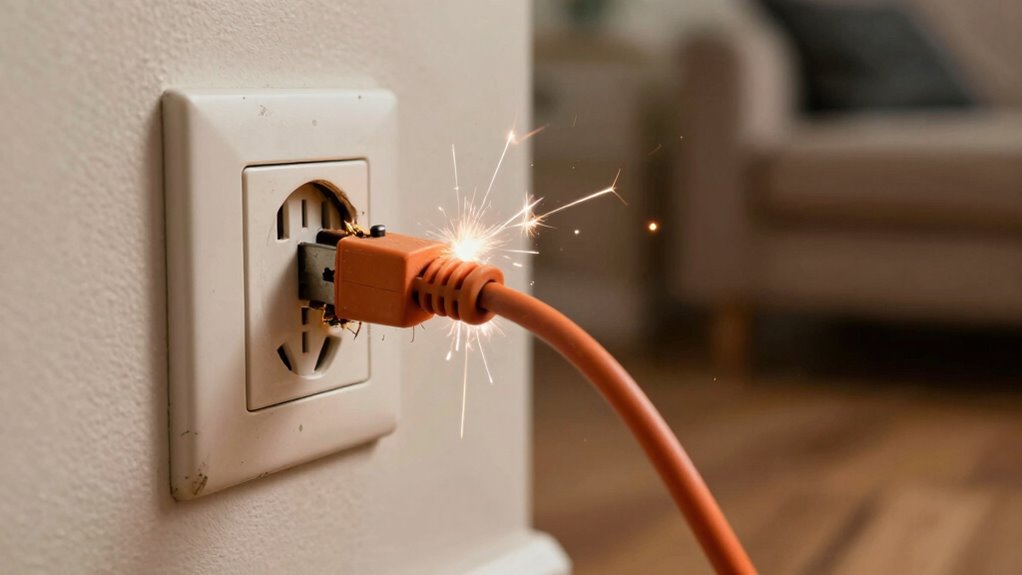
If your appliance outlet keeps tripping the circuit breaker, it can be frustrating and potentially dangerous. You might be tempted to ignore it or just unplug the device, but this recurring problem often signals underlying issues that need your attention. One common cause is a power surge, which occurs when there’s a sudden spike in electrical current. Power surges can happen due to lightning strikes, problems with the utility company, or large appliances turning on and off unexpectedly. When a surge hits your outlet, the circuit breaker trips to protect your wiring and appliances from damage. If it happens frequently, it’s a clear sign that your electrical system is under stress or vulnerable.
Frequent circuit breaker trips often indicate underlying electrical issues needing prompt attention.
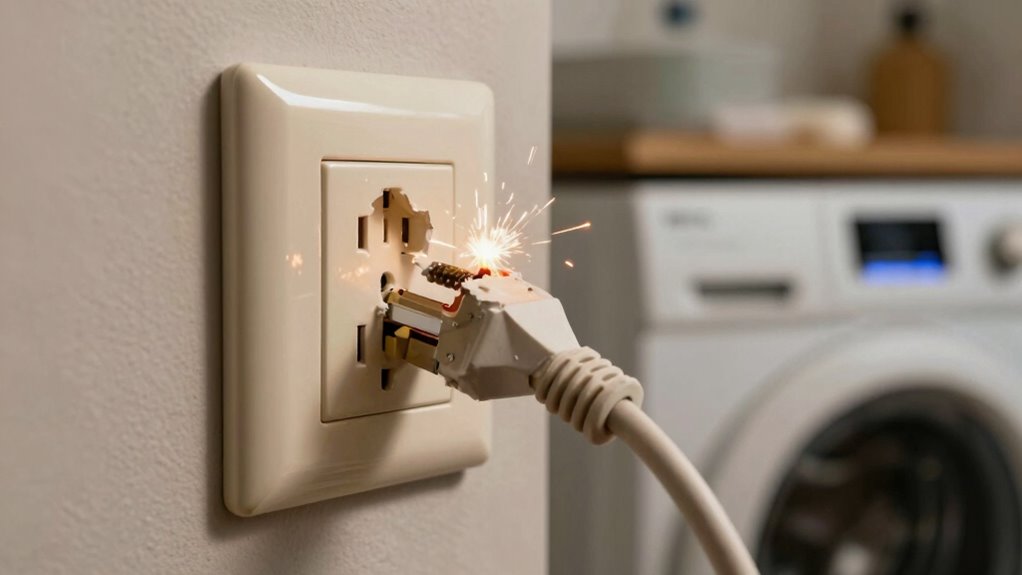
Another potential culprit behind outlet trips is wiring issues. Faulty or loose wiring inside the wall can create irregular electrical flow, triggering the circuit breaker to shut off power as a safety measure. Over time, wiring can degrade due to age, poor installation, or damage from pests or moisture. When wiring isn’t properly grounded or has become frayed, it increases the risk of shorts and sparks, which can lead to tripped outlets and even fire hazards. If you notice flickering lights or a burning smell along with outlet trips, wiring problems are likely at play. Addressing wiring issues promptly not only keeps your appliances safe but also prevents more serious electrical failures down the line. Additionally, understanding your electrical system’s capacity and limitations can help prevent overloads and trips. Recognizing signs of an overloaded circuit early can save you from costly repairs and safety risks. Sometimes, the problem isn’t just one appliance or wiring fault. Overloading an outlet by plugging in multiple high-power devices can cause the circuit breaker to trip, especially if the wiring isn’t rated for the combined load. When you overload an outlet, you’re forcing more current through the wiring than it’s designed to handle, which can trip the breaker as a safeguard. To avoid this, distribute your appliances across different outlets, and avoid daisy-chaining extension cords or power strips, which can exacerbate the problem. Being aware of your electrical system’s capacity and monitoring usage can help prevent future outages and ensure safety. Regularly inspecting your breaker’s load capacity can also help you identify potential overload issues before they cause interruptions.
surge protector with outlet safety
As an affiliate, we earn on qualifying purchases.
As an affiliate, we earn on qualifying purchases.
Frequently Asked Questions
Can Frequent Trips Damage My Appliance or Outlet?
Yes, frequent trips can harm your appliance and outlet. Constantly tripping the outlet can cause wear on the appliance’s internal components, potentially shortening its lifespan. It may also weaken the outlet’s safety features, increasing the risk of electrical hazards. To protect both, address the underlying issue causing trips promptly. Ensuring proper outlet safety and regular maintenance helps extend your appliance’s lifespan and keeps your home safe from electrical problems.
How Do I Reset a Tripped Circuit Breaker Safely?
To reset a tripped circuit breaker safely, first identify the breaker type—standard or GFCI/AFI. Turn off the appliance and make certain your hands are dry. Switch the breaker fully to the OFF position, then back to ON. Follow safety precautions by wearing insulated gloves if needed and avoiding contact with water. If it trips again, consult an electrician, as repeated trips could indicate a deeper electrical issue.
Are Some Appliances More Prone to Causing Trips Than Others?
Yes, some appliances are more prone to causing trips, especially those with high power demands or poor appliance compatibility. Heavy-duty appliances like space heaters, refrigerators, or power tools often draw more current, increasing trip risks. Using surge protection can help prevent damage and trips caused by voltage spikes. To avoid issues, guarantee your appliances are compatible with your circuit’s capacity and consider installing surge protectors for added safety.
What Tools Are Needed to Diagnose Electrical Outlet Issues?
To diagnose electrical outlet issues, you’ll need basic tools like a multimeter for electrical testing and a screwdriver for outlet inspection. Use the multimeter to check voltage levels and test for grounding problems. Carefully remove the outlet cover with a screwdriver to inspect for loose wires or damage. These tools help you identify if the outlet or wiring is causing trips, ensuring safe and effective troubleshooting before calling a professional.
Should I Call an Electrician for Recurring Outlet Trips?
When your outlet keeps tripping, it’s like a warning flag signaling circuit overload, and you should definitely call an electrician. Recurring trips indicate underlying issues with appliance maintenance or wiring, risking damage or fire. Your safety is paramount—don’t dismiss these signs. An electrician can diagnose and fix the problem, ensuring your appliances operate smoothly without risking your home’s electrical health. Trust the experts to restore balance and safety.
As an affiliate, we earn on qualifying purchases.
Conclusion
So, next time your appliance trips the outlet, don’t despair—think of it as a modern-day equivalent of a knight’s warning bell, alerting you to a potential problem. Troubleshoot the issue carefully, and remember that even in the age of smartphones, a simple fix can save you from a blackout. With a little patience and some elbow grease, you’ll have your trusty appliances back in action—no need to summon Merlin just yet!
As an affiliate, we earn on qualifying purchases.
electrical wiring inspection kit
As an affiliate, we earn on qualifying purchases.
As an affiliate, we earn on qualifying purchases.
Flea & tick season Picks
flea and tick prevention
As an affiliate, we earn on qualifying purchases.