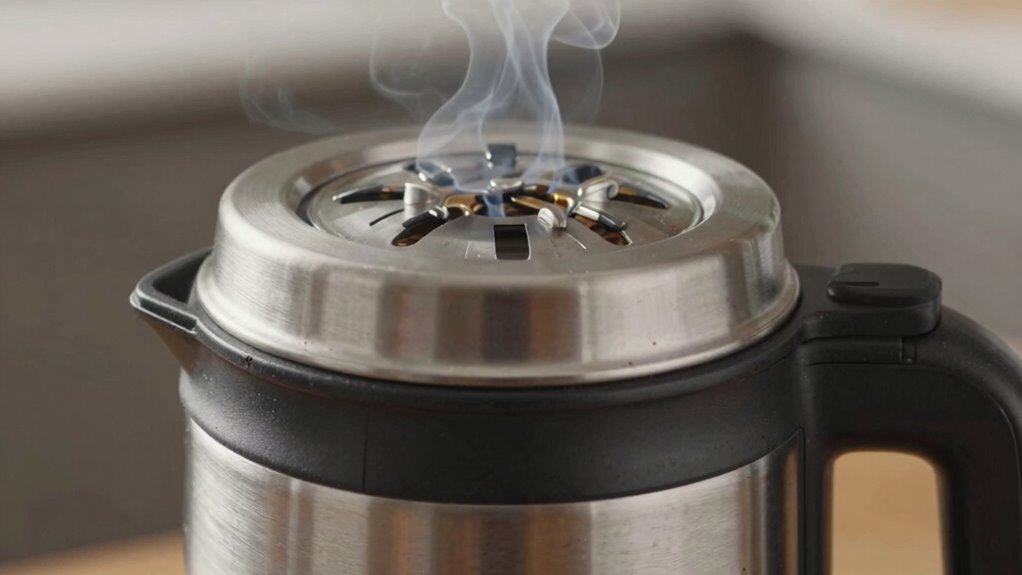
A burning smell from your blender can be normal during initial startup, after blending dense ingredients, or when oils burn off, and usually fades quickly. However, persistent or strong odors, especially with smoke or sparks, signal potential problems like motor overheating or electrical issues. To keep safe, stop use if the smell worsens, and inspect for damage. For more tips on diagnosing and fixing this issue, explore further.
Key Takeaways
- Slight burning odors during startup or after blending dense ingredients are normal and usually fade quickly.
- Persistent or strong burning smells, especially with smoke or sparks, indicate a potential malfunction requiring immediate attention.
- Regular cleaning and avoiding overloading help prevent overheating and reduce burning odors.
- Unusual noises, smoke, or sparks alongside a burning smell suggest safety risks and may need professional repair.
- Monitor odor persistence; if smells do not fade or worsen, consult a technician to inspect and fix the blender.
Is a Burning Smell Normal When Using a Blender?

A burning smell when using a blender isn’t always normal, but it can happen under certain circumstances. It is crucial to prioritize blender safety and pay attention to odor detection during operation. If you notice a slight burning odor, it might be due to the motor working hard or processing tough ingredients. Small, temporary smells can be normal, especially when breaking in a new appliance or blending dense foods. However, persistent or strong odors are a warning sign that something isn’t right. Always stay alert to changes in your blender’s smell, as it can help prevent damage or safety hazards. Trust your senses; if the smell intensifies or you feel heat, turn off the blender immediately to avoid potential risks. Additionally, understanding the motor function can help you identify when normal operation might produce a smell versus when there is an issue. Recognizing overheating signs can further aid in maintaining your blender’s longevity and safety. Being aware of electrical components can also assist in diagnosing potential problems that cause burning odors. Sometimes, poor ventilation around the appliance can contribute to overheating and odors, so ensure proper airflow during use. Proper cleaning and regular maintenance can also prevent build-up of debris that might cause smells or malfunctions.
What Causes a Burning Smell in Your Blender?
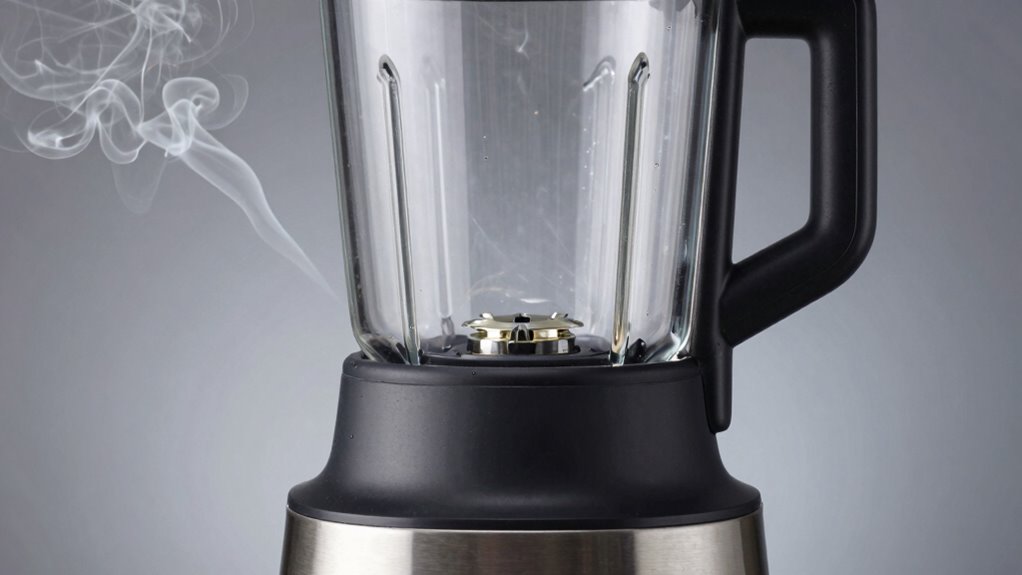
A burning smell in your blender typically points to specific issues within its components. The most common cause is motor overheating, which occurs when the motor runs excessively or is blocked. Electrical issues, such as faulty wiring or a damaged power cord, can also produce a burning odor. Additionally, worn-out brushes or a malfunctioning capacitor may generate heat and smell. Sometimes, food debris or residue can cause burning if it contacts hot motor parts. Finally, a jammed or stuck blade can strain the motor, leading to overheating. Be alert for:
Burning smells indicate motor overheating, electrical faults, worn parts, debris contact, or jammed blades—address these issues promptly.
- Motor overheating due to prolonged use
- Faulty wiring or electrical malfunctions
- Worn brushes or capacitors
- Food debris contact with hot parts
- Jammed blades causing motor strain
Proper sizing and load‑planning can help prevent overloads that lead to motor overheating. Regular maintenance and cleaning of the blender’s components can also prevent buildup that contributes to overheating. It’s also important to ensure that the blender’s ventilation system is unobstructed to help dissipate heat effectively. Addressing these issues promptly helps prevent further damage.
How Can You Tell If the Burning Smell Means Trouble?
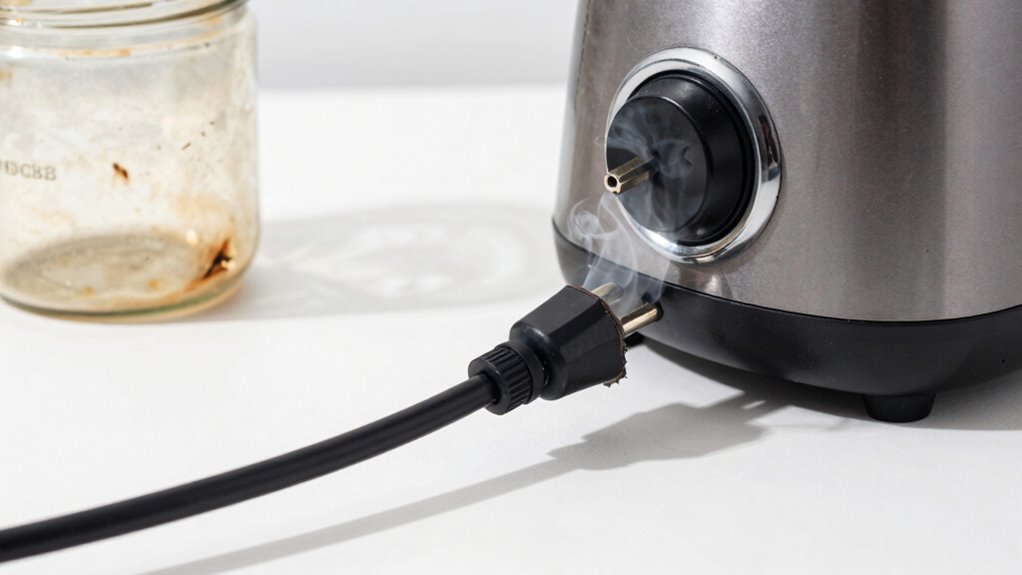
Detecting whether a burning smell indicates serious trouble involves paying close attention to how your blender behaves. If the odor is strong, persistent, or worsens with use, it’s a sign of safety concerns. A mild, fleeting smell might be normal during initial use or after cleaning, but a persistent or intense odor suggests something’s overheating or damaged. Listen for unusual sounds, such as grinding or squealing, and watch for smoke or sparks. These signs point to potential mechanical failure or electrical issues that could pose safety risks. The severity of the odor helps determine if you should immediately unplug the blender or seek professional repair. Electrical components can sometimes be the source of the problem, so understanding how they work can help you better assess the situation. It’s also important to consider modern safety features, which may prevent hazards or alert you to issues earlier. Recognizing signs of mechanical failure can help prevent further damage or safety hazards. Additionally, consulting wiring basics can help you understand if there’s an electrical fault contributing to the issue. Being familiar with home electrical safety can further aid in evaluating potential risks. Trust your instincts—if the smell seems abnormal or dangerous, it’s better to err on the side of caution.
Troubleshooting Common Causes of Burning Smells
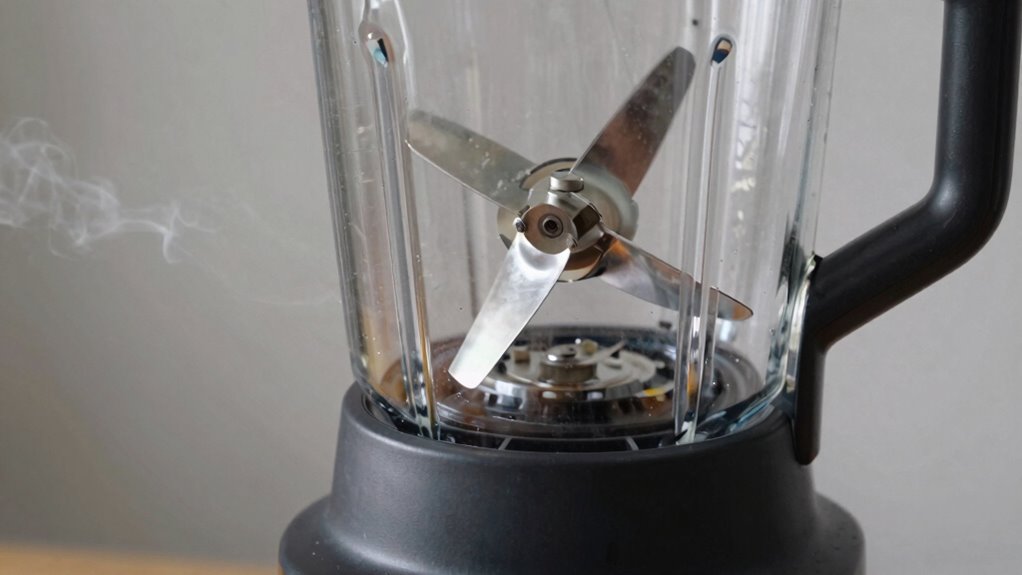
Burning smells in your blender often stem from common issues that can be quickly identified and addressed. First, check for overheating caused by overloading or blending tough ingredients. Second, inspect the motor for debris or buildup that might cause friction. Third, ensure the blades are clean and sharp; dull blades can strain the motor. Fourth, verify that the vents are clear—blocked vents can trap heat. Fifth, examine electrical connections for damage or loose wiring. Always follow safety precautions when troubleshooting, and incorporate regular cleaning routines to prevent buildup. Addressing these issues promptly can prevent further damage and keep your blender functioning properly. If the smell persists despite these steps, consider consulting a professional for repairs.
Tips to Prevent Burning Smells in Your Blender

To keep your blender running smoothly and avoid burning smells, regular maintenance is key. Start by cleaning your blender thoroughly after each use to prevent residue buildup, which can cause odors and strain the motor. Check and tighten blades as needed, since loose blades can generate friction and heat. Avoid overfilling the container; blending small batches allows the motor to work efficiently and reduces overheating risk. Use the correct speed settings for different ingredients, and don’t run the blender continuously for too long—give it breaks to cool down. Additionally, periodically inspect the motor base and seals for dirt or damage. Proper blender maintenance not only keeps odors at bay but also prolongs your appliance’s lifespan, ensuring it performs *ideal* without developing burning smells. Regularly monitoring motor health and understanding how the components work together can help prevent issues before they start. Being aware of appliance safety guidelines can further help you identify early signs of trouble and maintain your blender in top condition. Incorporating preventive maintenance and understanding airless paint sprayer principles can further reduce the likelihood of experiencing burning smells. Also, paying attention to motor overheating signs can help address problems before they become severe.
When to Repair or Replace Your Blender

Knowing when to repair or replace your blender can save you money and prevent further damage. If you notice persistent burning smells despite regular blender maintenance, it’s a sign that your appliance might be nearing the end of its lifespan. Consider replacing your blender if:
- It struggles to start or makes unusual noises
- It leaks or has visible damage
- The motor overheats frequently
- It emits a burning odor even after cleaning
- Repairs become more costly than a new unit
Prioritizing appliance safety is essential; continued use of a malfunctioning blender can be dangerous. If your blender shows these signs, replacing it ensures safe operation and reliable performance. Regular maintenance can extend its life, but recognizing when replacement is necessary avoids potential hazards. Additionally, understanding appliance maintenance dos and don’ts can help prevent issues before they arise. Staying informed about common appliance problems, including issues like overheating motors, can also help you troubleshoot and identify issues early, especially considering vetted wave and wind factors that may influence appliance performance and safety.
Myths About Burning Odors in Blenders Debunked

Many people believe that a burning smell always means your blender is damaged or broken. However, a slight odor doesn’t necessarily mean there’s a malfunction; it can be normal during certain uses. Let’s clear up these common misconceptions so you can use your blender confidently.
Myth: Burning Means Damage
A burning smell from your blender doesn’t automatically mean it’s damaged. Often, it’s just a temporary issue that doesn’t affect the device’s safety or function. Many people worry that this odor indicates a malfunction, but that’s not always true. Sometimes, the smell results from:
- Overheating of motor components during heavy use
- Residual manufacturing oils burning off
- Blending tough or frozen ingredients
- Overloading the jar with ingredients
- A brief, normal startup operation
These situations can create a burning odor without harming your blender. It’s essential to trust your safety concerns and assess whether the smell persists or worsens. Usually, this odor perception is normal, especially during initial use or after cleaning. If in doubt, consult the manufacturer or have a professional check it out. Additionally, understanding safety guidelines can help you determine when to seek professional assistance or replace your blender.
Myth: Odor Indicates Malfunction
Although a burning smell can be unsettling, it doesn’t necessarily mean your blender is malfunctioning. Sometimes, the odor perception is simply due to the initial heating of motor components or residual manufacturing oils, which can produce a temporary smell. While safety concerns are valid, it’s important to differentiate between normal odors and signs of serious issues. A brief, mild smell isn’t usually a cause for alarm, especially if the blender operates normally afterward. However, if the odor persists or intensifies, it could indicate overheating or internal damage. Don’t ignore safety concerns—discontinue use if you notice burning smells that don’t fade, and inspect your blender or consult a professional. Remember, not every odor signals a malfunction; often, it’s just part of the normal operation.
Frequently Asked Questions
Can a Burning Smell Indicate an Electrical Problem in the Blender?
Yes, a burning smell in your blender can indicate electrical issues, which pose safety risks. If you notice this smell, stop using the blender immediately to prevent potential fire hazards or damage. It might be caused by overheating or faulty wiring. To stay safe, unplug the appliance, inspect for visible damage, and consider having it checked by a professional or replacing it if necessary.
How Long Does a Typical Blender Smell Last During Normal Use?
When you blend, the initial odor duration is like a fleeting ghost—lasting just a few seconds to a minute. The smell intensity peaks quickly then dissipates, leaving behind a faint trace. If the smell lingers beyond a couple of minutes or grows stronger, it’s time to stop and investigate. Usually, a normal burning smell is brief, but don’t ignore persistent odors—they might signal a problem lurking beneath the surface.
Is It Safe to Continue Using a Blender With a Burning Odor?
No, it’s not safe to keep using your blender if it emits a burning odor. First, unplug it and check for any visible damage or obstructions. Follow troubleshooting steps like cleaning the blades and motor vents. Always prioritize safety precautions; if the smell persists or you notice smoke, stop using it immediately and consult a professional or contact the manufacturer. Continuing to use it could cause further damage or safety hazards.
What Specific Parts Inside the Blender Cause the Burning Smell?
The burning smell in your blender usually comes from the motor or cooling fan overheating. When you use your blender, the motor works hard, generating heat, and if it’s overworked or clogged, it can emit a burning odor. The cooling fan helps prevent this, but if it’s faulty or blocked, the smell worsens. Regularly clean your blender and avoid overloading it to keep these parts functioning properly and prevent burning smells.
Are There Models More Prone to Burning Smells Than Others?
You’ll find that cheaper models are more prone to burning smells, mainly due to lower-quality materials and less durable construction. Studies show that blenders with plastic gears or weaker motors tend to develop issues faster. Higher-end models usually use better materials like metal gears and robust motors, increasing their durability. So, if you want to avoid burning smells, invest in a reputable brand with solid build quality and durable parts.
Conclusion
A burning smell from your blender can be alarming, but not all odors signal disaster. By understanding what’s normal and acting quickly when needed, you can keep your appliance running smoothly. Think about it—would you ignore that strange smoke or smell coming from your car? The same applies here. Stay attentive, follow maintenance tips, and don’t hesitate to seek repairs if issues persist. Your blender’s longevity depends on your awareness—are you ready to keep it in top shape?