
A burning smell from your food processor’s motor is a serious warning sign that you should stop immediately to prevent damage or fire. If you notice a strong, persistent odor, smoke, or unusual noises, turn it off, unplug it, and inspect for overheating or debris. Mild odors during initial use are normal, but ongoing smells require troubleshooting. To guarantee safe operation and learn how to handle different signs, keep exploring the prevention and repair tips.
Key Takeaways
- Stop immediately if you notice a strong, burning smell or smoke from the motor to prevent damage or fire.
- Mild, fading odors during initial use are normal; continue operation if the smell dissipates quickly.
- Persistent or worsening smells after cleaning indicate a potential malfunction requiring professional inspection.
- Unusual noises, overheating, or difficulty in operation are signs to turn off your processor immediately.
- Regular maintenance and proper use help prevent odors; seek repair if odors persist despite cleaning.
Why Does My Food Processor Smell When I Use It? Normal and Abnormal Causes
If your food processor emits an unusual smell during operation, it’s natural to wonder whether it’s normal or a sign of a problem. Often, a burning odor indicates the motor is overheating, which can stem from poor motor maintenance or overuse. Regularly cleaning and inspecting the motor vents helps prevent buildup that could cause odors. Additionally, ensuring the processor isn’t overloaded allows the motor to run smoothly and reduces the chance of burning smells. Sometimes, new appliances emit a slight odor as coatings burn off, which is usually normal during initial use. However, persistent or strong burning smells signal a need to stop use immediately and check for issues. Proper odor prevention through maintenance keeps your food processor running efficiently and helps avoid motor problems. Understanding the contrast ratio of your appliance can also help ensure optimal performance and prevent overheating issues.
How Can I Recognize Normal Burning Smells During Initial Use?
When you first start using a new food processor, a faint burning smell can be normal as the appliance’s coatings and lubricants burn off. This initial use often produces a mild manufacturing smell that dissipates quickly. It’s common for new motors and internal components to emit a subtle odor during the first few minutes of operation. If the smell is light, fades within a short time, and doesn’t persist or worsen, it’s usually nothing to worry about. This is just the appliance settling in and burning off residual manufacturing residues. Additionally, Gold IRA Markets show that new appliances often emit such odors without indicating a defect. Being aware of initial appliance odors can help prevent unnecessary concern and ensure safe operation. Proper appliance break-in procedures can vary between models and manufacturers, so consulting the user manual is advisable. However, it’s important to monitor the smell closely because proper appliance break-in procedures can vary between models and manufacturers. If the smell remains strong, intensifies, or is accompanied by smoke or strange sounds, it’s a sign to stop using the processor and investigate further. Recognizing this normal burning smell helps ensure safe, proper use from the start, especially since motor components may need some time to fully settle during initial use.
What Are the Signs That My Food Processor’s Motor Is Overheating or Burning?
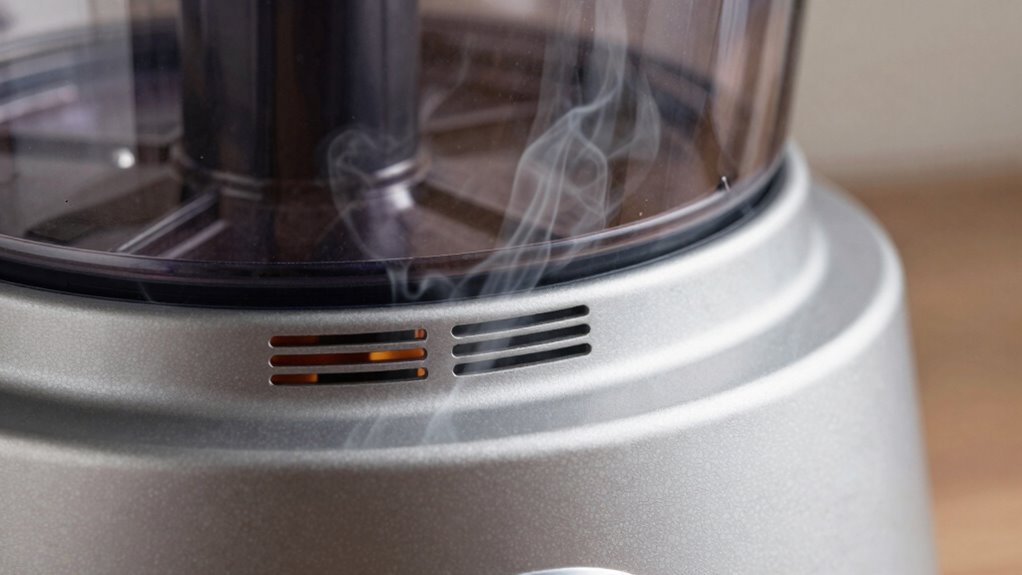
As your food processor continues to run, it’s important to stay alert for signs that the motor may be overheating or burning out. One clear warning is a strong, unusual odor detection, which indicates potential motor failure. If you notice a burning smell that intensifies, it’s a sign the motor is overheating. You might also see smoke or discoloration around the motor housing. Additionally, the processor may suddenly stop working or struggle to turn on, signaling motor failure. Unusual noises like grinding or squealing can also indicate overheating. Ignoring these signs can lead to permanent damage or a fire hazard. If you detect any of these symptoms, turn off your food processor immediately to prevent further damage.
When Should I Turn Off My Food Processor Immediately to Avoid Damage?
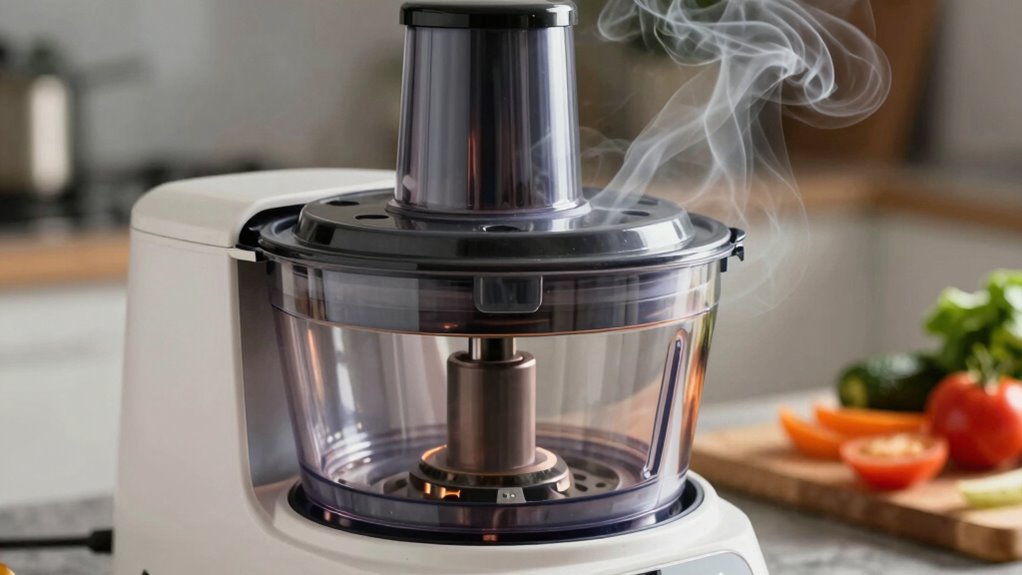
You should turn off your food processor immediately if you notice an unusual smell or signs of motor overheating. Ignoring these signals can cause serious damage to the motor and reduce its lifespan. Acting quickly helps prevent costly repairs and keeps your appliance running smoothly. Additionally, understanding motor safety practices can help you respond appropriately to potential issues and extend the life of your device. Recognizing early warning signs can make a significant difference in avoiding more extensive damage. Regularly inspecting the jewelry materials and ensuring proper maintenance can also help prevent motor issues caused by debris or buildup. Implementing proper maintenance routines can further safeguard your appliance from damage due to overheating or mechanical failure. Being aware of proper usage guidelines ensures that your food processor operates safely and efficiently over time.
Unusual Smell Detected
If your food processor emits a strange or burning smell during operation, it’s essential to shut it off immediately. Ignoring unusual odors can lead to motor damage. To prevent further issues, inspect your device for signs of overheating or burnt components. Regular motor maintenance can help reduce odors caused by dust or debris buildup. Also, ensure the blade or parts aren’t jammed, which can strain the motor. Keep the vents clear to promote proper airflow and odor prevention. If the smell persists after stopping, avoid restarting until you identify the cause. Addressing unusual odors early protects your appliance and prolongs its lifespan. Remember, prompt action saves you money and prevents potential hazards. Trust your instincts—when in doubt, turn it off.
Motor Overheating Signs
Motor overheating can happen suddenly, and recognizing the warning signs early is essential to prevent damage. If your food processor’s motor feels excessively hot, emits a burning odor, or makes unusual noises, turn it off immediately. Overheating can lead to motor failure and odor issues, so prompt action is vital. To aid in motor cooling and odor prevention, avoid continuous operation when the motor is hot. Use the table below to identify overheating signs and appropriate responses:
| Overheating Sign | Immediate Action | Prevention Tip |
|---|---|---|
| Burning smell | Turn off and unplug immediately | Allow cooling before reuse |
| Excessive heat on exterior | Let it cool down before using again | Use in short bursts |
| Unusual noises during use | Stop and inspect for damage | Regular maintenance |
| Motor stalls or slows down | Turn off and check for blockages | Avoid overloading |
Additionally, consulting proper maintenance can help extend the life of your appliance and prevent overheating issues. Proper motor design and usage habits play a key role in avoiding overheating problems. Being aware of overheating causes can also help prevent unexpected breakdowns.
How Do I Troubleshoot and Fix a Smelly Food Processor Safely?

When dealing with a smelly food processor, the key is to identify and eliminate the source of the odor safely. Start by unplugging the appliance and inspecting the blades, bowls, and gasket for trapped food residue. Clean all removable parts thoroughly with warm, soapy water, paying attention to crevices. Use a mixture of baking soda and water to deodorize stubborn smells. Always prioritize kitchen hygiene and proper appliance maintenance to prevent odors from lingering. To troubleshoot effectively:
- Remove and clean all detachable parts
- Use vinegar or baking soda solutions to neutralize odors
- Check for mold or moldy residues
- Ensure vents and filters are clean and unobstructed
- Wipe the motor housing with a damp cloth, avoiding water ingress
- Regularly clean and maintain your food processor to prevent future odors and ensure safe operation. Additionally, inspecting and cleaning internal components can help eliminate hidden sources of odor that may not be immediately visible. Incorporating routine deodorizing techniques can further keep your appliance smelling fresh and extend its lifespan.
Following these steps helps keep your food processor fresh and safe to use.
How Can I Prevent Motor Odors and Keep My Food Processor Running Smoothly?
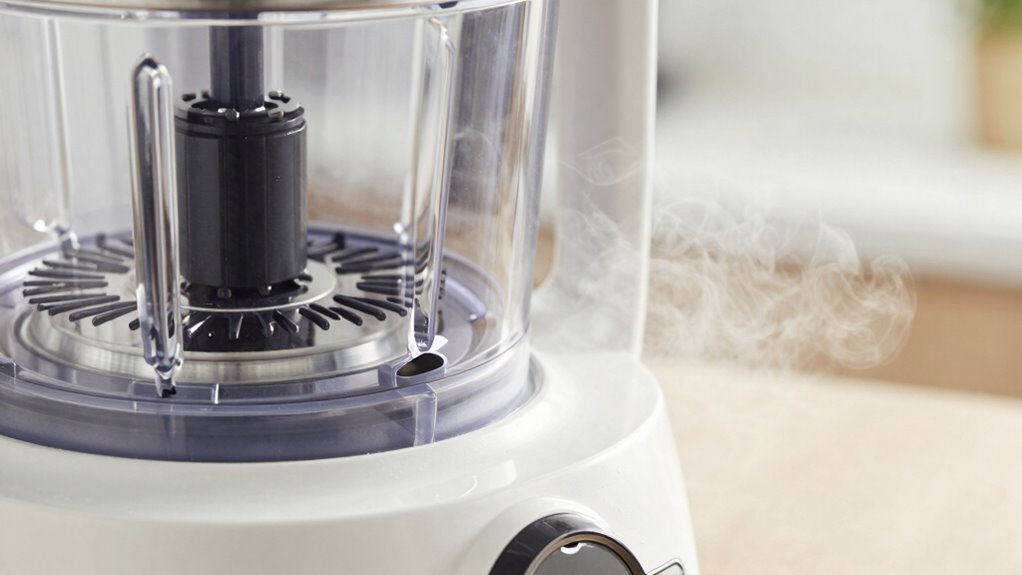
Regular maintenance is essential to prevent motor odors and guarantee your food processor runs smoothly. Consistently clean the motor housing and blades after each use to remove residue that can cause odor buildup. Use a damp cloth and mild detergent, avoiding excess moisture that could damage internal components. Periodically check and tighten any loose parts to ensure proper motor function. Practicing good motor maintenance also includes avoiding overloading the processor, which can strain the motor and produce odors. Additionally, run the processor with small amounts of food or dry ingredients to keep the motor cool and reduce odor formation. Staying aware of air quality, especially in enclosed spaces, can also help prevent odors from lingering. Proper ventilation during operation can further decrease the risk of unpleasant smells. Ensuring adequate airflow can help dissipate odors more effectively, enhancing your appliance’s longevity. By staying proactive with odor prevention and routine cleaning, you’ll extend your appliance’s lifespan and maintain ideal performance without unpleasant smells.
When Is It Time to Seek Professional Repairs or Replace Your Food Processor?
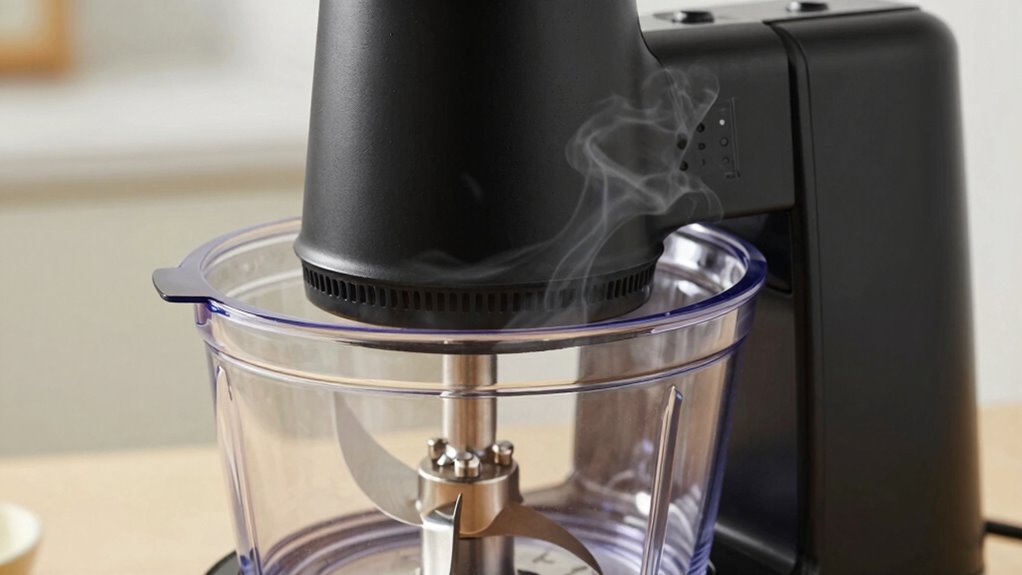
If you notice persistent odors despite proper cleaning and maintenance, it may be a sign that your food processor needs professional attention or replacement. Ignoring these warning signs can compromise kitchen safety and lead to further appliance damage. Consider seeking repairs if you experience unusual noises, consistent burning smells, or motor overheating. Also, if the appliance stops functioning altogether or if the smell worsens even after cleaning, it’s time for professional help. Regular appliance maintenance is vital, but some issues require expert diagnosis. Electrical components can sometimes be the cause of persistent odors and should be inspected by a professional.
Frequently Asked Questions
Can a Lingering Smell Indicate a Serious Motor Problem?
A lingering smell can indicate a serious motor problem, especially if it’s accompanied by motor overheating or electrical issues. If you notice the smell persists after use or worsens, stop the processor immediately to prevent damage. Ignoring these signs risks electrical faults or motor failure. Regularly check for burning odors, and don’t hesitate to seek professional repair if the smell continues, ensuring your appliance’s safety and longevity.
How Long Should I Run My Food Processor Before Smelling Any Odors?
You should run your food processor for about 30 seconds to a minute and then check for any odors. During this motor warm-up, if you notice a burnt smell or strong odor, stop immediately. Typically, a brief odor may last a few seconds to a minute, which is normal. However, if the odor persists beyond that, it could indicate a problem, and you should inspect the motor before using it further.
Are There Specific Foods That Cause More Motor Smells?
You’ll notice that dense, fibrous, or oily food types, like nuts, cheese, or fibrous vegetables, can trigger stronger motor odors. Studies show that these foods increase motor strain, leading to more smell. Odor triggers vary, but high-fat or tough ingredients cause the motor to work harder, producing more heat and smell. To avoid damage, stop immediately if odors become persistent or burn-like, especially with these challenging food types.
What Safety Precautions Should I Take When Troubleshooting Odors?
When troubleshooting odors from your food processor motor, prioritize electrical safety by unplugging the device first. Wear protective gear such as gloves and safety glasses to prevent injuries from moving parts or debris. Keep your work area dry and avoid touching hot or exposed components. If you notice sparks or a burning smell, stop immediately, and consult a professional. Always follow manufacturer instructions and never attempt repairs with the device powered on.
How Often Should I Clean My Food Processor to Prevent Odors?
You should clean your food processor after every use to prevent odors. Regular cleaning, including wiping down the blades, bowl, and lid, helps eliminate food residues that cause bad smells. For odor prevention, deep clean weekly with a mixture of baking soda and water or vinegar. Consistent cleaning frequency keeps your appliance fresh, safe, and ready for your next task, reducing the chances of lingering odors and ensuring ideal performance.
Conclusion
Think of your food processor like a trusted friend — occasional quirks, like a faint smell, are normal, but warning signs demand attention. Just as you’d listen carefully to a friend’s tone, pay close attention to odors and unusual noises. If you catch a burning smell early, it’s like noticing a small crack in a windshield before it spreads. Acting promptly keeps your appliance—and your kitchen—safe and humming smoothly.