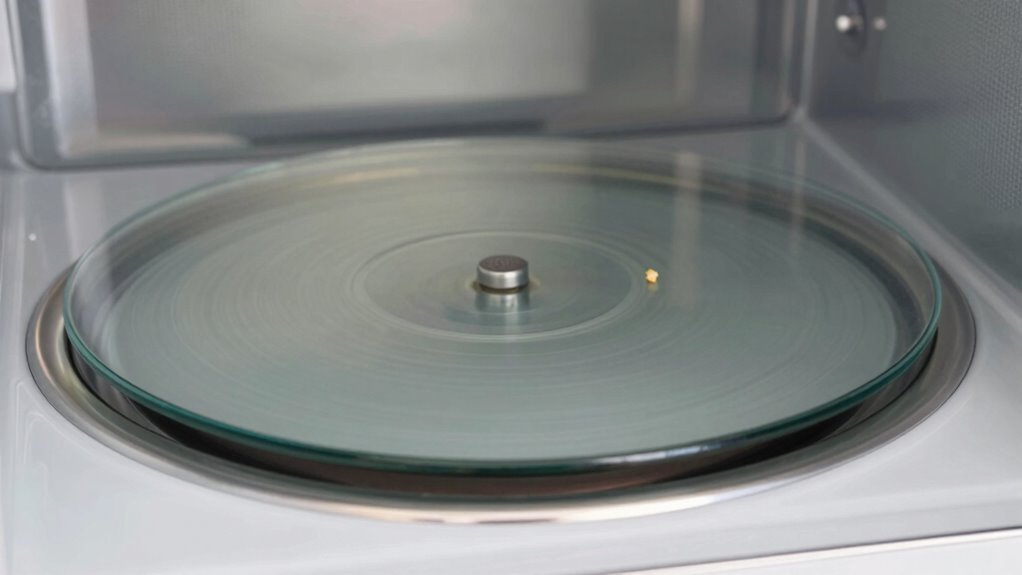

If your microwave turntable stops spinning, start with simple checks like ensuring it’s properly seated on the support and free of debris or obstructions. Inspect the roller ring and track for cracks, dirt, or misalignment, and verify the support is centered on the motor coupler. Also, confirm the motor fuse is intact and the electrical connections are secure. If these steps don’t solve it, exploring other potential issues can help you fix the problem more thoroughly.

Get kitchen staples and gadgets delivered free — and shop member deals
- Fast, free delivery on millions of items
- Access to Prime Big Deal Days deals on October 6–7
- Prime Video, Amazon Music and more included
Key Takeaways
- Check for debris, food spills, or obstructions blocking the turntable’s movement.
- Ensure the turntable is properly seated on the support and centered on the motor coupler.
- Inspect the roller ring and support for cracks, debris, or misalignment.
- Verify the turntable motor fuse and wiring are intact and functioning correctly.
- Confirm the microwave settings are correct and that the turntable switch is operational.
Why Isn’t My Microwave Turntable Spinning? Common Causes Explained
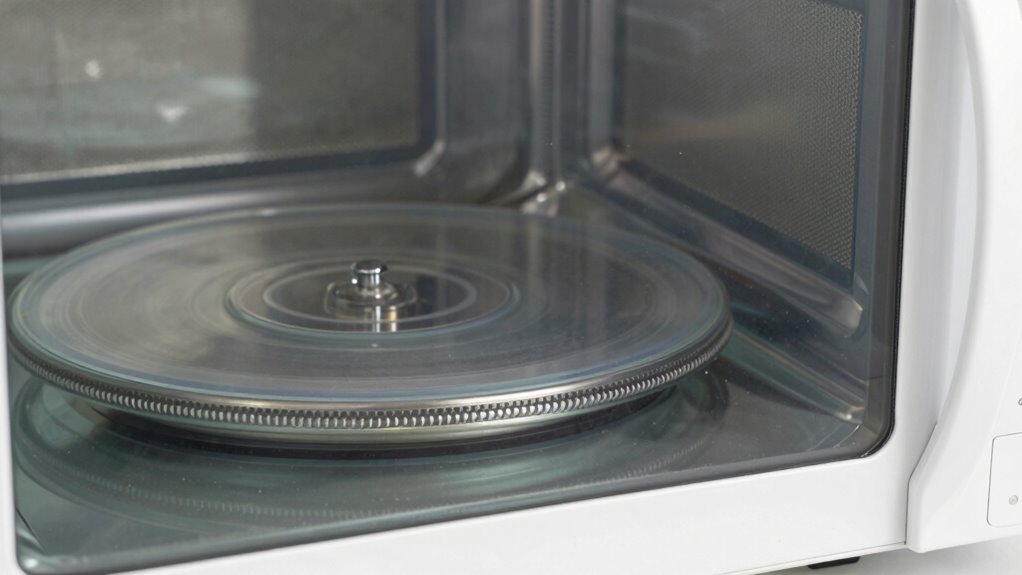
If your microwave turntable suddenly stops spinning, it can be frustrating and confusing. One common cause is excessive microwave noise, which might indicate a motor or gear issue. Sometimes, the turntable size isn’t compatible with your microwave’s interior, causing it to jam or not turn smoothly. You should also check if the turntable is sitting correctly on its support and isn’t obstructed by food or debris. Overloading the microwave with large or unevenly distributed items can also hinder rotation. Additionally, a worn-out motor or damaged drive coupling can prevent the turntable from moving. These issues often stem from normal wear and tear or improper loading, so inspecting these elements can quickly identify the problem before seeking further repairs. Understanding the contrast ratio of your microwave’s lighting environment can also impact how well you see the turntable’s movement. Moreover, familiarizing yourself with the basic components of a microwave can help in troubleshooting more effectively. Recognizing the signs of motor failure early can save you time and prevent further damage, especially since motor issues are a common cause of spinning problems in microwaves. Regularly checking the drive mechanism can help maintain smooth operation and extend the lifespan of your appliance.
How Do I Check and Fix the Turntable’s Power Connection?
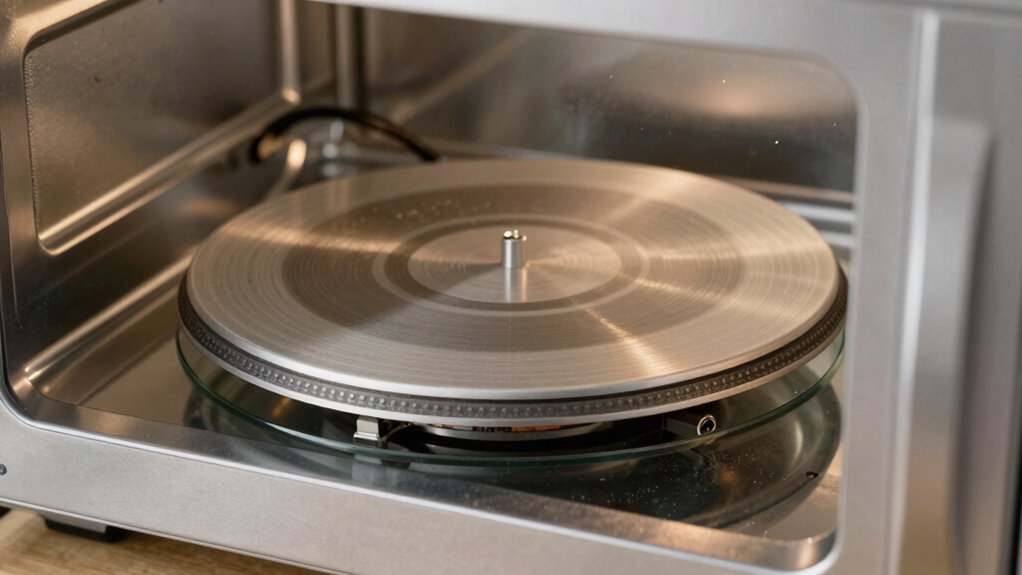
Start by inspecting the power cord to make certain it’s securely plugged into the microwave and the outlet. Next, test the outlet with another device to confirm it’s providing power. If the outlet works, but the turntable still won’t spin, check the cord for damage or loose connections.
Inspect Power Cord Connection
To verify your microwave turntable has power, begin by inspecting the connection of its power cord. Ensure the cord is securely plugged into the outlet and the microwave’s socket. Look for any visible damage, like frayed wires or bent prongs, which can disrupt the connection check. Free Floating Confirm all connections are tight and intact. If the cord appears damaged, replace it before testing further. This step is vital for guaranteeing proper power flow to your microwave.
Test Electrical Outlet Function
Before testing your microwave’s outlet, make sure it’s providing power by plugging in another device, like a lamp or phone charger. If it doesn’t turn on, the issue might be with the electrical outlet or power supply. To check the outlet:
- Unplug your microwave and plug in a different appliance to see if it works.
- Inspect the outlet for visible damage or loose connections.
- Test the outlet with a multimeter to confirm it’s delivering the correct voltage.
If the outlet isn’t functioning properly, reset the circuit breaker or replace the faulty outlet. Ensuring your electrical outlet provides consistent power is vital for your microwave’s turntable to operate smoothly.
How to Clean and Inspect the Turntable Track and Roller Ring
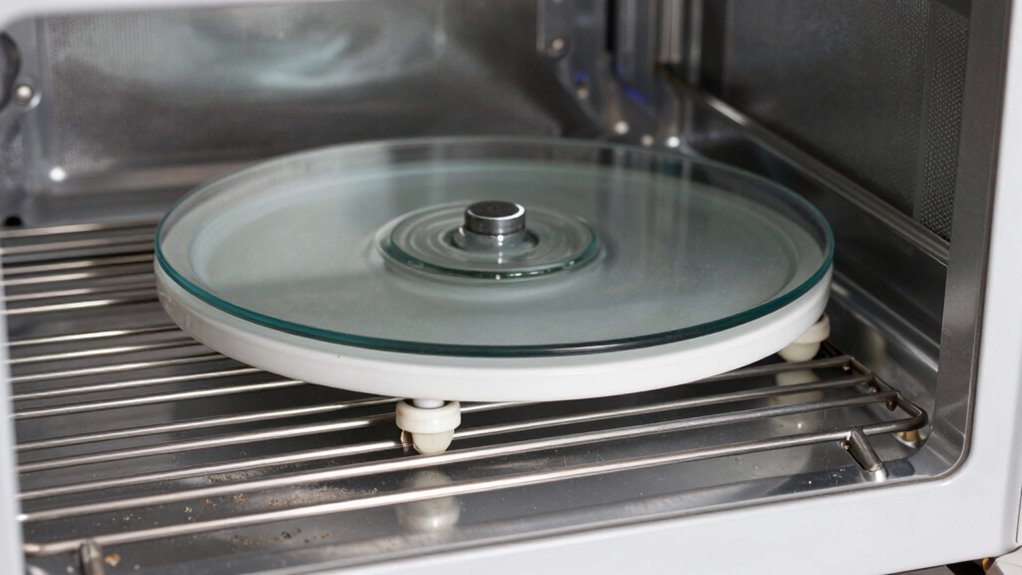
If your microwave turntable stops spinning, debris or dirt might be causing the track and roller ring to stick. Begin by carefully removing the turntable and roller ring. Clean both with a damp cloth and mild detergent to remove dust, grease, and food particles. Check the track for any buildup that could hinder movement. Use a soft brush or cloth to remove debris, ensuring the track remains clear and smooth. Inspect the roller ring for cracks or flat spots. While cleaning, consider applying a small amount of turntable lubrication, like a food-safe silicone spray, if the movement feels stiff. Also, verify the track alignment to ensure the roller ring sits evenly on the track, allowing smooth rotation. Proper cleaning and inspection can restore your turntable’s function. Regular maintenance can help prevent issues caused by mechanical wear that naturally occurs over time, ensuring optimal performance of your appliance. Incorporating connected fitness technology into home appliances can enhance their longevity and performance. Additionally, checking the motor and drive belt can help identify common causes of spinning issues.
What Are the Signs of a Worn Drive Belt or Damaged Gear?
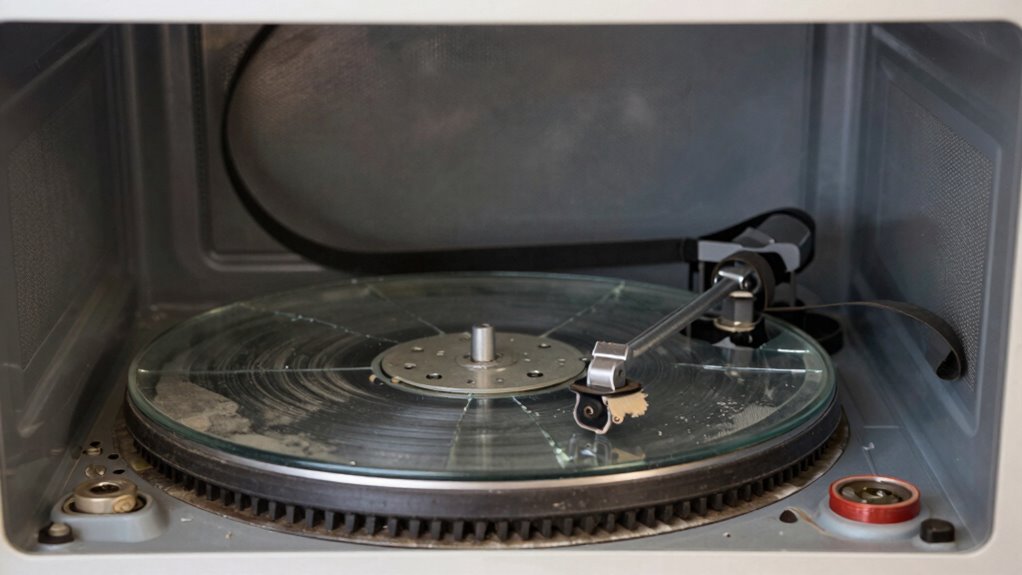
When your microwave turntable stops spinning despite being clean and free of debris, the issue might lie with the drive belt or the gears. Signs of a worn drive belt include slipping or a loose feel when you try to turn the plate manually. Gear damage often shows itself as unusual noises, such as grinding or clicking, during operation. Here are key indicators:
If your microwave turntable stops spinning, check for a worn drive belt or damaged gears.
- Visible cracks or fraying on the drive belt.
- The turntable suddenly stopping or not moving at all.
- Noisy operation, like grinding sounds, indicating gear damage.
If you notice any of these signs, it’s likely time to replace the drive belt or inspect the gears for damage. Addressing these issues can restore smooth spinning and prevent further damage.
How to Test the Turntable Motor Fuse and Thermal Cutout
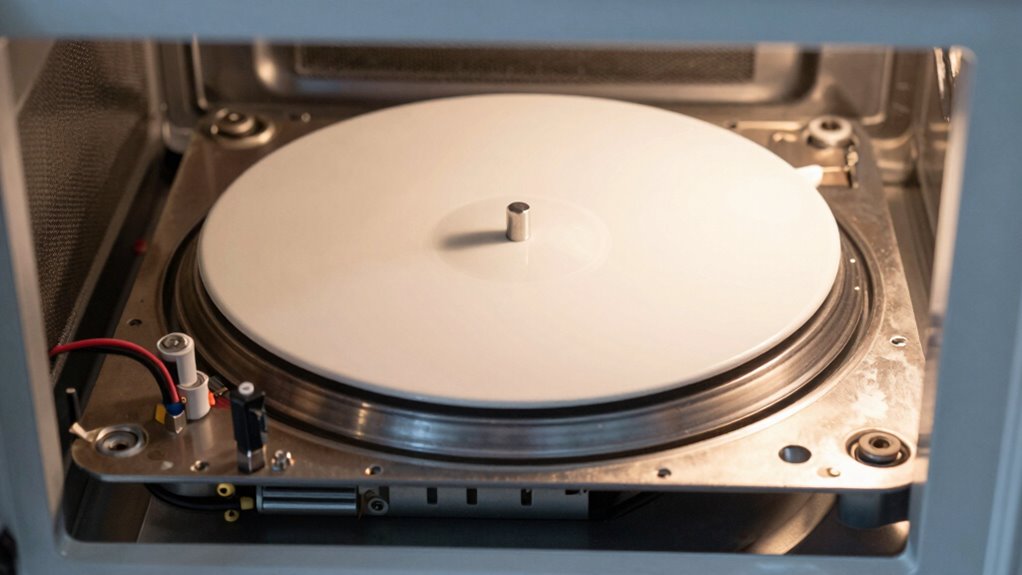
To determine if the turntable motor fuse or thermal cutout is causing the spin issue, you need to test these components for continuity. Use a multimeter set to ohms to check if they’re functioning properly. If either component shows no continuity, it’s likely faulty and needs replacing. Remember, testing these parts is essential for microwave safety and to avoid voiding appliance warranties.
| Component | How to Test |
|---|---|
| Turntable motor fuse | Disconnect power, remove fuse, test for continuity |
| Thermal cutout | Locate, disconnect, and test for continuity |
| Multimeter | Set to ohms, ensure proper calibration |
| Visual inspection | Look for obvious damage or burns |
| Safety precautions | Unplug microwave before testing |
Are My Microwave Settings Correct for the Turntable to Work?
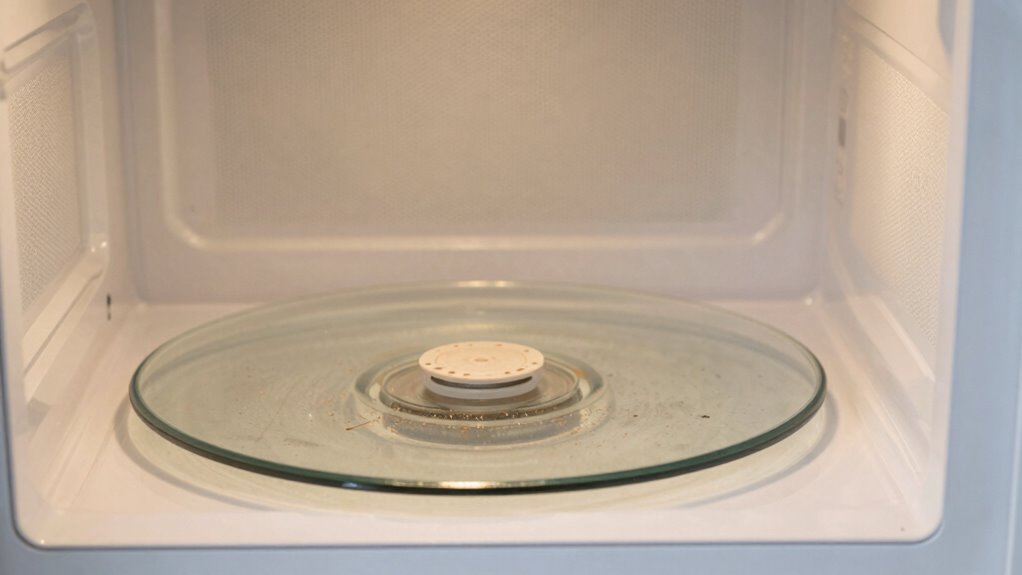
Sometimes, even after confirming that the turntable motor fuse and thermal cutout are functioning properly, the turntable still won’t spin. Your microwave settings could be the culprit. Incorrect settings may prevent the turntable from operating properly, affecting microwave safety and appliance longevity. To check:
- Ensure the microwave is not set to “defrost” or “sensor cook,” which sometimes disable the turntable.
- Verify the “turntable on” option is enabled in the control panel.
- Confirm that any child lock feature isn’t activated, as it may disable turntable movement.
Adjusting these settings is simple and helps ensure your microwave runs smoothly. Proper setup not only keeps your appliance working efficiently but also prolongs its lifespan, avoiding unnecessary repairs.
When Should I Replace the Turntable Motor or Roller Ring?
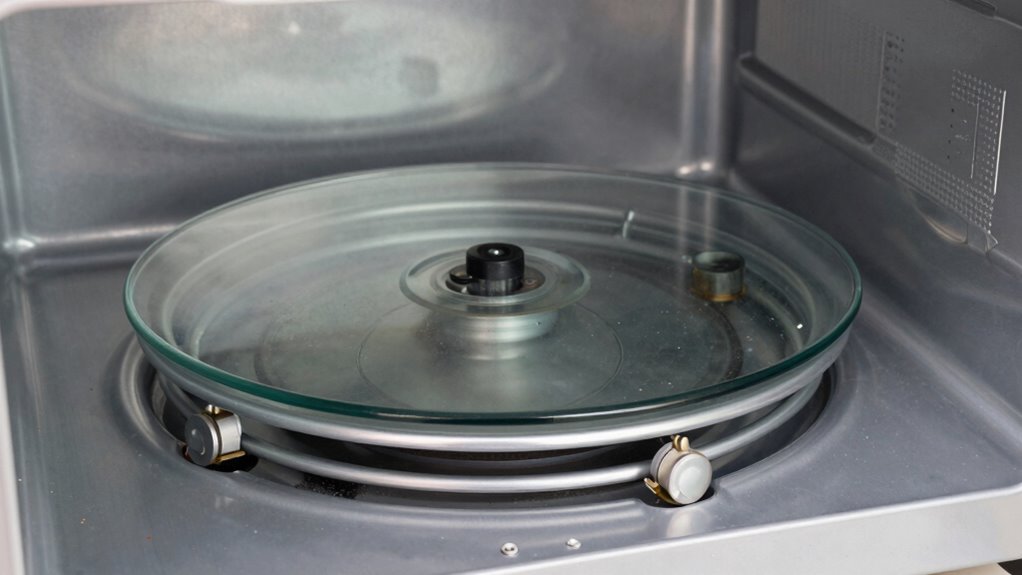
If your microwave’s turntable stops spinning despite correct settings, it’s likely time to contemplate replacing the motor or roller ring. Over time, these components wear out, impacting microwave safety and reducing the appliance’s lifespan. If the motor sounds strained or no longer turns smoothly, it’s a sign the motor may need replacement. Similarly, a damaged or cracked roller ring can prevent proper rotation. Regular inspection can help you catch issues early, ensuring safe operation. Continuing to use a malfunctioning turntable risks uneven cooking and potential electrical hazards. Vetted components like the motor and roller ring are crucial for safe and optimal microwave performance. Replacing the motor or roller ring extends your microwave’s lifespan and maintains safe, efficient performance. If you notice persistent problems despite troubleshooting, replacing these parts is the practical step forward. Maintaining your microwave’s components is essential for safe operation and reliable cooking results. Additionally, inspecting the wear and tear of these parts periodically can prevent unexpected breakdowns, especially since component degradation can affect the overall functionality of your microwave. Recognizing the importance of authenticity in replacement parts can also ensure better durability and safety.
Troubleshooting Mechanical and Electrical Issues Beyond the Motor
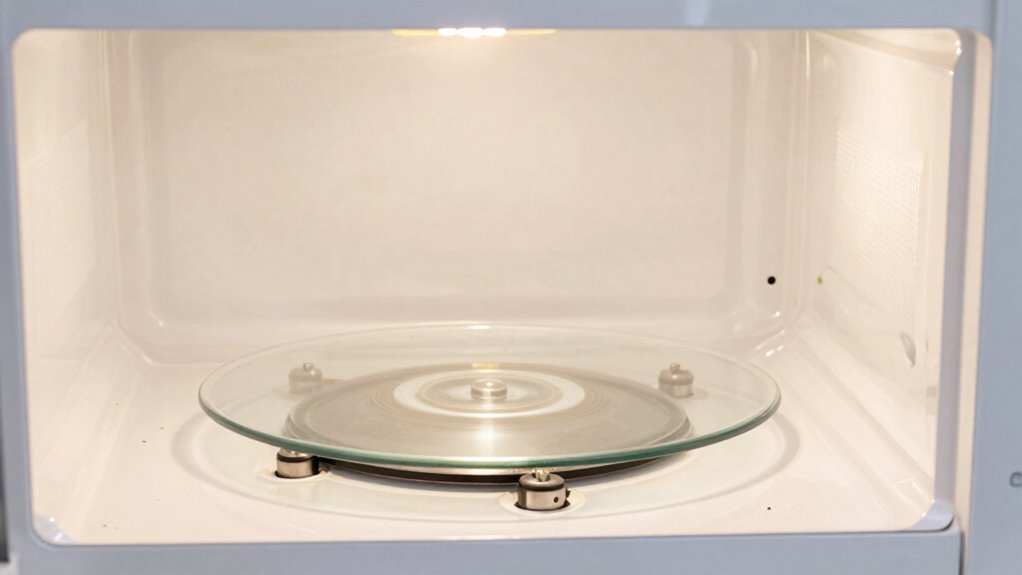
When your microwave’s turntable refuses to spin despite a functioning motor, the issue might lie elsewhere in the mechanical or electrical system. First, check the turntable support and roller ring for debris or misalignment, as blockages can hinder movement. Second, inspect the turntable coupling and drive gear for damage or wear, which can prevent proper rotation. Third, verify the door switch connections, since a malfunction here can interrupt power to the turntable motor, impacting microwave safety and possibly voiding appliance warranties. Addressing these issues promptly helps ensure safe operation and maintains your warranty coverage. Additionally, inspecting the electrical connections and wiring for corrosion or loose contacts can prevent intermittent failures. Recognizing common electrical problems can help you troubleshoot more effectively and avoid unnecessary repairs. Regularly checking microwave components can extend the lifespan of your appliance and help prevent future issues. Understanding the mechanical parts involved can aid in accurate diagnosis and repair. Moreover, being familiar with auditory cues can assist in diagnosing operational problems early. If you’re unsure or uncomfortable, consult a professional technician to prevent further damage or safety hazards. Proper troubleshooting saves money and keeps your microwave functioning reliably.
How to Confirm Your Turntable Spins Properly After Troubleshooting
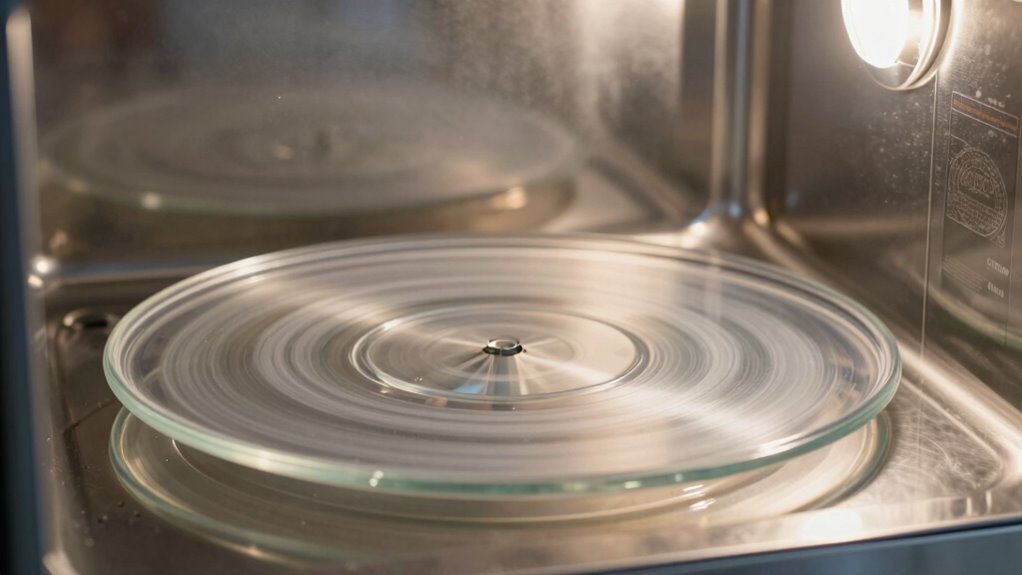
After troubleshooting, you need to verify that your turntable spins correctly. Start by checking the alignment and making sure it’s seated properly, then test if the motor runs smoothly. Finally, inspect for any obstructions that could be blocking the turntable’s movement. Ensuring proper vocal performance can also help you identify any mechanical issues more effectively.
Check Turntable Alignment
To guarantee your microwave turntable is properly aligned, start by removing the turntable and its support at the center. Proper placement is essential for smooth spinning. Check the following:
- Ensure the turntable sits evenly on the support, with no overhang or gaps.
- Confirm the support is centered correctly on the motor coupler.
- Look for any obstructions or debris that could hinder rotation.
- Regularly inspect the small appliances components for wear or damage that might affect operation. Additionally, verify that the turntable drive motor is functioning properly, as a faulty motor can also cause rotation issues.
If the turntable isn’t correctly aligned, it can cause uneven rotation or stop spinning altogether. Take your time to adjust the turntable and support until they fit snugly and are properly centered. Proper placement ensures smooth motor function and helps prevent future issues with the turntable stopping.
Test Motor Functionality
Before testing the motor, verify the turntable is correctly aligned and securely in place. Proper positioning guarantees accurate motor testing and prevents false negatives. To assess the motor’s functionality, unplug the microwave and access the turntable motor by removing the bottom panel. Manually spin the turntable to see if it moves freely; if it doesn’t, the motor or its connection might be faulty. Conduct circuit diagnostics by using a multimeter to check for continuity in the motor’s wiring and control board. If the motor shows no continuity, it’s likely defective and needs replacing. If the circuit diagnostics reveal a problem, repair or replace the faulty component. Confirming motor functionality through these steps helps determine whether the motor or the circuit causes the issue.
Inspect for Obstructions
Even if your turntable motor is functioning properly, obstructions can prevent it from spinning smoothly. To guarantee safe appliance maintenance and maintain kitchen safety, inspect the area around the turntable. Check for these common obstructions:
- Food debris or spills that might block the turntable’s movement
- Items placed on the turntable that aren’t microwave-safe
- Damaged or misaligned support rollers or ring
Remove any debris or objects that could hinder the turntable’s rotation. Make sure the support ring is seated correctly and spins freely. Regular inspection helps prevent further issues and keeps your microwave safe to use. Always prioritize safety by unplugging the appliance before inspecting or cleaning. Clear obstructions for maximum performance and appliance longevity.
When to Call a Professional for Microwave Turntable Repairs
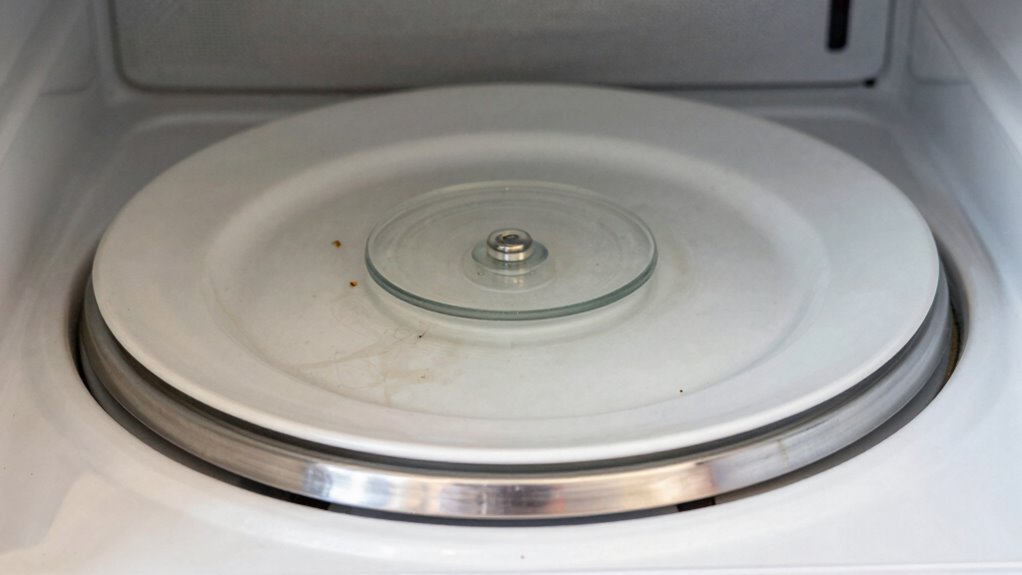
If your microwave’s turntable suddenly stops spinning and troubleshooting hasn’t resolved the issue, it’s time to call a professional. Ignoring the problem can compromise cooking tips and kitchen safety. A technician can diagnose issues like motor failure or damaged gears safely and efficiently.
Imagine your microwave as a well-oiled machine:
| Part | Function | Warning Signs |
|---|---|---|
| Turntable motor | Powers the spinning plate | No rotation despite power |
| Gear assembly | Transfers motor movement | Grinding noises or jams |
| Support roller | Keeps turntable stable | Plate wobbles or stops abruptly |
| Electrical connections | Supply power to motor | Sparks or burning smell |
| Control board | Manages operation commands | Unresponsive turntable |
When in doubt, prioritize safety and seek professional help to keep your cooking tips safe and effective.
Frequently Asked Questions
Can a Malfunctioning Turntable Affect Microwave Cooking Performance?
A malfunctioning turntable can impact microwave cooking performance by causing uneven heating, which affects microwave safety and food quality. When the turntable mechanics aren’t working properly, hot spots may develop, risking burns or undercooked food. Ensuring the turntable spins smoothly helps distribute microwave energy evenly, promoting safe and efficient cooking. Regularly check the turntable’s alignment and motor to prevent these issues and maintain peak microwave performance.
How Long Does a Typical Microwave Turntable Motor Last?
Your microwave turntable motor’s lifespan typically spans 5 to 10 years, acting like a steady heartbeat for your appliance. With proper care, its motor durability guarantees smooth spinning, but over time, wear and tear can slow it down or cause failure. If your turntable stops, it might be reaching the end of its lifespan, so checking or replacing the motor can keep your microwave functioning like new.
Are There Safety Risks When Inspecting or Repairing the Turntable?
When inspecting or repairing your microwave turntable, there are safety precautions you should follow to minimize repair risks. Always unplug the microwave before starting, avoid touching electrical components, and use insulated tools. If you’re unsure or uncomfortable, it’s best to consult a professional. Mishandling parts or neglecting safety precautions could lead to electrical shock or damage, so taking these steps helps guarantee your safety during repairs.
What Tools Are Needed to Fix a Stuck or Non-Spinning Turntable?
Think of fixing your microwave’s turntable as tuning a delicate instrument. You’ll need basic tools like a screwdriver and pliers to access the motor, along with turntable lubrication to ease movement. If the motor is faulty, motor replacement tools—such as a multimeter and possibly a soldering iron—are essential. These tools help you diagnose, lubricate, or replace parts, restoring your turntable’s graceful spin with minimal fuss.
Is It Worth Replacing the Turntable Components Myself or Hiring a Technician?
Deciding whether to do a DIY repair or hire a professional depends on your comfort level and the repair’s complexity. If you’re handy and have the right tools, replacing turntable components yourself can save money. However, for safety and accuracy, professional service might be worth it, especially if it involves electrical work. Consider your skills and the cost difference before making the choice—sometimes, a pro guarantees a reliable fix.
Conclusion
Think of your microwave turntable like a dance partner—it needs the right moves and clear steps to spin smoothly. When it stalls, it’s often just a small misstep, like a slipped roller ring or worn belt. With a little patience and quick checks, you can get it twirling again. Remember, sometimes it’s best to call in a pro—after all, even the best dancers need a coach to keep the rhythm going.
NFL season / tailgating Picks
team gear
As an affiliate, we earn on qualifying purchases.