Normal steam leaks happen during initial heating or pressure buildup, with small vapor escapes and slight hissing sounds, signaling your cooker functions properly. Problematic leaks are continuous, loud, or coming from unintended areas, indicating issues like a worn gasket or misalignment. Persistent leaks pose safety risks, increasing pressure and potential accidents. To keep your cooker safe, learn how to spot the signs and troubleshoot effectively—more helpful tips follow.
Key Takeaways
- Normal steam leaks occur during initial heating or pressure buildup, often with slight hissing and small vapor releases.
- Excessive, continuous, or loud steam escaping from the lid or gasket signals a potential problem.
- Properly functioning pressure release valves and sealed gaskets prevent dangerous leaks and ensure safety.
- Persistent leaks after reaching pressure indicate gasket misalignment, damage, or overfilling issues.
- Regular inspection and maintenance help distinguish normal operation from safety hazards caused by leaks.
How to Recognize Normal vs. Problematic Pressure Cooker Steam Leaks
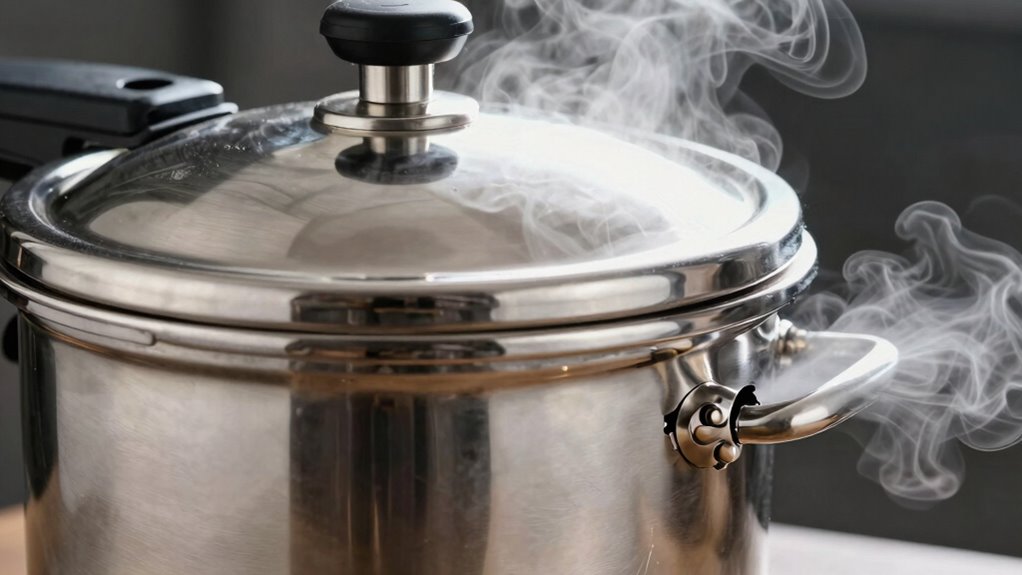
Understanding the difference between normal and problematic steam leaks is essential for safe pressure cooker use. During normal operation, a small amount of steam escapes through the pressure release valve or vent, relieving steam buildup safely. This indicates that the cooker is functioning properly, maintaining the right pressure levels. However, if you notice excessive or continuous steam leaks from other areas, it could signal a problem. Normal steam leaks are brief and controlled, while problematic leaks may be persistent, loud, or accompanied by hissing sounds. Always check that the pressure release valve is functioning correctly and that steam escapes only through designated outlets. Recognizing these signs helps you ensure your pressure cooker operates safely and efficiently, preventing potential hazards. Additionally, understanding pressure ratios and their impact on steam flow can aid in diagnosing issues early. Being aware of pressure buildup patterns can also help you identify early warning signs of malfunction before they become hazardous.
What Causes Excessive or Persistent Pressure Cooker Leaks?
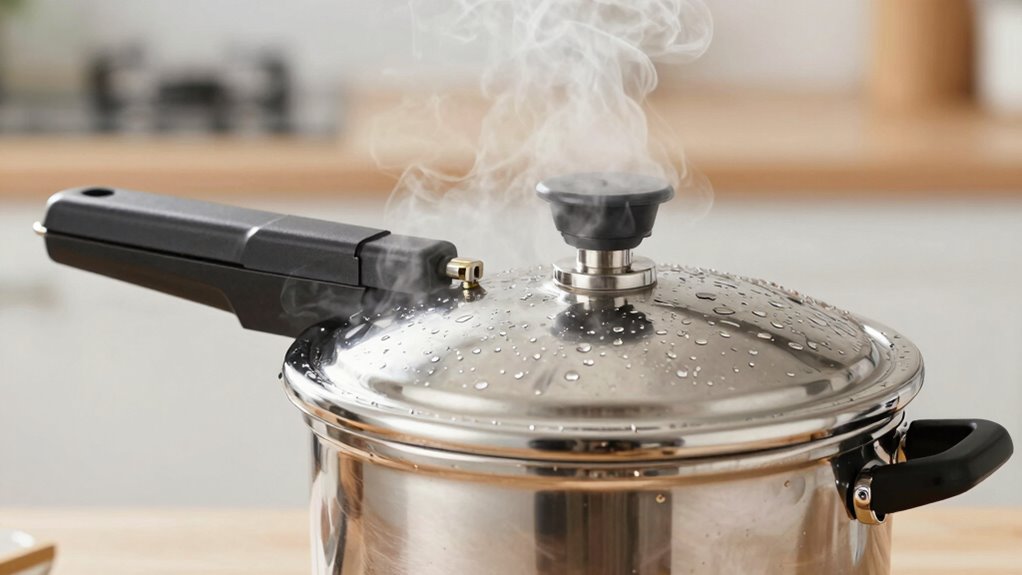
Leaks often happen when the gasket or sealing isn’t fitted properly, allowing steam to escape. Overfilling the cooker or choosing the wrong settings can also increase pressure, causing leaks to persist. Addressing these issues makes certain your pressure cooker operates safely and efficiently. Regularly inspecting and maintaining the sealing components helps prevent leaks and ensures optimal performance. Additionally, understanding free floating mechanisms can help identify if a leak is normal or requires attention. Proper pressure control is essential to prevent excessive or persistent leaks, and knowing how to adjust it can improve safety and cooking results. Being aware of pressure release valves can also help in managing pressure buildup and preventing leaks. Incorporating sound science principles, such as monitoring vibrations and frequencies, can further aid in diagnosing underlying issues with pressure systems.
Improper Sealing or Gasket
A common cause of excessive or persistent steam leaks in a pressure cooker is an improper seal or a damaged gasket. If your gasket isn’t seated correctly, or if it’s worn out, steam escapes, compromising safety and cooking efficiency. Regular gasket inspection is essential; look for cracks, tears, or deformation. When needed, perform gasket replacement using proper sealing techniques to ensure a secure fit. Proper sealing involves cleaning the gasket and cooker rim before assembly and ensuring the gasket sits evenly without twists. Consider this table for troubleshooting gasket issues:
| Issue | Solution | Tip |
|---|---|---|
| Cracked or torn gasket | Gasket replacement | Use compatible replacement parts |
| Improperly seated gasket | Re-seat gasket carefully | Check for debris or misalignment |
| Deformation or wear | Replace gasket | Prevent leaks and maintain safety |
Maintaining a tight seal prevents leaks and guarantees ideal pressure. Additionally, proper gasket maintenance is key to avoiding persistent leaks and ensuring the longevity of your pressure cooker.
Overfilled or Incorrect Settings
Overfilling your pressure cooker can lead to excessive steam buildup and persistent leaks, as the excess contents restrict proper pressure regulation. When you add too many ingredients or ignore the maximum fill line, it hampers the cooker’s ability to vent steam correctly. This often results in steam escaping through the lid or seams, indicating that the cooker isn’t functioning at its best. Using the wrong settings or cooking recipes that require high pressure without adjustment can also cause leaks. To prevent this, always follow your pressure cooker’s instructions and avoid overloading. Additionally, maintaining a clean and organized kitchen decoration helps you easily read markings and guarantee safe operation. Properly calibrated settings and mindful filling ensure your pressure cooker operates smoothly, reducing leaks and enhancing your cooking experience.
Signs That Your Pressure Cooker Leak Is a Safety Hazard

If you notice your pressure cooker releasing excessive steam or making unusual noises, it’s a sign something’s wrong. Persistent leaks or steam escaping from areas other than the vent can also indicate a safety issue. Pay attention to these signs to prevent potential hazards before they become serious. Additionally, ensuring your cooker’s affiliate relationships are transparent and properly disclosed can help you make informed choices about the safety and quality of your kitchen tools. Regularly checking that your pressure cooker’s safety mechanisms are functioning correctly can further reduce risks and ensure safe operation. Understanding pressure release techniques can also help you identify if the cooker’s safety features are working as intended, especially since proper fire control is essential during high-heat cooking.
Excessive Steam Escaping
Excessive steam escaping from your pressure cooker is a clear sign that something isn’t right and could pose a safety risk. If you notice a large amount of steam leaking constantly, it indicates the pressure release mechanism isn’t functioning properly. This excessive steam buildup suggests your cooker isn’t maintaining the correct internal pressure, which can lead to dangerous situations. A faulty pressure release valve or damaged gasket may be causing this problem. You should stop using the cooker immediately and inspect the seals and valves. Continuing to operate with significant steam escaping increases the risk of pressure over-accumulation or accidental release. Always address these signs promptly to ensure safe cooking and prevent potential accidents. According to safety guidelines, pressure monitoring is essential for preventing hazards during use. Regularly checking the pressure release valve can help identify issues before they become serious.
Unusual Pressure Noises
Unusual pressure noises emanating from your pressure cooker are a strong indicator that something isn’t functioning properly and could be a safety hazard. If you notice a sudden pressure release or hear steam whistling louder than usual, it signals that the cooker might be over-pressurized or its safety mechanisms are compromised. These sounds often mean the pressure release valve isn’t working correctly, or steam is escaping in unpredictable ways. Ignoring these noises can lead to dangerous situations, such as sudden bursts or steam burns. Always stop using the cooker immediately if you hear abnormal pressure noises, and inspect the valve and seal for blockages or damage. Proper maintenance and understanding of your pressure cooker’s safety features are essential for safe operation and preventing potential accidents. Regularly checking the pressure release valve can help prevent dangerous leaks and ensure the cooker functions properly. Addressing these issues promptly helps ensure safe operation and prevents potential accidents, especially considering that pressure regulation is critical for safe cooking.
Persistent Leaking Signs
Persistent leaking from your pressure cooker is a clear warning sign that something’s wrong and could pose a safety risk. If steam continues to escape after the pressure has built up, it indicates an issue with the pressure release mechanism or lid alignment. Proper lid placement is vital; if it’s not aligned correctly, steam can leak continuously, increasing the risk of burns or accidents. Check that the lid is securely locked and that the pressure release valve is functioning properly. If you notice ongoing leaks despite these adjustments, stop using the cooker immediately. Persistent leaks suggest a malfunction that can compromise safety, so it’s essential to address the problem before proceeding. Ignoring these signs can lead to dangerous pressure buildup or sudden releases. Additionally, pressure regulation is crucial for safe operation and should always be checked during troubleshooting. Regular maintenance and inspection of the pressure release system can help prevent leaks and ensure safe operation. Being familiar with pressure cooker safety features can also help you identify issues early and avoid accidents. Understanding pressure buildup dynamics can further assist in diagnosing potential problems before they become hazardous.
How to Check If Your Pressure Cooker Is Safe to Use
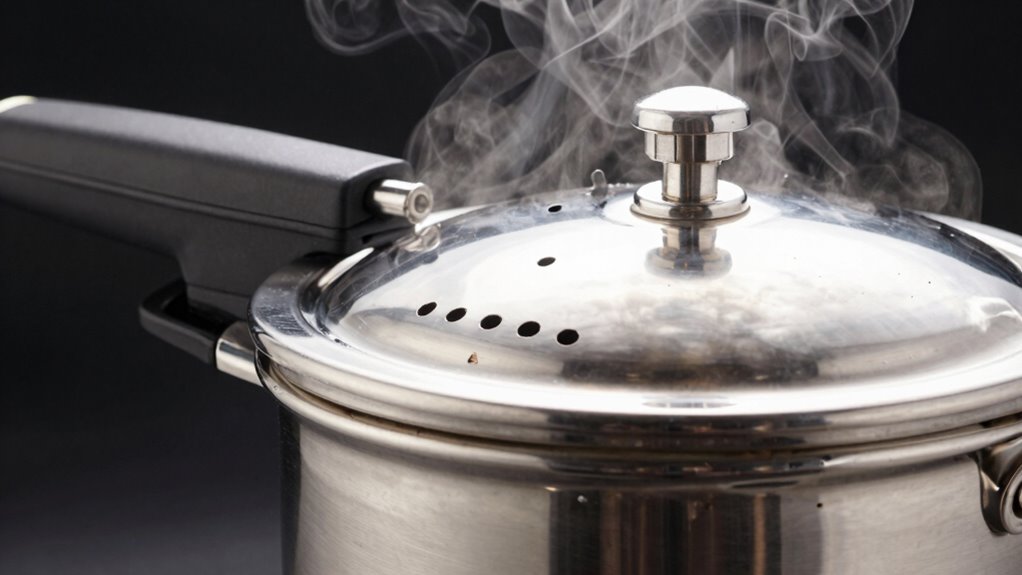
Before using your pressure cooker, it’s important to check that it’s safe and functioning properly. Start by inspecting the pressure cooker accessories, including the gasket and steam release valves. Ensure they’re clean, intact, and free of damage. Next, test the steam release valves by gently pressing or turning them to confirm they move smoothly and aren’t stuck. Finally, verify that the lid locks securely and that the pressure indicator rises as expected during operation. Here are three key steps: 1. Check pressure cooker accessories for damage or debris. 2. Test steam release valves for smooth operation. 3. Confirm the lid locks properly and pressure indicator functions. Performing these checks helps prevent leaks and ensures safe cooking every time. Additionally, reviewing the necessary cookies settings can help ensure your device’s security during operation.
Troubleshooting Tips for Fixing Pressure Cooker Leaks

When your pressure cooker starts leaking steam or liquid, it’s essential to verify the cause quickly to guarantee safe and effective cooking. Begin with safety checks, inspecting the lid and sealing area for any visible damage or misalignment. A worn or damaged gasket is a common cause of leaks; if it looks cracked, brittle, or deformed, gasket replacement is necessary. Ensure the gasket sits properly in its groove and that the lid is securely closed. Clean any debris or residue from the sealing surfaces to improve a tight seal. If leaks persist after these checks, consider replacing the gasket and reassembling the lid carefully. Regular maintenance and safety checks help prevent leaks and ensure your pressure cooker functions safely.
When to Seek Professional Repair or Replacement
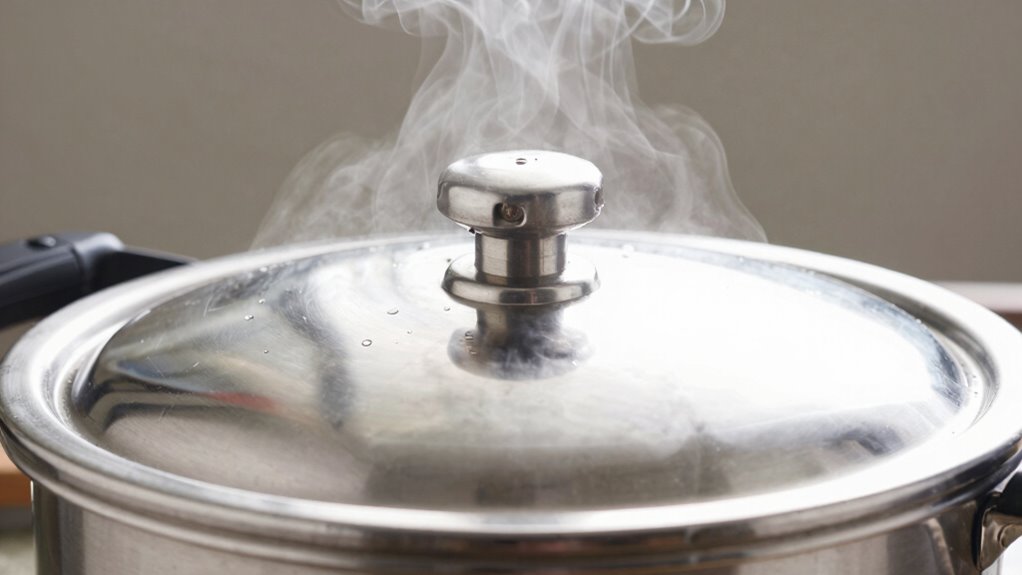
If you’ve replaced the gasket and thoroughly cleaned the sealing surfaces but your pressure cooker still leaks steam or liquid, it’s time to contemplate professional repair or replacement. Sometimes, the pressure cooker design or aging components make leaks unavoidable. Refer to your user manual to confirm proper assembly and operation. Consider professional help if:
If leaks persist despite cleaning and gasket replacement, seek professional repair or consider replacing the pressure cooker.
- The pressure cooker’s safety valves or seals are damaged or worn out beyond simple repairs.
- There are cracks or deformities in the body or lid that compromise the pressure integrity.
- The pressure cooker continues to leak despite following all troubleshooting tips.
Knowing when to seek expert assistance ensures your safety and the longevity of your appliance. If in doubt, consulting a professional is always the safest choice.
Frequently Asked Questions
Can a Pressure Cooker Leak Affect Cooking Times or Food Quality?
A pressure cooker leak can impact cooking safety and food quality. If steam escapes, it might cause uneven cooking or extend the cooking time, affecting food texture and flavor. To prevent this, check your cooker regularly for leaks and verify the gasket and vents are secure. Addressing leaks promptly helps maintain proper pressure and ensures your food cooks evenly, keeping safety a top priority during every meal.
Are Some Pressure Cooker Brands More Prone to Leaks Than Others?
Some pressure cooker brands are like fragile glass, more prone to leaks due to less reliable manufacturing. Brands with strong reputations for reliability tend to have fewer issues, but no brand is completely immune. Manufacturing defects can happen across any brand, so it’s essential to evaluate trusted options and regularly inspect your cooker. If leaks persist, it might be time to contemplate a different brand for safer, more dependable cooking.
How Often Should I Inspect My Pressure Cooker for Leaks?
You should inspect your pressure cooker for leaks before each use and periodically during cooking, especially if you’re cooking for long periods. Regular inspection frequency helps with leak detection and guarantees safety. Look for steam escaping from the lid, gasket, or valves, and check for any cracks or damage. Being vigilant with leak detection helps prevent accidents and prolongs your cooker’s lifespan. Always follow your manufacturer’s guidelines for specific inspection intervals.
Does Altitude Affect the Likelihood of Pressure Cooker Steam Leaks?
At high altitudes, pressure cooker steam leaks are more likely to dance around your kitchen, thanks to altitude adjustment needs. You’ll need to fine-tune the pressure regulation to match the thinner air, preventing excess steam from escaping. Without proper adjustments, the cooker struggles to maintain consistent pressure, increasing the risk of leaks. So, always check your manual for altitude-specific instructions, ensuring a safe, steady cook every time.
Can Improper Sealing Cause Long-Term Damage to My Pressure Cooker?
Yes, improper sealing can cause long-term damage to your pressure cooker. When the seal integrity is compromised, steam escapes constantly, which can weaken the gasket and other components over time. Persistent leaks put stress on the pressure cooker’s parts, increasing the risk of cracks or failure. To prevent this, always make certain the sealing ring is properly fitted and in good condition, protecting your cooker’s longevity and safety.
Conclusion
Now that you know the difference between normal and dangerous steam leaks, don’t ignore them—think of a tiny leak as a ticking time bomb waiting to turn your kitchen into a steam-powered disaster! Keep an eye out for signs of trouble and act fast. If your pressure cooker starts behaving like a runaway train, don’t hesitate—call a pro or replace it before your cooking turns into a full-blown steam explosion!