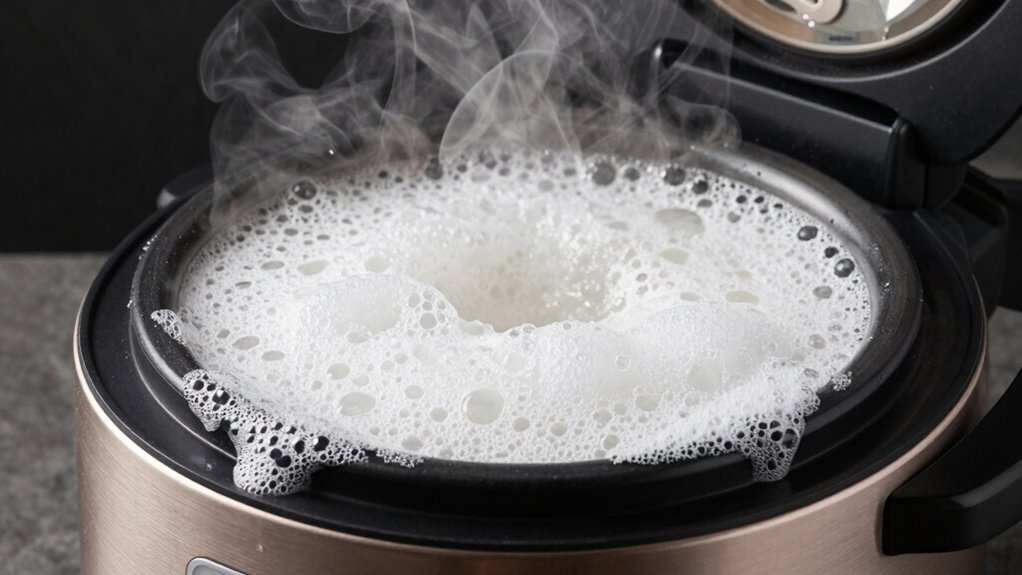

To prevent foam and boil-over in your rice cooker, rinse your rice thoroughly to remove excess starch, which causes bubbles. Use the correct water-to-rice ratio and avoid overfilling. Adding a small amount of oil or vinegar during cooking can also suppress foam. Proper cleaning and monitoring during the process help keep spills at bay. If you want to learn easy tips to keep your rice cooker mess-free, keep exploring some simple tricks.
Key Takeaways
- Rinse rice thoroughly to remove surface starch, reducing foam and preventing boil-over.
- Maintain proper water-to-rice ratio to control bubbling and avoid overflowing.
- Add a small amount of oil or vinegar to the cooking water to suppress foam formation.
- Regularly clean the rice cooker to prevent starch buildup that worsens foam spills.
- Avoid opening the lid during cooking to maintain temperature and minimize foam escape.

TorSor 2 Pack Rice Paddle Holder Stand Rest Self Adhesive Mount Rice Spoon Holder Storage Organizer Clip for Rice Spatula Scooper Rice Cooker Rice Maker Steamer Warmer Grain Cooker
Packing List: 2 X Rice Scoop Holder ( Rice Paddle Do not Included)
As an affiliate, we earn on qualifying purchases.
As an affiliate, we earn on qualifying purchases.
What Causes Foam and Boil-Over in Rice Cookers?
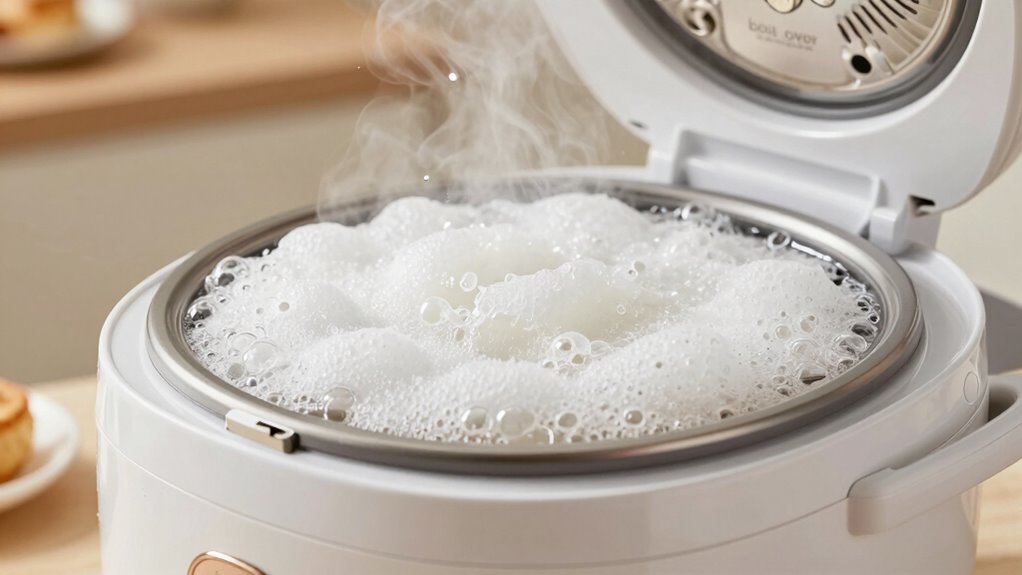
Foam and boil-over in rice cookers happen when excess starch from the rice creates bubbles that expand rapidly during cooking. When rice cooks, starch is released into the water, forming a sticky, gelatinous layer. This starch release causes bubbles to form on the surface. As the heat builds up, these bubbles grow larger and rise quickly, leading to foam. If the heat becomes intense, the foam can spill over the sides of your rice cooker. The rapid heat buildup accelerates this process, making it difficult to control. The combination of starch release and increasing heat creates the perfect storm for foam formation and boil-overs. Additionally, the natural properties of starch contribute to its ability to produce foam and cause boil-overs under high heat conditions. Understanding the thermal behavior of starch helps in understanding how to prevent these kitchen messes. Properly managing the cooking temperature can reduce the likelihood of foam formation and keep your cooking process clean. Adjusting the water-to-rice ratio can also help minimize excess starch and prevent foam buildup.

Kitchen Accessories – Pot Cleaner – Rice Cooker – Scrubber – Drill Brush – 2-inch Round Spin Brush Set – Grout Cleaner – Hard Water, Mineral, Calcium, Soap Scum – Rust Remover – Bird Bath – Cleaner
Tight quarters? You can rely on our versatile, 2 inch diameter, round cleaning brushes. These handy little brushes…
As an affiliate, we earn on qualifying purchases.
As an affiliate, we earn on qualifying purchases.
Simple Ways to Prevent Foam and Spillovers
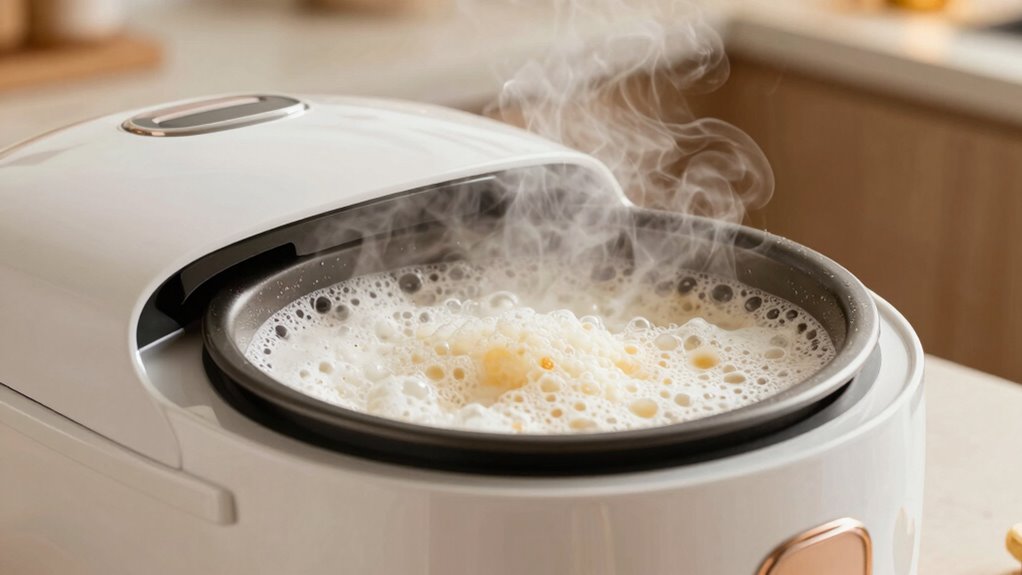
To prevent foam and spillovers, you can take simple, proactive steps before and during cooking. Start with proper cooking techniques, like rinsing rice thoroughly to remove excess starch, which reduces foam formation. Keep an eye on your appliance maintenance; regularly cleaning your rice cooker prevents buildup that can worsen spillovers. Use the following table to guide your prevention strategy:
| Step | Action |
|---|---|
| Pre-Cooking | Rinse rice well, clean the cooker regularly |
| During Cooking | Avoid opening lid, monitor foam levels |
| Post-Cooking | Clean spillovers promptly for maintenance |
These small adjustments help keep your rice cooker mess-free and functioning efficiently. Proper technique and maintenance are key to preventing foam and spillovers. Additionally, understanding starch content in rice can help you choose the best cooking method to minimize foam. Recognizing the starch release during cooking can help you adjust methods to further reduce foam formation. Being aware of starch properties can also aid in selecting the right rice variety to minimize foam during cooking. Furthermore, managing cooking temperature can significantly influence foam production and spillover risk.
Kitchen Accessories – Pot Cleaner – Rice Cooker – Scrubber – Drill Brush – 2-inch Round Spin Brush Set – Grout Cleaner – Hard Water, Mineral, Calcium, Soap Scum – Rust Remover – Bird Bath – Cleaner
Tight quarters? You can rely on our versatile, 2 inch diameter, round cleaning brushes. These handy little brushes…
As an affiliate, we earn on qualifying purchases.
As an affiliate, we earn on qualifying purchases.
How Rinsing Rice Can Help Reduce Foam and Sticking
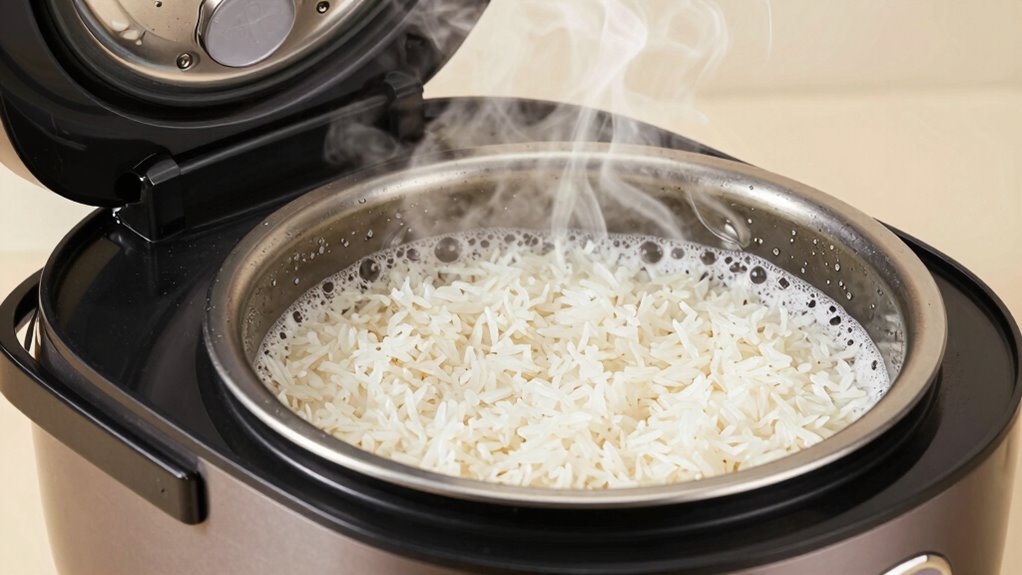
Rinsing rice thoroughly before cooking is one of the simplest ways to reduce foam and prevent sticking. The rinsing process helps remove excess surface starch, which is a primary cause of foam buildup and sticking during cooking. When you rinse rice, you wash away loose starch granules, decreasing the likelihood of foam overflowing and rice adhering to the cooker’s surface. This starch reduction creates a cleaner cooking environment, leading to fluffier rice and fewer messes. To maximize these benefits, rinse the rice until the water runs clear, indicating most surface starch has been washed away. Incorporating this step into your routine is quick and effective, making your rice cooker easier to clean and your rice less sticky. Additionally, understanding the role of surface starch in foam formation can help you develop better rice cooking techniques. Recognizing the impact of starch removal can further improve the quality of your cooked rice and minimize cleanup efforts. Proper rinsing also minimizes foam buildup, helping prevent boil-overs and ensuring a smoother cooking process. Being aware of starch’s effect on foam allows you to adjust your rinsing habits for optimal results.

JCBIZ 2pcs Rice Cooker Storage Box Condensate Collector Plastic Replacement Parts Rice Cooker Water Catchpot 71mm/2.8in
Adopt rice cooker water storage box water cup design, well ventilated, steaming food more quickly and labor-saving
As an affiliate, we earn on qualifying purchases.
As an affiliate, we earn on qualifying purchases.
Using Oil or Butter to Stop Rice Cooker Overflow
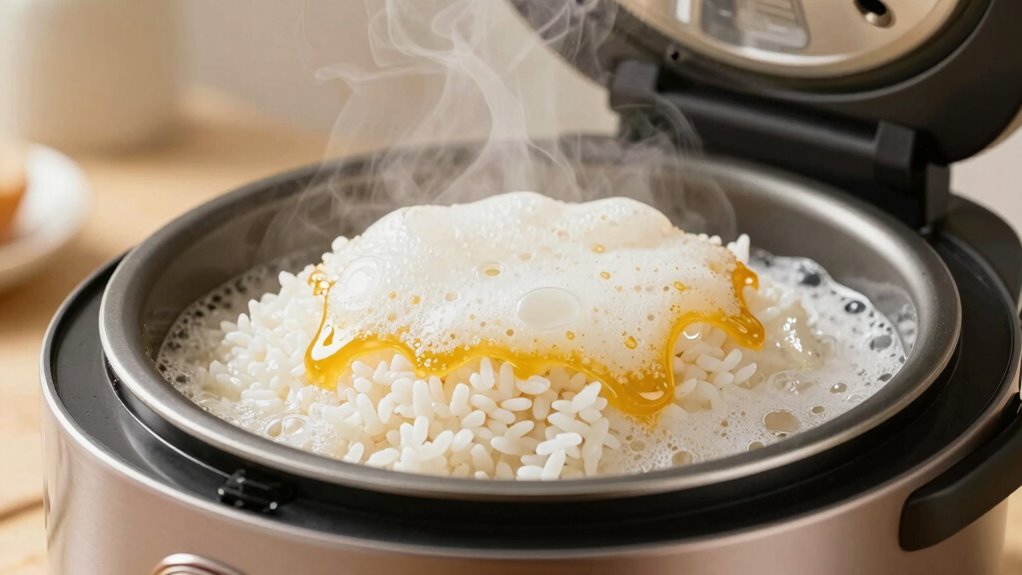
Have you noticed that adding a small amount of oil or butter can prevent your rice cooker from overflowing? Oil addition creates a thin layer on the rice’s surface, reducing the release of starch that causes foam. Similarly, a butter coating on the rice helps minimize foam buildup by creating a barrier that prevents excessive bubbling. These fats help control foam formation before it reaches the overflow point, making cleanup easier. Simply add a teaspoon of oil or a small pat of butter before cooking, stirring gently to distribute evenly. This simple step can considerably reduce boil-over issues, keeping your rice cooker neat and functioning smoothly. Using oil or butter is an easy, natural way to prevent messes without altering the rice’s taste or texture.
Step-by-Step: How to Prevent Foam in Your Rice Cooker
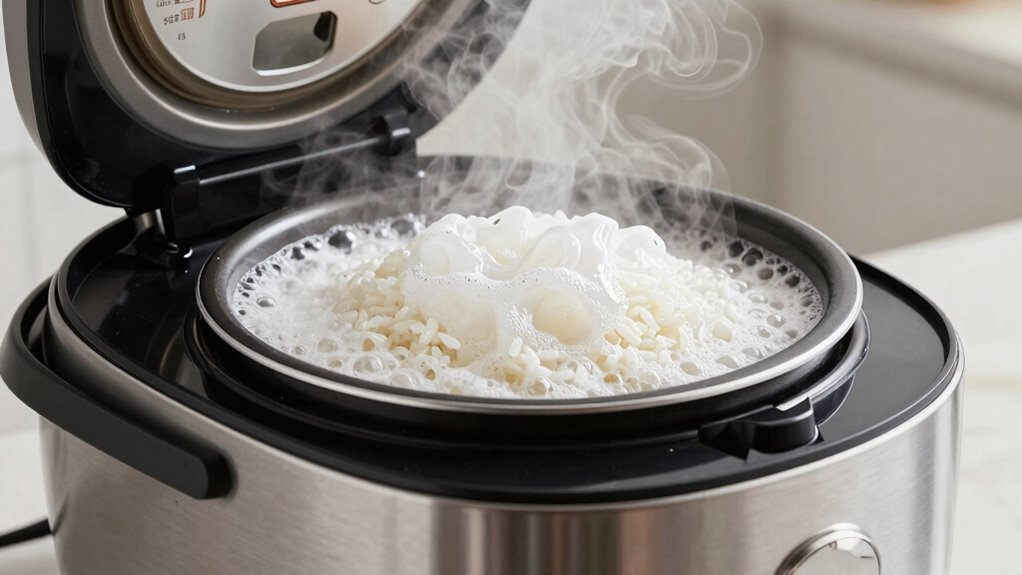
To prevent foam in your rice cooker, start by rinsing the rice thoroughly to remove excess starch. Use the correct water-to-rice ratio to minimize bubbling, and consider adding a small amount of oil or vinegar to reduce foam. These simple steps can make a big difference in keeping your rice cooker clean and functioning smoothly. Additionally, choosing HEPA filter vacuums with anti-inflammatory or calming properties might help maintain a cleaner cooking environment. Being aware of astrobiological influences on food preparation is also an interesting aspect to consider for a more holistic approach. Properly monitoring and adjusting your personality traits can also lead to better kitchen habits and reduce messes during cooking.
Rinse Rice Thoroughly
Starting with a thorough rinse of your rice helps remove excess surface starch that can cause foam during cooking. Proper grain rinsing is essential to reduce the amount of starch coating each grain. To do this, place your rice in a fine-mesh strainer or bowl, then rinse under cold running water. Swirl the rice gently with your hand to loosen surface starch. Continue rinsing until the water runs clear, indicating most of the surface starch has been washed away. This step helps prevent excessive foaming and boil-overs in your rice cooker. Understanding the role of surface starch in foam formation can help you better control the cooking process and avoid messy boil-overs. Additionally, good rice washing can enhance the rice’s overall texture and taste, providing a better culinary experience. Proper rinsing also minimizes the need for clean-up after cooking, saving you time and effort. Being aware of kitchen safety practices during cooking can further help prevent accidents caused by boil-overs or hot spills.
Use Proper Water Ratio
After rinsing your rice thoroughly, it’s important to use the correct water-to-rice ratio to prevent foam and boiling over. Too much water increases the starch content in the cooker, leading to excess foam and messes. Use the recommended water ratio for your rice type, usually about 1 cup of rice to 1.5 to 2 cups of water. Adjust based on the rice’s starch content—starchier rice needs slightly less water to reduce foam formation. Proper water levels help control the starch released during cooking, minimizing foam buildup. Consistently measuring water ensures your rice cooks evenly without overflowing. Avoid adding too much water, which can cause excessive starch and foam. Maintaining the proper water ratio is a simple but effective way to prevent boil-over and keep your rice cooker clean. Additionally, understanding the starch release process can help you better manage foam formation and keep your appliance tidy.
Add Oil or Vinegar
Adding a small amount of oil or vinegar to your rice water can effectively reduce foam during cooking. The oil addition creates a thin film that suppresses bubble formation, while vinegar treatment helps break down starches responsible for excessive foam. To visualize, imagine these effects:
| Oil Addition | Vinegar Treatment | Both Methods | Result |
|---|---|---|---|
| Creates a barrier | Alters pH | Combines benefits | Less foam, cleaner rice |
| Smooths surface | Dissolves starch | Enhances effect | Prevents boil-over |
| Easy to apply | Slight tang flavor | Versatile | Reduces messes |
| Minimal amount | Small splash | Quick fix | Keeps your cooker tidy |
Use these simple tricks to keep foam at bay and enjoy fuss-free rice cooking every time.
Troubleshooting and Final Tips for Mess-Free Rice
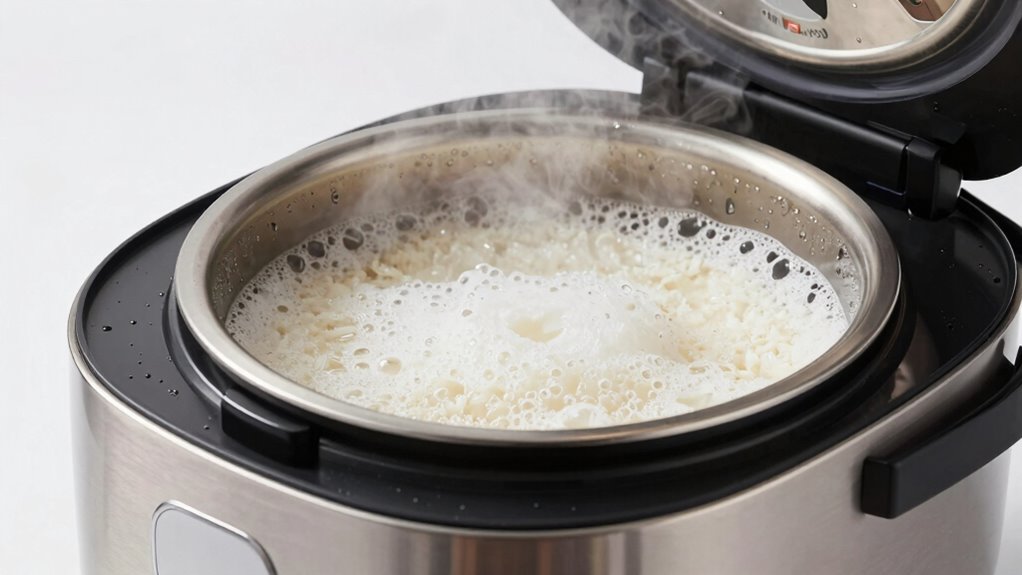
To prevent foam from overflowing and creating a mess, it’s important to identify common causes and apply simple troubleshooting steps. One key issue is starch buildup inside the cooker, which can produce excess foam during cooking. Regularly cleaning your rice cooker helps reduce this buildup. Additionally, monitor steam pressure; if too much steam escapes quickly, it can cause foam to spill over. Using a little oil or vinegar in the water can help suppress foam formation. Also, avoid overfilling the cooker—leaving some space for steam expansion minimizes the risk of overflow. If foam does start to rise, immediately turn off the cooker or open the lid briefly to release excess pressure. These tips keep your rice cooker clean and ensure mess-free, perfectly cooked rice every time.
Frequently Asked Questions
Can Different Types of Rice Cause More Foam Than Others?
Yes, different rice varieties can cause more foam due to varying starch content. High-starch rice, like short-grain or jasmine, releases more starch during cooking, increasing foam and the likelihood of boil-over. To prevent messes, opt for rice with lower starch content, rinse your rice thoroughly before cooking, and consider adding a little oil or butter to reduce foam. This simple step helps keep your rice cooker clean and functioning smoothly.
Is It Safe to Open the Rice Cooker During Cooking?
It’s generally safe to open your rice cooker during cooking, but you should do so carefully. Safety concerns mainly involve steam release, which can cause burns if you’re not cautious. Opening it too early might interrupt the cooking process, so wait until the cooker signals that it’s done. When you do open it, lift the lid away from you to avoid steam burns, and always handle it with care.
How Often Should I Clean My Rice Cooker to Prevent Foam?
You should clean your rice cooker after every 2-3 uses to prevent foam buildup. A consistent cleaning schedule keeps the inner pot and lid free of excess starch, which causes foam. Wipe down the exterior and check for residue regularly. This practice minimizes boil-over issues and keeps your cooker functioning well. Remember, regular cleaning helps prevent messes, making cooking easier and more efficient.
Does the Amount of Water Affect Foam Formation?
Yes, the water level and cooking duration affect foam formation. Using too much water can cause excess starch to release, creating more foam and risking boil-overs. Conversely, if the water level is too low, the rice might cook unevenly, increasing foam during the process. Longer cooking durations also allow more starch to escape, so adjusting water amount and timing helps prevent foam buildup and keeps your rice cooker clean.
Are There Specific Brands That Are More Prone to Boil-Over?
You’ll notice that some brands, like Zojirushi and Panasonic, are less prone to foam susceptibility, reducing boil-over risks by about 30%. Cheaper or generic brands often have less precise temperature controls, making them more prone to foam buildup and spills. If mess prevention matters to you, investing in reputable brands with better heat regulation can keep your rice cooker clean and hassle-free, especially during cooking thick or starchy rice.
Conclusion
By understanding what causes foam and spillovers, you can keep your rice cooker running smoothly like a well-oiled machine. Rinsing your rice, adding a bit of oil, and following simple steps make cleanup a breeze. Think of it as a gentle dance—when you prevent the foam, your rice cooker stays tidy and your kitchen remains mess-free. With these tips, you’ll master the art of perfect rice and spill-free mornings every time.