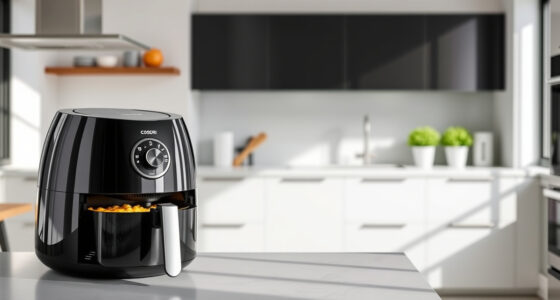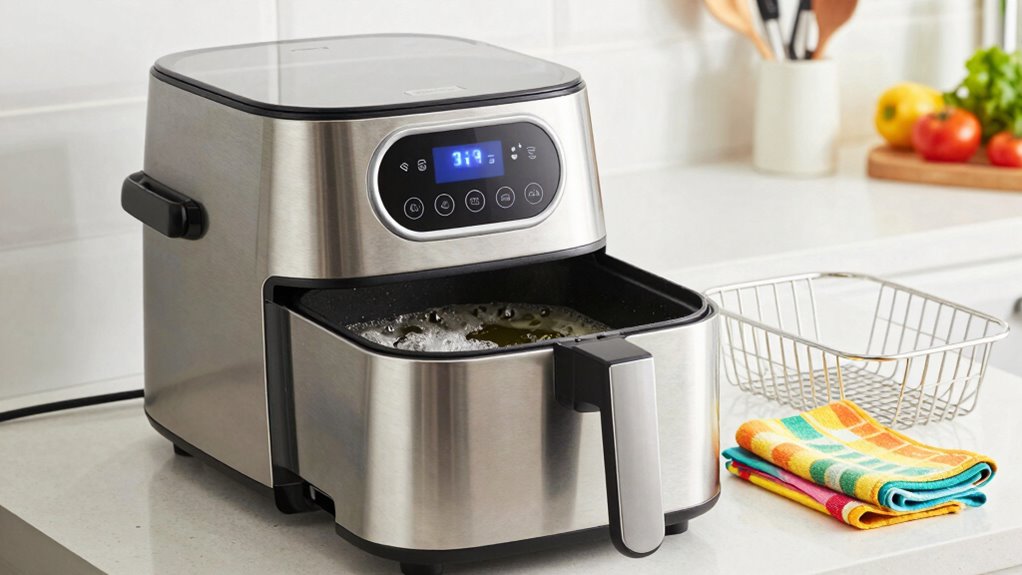

To avoid ruining your food with an electric deep fryer, start by preheating the oil to between 350°F–375°F using a reliable thermometer. Use fresh, high-quality oil and don’t overcrowd the basket, which drops the temperature and makes food greasy. Always fill the fryer to the recommended level, avoid adding wet ingredients, and stay attentive to oil temperature during frying. Follow these essential steps to get crispy, delicious results every time; keep going to learn more tips!

Get kitchen staples and gadgets delivered free — and shop member deals
- Fast, free delivery on millions of items
- Access to Prime Big Deal Days deals on October 6–7
- Prime Video, Amazon Music and more included
Key Takeaways
- Always preheat the oil to the correct temperature (350°F–375°F) before adding food.
- Use a reliable thermometer to monitor oil temperature continuously during frying.
- Start with fresh, high-quality oil suitable for frying to ensure proper cooking and flavor.
- Avoid overcrowding the fryer basket to maintain oil temperature and achieve crispy results.
- Never add wet foods or water to hot oil to prevent splatters and safety hazards.

Getting started with an electric deep fryer can be exciting, but beginners often make common mistakes that can affect safety and the quality of your fried foods. One of the biggest errors is neglecting to monitor the oil temperature accurately. If the oil isn’t hot enough, your food ends up greasy and soggy because it absorbs too much oil. Too hot, and it can burn the exterior before the inside cooks properly. Investing in a good thermometer and paying close attention to the temperature gauge helps you maintain that ideal range, usually between 350°F and 375°F. This not only ensures crispy, golden results but also keeps your cooking safe.
Another frequent mistake is using poor-quality oil or neglecting to check oil quality before frying. Over time, oil degrades, becoming dark, thick, and less effective at conducting heat. Using old or burnt oil can lead to uneven cooking, unpleasant flavors, and even health concerns. Always start with fresh oil suitable for frying, like vegetable or peanut oil, and replace it regularly to maintain excellent quality. Filtering the oil after each use extends its lifespan, but if it starts to smell rancid or shows signs of breakdown, it’s time to discard it.
Using fresh oil and replacing it regularly ensures safe, tasty frying results.
Many beginners overlook the importance of preheating the oil properly. Rushing to fry food without letting the oil reach the right temperature results in uneven cooking and greasy textures. Patience is key—allow the oil to heat up fully before adding your food. Using the fryer’s built-in thermostat can help, but always double-check with a thermometer. Also, avoid overcrowding the basket. Adding too much at once drops the oil temperature suddenly, leading to soggy, greasy food instead of crisp perfection.
Safety is paramount, so always keep an eye on the oil level. Overfilling can cause hot oil to spill over when adding food or during frying. Use the recommended fill line, and never add water or wet foods directly into hot oil, as it causes dangerous splatters. Keep a fire extinguisher nearby, and never leave the fryer unattended while in use.
digital thermometer for deep frying
As an affiliate, we earn on qualifying purchases.
As an affiliate, we earn on qualifying purchases.
Frequently Asked Questions
How Often Should I Change the Oil in My Deep Fryer?
You should change the oil in your deep fryer every 8 to 10 uses or when it starts to smell or smoke. Regularly checking oil freshness helps maintain food quality and extends your fryer’s lifespan. If you notice a dark color or a strange taste, it’s time for fresh oil. Properly maintaining oil freshness guarantees your fryer operates efficiently and keeps your fried foods delicious.
Can I Reuse Oil Multiple Times Without Affecting Food Quality?
Yes, you can reuse oil multiple times, but you need to be cautious. Use oil filtration to remove debris after each use, and monitor the oil temperature to prevent overheating. If the oil becomes dark, develops a bad smell, or produces excessive smoke, it’s time to replace it. Reusing oil without proper filtration and temperature control can affect food quality, making it less crispy and more prone to absorbing flavors.
What Safety Precautions Are Essential When Operating an Electric Deep Fryer?
You should prioritize fire safety, avoid electrical hazards, and always read the manufacturer’s instructions before use. Keep a fire extinguisher nearby, never leave the fryer unattended, and make certain your cord and outlet are in good condition. Use the correct temperature settings, avoid overfilling with oil, and keep flammable objects away. By following these precautions, you protect yourself, prevent accidents, and ensure safe, delicious frying every time.
How Do I Properly Clean and Maintain My Deep Fryer?
To properly clean and maintain your deep fryer, start by unplugging it and letting the oil cool. Use oil filtration to remove debris and extend oil life, then perform fryer scrubbing to clean the basket and interior thoroughly. Regularly change the oil and wipe down the exterior with a damp cloth. This routine keeps your fryer in top shape, ensuring delicious, safe food every time.
What Are Common Signs That My Fryer Is Malfunctioning?
Think of your fryer as a trusted steed; when it starts overheating or makes strange noises, it’s signaling trouble. If it overheats, it’s like a horse about to buck—dangerous and needs attention. Strange noises, like squeals or rattles, indicate mechanical issues. These signs mean your fryer isn’t happy and could break down. Regular maintenance helps, but stay alert to these warning signs to keep your cooking safe and smooth.
high-quality vegetable frying oil
As an affiliate, we earn on qualifying purchases.
As an affiliate, we earn on qualifying purchases.
Conclusion
Avoiding beginner mistakes can make all the difference in your frying success. Did you know that improper oil temperature can lead to soggy or burnt food, wasting up to 30% of your ingredients? By focusing on preheating, not overfilling, and maintaining the right temperature, you’ll enjoy crispy, delicious results every time. Don’t let small errors ruin your meal—practice these tips, and you’ll master your electric deep fryer in no time!
electric deep fryer with temperature control
As an affiliate, we earn on qualifying purchases.
As an affiliate, we earn on qualifying purchases.
As an affiliate, we earn on qualifying purchases.
NFL season / tailgating Picks
team gear
As an affiliate, we earn on qualifying purchases.