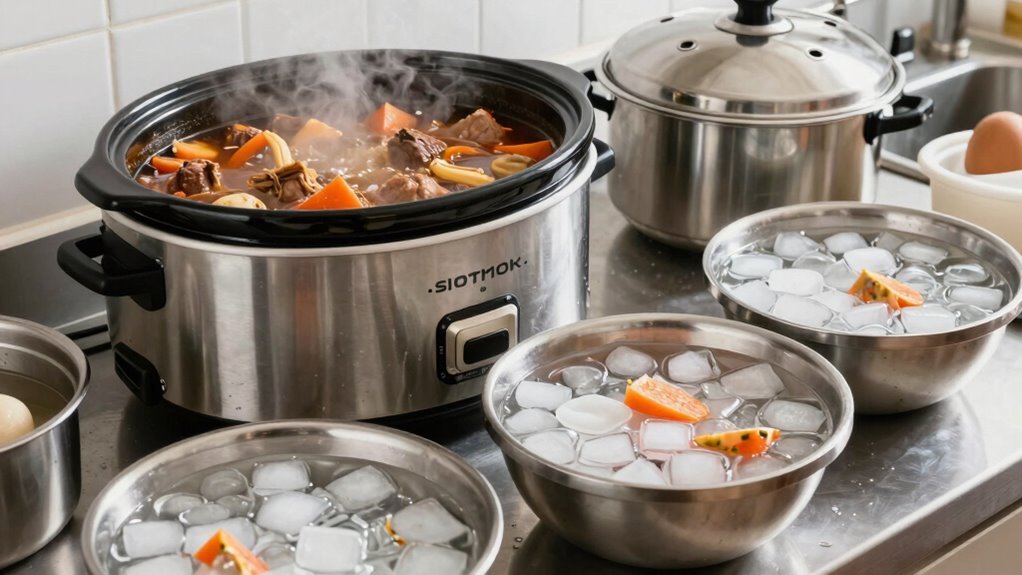
To cool large batches from your slow cooker safely, transfer the hot food into shallow containers and place them in an ice water bath, stirring occasionally for faster heat loss. Dividing leftovers into smaller portions helps them cool quicker and stay within safe temperature ranges. Avoid bulky containers and always monitor temperatures to prevent bacteria growth. Keep learning how to guarantee your food stays safe and fresh by continuing with these tips.

Get kitchen staples and gadgets delivered free — and shop member deals
- Fast, free delivery on millions of items
- Access to Prime Big Deal Days deals on October 6–7
- Prime Video, Amazon Music and more included
Key Takeaways
- Transfer hot food from the slow cooker into shallow, heat-resistant containers to speed cooling.
- Place containers in ice baths or cool water, stirring periodically to promote rapid heat loss.
- Divide large batches into smaller portions to reduce cooling time and prevent bacteria growth.
- Cover leftovers loosely once cooled and refrigerate promptly within two hours.
- Monitor and record temperatures to ensure food moves quickly through the danger zone, maintaining safety.
As an affiliate, we earn on qualifying purchases.
Why Cooling Large Slow Cooker Batches Quickly Is Essential for Food Safety

Cooling large slow cooker batches quickly is crucial because bacteria can rapidly grow between 40°F and 140°F, the so-called “danger zone.” If you leave hot food sitting out too long, harmful microorganisms can multiply to levels that may cause foodborne illnesses. Proper food cooling is essential for maintaining slow cooker safety, preventing bacteria from reaching dangerous levels. By cooling food swiftly, you reduce the time it spends in the danger zone, lowering the risk of contamination. Using techniques like dividing large portions into smaller containers or placing them in an ice bath helps accelerate cooling. Implementing effective cooling strategies aligns with food safety standards designed to protect health. Quick food cooling not only supports food safety but also preserves flavor and texture, ensuring your meals remain safe to enjoy. Additionally, employing proper storage methods and monitoring temperature changes can further enhance safety. For example, utilizing temperature control devices can help ensure foods are cooled to safe levels within recommended timeframes. Proper cooling methods are also supported by food safety regulations, which emphasize swift reduction of temperature to prevent bacterial growth. Always prioritize proper cooling methods for large batches.
As an affiliate, we earn on qualifying purchases.
Understanding the Risks of Improper Cooling and Bacterial Growth
If you don’t cool your slow-cooked foods properly, bacteria can grow quickly and cause foodborne illnesses. Knowing the risks helps you understand why safe cooling techniques are essential. Using the right methods keeps your food safe and reduces the chance of bacterial contamination. Proper cooling is also crucial to prevent cross-contamination and maintain the quality of your meals. Implementing methodical testing processes in your cooling routine can help ensure that temperatures are reduced safely and efficiently. Additionally, understanding air purifier maintenance can aid in creating a cleaner environment that supports food safety practices. Regularly monitoring food safety protocols and staying informed about industry standards ensures ongoing adherence to best practices and minimizes risks.
Bacterial Growth Risks
When food isn’t cooled properly after cooking, bacteria can rapidly multiply to dangerous levels. This growth increases the risk of foodborne illnesses. To minimize this, you need to focus on temperature monitoring—keeping track of cooling temperatures helps guarantee food moves through the danger zone quickly. Container selection also plays a vital role; choose shallow, wide containers to promote faster cooling and prevent bacterial growth. Avoid deep or bulky containers that trap heat and slow down the cooling process. If you fail to cool food promptly, bacteria like Salmonella and Staphylococcus can thrive, producing toxins that cause illness. Staying vigilant with proper temperature checks and using appropriate containers reduces bacterial growth risks, safeguarding your food and health. Additionally, utilizing electric tools and appliances such as slow cookers and electric bikes can help maintain consistent temperatures during cooking and cooling processes. Proper cooling techniques, like dividing large batches into smaller portions, also significantly reduce bacterial proliferation and ensure food safety. Incorporating effective cooling methods can further help prevent bacteria from reaching dangerous levels, ensuring your food remains safe to eat.
Proper Cooling Techniques
Proper cooling techniques are essential because failing to cool food quickly can allow bacteria like Salmonella and Staphylococcus to multiply rapidly. To prevent this, focus on effective food storage and temperature control. Divide large batches into smaller portions to increase surface area, enabling faster cooling. Use shallow containers and place them in an ice bath or cool water to speed up heat loss. Avoid leaving food at room temperature for extended periods, as this promotes bacterial growth. Always refrigerate leftovers promptly, ideally within two hours of cooking. Proper cooling not only maintains food safety but also helps preserve quality. Additionally, understanding the significance of proper storage can help prevent cross-contamination and spoilage. Incorporating temperature guidelines into your cooling process ensures that food remains within safe limits throughout the process. By mastering these techniques, you reduce the risk of foodborne illness and ensure safe storage for future consumption.
As an affiliate, we earn on qualifying purchases.
How to Cool Large Batches Fast: Best Techniques and Tips
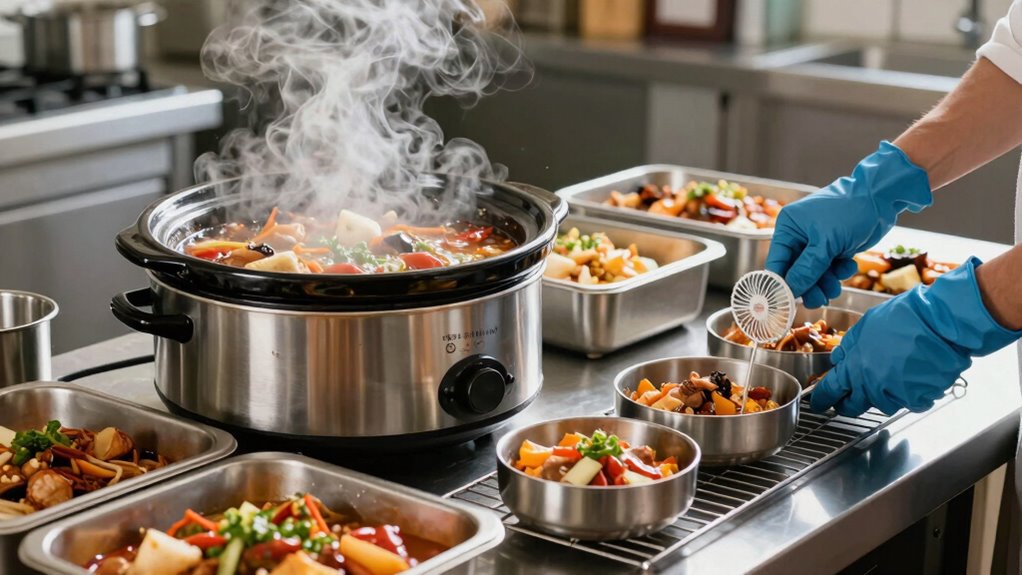
To cool large batches quickly, you should use methods like placing the food in ice baths or cold water baths to remove heat fast. Dividing large quantities into smaller containers also speeds up cooling and helps prevent bacterial growth. These techniques keep your food safe by reducing the time it spends in the temperature danger zone.
Use Ice Baths
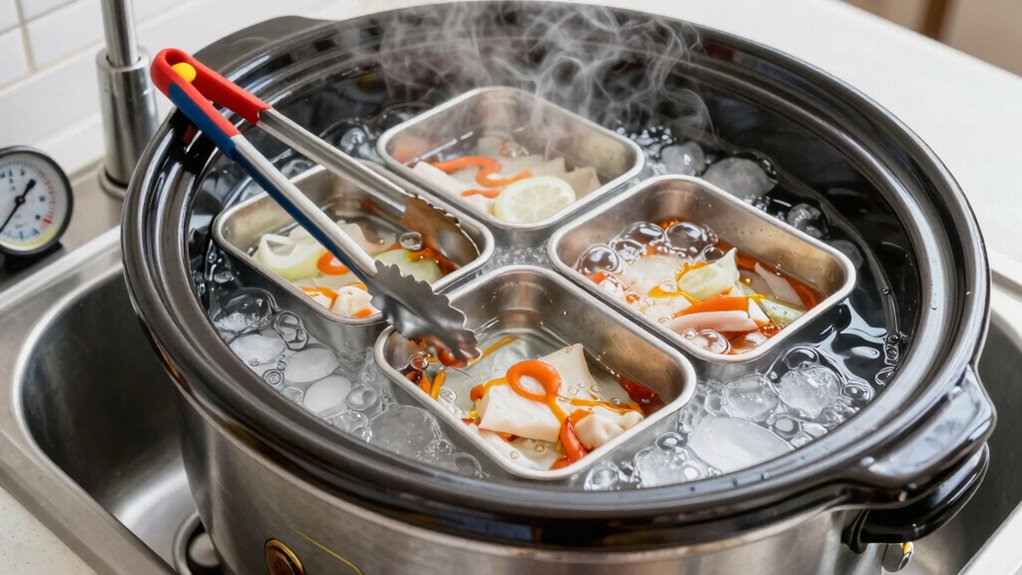
Cooling large batches quickly is essential to prevent bacterial growth, and an effective method is using ice baths. By immersing your container in an ice bath, you rapidly lower the food temperature, slowing down bacterial growth. Fill a large basin with ice and cold water, then place your pot or container in it, making sure the water reaches halfway up the sides. Stir the food occasionally to distribute the cold evenly. Keep an eye on the food temperature with a thermometer; aim to bring it down to 70°F within two hours, then to 41°F or below within four hours. Using ice baths helps you achieve safe, rapid cooling, reducing the time food spends in the temperature danger zone. This method is reliable and efficient for large batches. Proper cooling techniques are vital for maintaining food safety and quality during large batch cooling. Additionally, ensuring proper temperature control during cooling prevents the proliferation of harmful bacteria and ensures the safety of your food.
Divide Into Smaller Containers
Dividing large batches of hot food into smaller containers speeds up the cooling process considerably. Smaller containers increase the surface area exposed to air, allowing heat to dissipate faster. Use containers suited for portion control; smaller or shallow containers help cool food evenly and quickly. Avoid overly large or deep containers, which trap heat and slow down cooling. Opt for containers made of materials that conduct heat well, such as stainless steel or shallow plastic. Label containers with the date to ensure proper storage and avoid keeping food too long. Proper food storage practices help maintain safety and quality during cooling. By dividing your batch into appropriately sized portions, you reduce the risk of bacterial growth and make the cooling process more efficient. Proper container size and portion control are essential steps in maintaining food safety during cooling. Additionally, placing containers in a cooling environment like a well-ventilated area or using ice baths can further accelerate cooling times. Using proper storage techniques such as stacking containers to maximize airflow can also help speed up the process. Ensuring proper temperature control throughout the cooling process is crucial to prevent bacteria from thriving during the temperature drop. Implementing safe cooling guidelines ensures food remains safe for consumption during storage.
Use Cold Water Baths
Using a cold water bath is one of the most effective ways to rapidly lower the temperature of large batches of hot food. Submerging containers in a water bath accelerates cooling, reducing the window for bacteria growth and improving food safety. To do this safely, fill a sink or large basin with cold water and ice, then place the hot food container in it, making sure the water level reaches halfway up the sides. Stir or rotate the food occasionally to promote even cooling. Avoid using hot water, which can raise the temperature and promote bacteria growth. Using a cold water bath helps bring food into the safe temperature zone quickly, minimizing the risk of foodborne illnesses caused by bacteria proliferation. Incorporating proper food handling techniques can further ensure food safety during the cooling process. Additionally, monitoring the temperature with a food thermometer helps verify that the food cools within the recommended time frame.
digital food temperature thermometer
As an affiliate, we earn on qualifying purchases.
As an affiliate, we earn on qualifying purchases.
Use Ice Water Baths and Shallow Containers to Speed Up Cooling
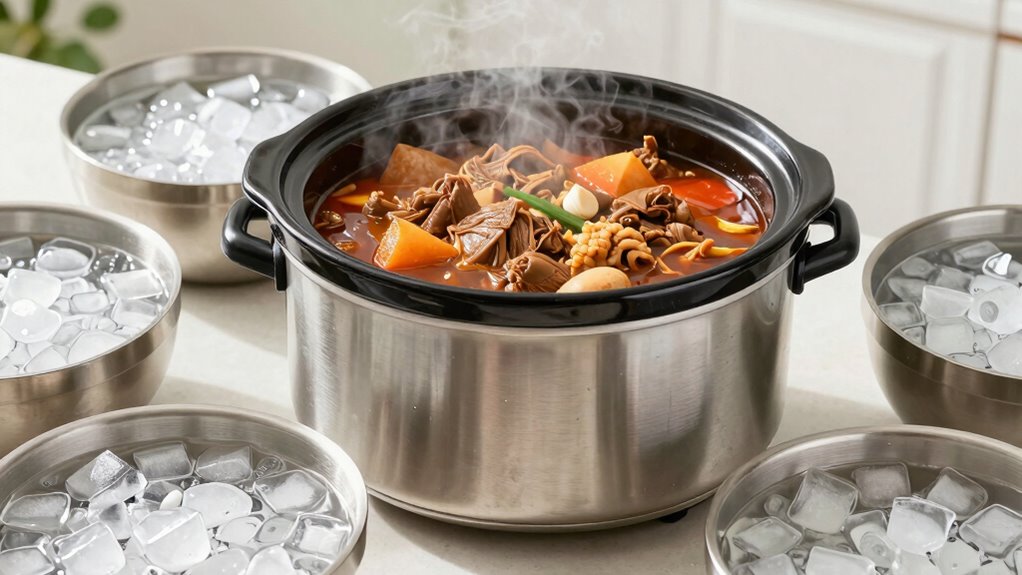
To prevent bacteria from multiplying rapidly, it’s important to cool hot foods quickly after cooking. Using ice water baths is an effective method—place your container of hot food into a larger basin filled with ice and water, ensuring the water surrounds the food without spilling in. Stirring occasionally helps release heat faster. Additionally, transfer the food into shallow containers; these increase surface area, allowing heat to dissipate more rapidly. This combination of ice water baths and shallow containers markedly reduces cooling time, minimizing the window for bacterial growth. Make sure to check the temperature regularly and aim to cool the food to 41°F (5°C) within two hours. Proper cooling techniques like these help keep your food safe and fresh.
Divide and Store Leftovers Properly for Safety and Freshness

Properly dividing leftovers into smaller portions and storing them promptly helps prevent bacterial growth and keeps your food safe. Use food labeling to clearly identify storage dates, so you know how long leftovers are good. Portion control is key; dividing large batches into manageable sizes allows for quicker cooling and easier reheating. Store leftovers in shallow, airtight containers to promote even cooling and maintain freshness. Label each container with the date and contents to avoid confusion later. This practice not only enhances food safety but also helps prevent waste by encouraging timely consumption. By managing portions and labeling correctly, you ensure leftovers stay fresh longer and reduce the risk of foodborne illness. Proper storage practices make your food safer and more convenient to enjoy later.
Prevent Cross-Contamination During Cooling
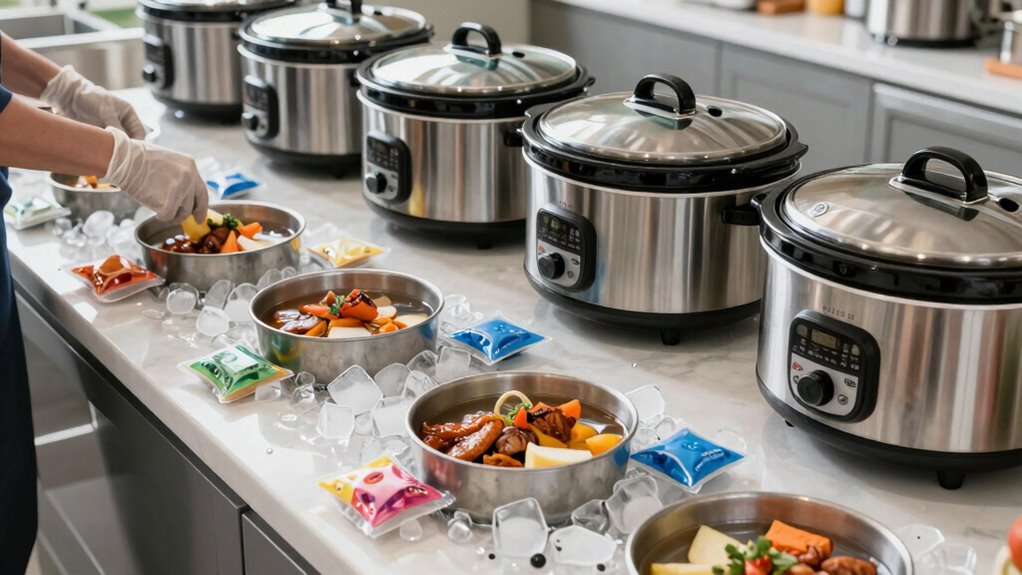
Cooling leftovers quickly is essential to prevent cross-contamination and reduce the risk of foodborne illness. To maintain proper hygiene and avoid cross contamination risks, handle leftovers carefully during cooling. Use clean utensils and containers, and wash your hands thoroughly before touching food. Avoid placing hot leftovers directly into the refrigerator; instead, transfer them to shallow containers to cool faster. Keep cooked foods separate from raw ingredients and ready-to-eat foods to prevent cross contamination. Cover leftovers loosely to allow heat to escape while protecting them from contamination. Regularly sanitize surfaces and tools used during cooling. By following these steps, you minimize cross contamination risks and ensure food stays safe for later consumption. Proper hygiene and cautious handling are key to safe cooling practices.
Track Cooling Times to Ensure Food Safety Compliance
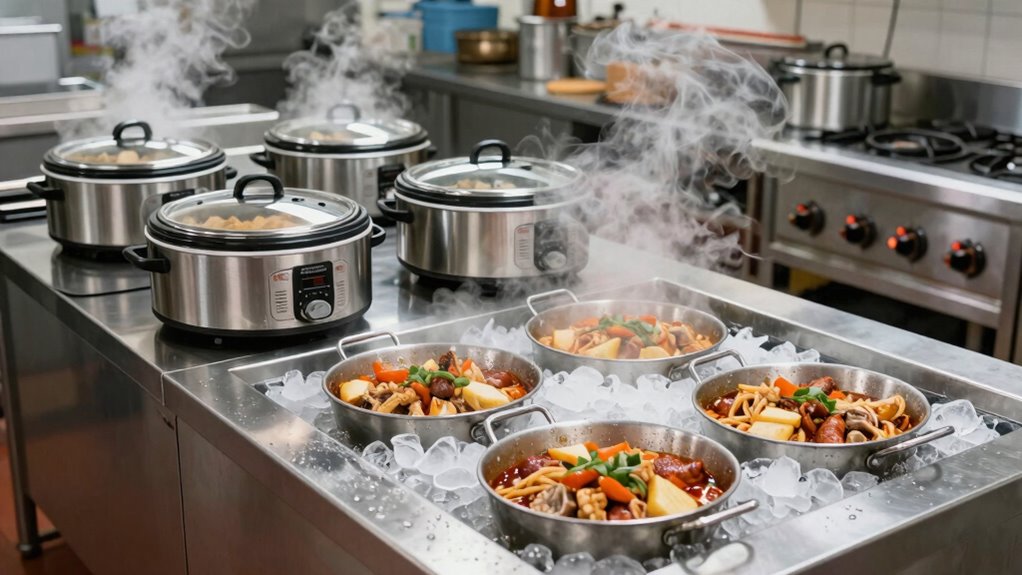
Keeping track of cooling times is essential for ensuring food safety and complying with health regulations. You should regularly perform temperature monitoring to confirm that foods cool within the safe window of two hours. Using cooling charts helps you record and visualize how long each batch takes to reach the required temperature, making it easier to identify any delays. By documenting cooling times, you can demonstrate compliance during inspections and prevent bacteria growth. Set timers and log temperatures at regular intervals to stay on top of the process. Consistent tracking guarantees you quickly spot problems and take corrective actions. Ultimately, diligent record-keeping with accurate temperature monitoring and clear cooling charts helps you maintain safe, high-quality food and meet regulatory standards.
Common Mistakes to Avoid When Cooling Large Batches
Failing to avoid common mistakes when cooling large batches can jeopardize food safety and lead to regulatory violations. One major error is ignoring the temperature danger zone, where bacteria proliferate rapidly. If you don’t cool foods quickly enough, you risk allowing bacterial growth to reach dangerous levels. Another mistake is leaving food uncovered or in large, deep containers, which slows cooling and increases risk. Additionally, rushing the process by cooling too slowly can keep food in the danger zone longer. Finally, neglecting proper monitoring can cause you to miss critical temperature milestones, increasing the risk of unsafe leftovers. To avoid these pitfalls, always implement proper cooling techniques and stay vigilant about temperature control. Proper cooling helps prevent bacterial proliferation and ensures food safety compliance.
Additional Tips for Fast, Safe Cooling of Slow Cooker Meals

To guarantee your slow cooker meals cool quickly and safely, start by dividing large portions into smaller, shallow containers. This improves heat transfer, reducing cooling time and lowering the risk of bacterial growth. Proper food storage is essential; assure containers are airtight to prevent contamination and maintain kitchen sanitation. Label the containers with dates to track freshness and avoid keeping leftovers too long. When cooling, avoid overcrowding the refrigerator, which can compromise temperature control. Always wash your hands and sanitize surfaces before handling food to prevent cross-contamination. Quick cooling methods combined with good food storage practices and maintaining kitchen sanitation help keep your meals safe and fresh, reducing the risk of foodborne illnesses.
Frequently Asked Questions
How Do I Identify if My Food Has Cooled Safely?
You can tell if your food has cooled safely by using a thermometer to check its internal temperature—ensure it’s below 40°F (4°C). Also, do a visual inspection: the food should no longer be steaming and should look solid and firm, not hot or bubbling. Make sure your thermometer is accurate for reliable readings. If both tests are clear, your food has cooled properly and is safe to store or eat.
Can I Leave Slow Cooker Leftovers at Room Temperature Temporarily?
You shouldn’t leave slow cooker leftovers at room temperature for more than two hours, as this risks unsafe bacteria growth. For room temperature safety, you need to cool leftovers quickly to prevent spoilage. If you’re in a rush, transfer your slow cooker leftovers to smaller containers and refrigerate promptly. Avoid leaving slow cooker leftovers out longer than necessary to keep your food safe and fresh.
What Are the Signs of Bacterial Growth in Cooled Food?
Bacterial growth in cooled food is like a sneaky shadow—hard to spot but dangerous. You’ll notice visual spoilage, such as discoloration or slimy textures, and unusual odors that weren’t there before. If your food looks cloudy or smells off, don’t take chances. These signs mean bacteria are thriving, so it’s safest to discard the food to prevent foodborne illnesses. Always trust your senses and handle leftovers carefully.
How Long Can Cooked Batches Be Stored Before Refrigeration?
You should refrigerate cooked batches within two hours to prevent bacterial growth. Use temperature monitoring to make certain your food stays below 40°F, and store leftovers in airtight storage containers for safety. If the food has been left out longer than two hours, especially in warm conditions, discard it to avoid foodborne illness. Proper cooling methods help keep your food safe and extend its freshness before refrigeration.
Is Reheating Cooled Food Safe if Not Cooled Quickly Enough?
Reheating cooled food isn’t safe if it wasn’t cooled quickly enough, like trying to catch a train that’s already left the station. Bacteria can grow rapidly in slow cooling, making reheating techniques vital. To prevent bacteria, reheat food to at least 165°F, stirring to guarantee even heating. Proper reheating kills bacteria, but if the food’s been in the danger zone too long, it’s safer to discard it.
Conclusion
By mastering quick cooling techniques, you’ll keep your slow cooker creations safe and delicious. When you gently navigate the delicate dance of temperature, you’re not just protecting your meals—you’re nurturing peace of mind for everyone at your table. Embrace these methods, and you’ll turn everyday cooking into a mindful act of care. In doing so, you guarantee your food’s journey from pot to plate remains both joyful and worry-free.
NFL season / tailgating Picks
team gear
As an affiliate, we earn on qualifying purchases.