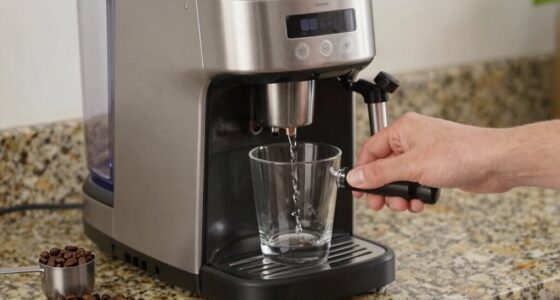
To avoid ruining your coffee with a single-serve machine, start by using the proper grind size—coarse for some brewers, fine for others—based on your machine’s recommendations. Always use clean, filtered water to enhance flavor and machine performance. Measure your coffee and water precisely to guarantee consistency. Maintain your machine regularly by descaling and cleaning to prevent off-flavors. Pay attention to the environment and setup for ideal results. Keep these tips in mind to brew better coffee every time.
Key Takeaways
- Use a proper, machine-specific grind size to ensure balanced extraction and avoid bitterness or weak coffee.
- Always use filtered or bottled water to prevent mineral buildup and improve flavor.
- Measure coffee and water accurately with a digital scale for consistent, optimal strength.
- Regularly clean and descale your machine to prevent residue buildup and maintain performance.
- Set up your brewing environment thoughtfully to prevent interference with the machine and enhance taste.

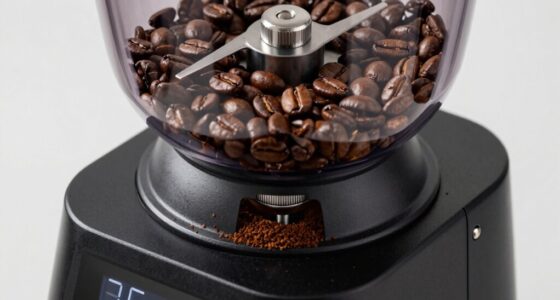
Starting with a single-serve coffee maker can seem simple, but many beginners make common mistakes that affect their coffee experience. One of the most important things to get right is the coffee grind. If your grind is too coarse, your coffee may end up weak and under-extracted, lacking flavor and body. Conversely, if it’s too fine, the water struggles to flow through, leading to over-extraction and a bitter taste. To avoid these issues, pay attention to the recommended grind size for your machine and experiment with small adjustments until you find the perfect balance. Using the proper grind guarantees your coffee brews evenly and develops the intended flavor profile. Additionally, understanding the influence of contrast ratio can help you optimize your brewing environment, ensuring that lighting conditions do not interfere with your coffee setup or tasting experience.
Pay attention to your grind size; it’s key to a balanced, flavorful brew.
Another critical factor often overlooked is water quality. Water makes up about 98% of your coffee, so its quality directly impacts the taste. Tap water with high mineral content or impurities can cause off-flavors, build up mineral deposits in your machine, and shorten its lifespan. Ideally, use filtered or bottled water to ensure your coffee tastes fresh and clean. If you prefer tap water, consider running it through a charcoal filter or letting it sit overnight to allow chlorine to evaporate. Clean water not only enhances flavor but also helps maintain your machine’s performance over time.
Many beginners also tend to neglect the importance of measuring coffee and water accurately. Using a scoop or guessing can lead to inconsistent results. Invest in a digital scale to measure your coffee grounds precisely, ensuring each brew is balanced and flavorful. Similarly, follow your machine’s recommended water-to-coffee ratio, as too much water can dilute the coffee, while too little can make it overly strong and concentrated. Consistency is key to developing your palate and enjoying a reliably good cup every time.
Lastly, don’t forget to keep your machine clean. Residual coffee oils and mineral buildup from water can affect taste and clog internal parts. Regularly descale your machine with a vinegar or descaling solution, and rinse thoroughly. Proper maintenance prevents mold and bacteria growth, ensuring each cup tastes fresh and pure.

Horavie Single Serve Coffee Maker with Built-in Grinder, Fast Brew 6-16oz Single Cup for Whole Beans, Grounds, K Pod, Grind and Brew Coffee Maker with 47oz Water Tank, Descaling Alert, Black
- Versatile Coffee Options: Uses beans, grounds, or K-pods
- Fast Brewing Time: Brew a cup in just 2 minutes
- Built-in Reusable Bean Basket: Freshly grind beans on demand
As an affiliate, we earn on qualifying purchases.
As an affiliate, we earn on qualifying purchases.
Frequently Asked Questions
Can I Use Regular Ground Coffee in a Single Serve Coffee Maker?
Yes, you can use regular ground coffee in a single serve coffee maker, but it’s not always ideal. Make certain the coffee grind is medium or fine, depending on your machine’s brew strength options. Using the right grind guarantees maximum extraction and flavor. If the grind is too coarse, the brew might be weak; too fine, and it could clog your machine. Adjusting the grind helps you achieve the perfect brew strength and taste.
How Often Should I Descale or Clean My Coffee Machine?
You should descale your coffee machine every 3 to 6 months, depending on your water hardness and usage. Regular descaling frequency prevents mineral buildup and keeps your machine brewing fresh coffee. Follow cleaning tips like using vinegar or descaling solutions, and always rinse thoroughly afterward. This routine maintenance guarantees your coffee stays flavorful and your machine runs smoothly, saving you time and costly repairs in the long run.
Is It Safe to Use Filtered Water Instead of Tap Water?
Yes, using filtered water is safe and often better for your coffee maker. Water quality impacts coffee filtration, so filtered water reduces mineral buildup and improves taste. It’s a smart choice over tap water, especially if your tap has high mineral content or impurities. Just make sure your filter is clean and changed regularly to maintain ideal performance and flavor. This keeps your machine running smoothly and your coffee tasting great.
What Type of Coffee Pods Are Compatible With My Machine?
You should check your coffee maker’s pod compatibility before buying. Most machines work best with specific brands or types, so look for pods labeled compatible with your model. Store your pods in a dry, cool place to keep them fresh. Using incompatible pods can clog your machine or ruin your coffee, so always verify compatibility and keep your pods properly stored to ensure great-tasting brew every time.
Can I Make Other Beverages Besides Coffee With a Single Serve Machine?
Imagine starting your day with more than just coffee—your single serve machine can do that. Yes, you can make alternative beverage options like tea, hot chocolate, or even instant soups. With machine customization, you can easily switch between drinks, making your mornings versatile and exciting. Just guarantee you use the right accessories and follow your machine’s guidelines for each beverage type. Now, every sip feels personalized and perfect.

12 Pack Replacement Charcoal Water Filters for All Cuisinart Coffee Machines – Cuisinart Compatible (NOT KEURIG) Filters Fit Both Newer & Older Models Cuisinart Coffee Makers
- Enhances Coffee Flavor: Removes impurities for better taste and aroma
- Compatible with Cuisinart: Designed for all Cuisinart coffee makers
- Easy to Install: Simple replacement for quick setup
As an affiliate, we earn on qualifying purchases.
As an affiliate, we earn on qualifying purchases.
Conclusion
By avoiding these common mistakes, you’re setting the stage for perfect brews every time. Think of your coffee maker as a trusted partner, ready to deliver warmth and comfort with each cup. When you follow these simple steps, you’re not just brewing coffee—you’re creating moments of joy. Remember, a little care now prevents a ruined brew later. So, embrace these tips, and let your coffee making journey be as smooth as a well-poured cup.

Maestri House S2 Espresso Coffee Scale with Timer 0.1g Precision Shot Scale
- Compact and Portable Design: Fits in your palm, lightweight for travel
- High Precision Measurement: 0.1g accuracy for perfect brewing
- Multiple Units & Timer Modes: Switch between g/oz/ml and dual timing
As an affiliate, we earn on qualifying purchases.
As an affiliate, we earn on qualifying purchases.

IMPRESA Coffee Machine Descaler, 2-Pack (1-Year Supply) Universal Descaling
- 2-Pack Coffee Descaler: Includes two 8-ounce bottles for multiple uses
- Effective Cleaning Formula: Made in USA, removes residue and buildup
- Long-Lasting Power: Over 1 year of cleaning capacity per bottle
As an affiliate, we earn on qualifying purchases.
As an affiliate, we earn on qualifying purchases.