
In your first week with new appliances, review the user manuals thoroughly to understand proper operation and maintenance. Check and clean filters, vents, and coils regularly to prevent dust buildup and guarantee efficient performance. Establish a routine schedule for tasks like inspecting door seals and testing appliance functions. Address any minor issues immediately to prevent bigger problems later. By developing these habits early, you’ll enjoy trouble-free use for months to come—more tips await as you continue.
Key Takeaways
- Review and understand each appliance’s user manual and manufacturer guidelines during the first week.
- Inspect, clean, or replace filters, vents, and coils to ensure optimal airflow and efficiency.
- Establish a routine maintenance schedule, including door seal checks and filter replacements.
- Monitor appliance performance for unusual noises, leaks, or irregular operation, addressing issues promptly.
- Develop good habits early by conducting regular inspections and proper initial use to prevent future problems.

Are you feeling overwhelmed with all the new appliances you’ve just brought home? It’s normal to feel a bit daunted when you’re suddenly responsible for so many new gadgets. The first week is vital for setting the stage for smooth operation and avoiding future headaches. By focusing on a simple but effective checklist, you can prevent months of frustration and guarantee your appliances serve you well for years to come.
Start by thoroughly reading each appliance’s user manual. This might seem tedious, but it’s the best way to understand the specific maintenance needs and ideal operation tips for each device. Proper appliance maintenance from the beginning helps extend their lifespan and keeps them running efficiently. Don’t skip this step—knowing how to correctly use and care for your appliances now can save you money and hassle later. Additionally, familiarizing yourself with manufacturer guidelines can provide valuable insights into the optimal care for your appliances.
Reading user manuals thoroughly extends appliance lifespan and ensures efficient operation from the start.
Next, check all filters, vents, and coils. For appliances like refrigerators, air conditioners, and dishwashers, clean or replace filters as recommended. Dirty filters reduce energy efficiency, forcing appliances to work harder and consume more power. Keeping filters clean ensures your appliances stay energy-efficient, which can greatly lower your utility bills over time. Additionally, inspect vents and coils for dust or debris, and clear them out. Proper airflow is essential for maintaining efficiency and preventing overheating or breakdowns. Regularly inspecting these components can also help you catch potential issues early before they escalate. Incorporating routine inspections can further help maintain optimal appliance performance.
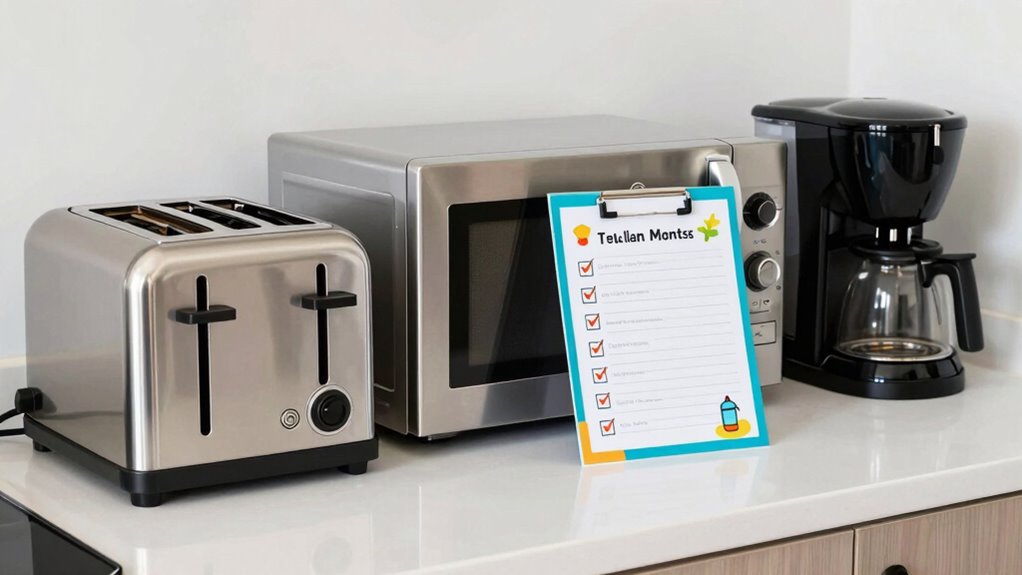
Set up a schedule for regular appliance maintenance. Mark specific dates in your calendar for tasks like cleaning filters, checking seals, or running diagnostic tests. Staying consistent prevents buildup and minor issues from turning into costly repairs. For example, a quick monthly check on your refrigerator’s door seals can keep cold air inside, improving energy efficiency and preventing unnecessary energy drain. Regular maintenance also involves monitoring appliance performance, which helps catch problems early. Establishing these routines now helps ingrain good habits that will benefit your appliances long-term.
Finally, pay attention to how your appliances perform during this first week. Notice any strange noises, leaks, or irregular functioning. Address minor problems immediately—sometimes, a simple adjustment or cleaning can restore ideal performance. If something seems off, don’t hesitate to consult the manual or contact a professional. Early intervention can prevent small issues from turning into major repairs down the line. Incorporating preventative maintenance practices can greatly enhance the longevity and reliability of your appliances.

2-Pack Refrigerator Door Seal for Whirlpool Models WRF535SMBM00 WRF535SWHZ04 WRF532SMHZ00 WRF532SMBM01 MFF2558VEM4 KBFS20ECMS00 WRF535SMBW00, Replaces Part Number W10830162 Refrigerator Door Gasket
- Designed for Whirlpool Models: Compatible with various Whirlpool refrigerators
- Energy-Saving Seal: Prevents cold air leaks and reduces energy costs
- High-Quality Material: Made of durable, flexible EPDM rubber
As an affiliate, we earn on qualifying purchases.
As an affiliate, we earn on qualifying purchases.
Frequently Asked Questions
How Long Should I Run Each Appliance During the First Week?
You should run each appliance for about 15-30 minutes daily during the first week to test their placement and guarantee proper functioning. Focus on ideal appliance placement for energy efficiency, avoiding overcrowding or blocking vents. Monitor how each appliance operates, and make adjustments if necessary. This approach helps identify issues early, promotes energy efficiency, and prevents future problems, making sure your appliances serve you well long-term.
What Safety Precautions Should I Take When Installing New Appliances?
Think of installing appliances like guiding a ship through calm waters—you need steady hands. Prioritize electrical safety by unplugging devices before installation, and follow appliance labeling instructions like a treasure map. Use insulated tools, verify your circuit breakers are off, and guarantee proper grounding. These precautions help prevent shocks or fires, keeping your new appliances and home safe as you navigate this exciting upgrade.
How Do I Troubleshoot Common Issues That Arise in the First Week?
To troubleshoot common issues in the first week, start by checking appliance placement—ensure items aren’t overcrowded or blocking vents. Confirm the power source considerations are met; verify the appliance is plugged in securely and that circuit breakers haven’t tripped. If it’s still not working, read the user manual for specific error codes or troubleshooting tips. Regularly inspect cords and connections to catch potential hazards early and keep everything running smoothly.
Are There Specific Cleaning Routines Recommended Initially?
Yes, establishing a cleaning schedule and performing initial maintenance is crucial. You should clean your appliances thoroughly during the first week, focusing on removing dust, debris, and any manufacturing residues. Wipe down surfaces, check filters, and run basic diagnostic tests. This routine guarantees peak performance and helps prevent future issues. Regular initial maintenance sets a solid foundation, making it easier to keep appliances in good shape and avoid costly repairs later.
When Should I Schedule Professional Maintenance After Installation?
You should schedule professional maintenance within the first few months after installation to guarantee ideal energy efficiency and to keep your warranty valid. During this visit, a technician can check for any issues and perform necessary adjustments. Don’t forget to register your appliance’s warranty, which often requires a maintenance checkup within this period. Regular professional tune-ups help extend your appliance’s lifespan and maintain peak performance.

K&N HVAC Filter Cleaner: 32 Oz Spray Bottle Filter Cleaner and Refresher; Restores K&N Home Air Filter Performance; 99-6010
- Cleans All K&N Home Air Filters: Cleans all K&N home air filters
- Restores Filter Performance: Removes build-up to restore performance
- Enhances Air Flow Efficiency: Restores air flow efficiency like new
As an affiliate, we earn on qualifying purchases.
As an affiliate, we earn on qualifying purchases.
Conclusion
By following this first-week appliance checklist, you set the stage for a smoother experience ahead. Think of it as gently guiding your new appliances into harmony, avoiding the subtle ripples of overlooked details. A little early attention now can help you sidestep months of minor frustrations later. Embrace this simple routine, and you’ll find your home runs more quietly and happily, turning what could be a rocky start into a seamless, comforting rhythm.

Sthovd WD49X24057 Dishwasher Ultra Fine Filter Kit Replacement for GE
- Precise Replacement Parts: Compatible with multiple GE models
- Wide Model Compatibility: Fits numerous GE dishwasher models
- Durable Construction: Sturdy, long-lasting filter material
As an affiliate, we earn on qualifying purchases.
As an affiliate, we earn on qualifying purchases.

Magnetic Home Maintenance Checklist – Monthly & Seasonal Home Care Planner – Household Upkeep Schedule – Made in USA
- Comprehensive Maintenance Checklist: Covers monthly and seasonal tasks
- Seasonally Organized Sections: Spring, Summer, Autumn, Winter
- User-Friendly Format: Large text and clean layout
As an affiliate, we earn on qualifying purchases.
As an affiliate, we earn on qualifying purchases.