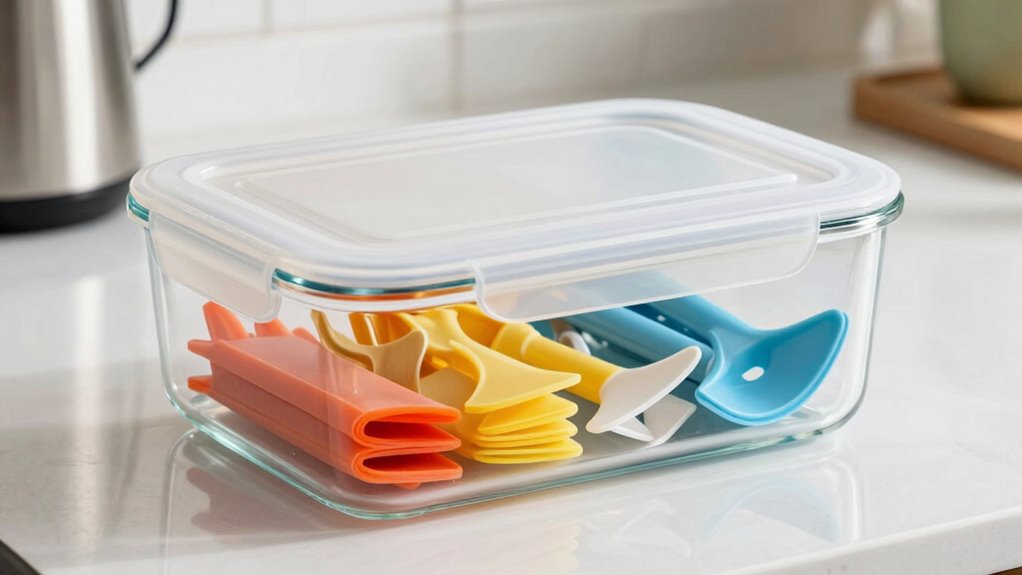
To store small appliance leftovers without losing texture, make sure everything is thoroughly cleaned and dried first. Use airtight containers or wrap delicate parts carefully to prevent moisture buildup and freezer burn. For components like blades or attachments, wrapping in plastic wrap works well. Label containers with dates and store on flat surfaces to avoid damage. Properly stored leftovers stay fresh longer and maintain their texture, so if you want to know more tips, keep exploring these storage strategies.

Get kitchen staples and gadgets delivered free with Prime
- Fast, free delivery on millions of items
- Prime Video, Amazon Music and more included
- Member-only deals all year
Key Takeaways
- Wrap delicate parts in plastic wrap or airtight bags to preserve texture and prevent moisture loss.
- Fill larger components with water or damp cloths before sealing to maintain moisture and shape.
- Use appropriate, moisture-proof containers labeled with storage dates to prevent spoilage and texture degradation.
- Store on flat, stable surfaces to avoid shifting or damage that could affect textures.
- Ensure all appliance parts are completely dry before freezing to prevent freezing damage and preserve texture.
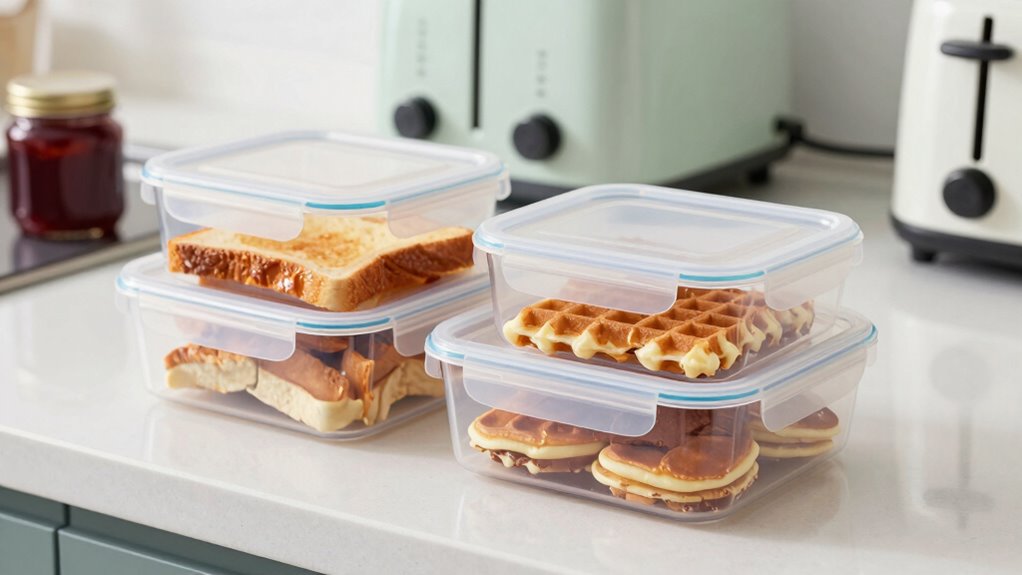
When you have leftovers from small appliances like blenders, food processors, or mixers, proper storage is essential to keep them functioning well and ready for future use. These appliances often have delicate parts and sensitive motors, so you need to handle leftovers carefully to prevent damage and preserve their texture. To do this effectively, focus on freezing techniques and container choices that protect the appliance components and maintain their quality.
Freezing techniques are critical because improper freezing can cause parts to shift or get damaged. Before storing, clean and dry the appliance thoroughly, making sure no food residue or moisture is left behind. When freezing, use a stable, flat surface to prevent the appliance or its parts from tipping over. For smaller components like blades or attachments, wrap them in plastic wrap or place them in small airtight bags before freezing. This prevents moisture buildup, which could cause corrosion or freezer burn. When it comes to larger parts like blender jars or food processor bowls, fill them with a little water or a damp cloth before sealing. This helps prevent cracking from temperature fluctuations. Always label your containers with the date of storage so you can keep track of freshness, ideally using a date system that prompts use within a few months. Additionally, understanding the importance of proper storage techniques can significantly extend the lifespan of your appliance parts. Proper storage is crucial to prevent damage caused by temperature changes and moisture exposure. Using protective measures like wrapping sharp or fragile components can also help avoid accidental damage during freezing. Incorporating correct handling practices ensures that your appliances remain in good condition for longer periods.
airtight food storage containers for small appliances
As an affiliate, we earn on qualifying purchases.
As an affiliate, we earn on qualifying purchases.
Frequently Asked Questions
How Long Can Small Appliance Leftovers Safely Stay in the Fridge?
You can typically keep small appliance leftovers in the fridge for 3 to 4 days, ensuring they stay safe and maintain quality. Pay attention to their shelf life to prevent spoilage, and always store leftovers in airtight containers. Food safety is key; if leftovers develop an off smell, flavor, or appearance, discard them promptly. Proper storage helps preserve texture and prevents foodborne illnesses.
What Containers Are Best for Preserving Texture?
Did you know that using the right containers can extend the freshness of leftovers by up to 50%? For preserving texture, opt for airtight containers to prevent moisture loss and maintain crunch. Vented lids are ideal when you need to release excess steam, especially for reheating. These choices help keep your small appliance leftovers tasting freshly made, ensuring they stay crisp and delicious longer.
Can Leftovers Be Frozen Without Losing Quality?
Yes, you can freeze leftovers without losing quality if you focus on flavor retention and texture preservation. To do this, store your leftovers in airtight containers, removing excess air to prevent freezer burn. Wrap foods tightly and freeze promptly. Using proper storage methods helps maintain the original flavor and keeps the texture intact, ensuring your leftovers taste fresh and enjoyable when you reheat them later.
How Do I Reheat Leftovers Without Sacrificing Texture?
Did you know that improper reheating can reduce food quality by up to 50%? To reheat leftovers without sacrificing texture, choose the right reheating techniques. Use a microwave on low power for gentle warming, or reheat in a skillet with a little oil to preserve crispness. Cover your food to retain moisture, and stir or flip occasionally. These methods help maintain the original texture and flavor of your leftovers.
Are There Specific Storage Tips for Different Appliances?
Yes, there are appliance-specific storage tips. Use texture-preserving containers designed for each appliance; for example, airtight containers work well for blenders, while shallow, vented containers suit coffee makers. Store leftovers promptly to maintain quality, and label containers with dates. Always follow manufacturer recommendations for storage, and avoid overcrowding to prevent damage. These tips help preserve the appliance’s texture and guarantee leftovers stay fresh longer.
plastic wrap for appliance parts
As an affiliate, we earn on qualifying purchases.
As an affiliate, we earn on qualifying purchases.
Conclusion
Storing small appliance leftovers correctly is the secret to keeping their texture intact and avoiding a culinary disaster. By following simple tips like airtight containers and proper cooling, you prevent them from turning into soggy or rubbery messes. Think of it as preserving a precious gem—your leftovers deserve the same care! When stored properly, your leftovers will stay fresh and delicious, making every bite feel like a gourmet delight, not a sad, limp disappointment.
freezer-safe appliance storage bags
As an affiliate, we earn on qualifying purchases.
As an affiliate, we earn on qualifying purchases.
As an affiliate, we earn on qualifying purchases.
Evergreen bestsellers Picks
bestsellers
As an affiliate, we earn on qualifying purchases.