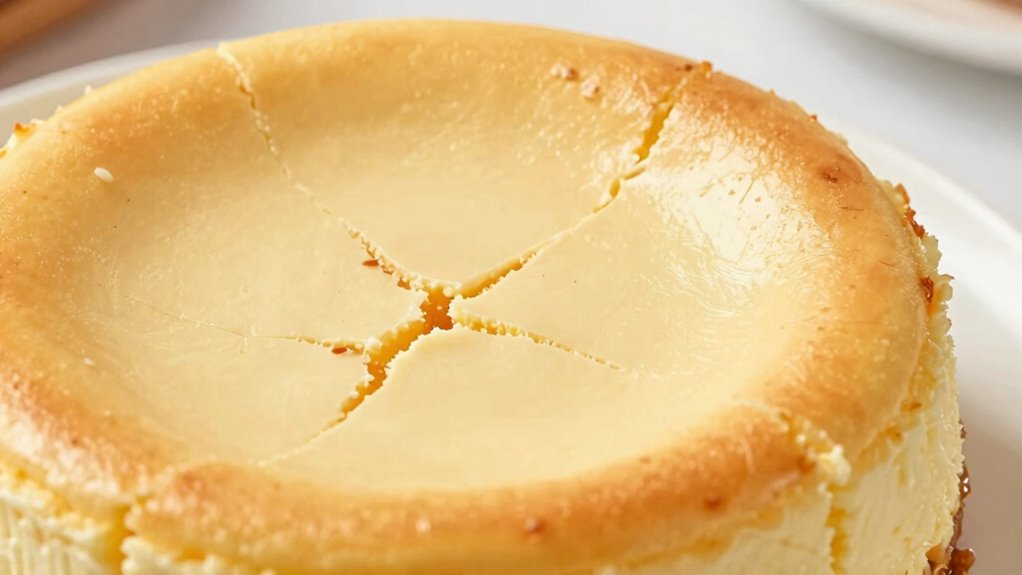

Even if you follow every step, your cheesecake can crack due to subtle factors like temperature fluctuations, ingredient differences, or cooling techniques. Quick changes in oven heat or overly aggressive cooling cause surface stress, leading to cracks. Using ingredients with varying moisture or fat levels can also affect stability. Pausing at each stage and controlling these small details helps, and if you keep exploring, you’ll uncover how to prevent cracks for good.
Key Takeaways
- Sudden temperature changes during baking or cooling cause surface stress and cracks.
- Overmixing introduces excess air, leading to expansion and fissures during baking.
- Using ingredients with varying moisture levels or substitutions can alter batter stability.
- Baking at too high a temperature causes rapid surface expansion, resulting in cracks.
- Rapid cooling or exposing the cheesecake to drafts stresses the structure and promotes cracking.
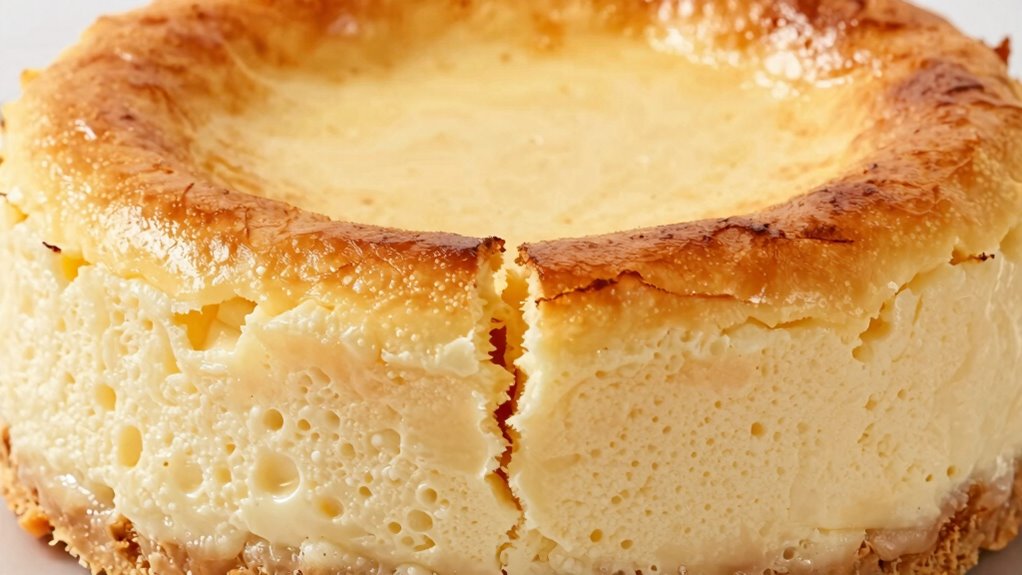
Cheesecakes often crack during baking or cooling, which can be frustrating if you’re aiming for a smooth, professional finish. You might follow the recipe perfectly, measure ingredients carefully, and even use water baths, but those pesky cracks still appear. One common culprit is baking temperature. If your oven runs hot or unevenly, the cheesecake’s surface can expand too quickly, causing it to crack as it cools. To prevent this, you should use an oven thermometer to guarantee your oven hits the right temperature and consider lowering the baking temperature slightly—often a few degrees below what the recipe specifies. Slow, gentle baking helps the cheesecake set evenly and reduces stress on the structure, minimizing cracks.
A hot oven can cause cheesecake cracks; lower the temperature slightly and bake slowly for a smooth finish.
Another factor that surprises many bakers is ingredient substitutions. When you swap ingredients—like using a different cream cheese brand, altering the amount of sugar, or replacing sour cream with Greek yogurt—you can unintentionally affect the cake’s texture and stability. These substitutions can change how the batter responds to heat, potentially leading to cracks. For example, some cream cheese varieties contain more moisture or stabilizers that influence how the cake bakes. If you need to make substitutions, do so cautiously. Stick to similar fat and moisture contents, and consider adjusting baking time or temperature accordingly. This way, you maintain the batter’s consistency and reduce the risk of cracking.
Beyond temperature and ingredients, other factors contribute to cracks. Overmixing the batter introduces excess air, which expands during baking and causes fissures. Conversely, underbaking can leave the center too soft, leading to cracks as it cools and contracts. Cooling plays a key role as well. Rapid cooling or exposing the hot cheesecake to cold air can cause the surface to contract quickly, resulting in cracks. To avoid this, turn off the oven when the baking time ends, crack the door open slightly, and let the cheesecake cool gradually at room temperature before refrigerating. Additionally, baking technique such as gentle mixing and proper cooling methods can make a noticeable difference. Being mindful of ingredient quality can also impact how well the cheesecake holds up and resists cracking. Furthermore, controlling the baking environment, including factors like humidity and airflow, can significantly influence the final appearance of your cheesecake. Paying attention to baking conditions allows for better consistency and fewer cracks.
In essence, cracking often comes down to controlling baking conditions—especially the temperature—and carefully considering ingredient substitutions. By paying close attention to these details, you can improve your chances of achieving a smooth, crack-free cheesecake. Remember, patience during cooling and handling your ingredients thoughtfully are just as essential as following the recipe. With practice, you’ll start to recognize the subtle cues and adjustments needed to keep your cheesecakes beautiful and flawless.
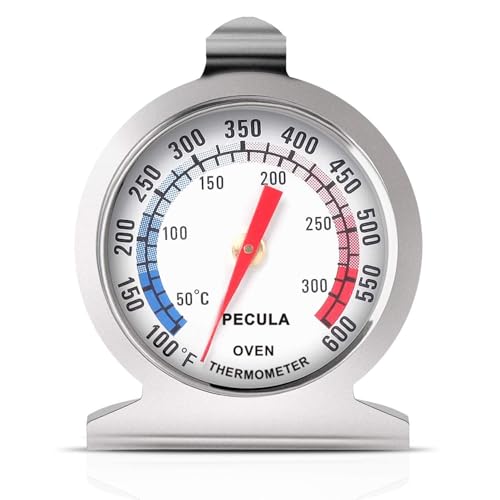
Stainless Steel Oven Thermometer 50-300°C/100-600°F, Analog Instant Read, Battery-Free Kitchen Cooking Thermometer, Hook & Stand Design Food Thermometer for Oven, Grill, Smoker, Fryer
- Clear Dual-Color Dial: Precise readings from 50–300°C / 100–600°F
- Flexible Placement Options: Hangs or stands on flat surfaces
- Battery-Free Operation: Instant, maintenance-free temperature readings
As an affiliate, we earn on qualifying purchases.
As an affiliate, we earn on qualifying purchases.
Frequently Asked Questions
Can Overmixing the Batter Cause Cracks?
Yes, overmixing the batter can cause cracks in your cheesecake. When you overmix, you incorporate excess air and disrupt the batter’s consistency, leading to a fragile structure that’s prone to cracking during baking. Use gentle mixing techniques and aim for a smooth, just combined batter. Keeping an eye on batter consistency helps prevent cracks, ensuring a creamy, crack-free cheesecake every time.
Does Oven Temperature Affect Cheesecake Cracking?
Yes, oven temperature affects cheesecake cracking. If your oven’s too hot, the edges cook faster, causing the center to crack as it expands. Microwave temperature and baking humidity also play roles—high microwave heat can unevenly cook your cheesecake, and low humidity can dry out it out, increasing cracking risk. To prevent this, use a water bath, monitor oven temps closely, and maintain proper baking humidity for a smooth, crack-free cheesecake.
Should I Leave the Cheesecake in the Oven After Baking?
Think of leaving your cheesecake in the oven as gently tucking a baby to sleep. Once the baking duration is complete, turn off the oven and leave the door ajar, allowing a gradual cool-down. This cooling technique prevents sudden temperature shifts that cause cracks. You’re guiding your cheesecake to settle peacefully, avoiding stress cracks, and ensuring a smooth, flawless surface. Patience in cooling is just as essential as precise baking.
Can Using Cold Ingredients Prevent Cracks?
Using cold ingredients can help prevent cracks in your cheesecake by improving temperature control during mixing. When ingredients are at room temperature, the batter heats unevenly, increasing the risk of cracks. Freshness also matters — fresh ingredients blend better, reducing air bubbles that cause cracks. So, always use ingredients that are slightly chilled or at room temperature, and mix carefully to maintain even temperature and texture, resulting in a smoother, crack-free cheesecake.
How Does Cheesecake Size Influence Cracking?
You notice that larger cheesecakes are more prone to cracking. With increased size, the cheesecake’s height and crust thickness matter—thicker crusts can help support the filling, reducing stress. A taller cheesecake experiences more pressure as it bakes, increasing the risk of cracks. To prevent this, keep the size manageable, use a water bath, and avoid overmixing, which can cause uneven expansion and cracks.
cheesecake baking temperature control
As an affiliate, we earn on qualifying purchases.
As an affiliate, we earn on qualifying purchases.
Conclusion
So, next time your cheesecake cracks, don’t despair—it’s usually just a tiny hiccup in an otherwise perfect creation. Remember, even the most experienced bakers face this mysterious flaw; it’s as common as a sunny day in summer. Keep experimenting, learn from each bake, and soon you’ll master the art of a flawless cheesecake, cracks or no cracks. After all, your baking journey is a thrilling adventure, and every crack is just a stepping stone to greatness!
As an affiliate, we earn on qualifying purchases.
As an affiliate, we earn on qualifying purchases.