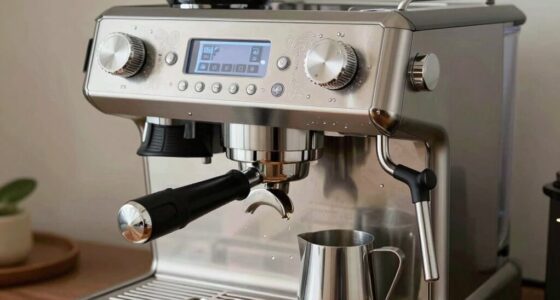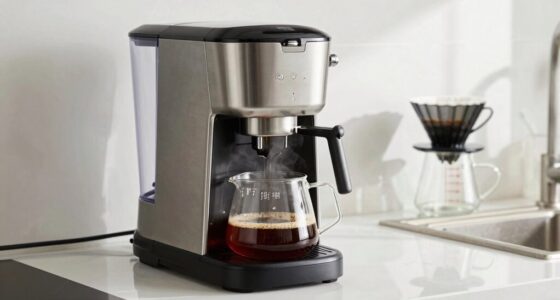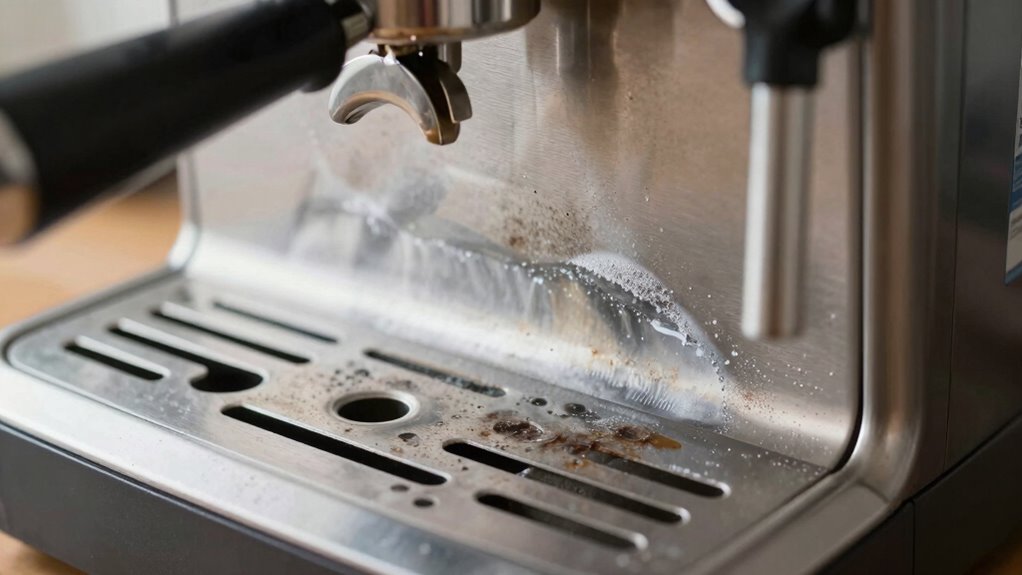
If your coffee starts tasting bitter, sour, or flat, it’s a sign your equipment might need descaling. You may also notice longer brewing times, irregular water flow, or difficulty reaching the right temperature. Reduced performance, weak espresso shots, or leaks can also point to mineral buildup. Ignoring these signs can harm your machine and impact flavor. Keep an eye out for these clues, and you’ll find ways to keep your coffee fresh and your equipment in top shape.

Get kitchen staples and gadgets delivered free — and shop member deals
- Fast, free delivery on millions of items
- Access to Prime Big Deal Days deals on October 6–7
- Prime Video, Amazon Music and more included
Key Takeaways
- Notice a decline in brew flavor quality, such as bitterness, sourness, or flatness.
- Observe longer brewing times or inconsistent water flow during operation.
- Experience weaker espresso shots or less hot coffee than usual.
- Detect mineral deposits or buildup on internal components or heating elements.
- The machine takes longer to reach optimal temperature or shows signs of reduced efficiency.

Have you ever noticed your coffee tasting off or your machine taking longer to brew? If so, it might be a sign of coffee mineral buildup inside your equipment. Over time, minerals from water—mainly calcium and magnesium—accumulate on the internal components, forming a stubborn layer that affects performance and taste. This buildup can clog small passages and interfere with the brewing process, making your coffee less flavorful and your machine less efficient. Recognizing the early signs of mineral deposits is vital for maintaining your equipment’s lifespan and guaranteeing each cup tastes just right.
Mineral buildup can impair coffee flavor and machine performance over time. Regular descaling is essential.
One of the clearest indicators that your coffee machine needs descaling is a noticeable decline in the quality of your brew. If your coffee starts tasting bitter, sour, or just flat compared to usual, it’s a sign that mineral deposits may be interfering with the water flow and extraction process. Additionally, if you observe that your machine is taking longer to brew or that it’s struggling to reach the perfect temperature, these are signs of buildup obstructing the heating elements or water pathways. You might also notice small leaks or irregularities in the water flow, hinting that mineral deposits are causing blockages.
Another common symptom is a change in the machine’s performance. For instance, if your espresso shot is weaker than usual or your drip coffee isn’t as hot, it could be due to mineral buildup insulating the heating elements or clogging the spray head. These issues often develop gradually, so staying alert to subtle changes can save you from more significant problems down the line. Regularly inspecting and cleaning your equipment is part of effective equipment maintenance tips, helping you catch early signs before they escalate into costly repairs. Moreover, understanding the effects of mineral buildup can motivate more proactive cleaning habits. Knowing what causes this accumulation, such as hard water, helps in choosing the right preventative measures. Using appropriate descaling methods can also extend the life of your machine and improve your coffee’s flavor. Additionally, incorporating preventative maintenance routines can significantly reduce the frequency of descaling needed. Regular use of water softening techniques can further decrease mineral deposits and promote better performance.
As an affiliate, we earn on qualifying purchases.
Frequently Asked Questions
How Often Should I Descale My Coffee Machine?
You should descale your coffee machine every 1 to 3 months, depending on your water hardness. Regular descaling helps maintain ideal brewing temperature and preserves your coffee bean’s flavor. If you notice a decrease in coffee quality or longer brewing times, it’s time to descale. Using fresh water and adjusting frequency based on your water source ensures your machine runs smoothly and produces great-tasting coffee every time.
Can Descaling Damage My Coffee Equipment?
Descaling, if done properly and with the right products, won’t damage your coffee equipment. In fact, regular descaling supports your cleaning frequency and helps maintain equipment longevity. However, using harsh chemicals or over-descaling can harm sensitive parts. Always follow your manufacturer’s instructions, and use recommended descaling solutions to guarantee your machine stays in top shape without risking damage. Proper care keeps your coffee tasting great and prolongs its lifespan.
What Are Natural Descaling Alternatives?
You can absolutely use natural remedies or alternative solutions to descale your coffee equipment! Think of vinegar or lemon juice as mighty superheroes that fight off mineral buildup without harsh chemicals. These natural solutions are gentle but incredibly effective, making your machine sparkle like new. Just mix equal parts water and vinegar or lemon juice, run it through your machine, and enjoy a fresh, clean brew—no damage, just pure, natural power!
How Do I Know Descaling Was Successful?
You’ll know descaling was successful when your coffee flavor improves, becoming richer and more consistent. Additionally, your equipment’s longevity increases as mineral build-up diminishes, reducing wear and tear. After descaling, run a few brewing cycles with water to clear any residue. If your coffee tastes better and your machine runs smoothly without clogs or delays, you’ve effectively descaled your equipment, ensuring peak performance and tasty brews.
Is Descaling Necessary for All Coffee Machines?
Yes, descaling is necessary for all coffee machines, regardless of type. Regular coffee maintenance with descaling helps prevent mineral buildup, ensuring your equipment lasts longer and performs at its best. If you notice slow water flow or off-tastes, it’s time to descale. By maintaining your machine properly, you enhance equipment longevity and keep your coffee tasting fresh. Don’t skip this step, especially if you have hard water, to protect your investment.
As an affiliate, we earn on qualifying purchases.
Conclusion
Imagine a steaming cup of coffee, rich and bold, pouring smoothly into your mug—no bitter taste or sluggish brew. When your coffee equipment needs descaling, it’s like trying to enjoy that perfect sip through a foggy window. Regularly descale to keep your machine gleaming and your coffee tasting its best. Don’t let mineral buildup cloud your mornings—descale now, and let every cup be a warm, inviting hug in a mug.
As an affiliate, we earn on qualifying purchases.
water softening for coffee machines
As an affiliate, we earn on qualifying purchases.
As an affiliate, we earn on qualifying purchases.
NFL season / tailgating Picks
team gear
As an affiliate, we earn on qualifying purchases.