
To keep your ice maker performing well, clean it regularly every 3-6 months using a vinegar-water mix or manufacturer-approved cleaner, and unplug it before starting. Remove and wash all removable parts with warm, soapy water, and wipe interior surfaces with a soft cloth. Check for mineral buildup, replace filters if needed, and run a rinse cycle. Staying on top of maintenance helps prevent issues like cloudy or stale ice—continue to discover more tips for peak performance.

Get kitchen staples and gadgets delivered free — and shop member deals
- Fast, free delivery on millions of items
- Access to Prime Big Deal Days deals on October 6–7
- Prime Video, Amazon Music and more included
Key Takeaways
- Follow the manufacturer’s recommended cleaning schedule every 3-6 months to prevent buildup and maintain efficiency.
- Turn off and unplug the machine before cleaning, and remove all removable parts for thorough cleaning.
- Use a vinegar-water mixture or approved cleaner, scrubbing hard-to-reach areas with a small brush.
- Rinse all parts thoroughly and run a cleaning cycle or flush with fresh water to remove residues.
- Regularly inspect and replace water filters to prevent mineral buildup and ensure optimal ice quality.
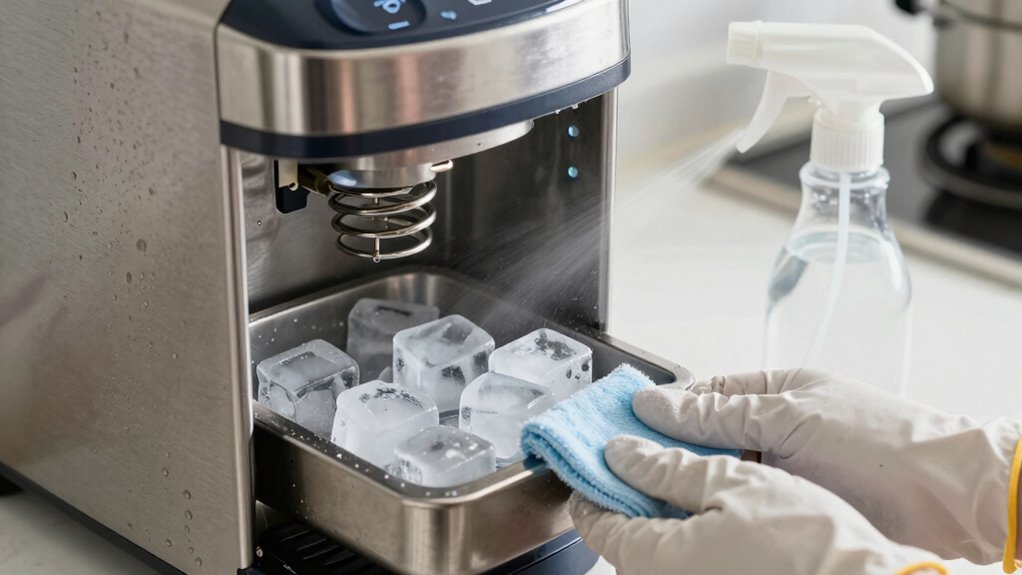
Keeping your ice maker clean and well-maintained is essential for guaranteeing the production of fresh, quality ice and extending its lifespan. When you neglect regular cleaning, mineral build-up, mold, and bacteria can develop, which quickly impacts ice quality. You might notice cloudy, stale-tasting ice or even experience unusual odors. These issues are signs it’s time for some maintenance, and addressing them promptly can prevent bigger problems down the line.
Regular cleaning prevents mold, bacteria, and mineral buildup, ensuring fresh, high-quality ice and extending your ice maker’s lifespan.
If you want to keep your ice machine troubleshooting simple, develop a routine cleaning schedule. Most manufacturers recommend cleaning your ice maker at least once every three to six months, depending on usage. Regular cleaning not only maintains hygiene but also improves efficiency, meaning your machine runs smoothly without overworking itself. To start, turn off the machine and unplug it for safety. Remove all removable parts—bins, trays, and water supply lines—and wash them with warm, soapy water. Avoid harsh chemicals that might damage the components or leave residues that could taint the ice.
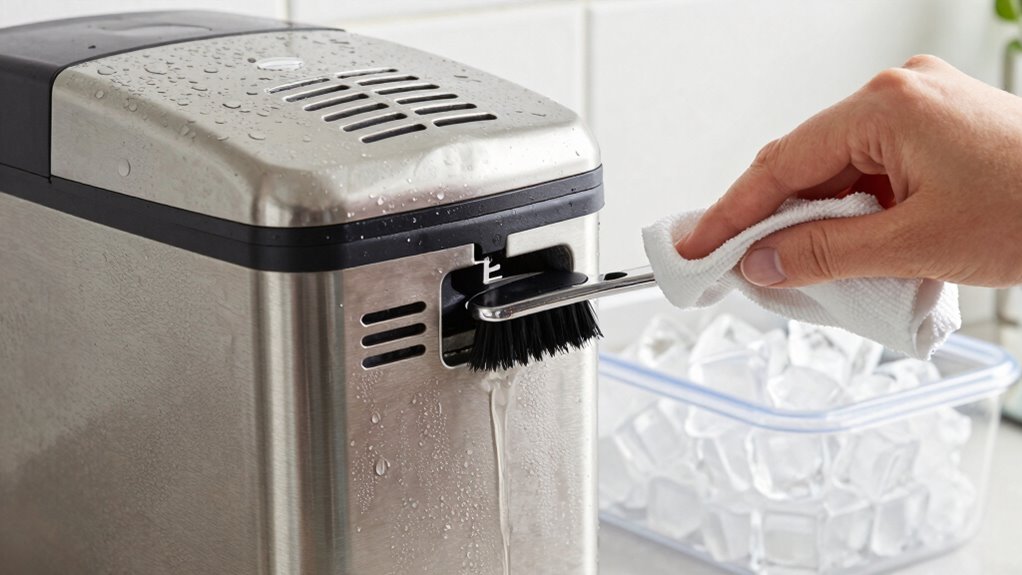
Next, clean the interior surfaces of the ice maker using a mixture of vinegar and water or a manufacturer-approved cleaner. This helps dissolve any mineral deposits, mold, or algae that can develop over time. Use a soft cloth or sponge to wipe down all surfaces, paying special attention to areas around the ice production chamber and water inlet. For hard-to-reach spots, a small brush or toothbrush can be very effective. Regular cleaning, combined with proper maintenance practices, can help prevent the buildup of contaminants that compromise ice quality. Incorporating routine inspections can help catch potential issues early before they become major problems. Additionally, ensuring proper water quality can significantly reduce the rate of mineral buildup and bacterial growth. Using a good water filtration system can be an effective way to maintain clean water supply and improve ice quality. After cleaning, rinse thoroughly with clean water to remove any cleaning solution residues.
Once everything is dry, replace the components and run a cleaning cycle or flush the system with fresh water. This step ensures that any remaining cleaning agents are flushed out, preventing contamination. If you notice your ice quality improving after cleaning, it’s a good sign that your routine is effective. On the other hand, persistent issues like cloudy ice or strange tastes may point to deeper problems, such as mineral buildup or a faulty water filter. In such cases, you might need to troubleshoot further or consider replacing filters or other parts.
Maintaining your ice maker isn’t just about cleaning; it’s about understanding how to keep everything operating efficiently. Proper maintenance minimizes the risk of breakdowns and keeps your ice fresh and safe to use. Regular attention to your machine’s condition also makes ice machine troubleshooting easier, as you’ll be familiar with its normal operation. Ultimately, consistent cleaning and upkeep lead to consistently high-quality ice, saving you time, money, and frustration in the long run. Additionally, following manufacturer recommendations can help ensure your machine stays in optimal condition over time.
As an affiliate, we earn on qualifying purchases.
Frequently Asked Questions
How Often Should I Replace the Water Filter in My Ice Maker?
You should replace your ice maker’s water filter every 6 to 12 months, depending on usage and water quality. Regular water filtration guarantees clean ice and peak performance. Keep an eye on the filter lifespan indicator, if available, and change the filter promptly when it signals. This routine replacement prevents buildup and maintains ice maker efficiency, ensuring fresh, clear ice every time you need it.
Can I Use Vinegar to Clean the Ice Maker?
You might find it funny, but vinegar cleaning actually works well for ice maker maintenance. Yes, you can use vinegar to clean your ice maker, as it effectively removes mineral buildup and odors. Just mix equal parts vinegar and water, run the solution through the ice maker, then rinse thoroughly with water. Regular vinegar cleaning keeps your ice maker in top shape, ensuring fresh, clean ice every time.
What Are Signs My Ice Maker Needs Professional Repair?
If you notice excessive ice buildup or water leakage around your ice maker, it’s time to call a professional. These signs often indicate underlying issues like faulty valves or clogged drains. You might also hear unusual noises or find inconsistent ice production. Addressing these problems early helps prevent further damage, ensuring your ice maker functions efficiently. Don’t ignore these warning signs—they’re your cue to seek expert repair.
How Do Temperature Settings Affect Ice Production?
Adjusting your ice maker’s temperature settings directly influences ice production. Proper temperature calibration guarantees the freezer stays cold enough for efficient ice formation without overworking the compressor. If the temperature is too high, ice formation slows or stops, reducing output. Conversely, setting it too low can cause excessive ice build-up, affecting performance. Regularly monitor and fine-tune the temperature to maintain ideal ice production and prevent premature wear.
Is It Safe to Use Commercial Cleaning Products?
Imagine your ice maker as a busy kitchen chef — using harsh commercial cleaning products can be like giving it a bad spice. It’s safe if you follow manufacturer instructions and rinse thoroughly, but always check cleaning schedules and maintenance tips first. Opt for food-safe cleaners designed for ice machines to keep it running smoothly and safely. Avoid risky chemicals to protect both your machine and the quality of your ice.
As an affiliate, we earn on qualifying purchases.
Conclusion
Keeping your ice maker clean is like giving it a fresh start, ensuring it runs smoothly and produces quality ice. Neglecting maintenance, however, is like ignoring a ticking time bomb—performance drops fast, and you’re left with subpar ice or even costly repairs. Think of regular cleaning as your ice maker’s best friend, preventing issues before they start. So, stay vigilant, maintain consistently, and enjoy crisp, clean ice whenever you need it—your ice maker’s best ally.
vinegar water cleaner for ice machine
As an affiliate, we earn on qualifying purchases.
As an affiliate, we earn on qualifying purchases.
small brush for ice maker cleaning
As an affiliate, we earn on qualifying purchases.
As an affiliate, we earn on qualifying purchases.
NFL season / tailgating Picks
team gear
As an affiliate, we earn on qualifying purchases.