
If your rice turns out hard in the rice cooker, soaking it first can make a big difference. Soaking helps the grains absorb water evenly, softening tough textures and reducing cooking time. For best results, rinse the rice well, then soak for at least 30 minutes (more for brown or wild rice). Proper soaking guarantees fluffy, tender rice every time, and if you want to learn more tips, keep exploring how to perfect your rice cooking process.

Get kitchen staples and gadgets delivered free — and shop member deals
- Fast, free delivery on millions of items
- Access to Prime Big Deal Days deals on October 6–7
- Prime Video, Amazon Music and more included
Key Takeaways
- Soak rice for at least 30 minutes to hydrate grains fully and improve tenderness before cooking.
- Use enough cold water to cover the rice completely during soaking for even water absorption.
- Gently stir the rice during soaking for uniform hydration and to prevent uneven texture.
- Drain excess water thoroughly after soaking to avoid overly soft or mushy rice in the cooker.
- Adjust soaking time based on rice variety; longer for brown or wild rice, shorter for sushi or medium-grain types.
As an affiliate, we earn on qualifying purchases.
Why Does Soaking Rice Make It Turn Out Better?
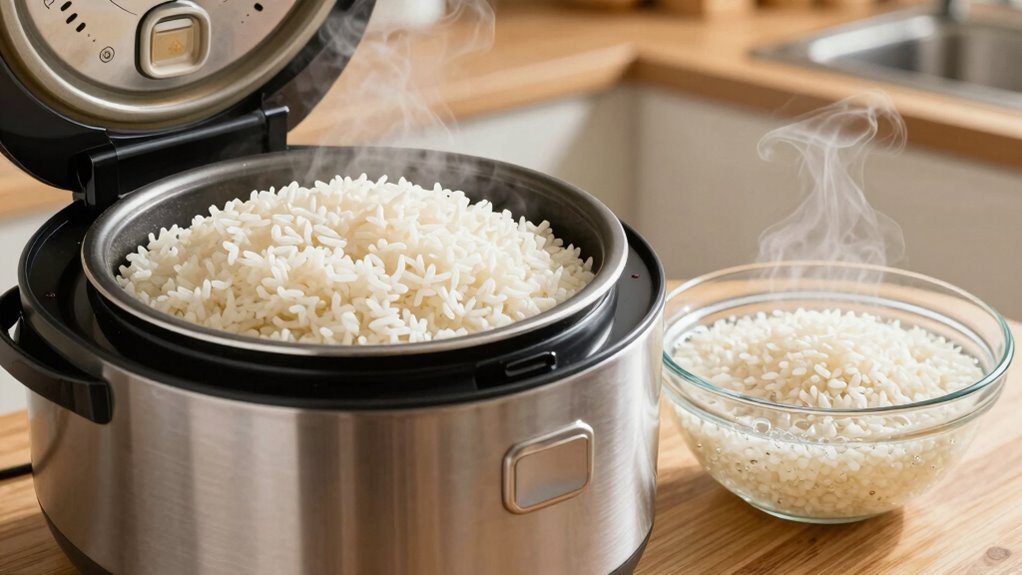
Soaking rice before cooking helps it absorb water gradually, which softens the grains evenly. This process offers several soaking benefits, especially when it comes to improving rice texture. When rice is soaked, the outer layers hydrate thoroughly, reducing cooking time and preventing uneven doneness. As a result, the grains become tender without becoming mushy. Soaking also helps break down some of the starches, leading to fluffier, less sticky rice. This step is particularly useful for varieties that tend to turn out hard or undercooked in a rice cooker. By softening the rice evenly, soaking ensures each grain cooks consistently, giving you a better overall texture. Additionally, proper water absorption during soaking can improve the rice’s final appearance and mouthfeel. Furthermore, understanding the varieties of rice can help you determine the ideal soaking time for different types. Ultimately, this simple step can make a significant difference in achieving perfectly cooked rice.
As an affiliate, we earn on qualifying purchases.
Which Types of Rice Benefit Most From Soaking?
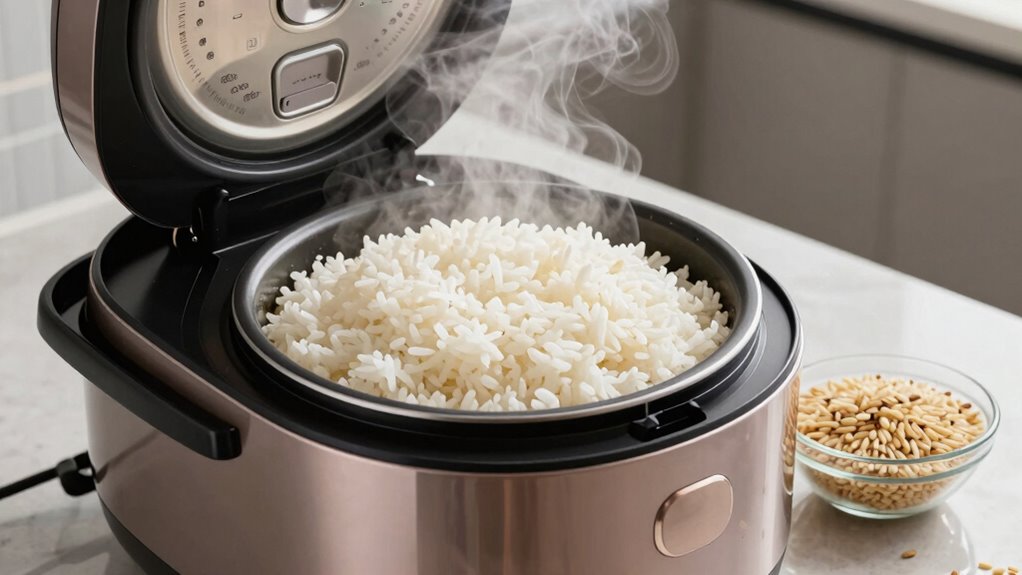
Certain rice varieties, especially those with high starch content or thick hulls, benefit the most from soaking. Soaking can improve the grain texture, making it less sticky or gummy and ensuring more even cooking. For example, long-grain and medium-grain rice types often have firmer, fluffier results after soaking, as it helps reduce surface starch and prevents clumping. Brown rice and wild rice, with their tougher hulls, also see significant soaking benefits—these varieties absorb water more slowly, leading to softer, more palatable cooked grains. Short-grain rice, commonly used for sushi, can become overly sticky if not soaked properly, so a quick soak helps achieve the ideal texture. Overall, soaking enhances the cooking process, especially for rice with dense or thick outer layers.
stainless steel rice soaking container
As an affiliate, we earn on qualifying purchases.
As an affiliate, we earn on qualifying purchases.
How to Soak Rice Properly for Fluffy, Tender Results
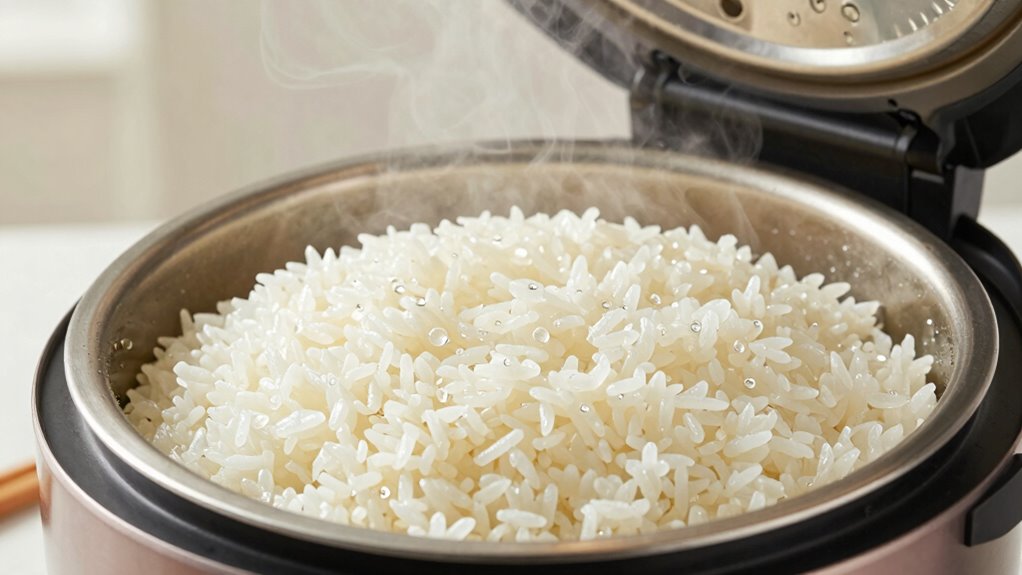
To achieve fluffy, tender rice, proper soaking is vital before cooking. Use soaking techniques that guarantee the rice absorbs enough water without becoming mushy. Start by rinsing the rice thoroughly to remove surface starch, then place it in a bowl with enough cold water to cover it completely. Let it soak for at least 30 minutes, or longer for firmer rice varieties. During soaking, gently stir the rice occasionally to distribute the water evenly. Drain excess water before cooking to improve rice texture. Proper soaking helps break down surface starches and softens the grains, resulting in a lighter, fluffier texture. Incorporating water absorption techniques into your soaking process can further enhance the rice’s final texture. Ensuring consistent water distribution during soaking is essential for even cooking and optimal results. Avoid over-soaking, which can make rice overly soft, and guarantee the rice is evenly hydrated for best results. Using the right soaking duration based on rice type can significantly impact the final outcome. Additionally, monitoring soaking temperature can help optimize the process for different rice varieties and desired textures. Incorporating ethical hacking techniques into your kitchen safety practices can help identify vulnerabilities in your cooking appliances or smart devices.
best rice cooker for fluffy rice
As an affiliate, we earn on qualifying purchases.
As an affiliate, we earn on qualifying purchases.
How Long Should You Soak Different Rice Varieties?
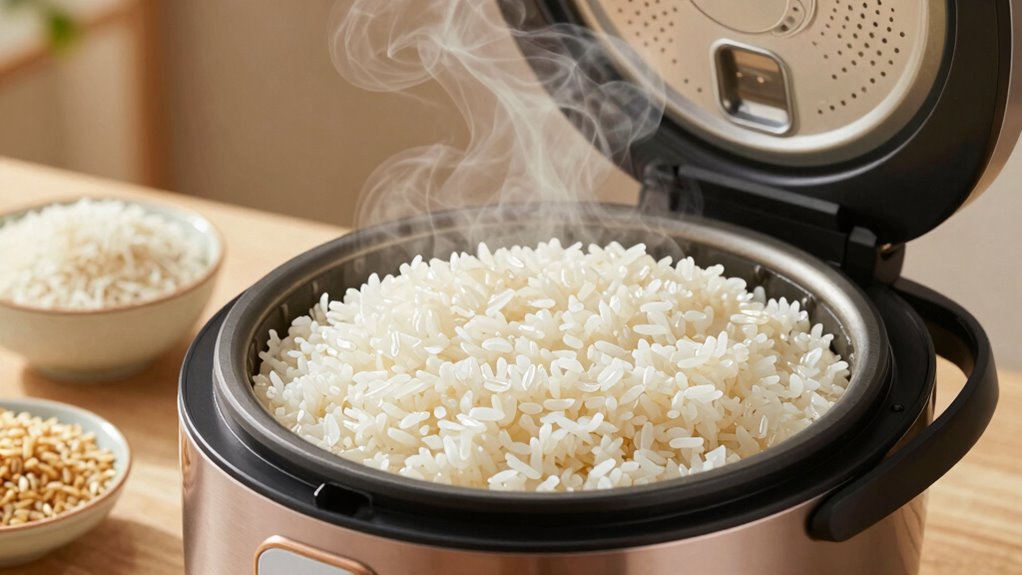
Different rice varieties require different soaking times to achieve ideal grain texture. For example, long-grain rice like basmati benefits from soaking for 30 minutes to 1 hour, which helps elongate the grains and improve fluffiness. Short-grain rice, such as sushi rice, typically needs a soaking duration of 20 to 30 minutes to achieve a sticky yet tender texture. Brown rice, with its tougher outer bran layer, benefits from soaking for 1 to 2 hours or even overnight, ensuring the grains soften properly. Wild rice may require 1 to 2 hours of soaking to improve its chewiness. Adjusting soaking duration based on the rice variety guarantees you get the right grain texture, preventing it from turning out too hard or undercooked in the rice cooker. Proper soaking techniques are essential to enhance rice quality and cooking results. Additionally, understanding the role of soaking can help optimize the texture for different dishes. Incorporating the benefits of soaking can also make a significant difference in achieving consistent and desirable results.
Common Mistakes When Soaking Rice and How to Avoid Them
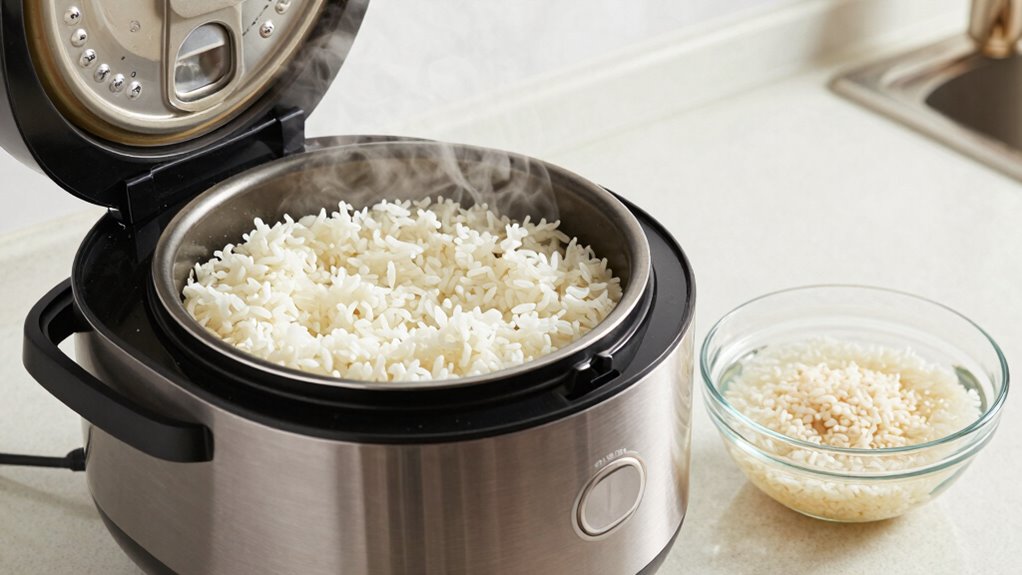
One common mistake is soaking rice for too long, which can lead to over soaking risks like overly soft grains or fermentation, ruining the texture and flavor. To avoid this, don’t leave rice submerged beyond recommended times. Additionally, the type of soaking container matters. Using a non-porous, airtight container helps prevent contamination and excess moisture absorption. Avoid using wide or shallow bowls that expose rice to air and contaminants, as they can cause uneven soaking or spoilage. Always opt for a clean, covered container suited for soaking, and stick to suggested soaking durations. Over soaking can compromise rice quality, so monitor your timing and choose the right container type to ensure perfect results every time. Understanding credit card security measures can also help protect your personal information during online transactions. Moreover, selecting the appropriate soaking method can significantly impact the rice’s final texture and taste. Using the correct soaking duration based on rice variety can further improve your cooking results. Proper container choice is essential to maintain optimal soaking conditions and achieve consistent quality. Additionally, paying attention to the body’s response during soaking can help prevent over-softening of the grains, especially for delicate rice types.
Step-by-Step: Incorporating Soaking Into Your Rice Cooker Routine
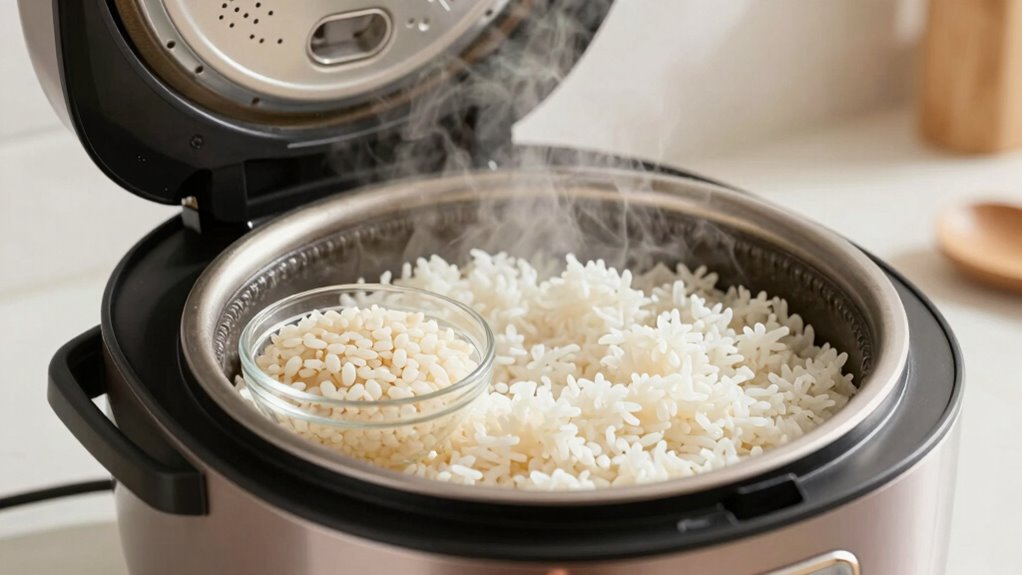
Incorporating soaking into your rice cooker routine can improve the texture and flavor of your rice, but it requires a simple, organized approach. Start by rinsing your rice thoroughly, then soak it in water for 30 minutes to 2 hours. This step enhances the soaking benefits, making the rice softer and less hard when cooked. Adjust your water-to-rice ratio based on the soaking time, as soaked rice absorbs more water. Use the table below to guide your process:
| Soaking Duration | Effect on Rice Texture |
|---|---|
| 30 minutes | Slightly softer, improved texture |
| 1 hour | Fluffier, less hard |
| 2 hours | Very tender, ideal soaking benefits |
Following this routine ensures better rice texture every time. Incorporating energy-efficient cloud servers concepts can also be seen as a way to optimize resource use and sustainability in your kitchen routines, much like selecting the right espresso machine for your needs enhances your coffee experience. Additionally, using fiber-rich ingredients like chia seeds or flaxseeds in your meals can support overall digestive health, aligning with tips for maintaining gut health on a keto diet.
Furthermore, understanding the role of stingless bees in pollination can inspire more sustainable practices in gardening and food production, ultimately benefiting your culinary experiences.
Does Soaking Reduce Cooking Time or Save Energy?
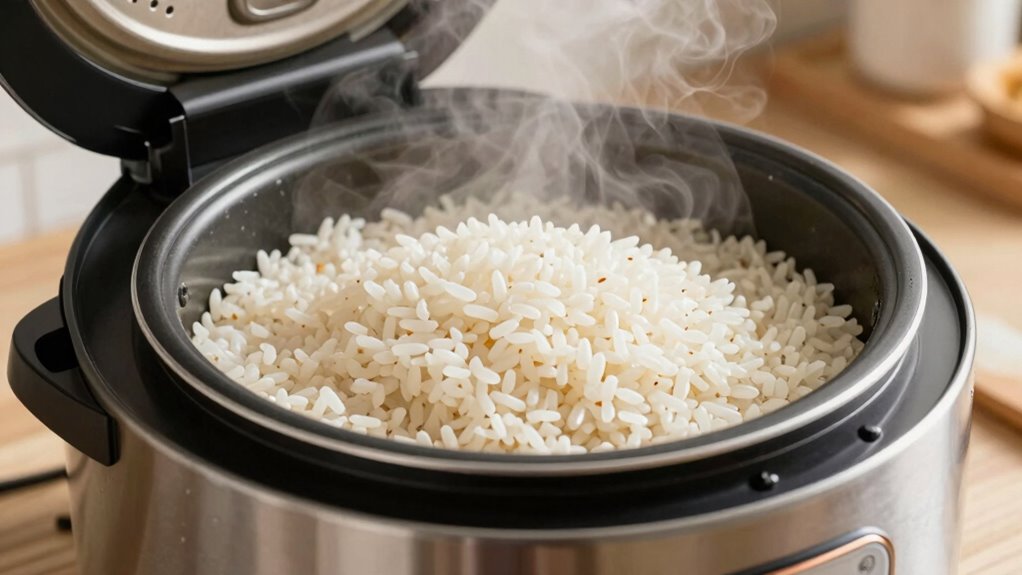
While soaking rice can slightly reduce the overall cooking time, the savings are often minimal and depend on the soaking duration. Shorter cooking times mean you might use a bit less energy, improving your energy savings slightly. However, the impact on cooking efficiency isn’t dramatic; most of the energy used in rice cooking comes from heating water and rice to boiling point. Soaking helps soften grains and can speed up the process, but the difference in energy consumption is usually small. If you soak rice for 30 minutes or more, you may see some improvement in cooking efficiency, though it’s often not enough to justify significant energy savings. Ultimately, soaking mainly benefits texture and doneness, with modest effects on time and energy use. Additionally, understanding media literacy can help you make informed decisions about cooking techniques and time-saving methods. Recognizing the energy consumption involved in various cooking methods can help you adopt more efficient kitchen habits.
What If Your Rice Is Still Hard After Soaking? Troubleshooting Tips
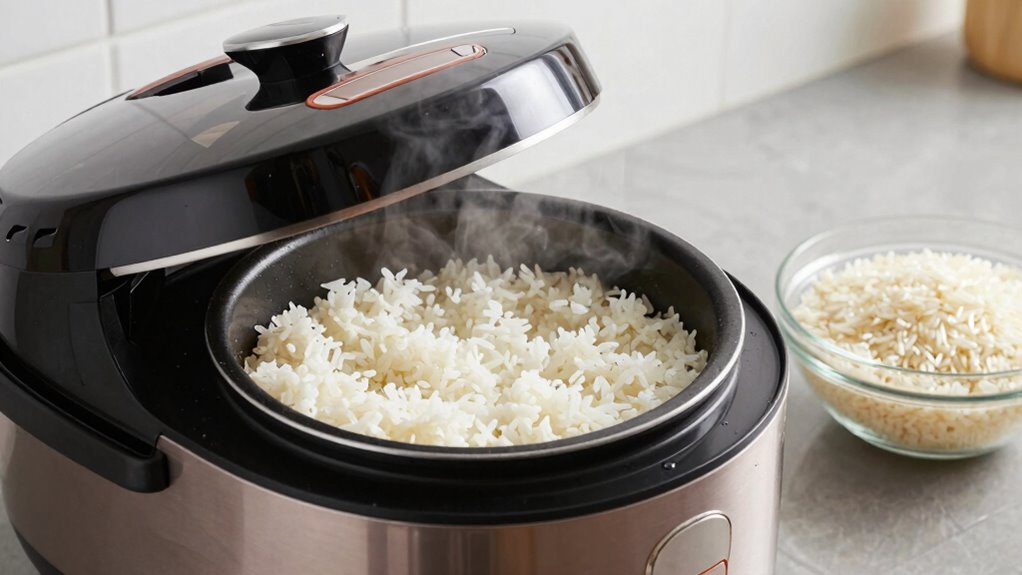
If your rice remains hard after soaking, start by checking your water-to-rice ratio to make certain it’s correct. You might also need to adjust the soaking time, giving the rice more or less time to soften properly. Making these tweaks can help you achieve the tender texture you want.
Check Water Ratios
When your rice remains hard even after soaking, checking the water-to-rice ratio is essential. Proper water absorption directly influences rice texture, making it tender and fluffy. Too little water results in uneven cooking and a firm texture, while too much can make rice mushy. Make certain you’re using the right ratio for your rice variety, as white, brown, or jasmine rice all require different amounts. Double-check your measurements and adjust accordingly.
- Use a reliable measuring cup for consistency
- Follow package instructions for water ratios
- Consider rice age and dryness
- Avoid overcrowding your rice cooker
- Remember that different rice types absorb water at different rates
Getting this right will improve your rice’s texture and prevent it from remaining hard.
Adjust Soaking Time
Even after soaking your rice, it can still turn out hard if the soaking time wasn’t sufficient. The key is adjusting the soaking duration based on the soaking temperature. If your rice was soaked in cold water, it may need more time for the rice grains to fully expand and soften. Warmer temperatures accelerate rice grain expansion, so reducing soak time might work better in warmer conditions. Conversely, if you soaked at a lower temperature, extend the soaking period to allow more moisture absorption. Experimenting with longer soak times helps ensure the grains absorb enough water to soften properly. Keep track of how long you soak and adjust accordingly to achieve tender, well-cooked rice without wasting time or effort.
How to Confirm Your Rice Is Properly Soaked and Ready to Cook
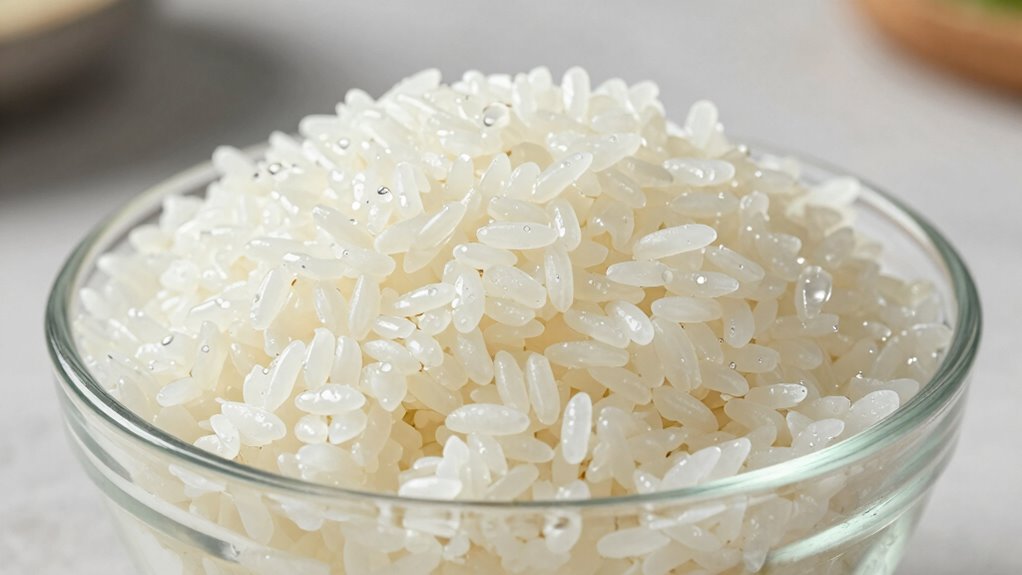
To confirm your rice is properly soaked, check if it feels soft and plump when you pinch a few grains. Observe how much water the rice has absorbed; it should look slightly translucent and have minimal excess water. When these signs are present, your rice is ready to cook and should result in a tender, fluffy texture.
Check for Softness
Before starting the cooking process, you should check if your rice has soaked enough to become tender. To do this, perform a texture check by gently pressing a few grains between your fingers or with a spoon. Proper water absorption will make the grains soft but not mushy. If the rice still feels firm or grainy, it needs more soaking time. Look for these signs:
- Grains are tender and slightly sticky
- No hard centers when pressed
- Water has been fully absorbed
- Texture feels uniform across the batch
- No resistance when biting or pressing
This step ensures your rice is adequately hydrated and ready for cooking, preventing undercooked or hard rice after steaming. Confirming softness guarantees a fluffy, well-cooked result without guesswork.
Observe Water Absorption
How can you tell if your rice has absorbed enough water and is ready to cook? Watch for the soaking consistency. Proper water absorption means the rice grains are plump and have swelled, indicating they’ve taken in enough water. You can test this by gently pressing a few grains; they should feel soft yet firm, not hard or dry. To confirm, compare the appearance of soaked rice with this table:
| Indicator | Description |
|---|---|
| Water absorption | Grains look plump and slightly translucent |
| Soaking consistency | Rice feels soft but maintains shape |
| Water level | Slightly below or just touching the rice surface |
| Grain texture | Soft to the bite but not mushy |
| Visual cue | Uniform swelling, no dry patches |
Once these signs appear, your rice has absorbed enough water and is ready to cook.
How Soaking Enhances Nutrition and Digestion of Rice
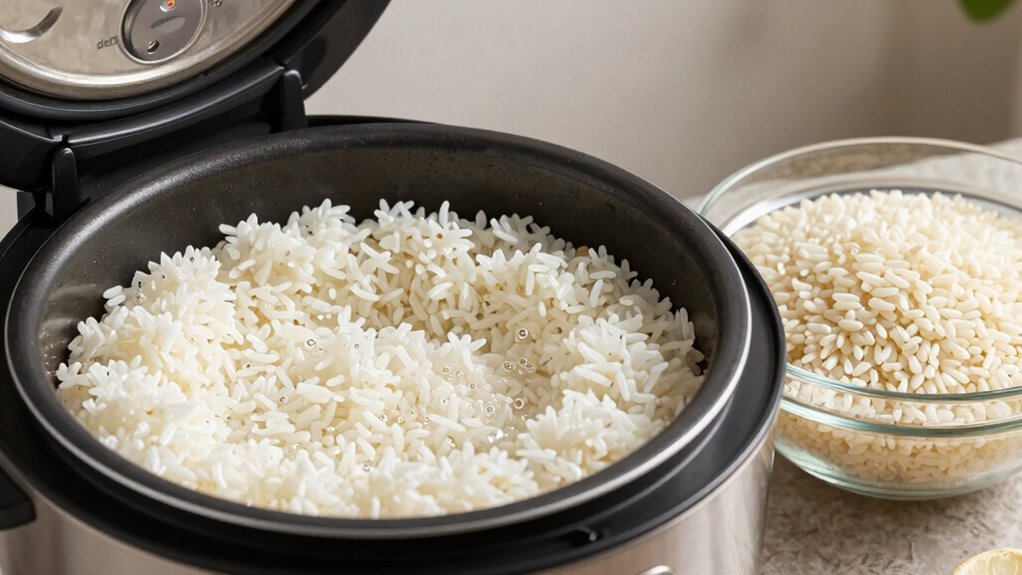
Soaking rice before cooking activates enzymes that break down complex starches and antinutrients, making the rice easier to digest. This process improves nutrient absorption and enhances digestion benefits, ensuring your body can better utilize the vitamins and minerals present. When you soak rice, you reduce phytic acid, which can inhibit mineral absorption, allowing your body to more effectively absorb iron, zinc, and magnesium. Additionally, soaking promotes the activity of enzymes that pre-digest starches, easing the workload on your digestive system. This can lead to less bloating and discomfort.
- Boosts mineral bioavailability
- Reduces anti-nutrients that hinder nutrient absorption
- Promotes gentle digestion for sensitive stomachs
- Enhances overall nutrient profile of rice
- Supports healthier gut function
Frequently Asked Questions
Can Soaking Rice Reduce Its Glycemic Index?
Yes, soaking rice can reduce its glycemic impact and boost health benefits. When you soak rice, it lowers the starch content, making it digenerate more slowly. This helps control blood sugar spikes and enhances nutrient absorption. Soaking also reduces anti-nutrients, supporting better digestion. By doing this simple step, you make your rice healthier and easier on your body, especially if you’re managing blood sugar levels or aiming for better overall health.
Is Soaking Necessary for All Rice Types?
No, soaking isn’t necessary for all rice types. Your choice depends on the rice’s cooking methods and soaking duration. For example, long-grain or brown rice benefits from soaking to reduce cooking time and improve texture, while white rice often doesn’t need it. If you decide to soak, aim for about 30 minutes to an hour, but adjust based on the rice’s variety and your preferred doneness.
How Does Soaking Affect Rice Shelf Life?
Did you know soaking rice can extend its shelf life by up to a week? When you soak rice, it boosts storage benefits and helps reduce microbial growth, making it safer to store longer. So, if you soak your rice before cooking, you not only improve texture but also slow down spoilage. Just remember to dry it thoroughly afterward to maximize these benefits and keep your rice fresh longer.
Can Soaking Remove Pesticides From Rice?
Soaking rice can help reduce certain surface pesticides, but it isn’t a foolproof method for complete pesticide removal. The soaking benefits include loosening dirt and some residues, which may include pesticides on the surface. To maximize pesticide removal, you should rinse rice thoroughly under cold water and soak it for about 30 minutes. Keep in mind, however, that some pesticides may penetrate the rice grains, requiring more advanced cleaning methods.
Does Soaking Change the Rice’s Flavor or Aroma?
They say “don’t judge a book by its cover,” but when it comes to soaking rice, it can subtly influence flavor enhancement and aroma preservation. Soaking may mellow the rice’s natural flavor, making it less intense, but it generally doesn’t considerably alter the aroma. If you want to keep the rice’s original aroma, soak briefly, and use fresh water. Proper soaking enhances texture without sacrificing the rice’s natural aroma.
Conclusion
Remember, patience is a virtue, especially when it comes to cooking rice. Soaking can transform tough grains into fluffy, tender perfection, saving you time and energy. Just like a good recipe, it’s all about the right steps and timing. Don’t rush the process—trust in the soak, and you’ll enjoy perfectly cooked rice every time. Sometimes, a little patience truly makes all the difference in achieving the best results.
NFL season / tailgating Picks
team gear
As an affiliate, we earn on qualifying purchases.