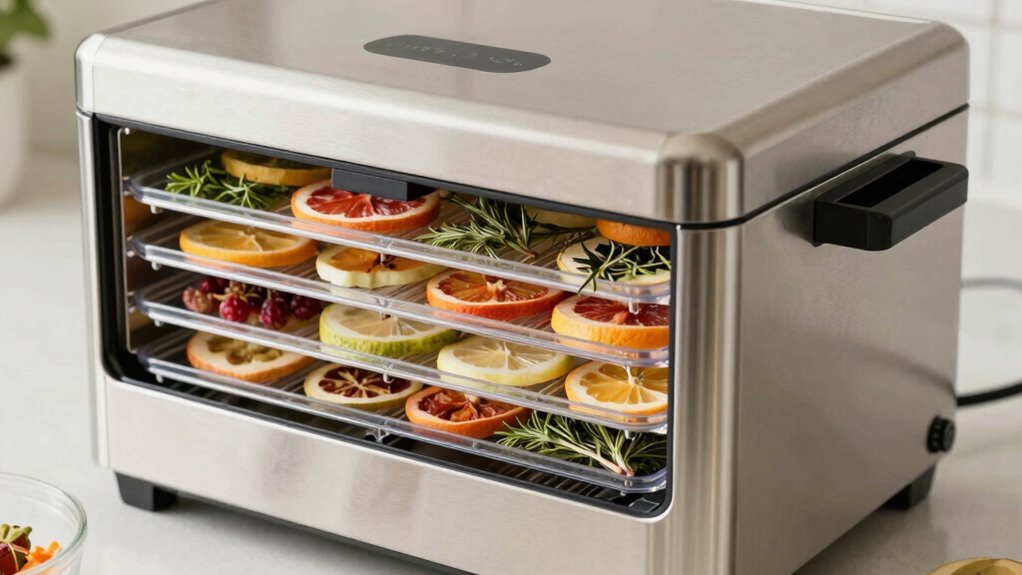
To avoid ruining food with your stainless steel dehydrator, start by thoroughly washing and evenly slicing your fruit with a sharp knife or mandoline, making certain uniform thickness. Set the correct temperature and drying time based on the type of fruit, avoiding high heat that can cook or toughen it. Don’t overcrowd the trays—leave space for air circulation—and consider pre-treatments like lemon dipping to prevent browning. Proper storage and record-keeping help maintain quality; learning more guarantees success.
Key Takeaways
- Thoroughly wash and evenly slice fruit to ensure uniform drying and prevent spoilage.
- Avoid overcrowding trays; leave space between slices for proper airflow and consistent dehydration.
- Set the correct temperature and drying time based on fruit type to prevent cooking or under-drying.
- Use appropriate pre-treatments like lemon dip or blanching to prevent browning and microbial growth.
- Store dried fruit in airtight containers away from light and humidity to maintain quality and extend shelf life.
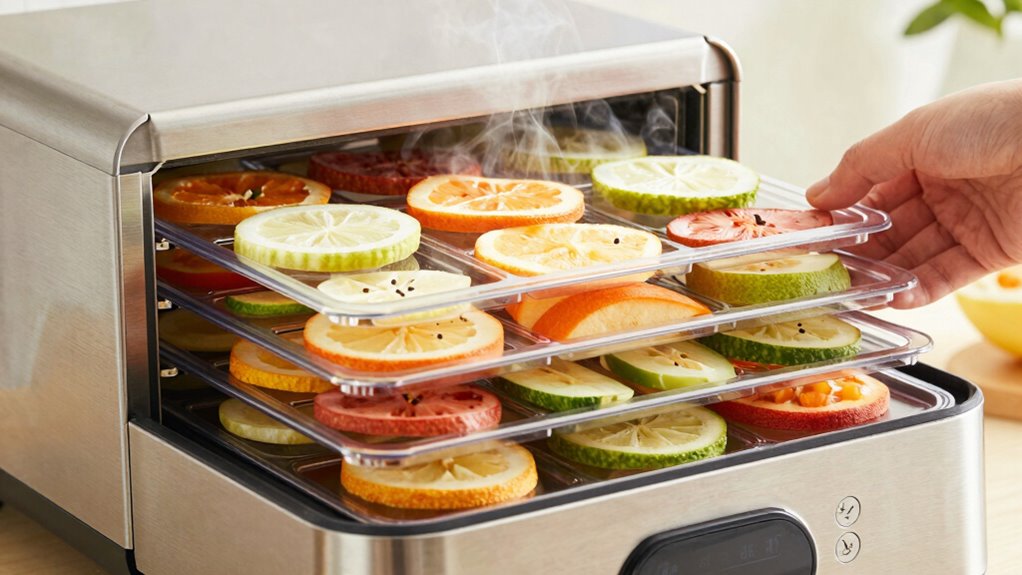
Starting with a stainless steel food dehydrator can be exciting, but beginners often make common mistakes that hinder their results. One of the biggest pitfalls is not understanding the basics of fruit preservation through dehydration. If you jump in without a clear plan, you risk ending up with improperly dried fruit that spoils quickly or loses its flavor and texture. To avoid this, you need to grasp the fundamental dehydration techniques, which include proper preparation and timing. Properly preparing your fruit is essential. Always wash and slice your fruit evenly, removing any stems, seeds, or bruised spots. Thin, uniform slices ensure consistent drying and prevent some pieces from over-drying while others remain damp. Using a sharp knife or mandoline can help you achieve even slices, which is indispensable for good fruit preservation.
Proper fruit prep and even slicing are key to successful dehydration.
Next, pay attention to the dehydration process itself. Setting the right temperature and drying time is necessary. Too high a temperature can cause the fruit to cook or become tough, while too low prolongs the process and risks mold development. Follow the manufacturer’s instructions and adjust based on the fruit type. For example, berries and softer fruits need lower temperatures, while thicker or denser fruits like apples or pears may require slightly higher heat. Keep in mind that dehydration techniques aren’t one-size-fits-all; some fruits benefit from pre-treatments like blanching or dipping in lemon juice to prevent browning and microbial growth. Understanding the importance of proper airflow can significantly improve dehydration results, as it ensures even drying and reduces spoilage risks.
Another common mistake is overcrowding the dehydrator trays. Overloading can block airflow, leading to uneven drying and compromised fruit preservation. Arrange sliced fruit in a single layer, leaving space between pieces to allow air to circulate freely. This not only speeds up the process but also ensures that each piece dries uniformly, reducing waste and improving quality. Regularly check on your fruit and rotate trays if needed, especially if your dehydrator doesn’t have a fan that evenly distributes heat.
Finally, don’t forget to document your drying process. Take notes on times, temperatures, and results so you can tweak your dehydration techniques for future batches. Proper storage after dehydration is equally important; once your fruit is dry, store it in airtight containers away from light and humidity. This will extend their shelf life and maintain their flavor and nutrients. Avoid rushing the process or skipping steps, and you’ll find that your fruit preservation efforts will yield delicious, long-lasting snacks. By understanding and applying correct dehydration techniques, you prevent common mistakes that can ruin your food, ensuring your dried fruit is flavorful, safe, and perfectly preserved.
Frequently Asked Questions
Can I Dehydrate All Types of Food in a Stainless Steel Dehydrator?
Yes, you can dehydrate most types of food in a stainless steel dehydrator, but it’s important to take into account food compatibility and equipment limitations. Some foods, like high-moisture fruits and vegetables, dehydrate well, while others, like oily or sticky items, may pose challenges. Always check your dehydrator’s guidelines to ensure it handles different food types properly, preventing damage and ensuring safe, effective dehydration.
How Do I Prevent Food From Sticking to the Trays?
Of course, food loves to stick—said no dehydrator user ever. To prevent this, use tray liners or parchment paper, which makes cleanup a breeze and keeps your food from sticking. Guarantee even spacing on the trays so air circulates properly, reducing the chances of sticking. Ironically, the trick to perfect dehydration is simple: keep things moving smoothly with liners and proper spacing, and your food will come out perfectly dry and intact.
What’s the Best Way to Store Dried Food Long-Term?
To store dried food long-term, you should use airtight containers to keep out moisture and pests. Store these containers in a dark, cool place to preserve flavor and nutrients. Make sure the food is completely dry before sealing to prevent mold. Label containers with dates so you use older dried foods first. Proper storage guarantees your dried foods stay fresh and delicious for months or even years.
How Often Should I Clean My Dehydrator?
They say “a stitch in time saves nine,” so you should clean your dehydrator regularly. Follow a cleaning schedule after every few uses, especially if you notice residue or odors. Maintenance tips include wiping down trays, cleaning the fan and vents, and avoiding harsh abrasives. Doing so keeps your dehydrator in top shape, guarantees food safety, and prolongs its lifespan. Consistent cleaning is key to hassle-free drying!
Is It Safe to Dehydrate Herbs Alongside Meats?
Yes, it’s safe to dehydrate herbs alongside meats if you prioritize herb safety and prevent meat contamination. To do this, keep meats and herbs on separate trays or run the dehydrator in between batches. Make sure your herbs are thoroughly cleaned, and don’t overlap the meat with herbs that might release moisture or bacteria. Proper separation and hygiene help avoid cross-contamination and guarantee safe, delicious dried herbs and meats.
Conclusion
Remember, haste makes waste, so take your time and follow these tips to avoid common mistakes. A stainless steel food dehydrator is a great investment, but only if you use it wisely. By paying attention to the details and learning as you go, you’ll preserve your food perfectly and save yourself from frustration. Stay patient and diligent—your future self will thank you for it. Happy dehydrating!