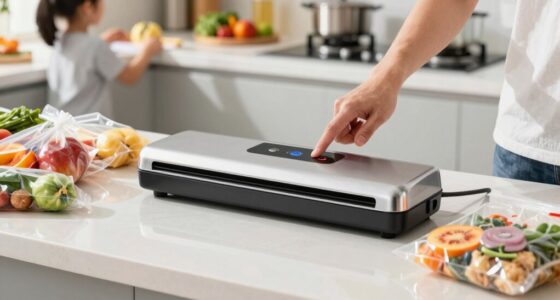

To avoid ruining your food with a vacuum sealer, ensure you seal bags properly by keeping edges clean and flat, and avoid rushing. Don’t overfill bags, leaving enough space for a secure seal, and wait for hot or moist foods to cool beforehand. Use quality equipment and regularly test seals for leaks. Finally, practice patience and attention to detail, as these habits will help protect your food and make sealing more effective. Keep going to discover more tips for success.

Get kitchen staples and gadgets delivered free — and shop member deals
- Fast, free delivery on millions of items
- Access to Prime Big Deal Days deals on October 6–7
- Prime Video, Amazon Music and more included
Key Takeaways
- Ensure bag edges are clean and dry before sealing to prevent leaks.
- Leave enough space (3-4 inches) at the top of the bag for a secure seal.
- Cool or dry hot foods to avoid moisture interfering with the vacuum process.
- Use quality equipment and test seals regularly to detect leaks early.
- Be patient and precise, taking time to verify a proper, airtight seal.

Starting with a vacuum sealer can save you time and keep your food fresh longer, but beginners often make simple mistakes that can compromise their results. To get the most out of your device, it’s important to understand some tips for beginners and recognize common pitfalls. Many newcomers overlook basic steps or rush through the process, leading to wasted food or damaged bags. Learning the correct techniques from the start helps make certain your food stays fresh and your machine functions properly.
Starting with a vacuum sealer saves time but requires careful technique for best results.
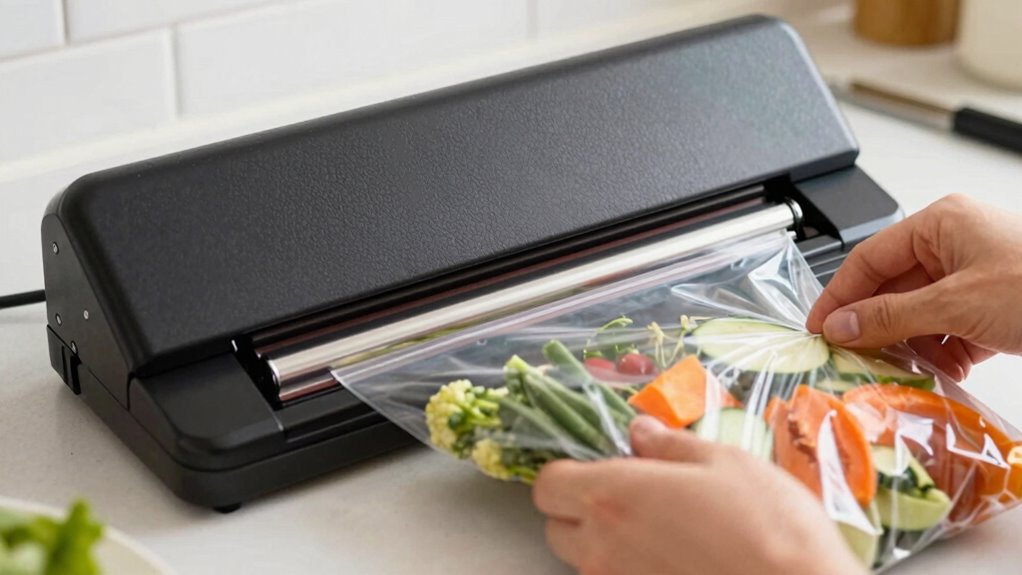
One common pitfall is not properly sealing the bags. Before sealing, always check that the edges are clean and free of crumbs or moisture. Food particles or liquids on the edge can prevent a proper seal, which causes air leaks and reduces freshness. Use a damp cloth to wipe the edges if needed, and double-check that the bag is flat against the sealing strip. It’s tempting to rush, but taking a moment to make certain a clean, even seal makes a big difference in preserving your food.
Another tip for beginners is to avoid overfilling the bags. When placing items inside, leave enough space at the top—usually about 3 to 4 inches—to allow for proper sealing. Overstuffed bags can prevent the machine from creating an airtight seal, leading to spoilage or freezer burn. Plus, packing items tightly can make sealing uneven or difficult. Instead, pack your food carefully, and cut the bags to the appropriate size if needed. This not only improves sealing quality but also makes storage more organized.
Temperature and moisture are also vital factors. If you’re sealing items that are hot or have excess moisture, wait until they’re cooled or dry before sealing. Hot or wet foods release moisture that can interfere with the vacuum process, resulting in weak seals or compromised food safety. For liquids or sauces, consider freezing them in a small container first, then vacuum sealing once solid. This prevents liquids from being sucked into the machine, which can damage the device and ruin your food.
Additionally, investing in a high-quality vacuum sealer can significantly improve your results and reduce common issues. Finally, don’t forget to test your seals periodically. After sealing, gently tug on the bag to make certain it’s secure. If you notice leaks or weak spots, re-seal the bag or adjust your technique. Following these tips for beginners and avoiding common pitfalls will help you develop good habits early on. With practice, you’ll become confident in your sealing skills, and your food will stay fresher longer without the frustration of mistakes. Remember, patience and attention to detail are key to mastering your vacuum sealer.
vacuum sealer bags with proper sealing strips
As an affiliate, we earn on qualifying purchases.
As an affiliate, we earn on qualifying purchases.
Frequently Asked Questions
Can I Reseal Bags Multiple Times Without Ruining Them?
Yes, you can reseal bags multiple times, but it depends on the bag’s durability. Repeated resealing may weaken the bag’s material, risking leaks or tears. To avoid ruining your food, check the bag’s condition before resealing and don’t overdo it. Use bags designed for multiple reseals if possible, and always verify the seal stays airtight. Proper handling helps maintain bag durability and keeps your food fresh longer.
How Do I Choose the Right Vacuum Sealer for My Needs?
Imagine your food wrapped tightly like a treasure chest—this is the seal quality you want. To choose the right vacuum sealer, consider your needs: do you need a machine with strong seal features for large cuts, or one that handles delicate foods? Look for models with adjustable sealing settings, reliable durability, and user-friendly controls. Picking the right machine guarantees your food stays fresh, just like sealing away precious memories.
What Foods Should I Avoid Sealing to Prevent Spoilage?
You should avoid sealing perishable produce like leafy greens or soft fruits, as they can crush or trap moisture, leading to spoilage. Oily foods such as fried snacks or oily meats can create a mess and may even compromise the vacuum seal. Instead, focus on sealing dry, non-perishable items or foods that don’t have high moisture or oil content to guarantee your food stays fresh longer.
How Long Can I Store Food Sealed With a Vacuum Sealer?
You can store vacuum-sealed food for varying durations depending on the item and storage conditions. Generally, for maximum food safety, meats last 1-3 years, vegetables up to 2-3 years, and dried goods up to 5 years. Always check for signs of spoilage before consumption. Properly sealed and stored in a freezer helps extend storage duration, but monitor your food regularly to prevent spoilage and guarantee safety.
Is It Safe to Freeze Liquids in Vacuum-Sealed Bags?
Yes, you can freeze liquids in vacuum-sealed bags, but you need to be cautious. Liquids expand when frozen, so leave some space in the bag to prevent punctures from the pressure. Always use freezer-safe, thick bags designed for liquids. Avoid overfilling, and consider pre-freezing liquids in a container before sealing to reduce the risk of bag puncture and guarantee safe storage.
food vacuum sealer for beginners
As an affiliate, we earn on qualifying purchases.
As an affiliate, we earn on qualifying purchases.
Conclusion
Think of your vacuum sealer as a trusty ship sailing smoothly through the seas of food storage. Avoid common mistakes, and you’ll steer clear of spoiled adventures and wasted supplies. With a little attention and care, you’ll keep your food fresh and your kitchen running like a well-oiled machine. So, set your course wisely, and enjoy the journey of perfectly preserved goodies—your culinary voyage will be smoother than you ever imagined. Happy sealing!
vacuum sealer with leak detection
As an affiliate, we earn on qualifying purchases.
As an affiliate, we earn on qualifying purchases.
vacuum sealer accessories and replacement parts
As an affiliate, we earn on qualifying purchases.
As an affiliate, we earn on qualifying purchases.
Fall Picks
fall essentials
As an affiliate, we earn on qualifying purchases.