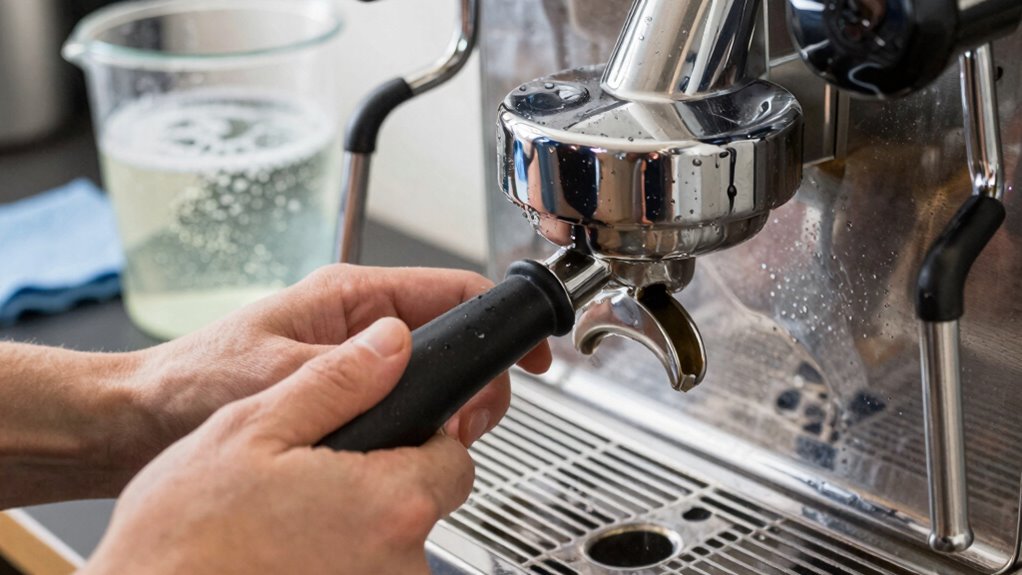

To descale your espresso machine without harming the seals, use a seal-safe descaling solution that’s pH-balanced and designed for coffee machines. Always follow the manufacturer’s instructions and avoid harsh acids or corrosive chemicals. Before starting, turn off and unplug your machine, then run the solution through the brew head and steam wand. Rinse thoroughly afterward. For detailed steps and tips, there’s more you can do to keep your machine running smoothly and protect its seals.

Get kitchen staples and gadgets delivered free — and shop member deals
- Fast, free delivery on millions of items
- Access to Prime Big Deal Days deals on October 6–7
- Prime Video, Amazon Music and more included
Key Takeaways
- Use only seal-safe, pH-balanced descaling solutions recommended by your espresso machine manufacturer.
- Follow the manufacturer’s instructions carefully to avoid over-pressurizing or damaging internal seals.
- Rinse thoroughly after descaling to remove any residual chemicals that could degrade seals over time.
- Avoid harsh acids or corrosive agents that can weaken or damage seals and gaskets.
- Regularly monitor water quality and perform maintenance to prevent mineral buildup, reducing the need for aggressive descaling.
seal-safe descaling solution for espresso machines
As an affiliate, we earn on qualifying purchases.
As an affiliate, we earn on qualifying purchases.
Why Descaling Your Espresso Machine Is Essential

Regularly descaling your espresso machine is essential because mineral buildup from water can severely impact its performance. The type of coffee bean varieties you use influences extraction, but minerals in water affect the machine’s efficiency more directly. Hard water, rich in calcium and magnesium, causes scale buildup faster, reducing heat transfer and clogging internal components. Soft water minimizes deposits but may lack minerals that enhance flavor extraction. Understanding your water hardness levels helps you determine how often to descale. You can also test water quality to better understand mineral content and plan maintenance accordingly. Without proper maintenance, mineral deposits can lead to inconsistent espresso quality, longer brewing times, and costly repairs. Descaling ensures your machine operates smoothly, preserves the quality of your coffee, and extends its lifespan. Regular care tailored to your water type is key to peak performance. Monitoring water hardness levels can help you decide when descaling is necessary and prevent damage over time, especially since mineral deposits can build up rapidly with hard water. Additionally, maintaining optimal water quality supports the longevity of seals and internal components, preventing premature wear and tear.
pH-balanced coffee machine descaler
As an affiliate, we earn on qualifying purchases.
As an affiliate, we earn on qualifying purchases.
How to Choose Seal-Safe Descaling Solutions
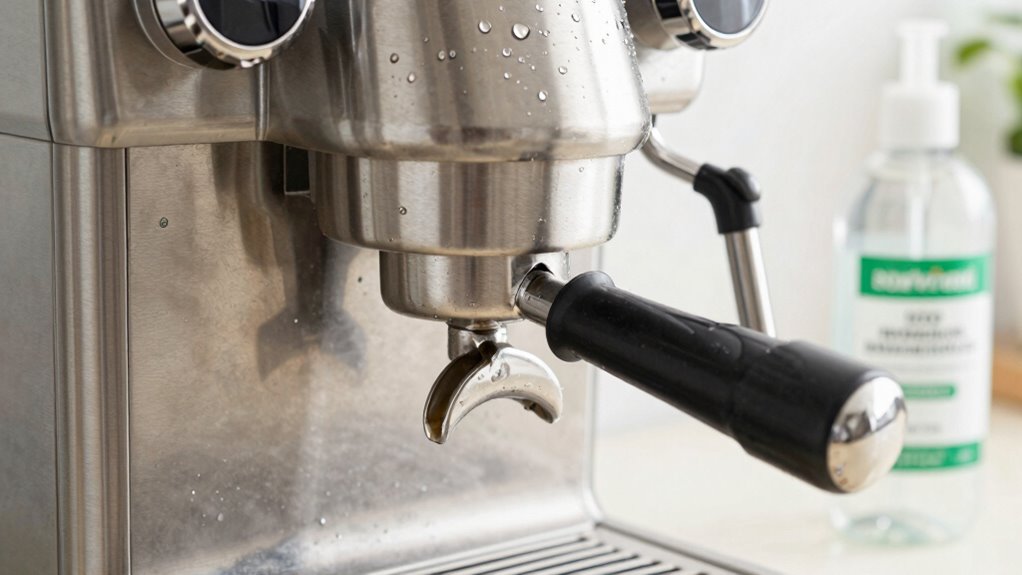
Choosing the right descaling solution is key to protecting your espresso machine’s seals and internal components. To do this, focus on seal compatibility—guarantee the product is safe for the specific materials used in your machine’s seals. Check manufacturer recommendations or labels for compatibility information. Chemical safety is equally important; select solutions free from harsh acids or corrosive substances that could damage seals or other parts. Opt for descalers designed explicitly for espresso machines or those labeled as safe for seals and internal components. Avoid generic or overly strong cleaning agents, as they may compromise seal integrity over time. Additionally, understanding the free floating nature of certain chemicals can help you choose solutions that do not linger or cause build-up, preserving your machine’s performance. It is also beneficial to consider seal-safe descaling products that are specially formulated to prevent degradation of rubber and gasket materials. Using products with non-corrosive formulas can further ensure your seals remain intact during the cleaning process. Furthermore, selecting solutions with pH-balanced properties can help minimize potential damage to sensitive components. By paying attention to both seal compatibility and chemical safety, you ensure an effective descaling process that preserves your machine’s longevity.
As an affiliate, we earn on qualifying purchases.
Step-by-Step: Safely Descale Your Espresso Machine
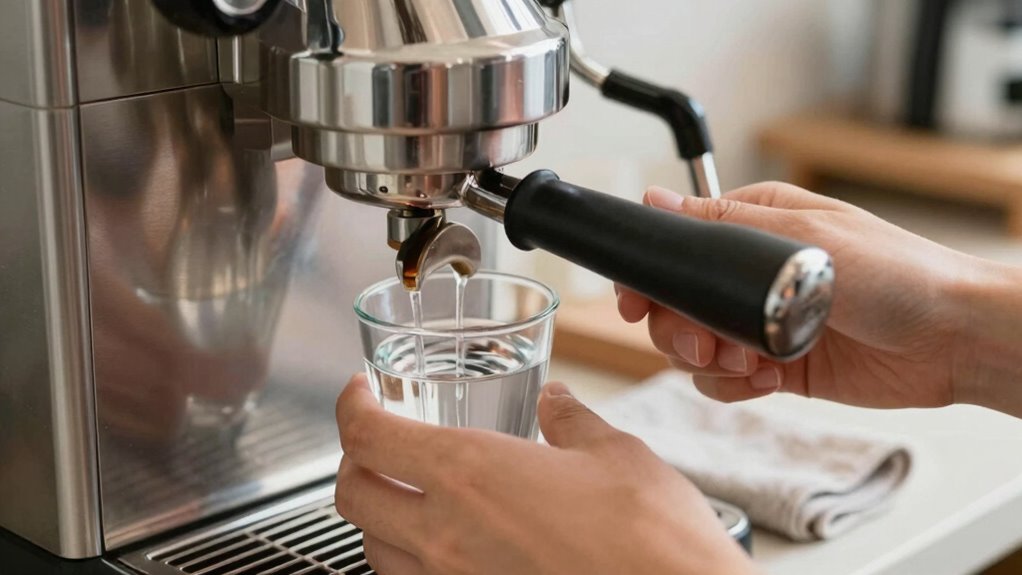
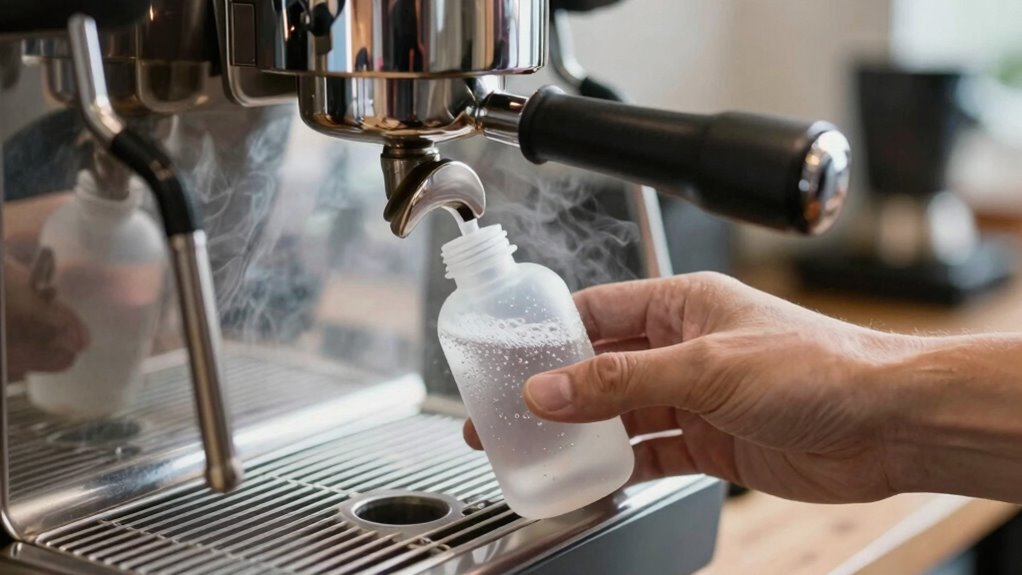
To safely descale your espresso machine, start by turning off the machine and unplugging it from the power source. Remove any brewing accessories, like the portafilter and drip tray, and clean them separately to guarantee no residual buildup remains. Fill the water reservoir with a descaling solution or a mixture of water and a descaling agent recommended for your machine. Incorporate a water filtration system if possible to prevent future mineral buildup. Run a cleaning cycle or manually flush the solution through the machine’s brew head and steam wand, following manufacturer instructions. Use cleaning accessories such as a soft cloth or brush to wipe down surfaces. Rinse thoroughly with clean water afterward to prevent chemical residues. This process ensures effective descaling without damaging seals or components. Proper descaling also maintains the contrast ratio of your espresso machine, ensuring consistent brewing performance over time. Additionally, regularly checking your machine’s water hardness can help you determine how often descaling is necessary, and using appropriate descaling agents can further protect your equipment’s seals and internal parts. Regular maintenance and understanding how mineral buildup affects your machine will extend its lifespan, especially when you implement preventative maintenance techniques and monitor your water quality to keep your espresso tasting great.
water hardness test kit for coffee machines
As an affiliate, we earn on qualifying purchases.
As an affiliate, we earn on qualifying purchases.
Maintenance Tips to Prevent Mineral Buildup
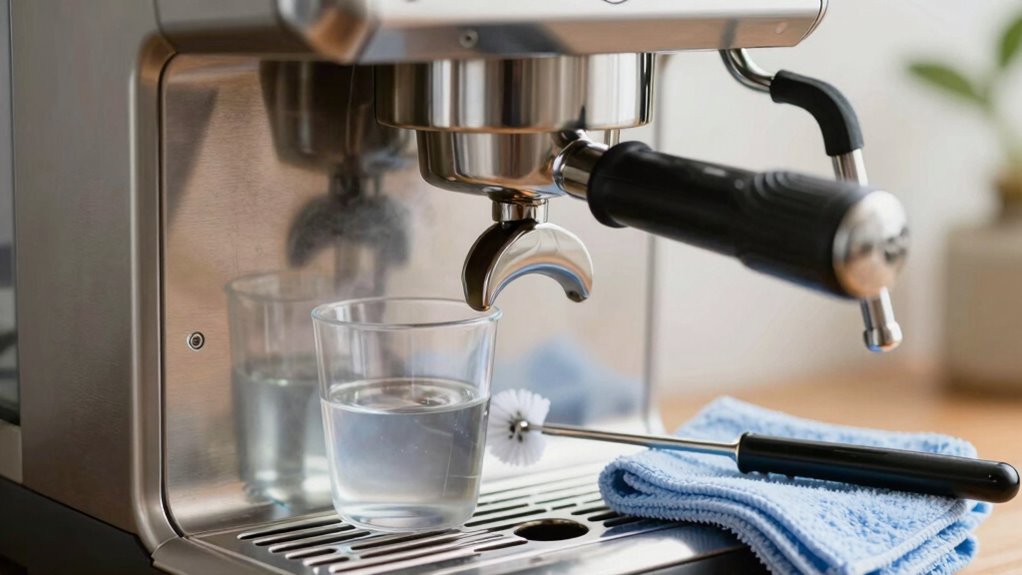
Proper maintenance can considerably reduce mineral buildup in your espresso machine, keeping it running smoothly and extending its lifespan. To achieve this, monitor your water hardness level and consider using filtered or softened water. Hard water contains more minerals, which can lead to stubborn mineral deposits inside your machine over time. Regularly checking the mineral content helps prevent excessive buildup. Additionally, avoid letting water sit in the machine for extended periods, as stagnant water promotes mineral accumulation. Wiping down the exterior and cleaning removable parts regularly also helps prevent mineral deposits from forming in hard-to-reach areas. By controlling water hardness and maintaining a routine cleaning schedule, you can minimize mineral build-up, reduce the need for descaling, and ensure your espresso machine stays in top condition longer. Understanding water mineral content can help you better manage your machine’s maintenance needs. Incorporating proper water filtration can significantly reduce mineral deposits and prolong the intervals between descaling sessions. Regularly using descaling solutions as recommended by the manufacturer can effectively dissolve existing mineral buildup when necessary. Additionally, employing water testing kits can help you accurately measure mineral levels in your water supply.
Troubleshooting Common Descaling Problems and When to Call a Professional
Even with regular descaling, you might encounter problems that are tricky to resolve on your own. For instance, persistent mineral buildup can cause blockages, or seals may start to leak if they’re damaged during cleaning. If you notice leaks, unusual noises, or a decline in performance, it’s time to seek professional help. Here’s a quick troubleshooting guide:
| Problem | Possible Cause | Solution |
|---|---|---|
| Seal leaks after descaling | Seal preservation issues | Replace seals or have them inspected |
| Machine not heating properly | Mineral buildup blocking valves | Professional cleaning or descaling |
| Weak espresso flow | Blocked outlets or buildup | Call a technician for thorough cleaning |
Proper maintenance and understanding of descaling best practices can prevent many of these issues. Knowing when to call a professional ensures your espresso machine stays in top shape without risking damage.
Frequently Asked Questions
Can Descaling Solutions Affect Coffee Flavor Over Time?
Descaling solutions can impact your coffee flavor over time if not used properly. They might alter the brew strength or leave residues that affect taste, especially if water quality isn’t ideal. To prevent this, use the recommended amount of descaler, rinse thoroughly, and regularly clean your machine. Proper maintenance ensures your coffee maintains its rich flavor without unwanted aftertastes from descaling products.
How Often Should I Descale My Espresso Machine?
You should descale your espresso machine every 1 to 3 months, depending on your machine’s usage and water hardness. Regular descaling is crucial for machine maintenance, preventing mineral buildup that can affect performance and flavor. Check your manufacturer’s recommendations for descaling frequency, and use gentle descaling solutions to avoid damaging seals. Staying consistent ensures your espresso machine runs smoothly and produces great-tasting coffee every time.
Are There Natural Descaling Methods Safe for Seals?
You’ll be glad to know that natural remedies like vinegar or citric acid are generally safe for seal preservation if used correctly. Investigating their effectiveness shows they can remove scale without harsh chemicals. Just dilute them properly and rinse thoroughly afterward. This approach helps protect your seals while effectively descaling, making your espresso machine last longer and perform better without risking damage from aggressive chemicals.
What Signs Indicate Mineral Buildup Before Descaling?
You’ll notice signs of mineral buildup before seal damage becomes a concern. Look for slower water flow, reduced steam pressure, or inconsistent espresso extraction. You might also see a white or chalky residue around the seals or in the water reservoir. These indicators suggest scale buildup, which can eventually lead to seal damage if ignored. Regularly inspecting your machine helps catch these signs early, preventing costly repairs and maintaining peak performance.
Is It Safe to Use Vinegar for Descaling Espresso Machines?
Using vinegar for descaling espresso machines can be safe if done carefully, but you should consider vinegar safety and potential descaling risks. Vinegar’s acidity helps dissolve mineral buildup, but it may damage rubber seals or internal components over time if used excessively. Always dilute vinegar properly, rinse thoroughly afterward, and avoid prolonged exposure. If you’re concerned about damage, opt for commercial descaling solutions designed specifically for espresso machines.
Conclusion
Descaling your espresso machine is like giving it a revitalizing breath of life, ensuring every shot tastes perfect. With gentle care and the right solutions, you protect its delicate seals and keep it running smoothly. Think of it as nurturing a trusted friend—consistent attention keeps the magic brewing. So, embrace these steps, stay vigilant, and let your espresso machine shine, brewing rich, flavorful moments that awaken your senses every time.
Fall Picks
fall essentials
As an affiliate, we earn on qualifying purchases.