The biggest container mistake that speeds up food spoilage is using the wrong size or material. For example, flimsy plastics, scratched containers, or containers that aren’t airtight can harbor bacteria, allow odors to mingle, and let moisture escape. Overfilled or too-large containers expose food to air, speeding up decay. Choosing the right material, size, and ensuring proper sealing helps keep your food fresh longer. Stay with us to discover more tips to prevent spoilage and extend shelf life.

Get kitchen staples and gadgets delivered free — and shop member deals
- Fast, free delivery on millions of items
- Access to Prime Big Deal Days deals on October 6–7
- Prime Video, Amazon Music and more included
Key Takeaways
- Using porous or scratched plastic containers can harbor bacteria, speeding up spoilage.
- Improperly sealed or loose lids allow air and moisture in, accelerating food deterioration.
- Overly large containers increase exposure to air, leading to faster spoilage.
- Reusing non-food containers without thorough cleaning introduces contaminants that cause spoilage.
- Storing food in inappropriate containers not designed for specific foods can create an environment that promotes faster spoilage.

Many people unknowingly speed up food spoilage simply by choosing the wrong storage containers. The containers you pick play a fundamental role in food preservation, directly impacting how long your food stays fresh. Using the wrong storage techniques can cause moisture buildup, expose food to air, or allow bacteria to thrive, all of which hasten spoilage. The key is to select containers that create an ideal environment for your food, minimizing exposure to factors that accelerate deterioration.
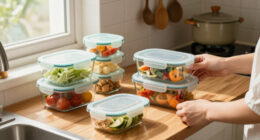
First, consider the material of your storage containers. Glass and high-quality BPA-free plastics are preferable because they don’t transfer odors or chemicals to your food. Avoid using flimsy, porous plastics or old containers with scratches, as these can harbor bacteria and leak odors, compromising food safety. Airtight containers are essential; they lock out air and moisture, which are primary culprits behind spoilage. When air seeps in, it introduces bacteria and molds, leading to quicker decay. Proper sealing also prevents odors from mingling, helping your food taste fresh longer.
Temperature control is another critical aspect of effective food preservation. Store containers in the refrigerator or freezer, depending on the type of food. However, even the best container won’t work if it’s not placed correctly. For example, leaving containers uncovered or loosely sealed can lead to moisture loss or contamination. Always ensure lids are tightly secured and containers are filled appropriately—leaving enough space for expansion in the freezer or avoiding overfilling in the fridge, which can cause pressure buildup and leaks. Additionally, understanding food storage guidelines can help you optimize your storage practices and prolong freshness. Proper container selection can further enhance these benefits by providing an optimal environment for different types of food. Using the right storage techniques can also help prevent unnecessary food waste and maintain nutritional quality.
Another common mistake involves using the wrong size containers. Using large containers for small portions exposes leftover food to more air than necessary, increasing spoilage risk. Conversely, tiny containers may cause difficulty in sealing tightly or lead to frequent opening, which introduces air and bacteria. The right size makes a difference in food preservation, as it minimizes exposure to environmental factors that promote spoilage.
Lastly, avoid repurposing containers that previously held non-food items or chemicals. Residues can contaminate your food, posing health risks and accelerating spoilage. Always clean containers thoroughly and designate specific ones for food storage. This practice ensures your food stays fresh longer and reduces the chance of cross-contamination. Additionally, selecting containers designed specifically for food storage enhances food safety and longevity.
In short, paying attention to storage techniques and choosing the right containers can markedly extend the lifespan of your food. Proper food preservation isn’t just about what you buy but how you store it. With the right containers, airtight seals, appropriate sizes, and correct placement, you can keep your food fresher for longer and cut down on waste.
airtight food storage containers
As an affiliate, we earn on qualifying purchases.
As an affiliate, we earn on qualifying purchases.
Frequently Asked Questions
Can Using Glass Containers Prevent Faster Food Spoilage?
Yes, using glass containers can help prevent faster food spoilage by supporting food safety and ensuring better container hygiene. Glass doesn’t retain odors or stains, making it easier to clean thoroughly and avoid bacterial buildup. Plus, glass is non-porous, so it doesn’t absorb contaminants like some plastics. This helps keep your food fresher longer, reducing spoilage caused by improper storage and contaminated containers.
How Does Container Material Affect Food Longevity?
Choosing the right container material can notably slow spoilage. You’ll want containers with airtight seals to keep out moisture and contaminants, and those with thermal insulation to regulate temperature. Glass and metal containers often outperform plastic by preventing odors and resisting stains, extending food freshness. By selecting sturdy, sealed, and thermally insulated materials, you actively preserve produce, prolonging its life and reducing waste.
Are Reusable Containers Better Than Disposable Ones?
Reusable containers are better than disposable ones because they’re more environmentally friendly and cost-effective over time. By choosing reusable options, you reduce waste and lessen your environmental impact. Although they might cost more upfront, they save you money in the long run since you don’t need to buy replacements constantly. Plus, reusable containers often keep food fresher longer, preventing spoilage and further reducing waste and expenses.
What Is the Ideal Container Size for Different Foods?
For different foods, choose container sizes that match portions to prevent air exposure. Use smaller containers for leftovers and larger ones for bulk items, ensuring airtight sealing to slow spoilage. Opt for containers that stack easily, maximizing fridge space and reducing air circulation around food. Proper sizing combined with airtight sealing and container stacking helps keep your food fresh longer, minimizing waste and preserving flavor.
Does Container Color Influence Food Preservation?
Think of container color as the mood of your food storage. Dark-colored containers, like black or navy, absorb heat and light, which can accelerate spoilage, while clear or light-colored ones reflect it, helping preserve freshness. Container aesthetics don’t just make your fridge look good—they impact food storage by influencing how well your food stays fresh. Choose wisely to keep your food safer and longer-lasting.
BPA-free plastic food containers
As an affiliate, we earn on qualifying purchases.
As an affiliate, we earn on qualifying purchases.
Conclusion
If you keep making this one simple container mistake, you might as well be tossing your food into a fiery furnace! Using the wrong container or not sealing it tight can turn your leftovers into a moldy, smelly disaster in no time. Don’t let your food turn into trash before its time—fix this mistake now, or risk losing every delicious bite to the merciless spoilage monster. Protect your food, save your money, and keep the freshness alive!
glass food storage containers with lids
As an affiliate, we earn on qualifying purchases.
As an affiliate, we earn on qualifying purchases.
food storage container sizes for leftovers
As an affiliate, we earn on qualifying purchases.
As an affiliate, we earn on qualifying purchases.
Fall Picks
fall essentials
As an affiliate, we earn on qualifying purchases.