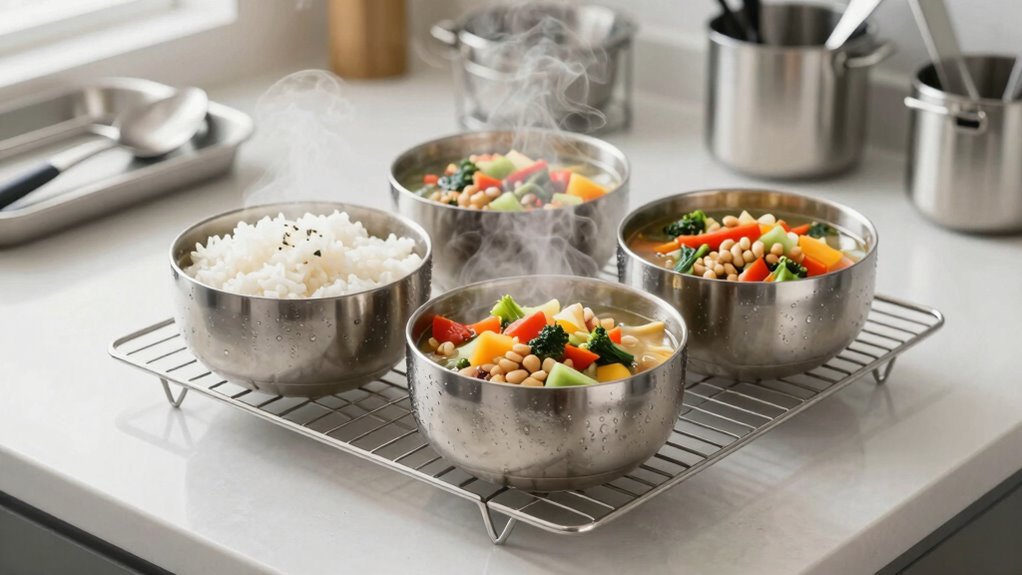
To cool soups, rice, and batch meals quickly and safely, transfer hot food into shallow containers to increase surface area and speed up cooling. Stir periodically to release heat, and spread rice or grains on baking sheets for even cooling. Avoid leaving food in large pots, and keep room temperature exposure under 2 hours. Using these effective techniques helps prevent bacteria growth—continue to discover more tips for safe cooling procedures.

Get kitchen staples and gadgets delivered free — and shop member deals
- Fast, free delivery on millions of items
- Access to Prime Big Deal Days deals on October 6–7
- Prime Video, Amazon Music and more included
Key Takeaways
- Divide hot soups, rice, and batch meals into shallow containers to increase surface area for faster cooling.
- Stir soups and grains periodically to release heat and promote even cooling.
- Use loose covers or vents on containers to facilitate heat dissipation during cooling.
- Cool food in small portions within 2 hours to prevent bacterial growth.
- Use a food thermometer to ensure internal temperatures drop below 40°F before refrigerating.
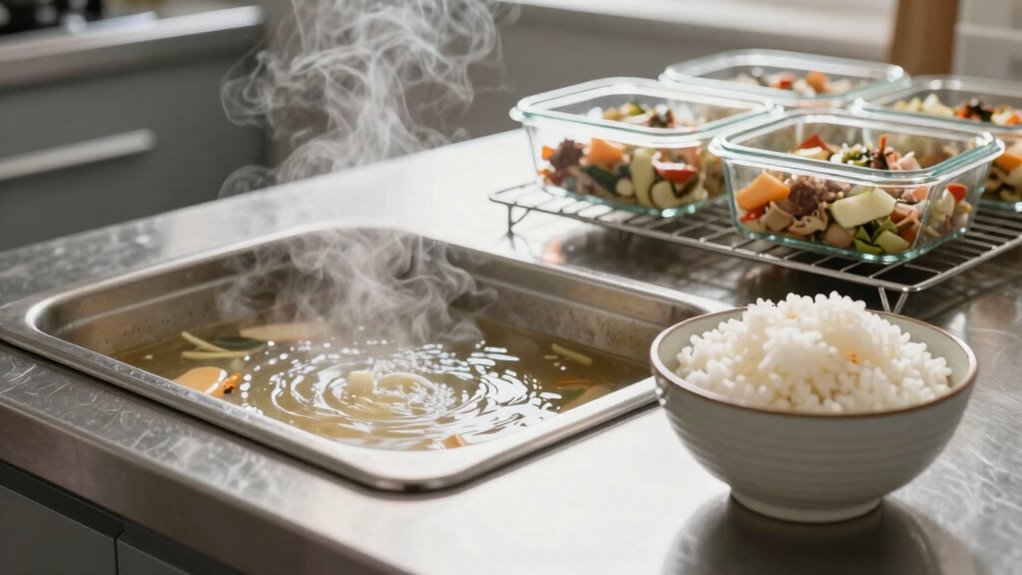
Cooling hot soups, rice, and batch meals quickly and safely is essential to prevent bacterial growth and guarantee your food stays fresh. When you’re preparing large quantities of food, proper cooling techniques are crucial to maintain food safety. Bacteria multiply rapidly at temperatures between 40°F and 140°F, so the goal is to get your food out of this danger zone as quickly as possible. To do this effectively, you need a clear plan for cooling your meals efficiently.
One of the simplest and most effective food safety strategies involves dividing large portions into smaller, shallow containers. This increases the surface area, allowing heat to dissipate faster. Avoid leaving hot food in deep pots or large containers for extended periods, as this slows down cooling and raises the risk of bacterial growth. Instead, transfer your food into multiple shallow containers, cover them loosely, and place them in the fridge once they’ve cooled down sufficiently. This method is a key part of cooling techniques that prioritize safety and efficiency.
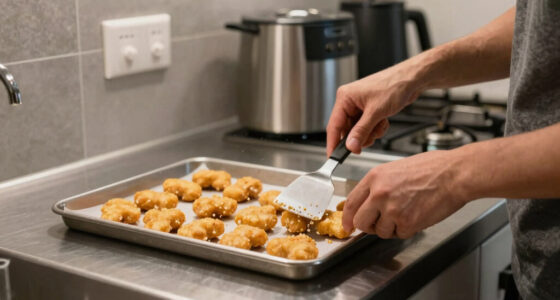
Another useful tip is to stir hot food periodically during the cooling process. For soups and stews, stirring helps release heat and promotes even cooling. Just be sure to do this with clean utensils to prevent contamination. If you’re cooling rice or other grains, spreading them out on a baking sheet or shallow dish can markedly reduce cooling time. The key is to avoid leaving these items at room temperature for too long—two hours is the maximum safe limit. If you notice your food is still hot after this period, pop it into the fridge in small portions to avoid raising the fridge’s internal temperature. Additionally, utilizing proper cooling methods can significantly decrease the risk of bacterial growth during this critical period. Employing effective cooling techniques ensures your food remains safe and fresh for later consumption. Incorporating food safety knowledge into your process can further enhance your cooling strategies and help prevent foodborne illnesses. Using food thermometers to monitor temperatures can also be a valuable tool in managing safe cooling times. Remember, understanding and applying food safety principles is vital for maintaining overall kitchen safety.
As an affiliate, we earn on qualifying purchases.
Frequently Asked Questions
Can I Leave Hot Food Out Overnight After Cooling?
No, you shouldn’t leave hot food out overnight after cooling. For food safety, cooling techniques are essential to prevent bacteria growth. Ideally, you should cool your food quickly by dividing it into smaller portions and using shallow containers. Leaving hot food out at room temperature for too long increases the risk of foodborne illnesses. Always refrigerate within two hours of cooking to keep your meals safe and fresh.
What Is the Ideal Temperature to Cool Food Quickly?
You should aim to cool your food to the gentle threshold of 70°F within two hours, then lower it to 40°F or below within four hours. Use effective cooling techniques like dividing large portions into smaller containers or placing dishes in an ice bath. Following proper temperature guidelines guarantees food cools quickly and safely, preventing bacteria growth and maintaining quality. Always prioritize rapid cooling for safe, delicious meals.
Is It Safe to Use Ice Water Baths for Cooling?
Yes, using ice water baths is safe for cooling food quickly, provided you follow proper food safety practices. You should place your container of hot food into a larger bowl of ice water, stirring occasionally to expedite cooling. This method helps bring down the temperature rapidly, reducing bacterial growth. Just make sure to keep the water cold, change it if it warms up, and avoid contamination by using clean utensils and containers.
How Long Can I Leave Food at Room Temperature Before Refrigerating?
Imagine a clock ticking as you leave food on the counter; ideally, you shouldn’t keep it out for more than two hours. Food storage relies on proper temperature control to prevent bacteria growth. After two hours at room temperature, bacteria can multiply quickly, risking food safety. To keep your meals safe, refrigerate leftovers promptly within this window, ensuring they stay fresh and safe to eat.
Does Stirring Hot Food Help It Cool Faster?
Stirring hot food does help it cool faster because it promotes even heat distribution and speeds up the cooling process. Using effective cooling techniques like stirring, dividing large portions into smaller containers, or using shallow pans enhances food safety by reducing the risk of bacterial growth. Always remember to cool hot food quickly and refrigerate promptly to maintain safety and freshness, ensuring you prevent any foodborne illnesses.
As an affiliate, we earn on qualifying purchases.
Conclusion
Think of cooling your meals as gently releasing steam from a boiling pot—let the heat escape slowly, like opening a window to a fresh breeze. By doing so, you guarantee steam from trapping heat and creating a pressure that could spoil your food. As the warmth fades like a setting sun, your dishes settle into a safe, cool embrace. This simple step ensures your meals stay fresh and ready to enjoy, just like a peaceful night after a busy day.
As an affiliate, we earn on qualifying purchases.
As an affiliate, we earn on qualifying purchases.
NFL season / tailgating Picks
team gear
As an affiliate, we earn on qualifying purchases.