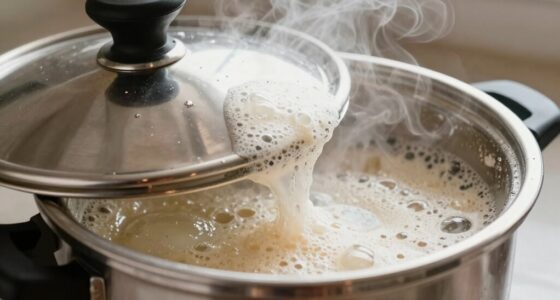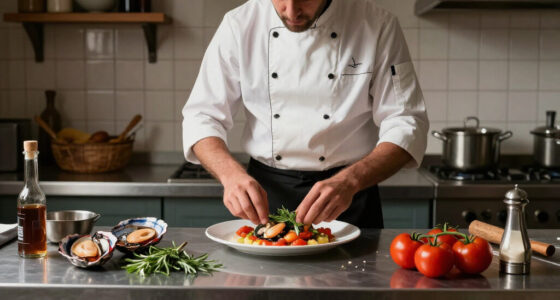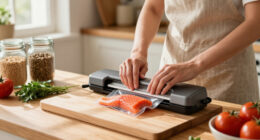
During busy cooking, you often rush through tasks, which increases the chance of cross-contamination. Quick work can lead to skipping cleaning surfaces, reusing utensils without sanitizing, and multitasking on the same prep stations. This makes it easier for bacteria to transfer from raw ingredients to cooked foods. When you’re focused on finishing dishes fast, hygiene lapses happen more often. If you keep going, you’ll discover effective strategies to prevent these risks and maintain safe practices even in hectic kitchens.

Get kitchen staples and gadgets delivered free — and shop member deals
- Fast, free delivery on millions of items
- Access to Prime Big Deal Days deals on October 6–7
- Prime Video, Amazon Music and more included
Key Takeaways
- High-pressure environments lead to rushed tasks, increasing the likelihood of skipping sanitation steps.
- Multiple simultaneous tasks cause surfaces and utensils to be used without proper cleaning.
- Fast-paced cooking often results in neglecting handwashing and changing gloves between tasks.
- Reusing cutting boards and tools without sanitation transfers bacteria more quickly.
- Focus on speed reduces attention to hygiene protocols, facilitating faster cross-contamination.
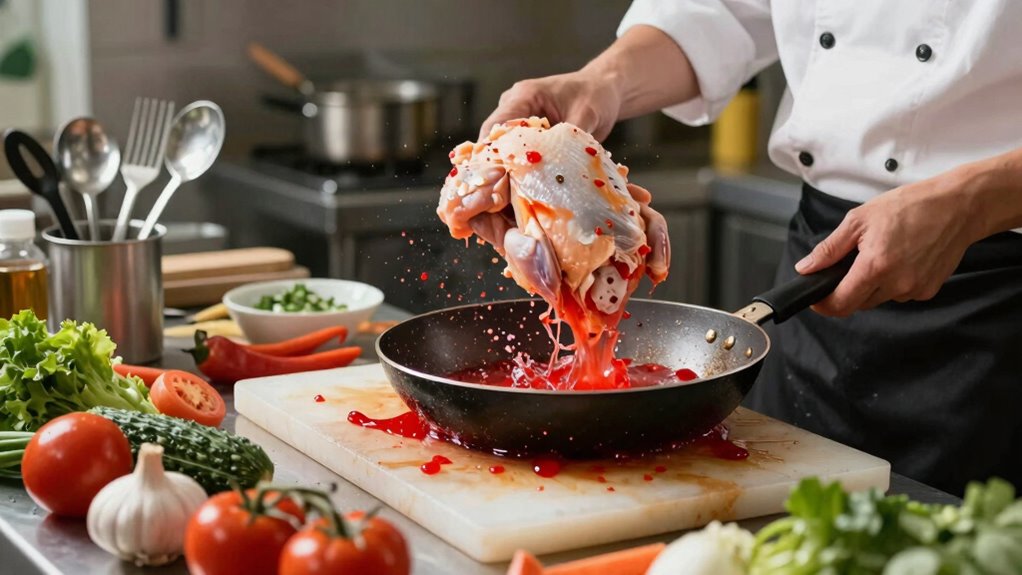
Have you ever wondered how easily bacteria can spread during cooking? When you’re rushing to prepare a meal in a busy kitchen, it’s easy to overlook the significance of maintaining proper kitchen hygiene. But the truth is, the faster you work, the more susceptible you are to cross-contamination. During high-pressure moments, it’s tempting to cut corners, skip cleaning surfaces, or reuse cutting boards without sanitizing them properly. These lapses can lead to bacteria transferring from raw meats or contaminated ingredients to cooked foods or ready-to-eat items. That’s why adhering to strict food safety protocols is essential, especially when you’re pressed for time.
Rushing in the kitchen increases the risk of cross-contamination and foodborne illness. Stay vigilant and follow safety protocols.
In a hectic kitchen environment, multiple tasks happen simultaneously, increasing the likelihood of cross-contamination. You might be chopping vegetables on one side of the counter while handling raw chicken on the other. If surfaces, utensils, or your hands aren’t cleaned thoroughly between tasks, bacteria can easily transfer from raw to cooked foods. During slow cooking, you tend to have more time to follow proper procedures—washing hands frequently, sanitizing surfaces, and using separate cutting boards for different ingredients. But during busy periods, these habits often slip, and bacteria spread rapidly. The faster pace doesn’t just make it harder to maintain hygiene; it also heightens the risk of foodborne illnesses.
Kitchen hygiene becomes even more critical during busy cooking sessions because the risk of cross-contamination multiplies. When multiple dishes are being prepared at once, you might forget to change gloves or wash utensils between tasks. It’s easy to assume that cooking the food thoroughly will eliminate bacteria, but that’s only part of the solution. The initial transfer of bacteria from raw ingredients can cause contamination before cooking begins. Proper food safety protocols, such as cleaning as you go and prioritizing sanitation, help minimize these risks. These protocols aren’t just guidelines—they’re vital practices that protect you and others from foodborne illnesses, especially when the kitchen is bustling.
In essence, the faster pace of busy cooking makes it more challenging to control cross-contamination. Your focus shifts from careful hygiene to quick completion, which can compromise safety. Being mindful of kitchen hygiene and strictly following food safety protocols ensures you keep bacteria at bay, regardless of how hectic things get. Staying vigilant, cleaning surfaces regularly, and using separate utensils for raw and cooked foods are simple steps that make all the difference. When you prioritize these habits, you create a safer cooking environment—no matter how busy the kitchen becomes. Additionally, understanding the importance of proper sanitation and using dedicated tools can significantly reduce the risk of bacteria transfer during hectic cooking times. Implementing effective cleaning routines is another crucial step to support these safety measures and prevent cross-contamination.
food safety cutting board sanitizers
As an affiliate, we earn on qualifying purchases.
As an affiliate, we earn on qualifying purchases.
Frequently Asked Questions
How Does Time Pressure Affect Cross-Contamination Risks?
Under time pressure, your stress levels rise, leading to rushed movements and less attention to proper hygiene. Poor time management causes you to skip steps like washing hands or sanitizing surfaces, increasing cross-contamination risks. When you’re in a hurry, it’s easy to accidentally transfer bacteria between foods or surfaces. Staying calm and organized helps you maintain good hygiene practices, reducing the chances of cross-contamination during busy cooking.
What Specific Kitchen Tools Contribute Most to Rapid Contamination?
Tools like cutting boards, knives, and spatulas are the main culprits, spreading germs like wildfire. Think of them as the highway for bacteria during busy times. If you don’t follow strict sanitization protocols and avoid utensil sharing, you risk rapid cross-contamination. Always clean and disinfect tools between tasks, especially when handling raw meats and vegetables, to keep your kitchen safe and bacteria-free.
Are There Certain Foods More Prone to Quick Cross-Contamination?
Certain foods are more prone to quick cross-contamination because they harbor more bacteria or allergens, making food safety a priority. Raw meats, seafood, and unwashed vegetables are common contamination sources that can spread easily if not handled carefully. During busy cooking, the risk increases as you juggle multiple tasks. Always practice good hygiene, use separate cutting boards, and clean utensils thoroughly to prevent rapid cross-contamination and guarantee food safety.
How Does Staff Training Influence Contamination Rates During Busy Periods?
Coincidences often highlight the importance of staff awareness in busy kitchens. When your staff is well-trained, they inherently practice contamination prevention, especially during hectic periods. This awareness reduces mistakes and cross-contamination chances, even amid chaos. Proper training ensures everyone understands critical control points, maintains hygiene standards, and quickly responds to potential hazards. Ultimately, investing in staff education creates a safer environment, turning chaos into control and safeguarding your food.
Can Using Color-Coded Utensils Reduce Quick Contamination During High Volume?
Using color-coded utensils effectively reduces quick contamination during high-volume cooking by streamlining utensil management. When each color corresponds to a specific food group or allergen, you minimize cross-contact between raw meats, vegetables, or cooked items. This clear visual system helps staff quickly identify the right utensils, preventing accidental transfers. As a result, it enhances food safety, maintains hygiene standards, and keeps your kitchen running smoothly during busy periods.
As an affiliate, we earn on qualifying purchases.
Conclusion
So, next time you’re rushing through a busy kitchen, remember that cross-contamination can spread faster than wildfire. When you skip steps or forget to clean surfaces, bacteria can multiply at lightning speed, turning a small mistake into a full-blown food safety disaster. Keep your environment clean and your pace controlled—you don’t want a tiny slip-up turning into a culinary catastrophe. Stay vigilant, and don’t let bacteria win the race!
As an affiliate, we earn on qualifying purchases.
kitchen surface disinfectant spray
As an affiliate, we earn on qualifying purchases.
As an affiliate, we earn on qualifying purchases.
NFL season / tailgating Picks
team gear
As an affiliate, we earn on qualifying purchases.