
To handle marinated foods safely, wash your hands with soap before touching them and use separate cutting boards for raw meats and veggies. Keep marinades in sealed containers in the fridge, and discard or boil leftover marinade that contacted raw meat. Always cook meats to the right temperature to kill bacteria, and clean all utensils and surfaces thoroughly after contact. Proper storage and hygiene prevent cross-contamination—if you want more tips, keep exploring how to keep your kitchen safe.

Get kitchen staples and gadgets delivered free — and shop member deals
- Fast, free delivery on millions of items
- Access to Prime Big Deal Days deals on October 6–7
- Prime Video, Amazon Music and more included
Key Takeaways
- Wash hands thoroughly before and after handling marinated foods to prevent bacteria transfer.
- Use separate cutting boards and utensils for raw/marinated meats and vegetables.
- Store marinated foods in airtight containers and refrigerate promptly to prevent bacterial growth.
- Never reuse marinade that contacted raw meat unless boiled thoroughly before reuse.
- Clean all surfaces, utensils, and equipment with hot, soapy water after contact with raw or marinated foods.
Marinated foods add flavor and tenderness to your dishes, but handling them improperly can spread bacteria and increase the risk of foodborne illness. To guarantee food safety, you need to be mindful of how you handle and store these foods, especially to prevent cross contamination. Cross contamination occurs when bacteria from raw or marinated foods transfer to other ingredients, utensils, or surfaces, making your entire kitchen unsafe. The key is to treat marinated foods with care, keeping them separate from ready-to-eat items and cleaning all surfaces thoroughly.
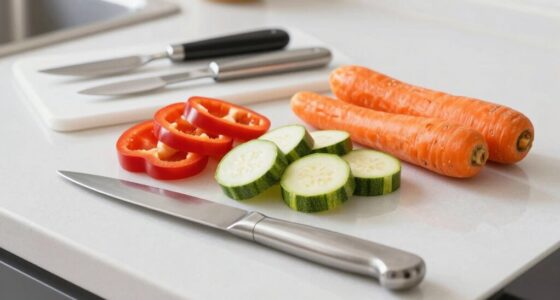
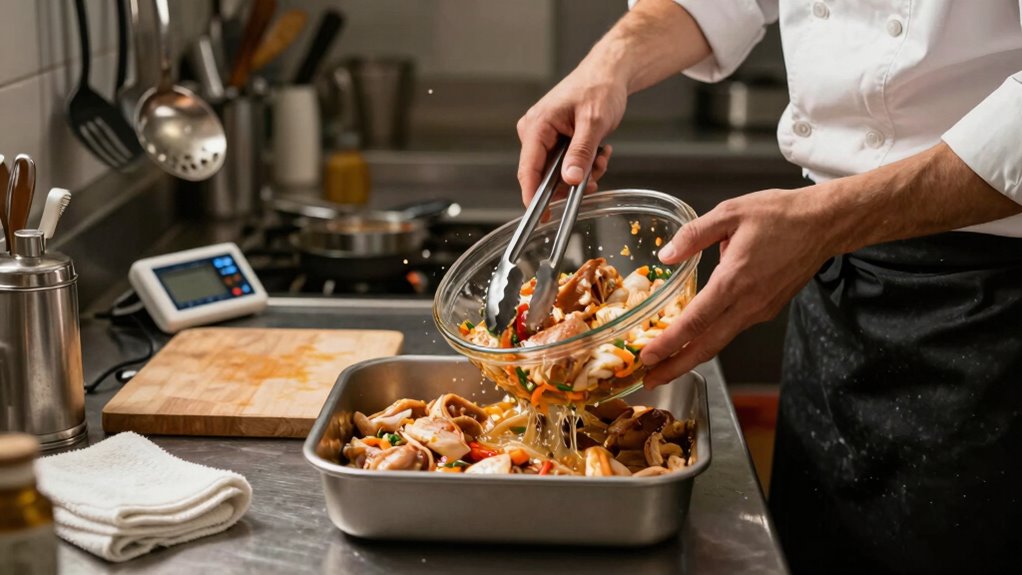
When preparing marinated foods, always start by washing your hands with soap and warm water. This basic step minimizes the transfer of bacteria from your hands to the food. Use separate cutting boards and utensils for raw or marinated meats and vegetables. For example, don’t cut raw chicken on the same surface used for vegetables meant to be eaten raw. After handling raw or marinated meats, wash all utensils, cutting boards, and countertops with hot, soapy water before moving on to other ingredients. This practice prevents bacteria from lingering and contaminating other foods.
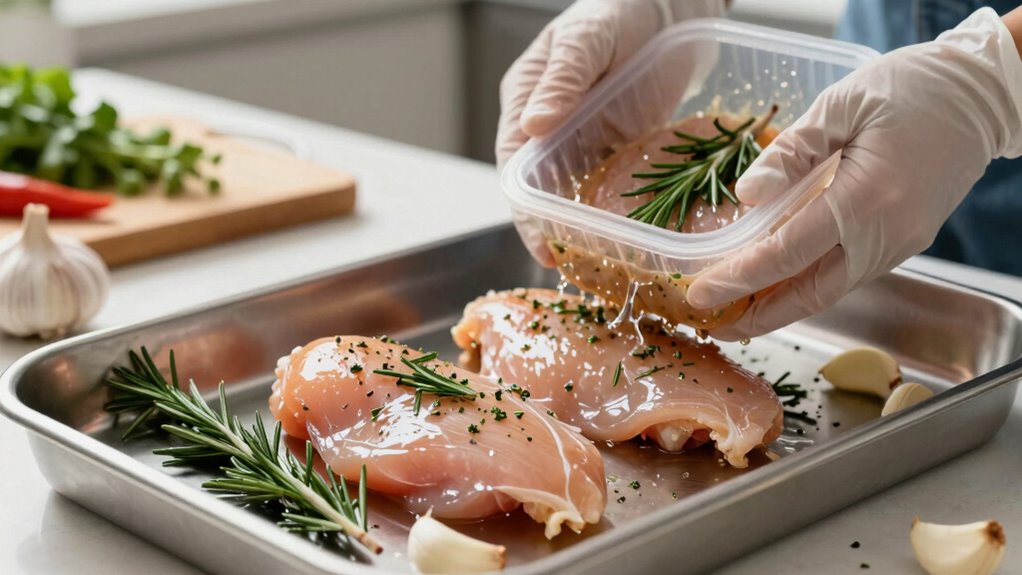
Refrigeration is essential when dealing with marinated foods. Always marinate meats in the refrigerator, not on the countertop, to slow bacterial growth. Keep marinating meats in sealed containers to prevent juices from leaking onto other foods. If you’re using a marinade as a sauce, discard any leftover marinade that has been in contact with raw meat, or bring it to a boil before using it as a sauce. This step kills bacteria that may have been transferred during marination. Proper food handling practices help prevent the spread of bacteria and ensure safety. Additionally, understanding food safety principles can further enhance your ability to prevent cross contamination. Remember that proper storage temperatures and safe cooking methods are crucial in eliminating bacteria from marinated foods.
When it’s time to cook, don’t reuse marinade that has touched raw meat unless you boil it thoroughly. Avoid brushing cooked meats with leftover marinade directly from the raw marinade container. Instead, pour fresh marinade onto cooked foods or set aside some marinade before adding raw meat. Once cooked, ensure the meat reaches a safe internal temperature, usually 165°F for poultry and 145°F for other meats, to effectively kill any bacteria.
Finally, store marinated foods properly. Keep them in airtight containers and refrigerate promptly. Never leave marinated foods sitting out at room temperature for extended periods, as bacteria multiply rapidly at warm temperatures. By following these simple food safety practices—keeping raw and cooked foods separate, cleaning all surfaces, refrigerating promptly, and cooking thoroughly—you greatly reduce the risk of cross contamination and protect yourself from foodborne illnesses. Handling marinated foods with care ensures your meals are both flavorful and safe to enjoy.
As an affiliate, we earn on qualifying purchases.
Frequently Asked Questions
Can I Reuse Leftover Marinade Safely?
You can’t reuse leftover marinade safely because of marinade contamination risks. When you reuse marinade that’s touched raw meat, you risk cross contamination. To prevent this, always set aside a portion of marinade before adding raw meat, or boil the used marinade thoroughly to kill bacteria. This simple step helps avoid cross contamination prevention issues and keeps your kitchen safe. When in doubt, discard leftover marinade to prevent foodborne illnesses.
How Long Can Marinated Foods Sit at Room Temperature?
You shouldn’t let marinated foods sit at room temperature for more than two hours. Bacteria grow rapidly between 40°F and 140°F, increasing spoilage risks. To prevent spoilage, always refrigerate marinated items promptly, especially if you won’t cook them immediately. Keeping foods out too long at room temperature makes them unsafe to eat, so prioritize proper storage to guarantee food safety and reduce the risk of foodborne illnesses.
Is It Safe to Baste With Marinade During Grilling?
Yes, it’s safe to baste with marinade during grilling if you set aside some marinade beforehand, separate from raw meat, to prevent marinade contamination. Avoid reusing marinade that has contacted raw meat to prevent cross contamination. Always baste with fresh marinade or boil the reserved marinade before applying it to cooked food. This practice helps prevent cross contamination and keeps your grilling safe and delicious.
Should Marinades Be Refrigerated Immediately After Use?
Yes, you should refrigerate marinades immediately after use to prevent bacterial growth. If you want flavor penetration, reserve some marinade before adding raw meat, then use it as a sauce later. Keep in mind, marinade consistency affects how well flavors transfer; a thicker marinade sticks better. Always refrigerate to maintain safety and guarantee your marinade stays fresh, enhancing your dishes without risking contamination.
Can I Freeze Marinated Foods Without Risk?
Think of marinated foods like a delicate secret—freezing them is safe if you follow proper steps. Yes, you can freeze marinated foods without risking marinade bacteria or cross contamination prevention issues. Just make certain you freeze promptly in airtight containers, label them clearly, and avoid thawing at room temperature. Freezing halts bacteria growth and keeps your food safe, maintaining quality until you’re ready to cook.
refrigerated airtight food storage containers
As an affiliate, we earn on qualifying purchases.
As an affiliate, we earn on qualifying purchases.
Conclusion
Think of marinated foods as delicate dancers—they glide smoothly across the kitchen stage, but one misstep can cause chaos. By keeping your marinating tools and surfaces clean, you’re choreographing a safe, harmonious performance. Remember, a little extra caution is like a spotlight on the right moves—keeping germs at bay and your kitchen shining. When you handle marinated foods carefully, you’re orchestrating a clean, safe culinary masterpiece every time.
As an affiliate, we earn on qualifying purchases.
dish soap and sponge set for kitchen cleaning
As an affiliate, we earn on qualifying purchases.
As an affiliate, we earn on qualifying purchases.
NFL season / tailgating Picks
team gear
As an affiliate, we earn on qualifying purchases.