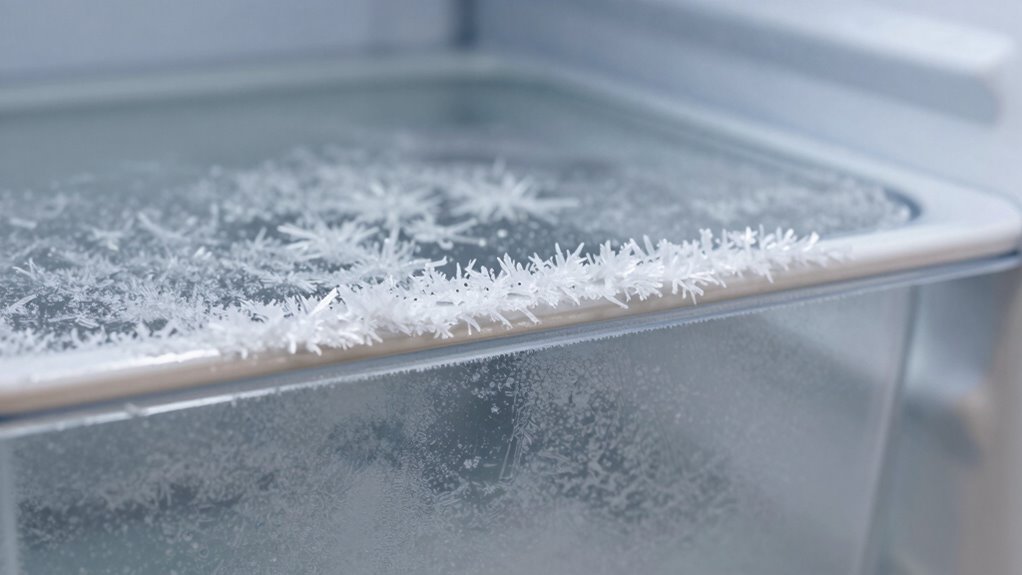

Freezer burn begins with subtle dehydration beneath your food’s surface long before any signs are visible. Even in sealed packaging, tiny amounts of air cause moisture to escape, leading to surface dryness and discoloration over time. This process makes the food tough and dull, and flavors deteriorate. Proper packaging and storage can slow down this dehydration, but if you want to understand how to prevent it early on, there’s more to discover below.

Get kitchen staples and gadgets delivered free — and shop member deals
- Fast, free delivery on millions of items
- Access to Prime Big Deal Days deals on October 6–7
- Prime Video, Amazon Music and more included
Key Takeaways
- Freezer burn begins with microscopic dehydration beneath the surface, often unnoticed before visible signs appear.
- Slight air exposure allows moisture to escape, accelerating dehydration even in sealed packaging.
- Initial dehydration causes surface dryness and discoloration, which gradually worsens over weeks or months.
- Proper sealing and airtight packaging are crucial to minimize moisture loss and delay freezer burn onset.
- Understanding moisture movement helps in early detection and better storage practices to extend food freshness.
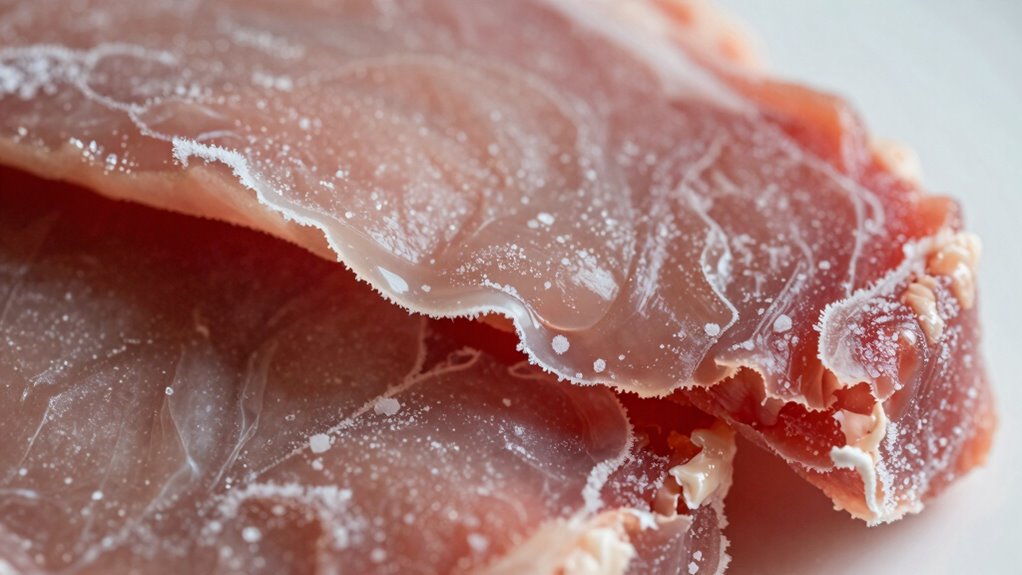
Freezer burn begins subtly, often long before you realize it’s affecting your food. It’s a sneaky process that starts with small changes you might not notice right away. When you store food in your freezer, you might think that as long as it’s wrapped or sealed, it’s safe from damage. But the truth is, even the slightest air exposure can lead to dehydration of your food over time. This dehydration strips moisture from the surface, causing those dry, discolored patches that signal freezer burn. The problem isn’t always immediately obvious because it happens gradually, sometimes taking weeks or even months before your food shows visible signs.
Freezer burn starts subtly, with dehydration causing dry, discolored patches over time.
The key factor behind freezer burn is air exposure, which accelerates food dehydration. When you leave your food exposed to air—even in a sealed bag that isn’t airtight—you allow moisture to escape. As moisture leaves the food, the surface begins to dehydrate, creating that leathery texture and dull appearance. This process occurs because moisture naturally moves from areas of higher concentration (inside the food) to lower concentration (the surrounding air). Over time, this moisture loss leads to texture and flavor deterioration, even if the food looks fine on the surface initially. The more exposed the food is to air, the faster dehydration happens, which is why proper packaging is vital. Proper packaging techniques are essential to prevent this slow moisture loss.
You might not notice freezer burn right away because the dehydration often takes place at the surface level, making the affected areas dry and tough but not necessarily discolored or visibly damaged immediately. This initial stage is where food dehydration begins—small moisture losses accumulate silently beneath the surface. Once dehydration progresses, the texture becomes noticeably rough, and the flavor can take a hit, often described as a stale or off taste. The longer food remains exposed to air, the more intense these effects become. That’s why careful packaging, like airtight containers or freezer bags designed to minimize air contact, is essential to prevent freezer burn from developing unnoticed. Effective storage methods play a critical role in safeguarding your food’s quality over time. Additionally, understanding dehydration can help you recognize early signs and take steps to minimize moisture loss.
Being aware of how dehydration impacts food quality allows you to better manage storage conditions and extend the freshness of your frozen goods. Proper storage practices are a simple yet powerful way to combat freezer burn effectively. Properly storing your food in moisture- and air-tight containers can significantly slow down the dehydration process, extending the shelf life of your frozen items.
airtight freezer storage containers
As an affiliate, we earn on qualifying purchases.
As an affiliate, we earn on qualifying purchases.
Frequently Asked Questions
Can Freezer Burn Affect the Safety of Food?
Freezer burn doesn’t typically make food unsafe, but it can affect food safety by causing dehydration and oxidation that compromise texture and flavor. To guarantee food safety, you should focus on freezer burn prevention by properly wrapping and sealing foods. This helps maintain quality and prevents contamination. While freezer-burned food isn’t harmful, consuming it might be less enjoyable, so proper storage is key to preserving both safety and taste.
How Does Humidity Influence Freezer Burn Formation?
Did you know that improper humidity levels cause over 40% of freezer burn cases? Humidity influences freezer burn formation by promoting moisture migration from your food to the freezer environment. When air circulation is poor, humidity builds up around your food, accelerating dehydration and ice crystal formation. To prevent this, keep your freezer well-ventilated, and use airtight packaging to control moisture levels, reducing the risk of freezer burn.
Does the Type of Packaging Impact Freezer Burn Development?
Yes, the type of packaging impacts freezer burn development. Using proper packaging materials, like airtight, moisture-resistant wraps or vacuum-sealed bags, helps prevent freezer burn. Storage techniques also matter; make certain your items are tightly sealed and avoid leaving air pockets. Good packaging minimizes exposure to air and humidity, slowing freezer burn. So, choose quality packaging and follow proper storage methods to keep your food fresh and freezer burn-free longer.
Can You Reverse Freezer Burn on Food?
You can’t fully reverse freezer burn, but you can improve food texture and flavor preservation. When you notice freezer burn, trim off the affected areas to reduce dryness and ice crystals, helping restore some moisture. Using airtight packaging in the future can prevent further damage. While these steps won’t undo the damage completely, they can make your food taste better and maintain its texture longer.
How Often Should I Check My Freezer for Early Signs?
You should check your freezer weekly to catch early signs of freezer burn. Regular freezer organization helps you spot issues quickly, and maintaining temperature consistency prevents moisture loss. If your freezer isn’t organized or temperature fluctuates, freezer burn can develop unnoticed. By setting a weekly reminder, you stay proactive, preserving your food’s quality. Consistent checks guarantee you catch problems early and keep your freezer running efficiently.
vacuum sealer for food preservation
As an affiliate, we earn on qualifying purchases.
As an affiliate, we earn on qualifying purchases.
Conclusion
Remember, freezer burn begins long before you see it—sometimes months ahead. Proper storage can prevent this issue, saving your food’s flavor and texture. Did you know that over 90% of frozen foods suffer some degree of freezer burn? That’s a lot of wasted food and money. So, keep your freezer organized, seal your items tightly, and check on your frozen goods regularly. Protect your food now to enjoy fresh-tasting meals later!
freezer storage bags with zipper
As an affiliate, we earn on qualifying purchases.
As an affiliate, we earn on qualifying purchases.
As an affiliate, we earn on qualifying purchases.
NFL season / tailgating Picks
team gear
As an affiliate, we earn on qualifying purchases.