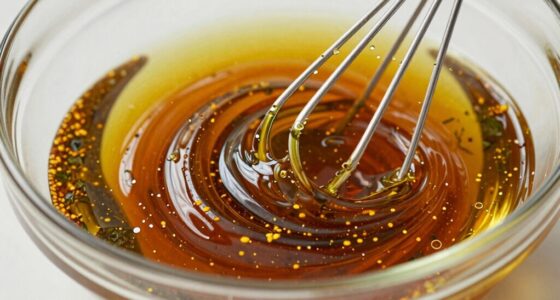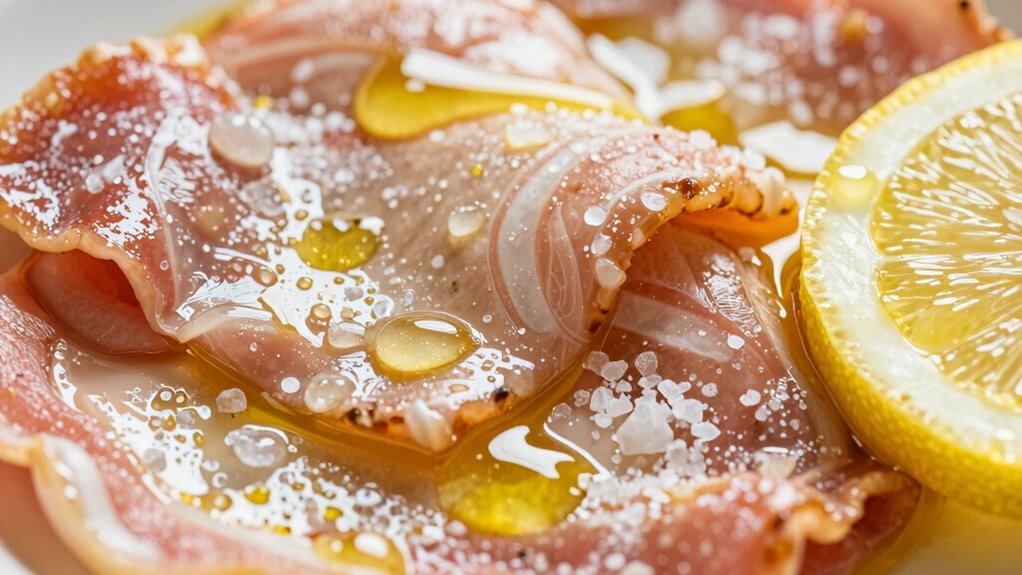

Acid, salt, and fat physically alter the chemistry of your dishes, creating deeper, more lasting flavor changes than simply adding extra seasonings. Salt enhances umami and balances bitterness, while acids add brightness and sharpen flavors by cutting richness. Fat coats the palate, making flavors more rounded and helping ingredients blend. These elements influence aroma and taste chemistry directly, elevating dishes beyond surface seasoning. Keep exploring to discover how mastering these basics can transform your culinary skills.

Get kitchen staples and gadgets delivered free with Prime
- Fast, free delivery on millions of items
- Prime Video, Amazon Music and more included
- Member-only deals all year
Key Takeaways
- Acid, salt, and fat directly alter the chemistry of taste and aroma, creating more profound flavor changes than adding herbs or spices.
- They influence fundamental taste perceptions like umami, sweetness, bitterness, and richness, enhancing overall flavor depth.
- These elements act as flavor carriers and enhancers, modifying ingredient interactions for greater harmony and complexity.
- Acid and salt can suppress undesirable tastes and brighten flavors, while fat rounds out and amplifies sensory impressions.
- Mastery of their use allows precise control of flavor profiles, resulting in more impactful and balanced dishes.

Have you ever noticed how adding a splash of vinegar, a pinch of salt, or a drizzle of fat can dramatically transform a dish’s flavor, while simply increasing seasoning often falls flat? It’s because these elements work on a different level—altering the dish’s fundamental taste profile through mechanisms like umami enhancement and flavor synergy. Seasonings like herbs and spices are important, but they primarily add new notes rather than change the core taste. Acid, salt, and fat, on the other hand, interact with your palate and the ingredients themselves, amplifying what’s already there. These ingredients also influence the perception of other flavors, creating a more cohesive and balanced dish.
Salt is perhaps the most straightforward example. It enhances flavors by suppressing bitterness and balancing sweetness, making other tastes more vivid. When you sprinkle salt, you’re not just adding flavor; you’re heightening the natural umami in ingredients like tomatoes, cheese, or meats. This umami enhancement creates a richer, more satisfying experience because it amplifies the savory depth that naturally exists. Salt also helps to achieve flavor synergy, where ingredients complement each other more effectively, creating a harmonious whole that feels more than the sum of its parts.
Vinegar and other acids take a different approach. They cut through richness and add brightness, sharpening flavors with a clean tang. Acid can elevate the perceived freshness of a dish, balancing heavier ingredients and revealing subtle nuances that might otherwise be hidden. When used strategically, vinegar doesn’t just add flavor; it enhances the overall taste profile by creating contrast and highlighting underlying umami notes. This is why a splash of vinegar can make a stew taste more vibrant or a salad feel more lively—it’s about transforming the dish’s depth and clarity. Incorporating acidic components can also influence how other ingredients interact, further enhancing the overall flavor harmony.
Fat, whether oil, butter, or animal fat, adds a different kind of richness that coats the palate, making flavors more rounded and appealing. Fat acts as a carrier for flavor compounds, helping them disperse evenly and persist longer on your tongue. This creates a sensation of fullness and indulgence, often leading to a more satisfying experience. Fat also promotes flavor synergy by blending and harmonizing various ingredients, allowing their natural flavors to meld smoothly. When you drizzle some good olive oil over a dish, you’re not just adding richness; you’re enhancing the entire flavor spectrum, making each element more appealing.
In essence, acid, salt, and fat tap into the fundamental chemistry of taste and aroma, elevating dishes in ways that extra seasoning alone can’t achieve. They manipulate how your palate perceives flavors, often turning simple ingredients into complex, memorable bites through umami enhancement and flavor synergy. Understanding the chemical interactions involved can help you master the art of balancing flavors more effectively. That’s why mastering their use can truly transform your cooking—more than just adding more seasoning, it’s about understanding how these elements work on a deeper level.
As an affiliate, we earn on qualifying purchases.
Frequently Asked Questions
How Do Acid, Salt, and Fat Chemically Interact With Food?
You’ll see acid, salt, and fat chemically interact with food through various reactions that enhance flavor. Acids break down cell walls, releasing more aroma compounds, while salt promotes chemical reactions that boost umami and suppress bitterness. Fat dissolves flavor molecules, releasing richer tastes. These chemical reactions directly alter food’s structure and flavor profile, making them more intense and complex, unlike extra seasoning which only adds surface-level flavor without significant chemical change.
Can Adding More Seasoning Compensate for Lack of Acid, Salt, or Fat?
Think of flavor balance as a symphony; adding more seasoning alone can’t replace the harmony created by acid, salt, or fat. You can’t achieve ingredient synergy just by increasing spice, because these elements chemically interact to enhance depth and complexity. While more seasoning may boost intensity, it won’t replicate the nuanced effects of acids or fats that release true flavor richness, making adjustments more than just a matter of quantity.
Which Cuisines Rely Most on Acid, Salt, and Fat for Flavor?
You’ll find that Asian, Mediterranean, and Latin American cuisines rely heavily on acid, salt, and fat for flavor balancing. You might use ingredient substitution, like vinegar instead of citrus or olive oil instead of butter, to enhance dishes. These ingredients create depth and contrast, transforming simple flavors. Extra seasoning alone often can’t replicate the nuanced effects of acid, salt, and fat, which are essential for authentic taste profiles.
How Does Individual Taste Perception Vary With These Ingredients?
Your taste perception varies with acid, salt, and fat because they considerably modulate flavor through sensory adaptation and flavor modulation. You might find that your sensitivity to these ingredients changes over time, making flavors seem more or less intense. Personal preferences and physiological differences influence how you perceive their impact. As a result, your experience with these ingredients can differ from others, highlighting the diverse ways flavor is experienced and appreciated.
Are There Health Implications of Increasing Acid, Salt, or Fat in Dishes?
Increasing acid, salt, or fat in dishes impacts flavor enhancement and culinary chemistry, but it also has health implications. Consuming too much salt can raise blood pressure, excess fat may lead to heart issues, and high acid levels can affect digestion. You should balance these ingredients carefully to enjoy flavor benefits without risking health. Moderation is key, and understanding culinary chemistry helps you make smarter, healthier choices in your cooking.
As an affiliate, we earn on qualifying purchases.
Conclusion
You might be surprised to learn that adding acid, salt, and fat can transform your dish more than just extra seasoning. These ingredients enhance flavor by activating taste receptors and balancing flavors, making each bite more satisfying. In fact, studies show that salt can increase perceived flavor intensity by up to 40%. So next time, focus on these key elements to elevate your cooking—sometimes, less really is more for a richer, more dynamic taste experience.
As an affiliate, we earn on qualifying purchases.
As an affiliate, we earn on qualifying purchases.
Halloween Picks
halloween
As an affiliate, we earn on qualifying purchases.