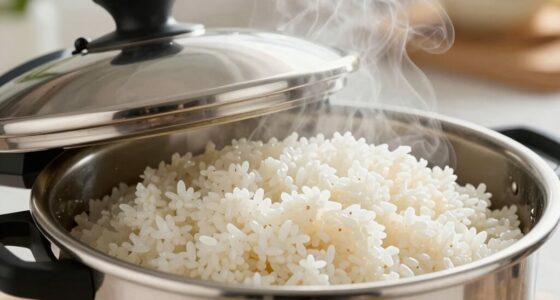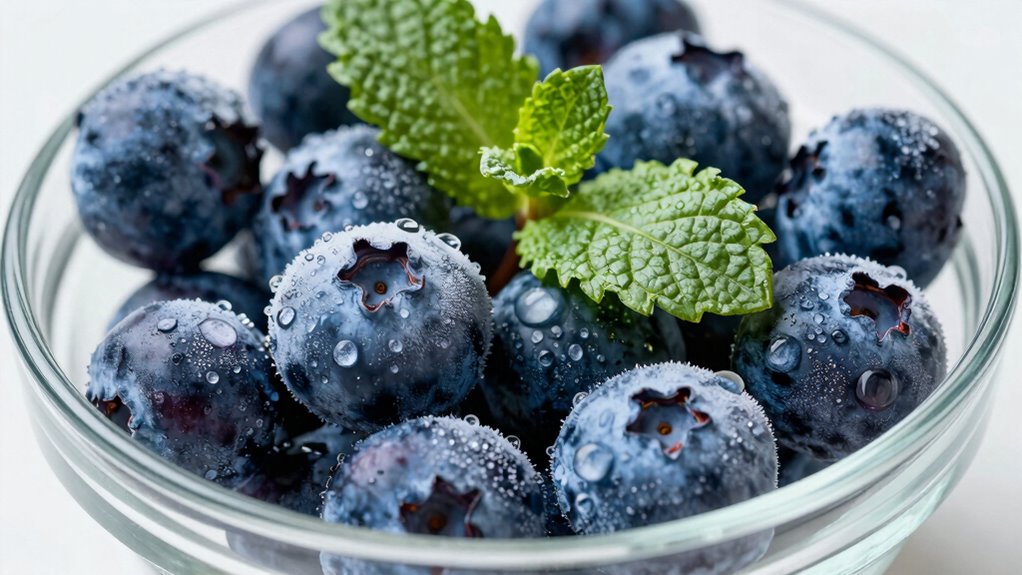

Cold ingredients slow down chemical reactions during cooking and baking, affecting how your dishes turn out. For example, cold butter resists melting and results in denser baked goods, while cold liquids hinder thickening and emulsification. This prevents ingredients from interacting properly, often leading to less flavor development and texture issues. Understanding how temperature influences these reactions helps you control your results better. Keep exploring, and you’ll discover more about mastering ingredient science for perfect dishes.

Get kitchen staples and gadgets delivered free with Prime
- Fast, free delivery on millions of items
- Prime Video, Amazon Music and more included
- Member-only deals all year
Key Takeaways
- Cold ingredients slow down chemical reactions like leavening and emulsification, affecting texture and rise.
- Cold fats resist melting, leading to denser baked goods and altered crumb structure.
- Cold liquids hinder gelatinization and thickening, resulting in runnier sauces or incomplete set.
- Lower temperatures reduce gluten development and aeration, producing tougher or less airy baked products.
- Proper temperature management ensures optimal ingredient interaction, improving consistency and final product quality.

When you start a recipe with cold ingredients, you might notice your baked goods don’t turn out as expected or your sauces don’t thicken properly. This happens because temperature effects play a significant role in how ingredients interact during cooking or baking. Cold ingredients can slow down chemical reactions, preventing them from happening at the right pace or to the desired extent. For example, when you add cold butter to dough, it doesn’t melt and incorporate smoothly, which can lead to a dense or uneven texture. Similarly, chilled eggs or dairy can hinder emulsification, making sauces or dressings less stable. Recognizing how temperature influences these processes helps you troubleshoot and adjust your approach for better results.
Temperature effects on ingredients are not just about how hot or cold they are, but how they influence the interactions between components. When ingredients are cold, fats like butter or margarine stay firm longer, affecting how they blend with sugars and flours. This can lead to less aeration during creaming, resulting in baked goods that are dense rather than light and fluffy. Cold ingredients also slow down gluten development in dough, which might sound desirable in some recipes but often results in a tougher, less tender final product. Conversely, room temperature or warmer ingredients tend to combine more easily, promoting better texture and rise because chemical reactions like leavening are more active. Temperature management is crucial for achieving optimal baking and cooking outcomes.
Ingredient interactions are highly sensitive to temperature. For instance, when cold liquids meet dry ingredients, they don’t mix as smoothly, which can cause uneven distribution of ingredients and affect the overall consistency. In baking, the interaction between sugar and fats is essential for browning and flavor development. Cold fats inhibit this interaction, leading to paler baked goods. In sauces that rely on thickening agents like flour or cornstarch, cold liquids can prevent proper gelatinization or thickening, leaving you with a runny or uneven sauce. Understanding these interactions helps you anticipate how cold temperatures will alter the chemistry happening in your kitchen.
Ultimately, mastering the science behind ingredient interactions and temperature effects allows you to make more precise adjustments. Warming ingredients to room temperature before mixing ensures better integration, improved texture, and more predictable results. Whether you’re baking delicate pastries or preparing sauces, paying attention to temperature effects can be the difference between a perfect dish and a culinary mishap. Recognizing how cold ingredients influence the chemistry can empower you to tweak your techniques and consistently produce better, more professional results.
room temperature butter for baking
As an affiliate, we earn on qualifying purchases.
As an affiliate, we earn on qualifying purchases.
Frequently Asked Questions
How Does Temperature Affect Ingredient Chemical Reactions?
Temperature profoundly impacts ingredient chemical reactions by affecting molecular stability and enzyme activity. When ingredients are cold, molecular stability increases, slowing down reactions. Cold temperatures also reduce enzyme activity, which can hinder processes like fermentation or mixing. Conversely, warmer temperatures boost enzyme activity and molecular movement, speeding reactions. So, by controlling temperature, you influence how quickly and efficiently reactions occur, ultimately shaping the final texture, flavor, and appearance of your dish.
Do Cold Ingredients Impact Cooking Times?
Cold ingredients like frozen berries or chilled dairy can extend cooking times because they lower the overall temperature of your dish. When you add frozen berries, you might notice the need to cook longer to soften them. Chilled dairy can slow down processes like melting or thickening. To avoid uneven cooking, consider bringing cold ingredients closer to room temperature before adding them, ensuring more consistent and efficient results.
Can Cold Ingredients Alter Flavor Profiles?
Like a painter blending colors, cold ingredients can muddle flavors, subtly altering your dish’s profile. When you add chilled components, their flavors may become subdued or less vibrant, leading to flavor alteration. This change can diminish the intended aroma and taste, making your dish less balanced. To avoid this, bring ingredients to room temperature before cooking to preserve their natural flavors and guarantee your creation tastes as intended.
Why Do Some Recipes Require Room Temperature Ingredients?
You need room temperature ingredients because they blend more evenly, ensuring better ingredient selection and consistent results. Cold ingredients can slow down reactions and hinder proper mixing, especially with butter or eggs. Proper storage techniques help maintain the right temperature, which is essential for recipes like baked goods. By using ingredients at room temperature, you promote better emulsification and texture, ultimately leading to a more successful and professional-looking finished product.
How Does Coldness Influence Ingredient Texture?
Coldness influences ingredient texture by slowing down chemical reactions and controlling moisture movement. When ingredients are cold, ice crystallization occurs more slowly, helping preserve delicate textures like creamy or airy structures. This prevents ingredients from becoming overly sticky or grainy. You’ll notice that cold ingredients maintain their intended texture longer, ensuring your final dish stays true to its desired consistency and preventing unwanted changes during preparation.
emulsification blender for sauces
As an affiliate, we earn on qualifying purchases.
As an affiliate, we earn on qualifying purchases.
Conclusion
So, next time you’re tempted to skip chilling your ingredients, remember it’s not just about tradition or preference—science has your back. Cold ingredients might seem like a small detail, but they can dramatically alter your results, often in ways you least expect. It’s ironic how a simple chill can make or break your dish, proving that sometimes, the tiniest change can have the biggest impact. Embrace the cold; it might just elevate your cooking in ways you never imagined.
As an affiliate, we earn on qualifying purchases.
baking ingredients temperature control
As an affiliate, we earn on qualifying purchases.
As an affiliate, we earn on qualifying purchases.
Halloween Picks
halloween
As an affiliate, we earn on qualifying purchases.