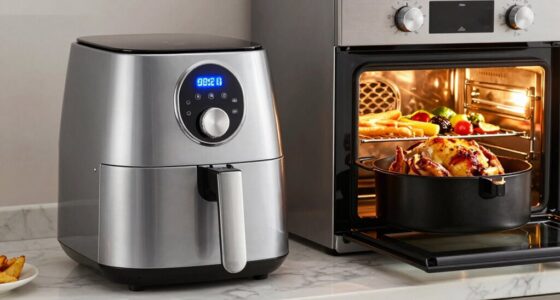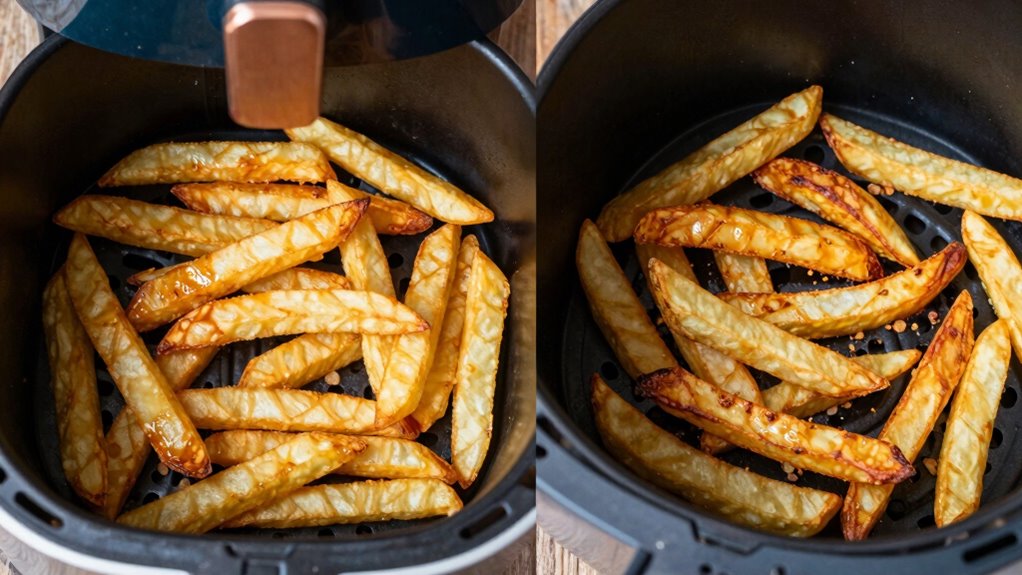

In an air fryer, rapid hot air circulation speeds up starch gelatinization and browning, giving fries a crispy exterior quickly with less oil absorption. Traditional ovens rely on slower conduction and convection, which can lead to uneven crispiness and sogginess if not managed carefully. Heat transfer methods and cooking time greatly impact the browning and crunch; mastering these factors will help you achieve the perfect fry. Continue exploring to uncover more tips for crispy perfection.
Key Takeaways
- Air fryers promote rapid surface starch gelatinization and browning via convection, leading to quicker, more even crispiness.
- Ovens rely on slower conduction heat, which may cause uneven starch gelatinization and less uniform crispiness.
- Effective heat transfer in air fryers speeds up Maillard reaction, enhancing flavor and golden color.
- Proper moisture evaporation is crucial; air fryers reduce moisture quickly, creating a crispy exterior.
- Controlling temperature and cooking time ensures optimal starch gelatinization and prevents sogginess or burning.

Ninja Crispi Glass Air Fryer, 4-in-1, Grey, FN101GY
- All-in-One Cooking System: Includes PowerPod, containers, and lids
- Portable Air Fryer PowerPod: Compact, versatile, countertop-free design
- Cook for One or Family: Crisps meals in minutes, suitable for various servings
As an affiliate, we earn on qualifying purchases.
As an affiliate, we earn on qualifying purchases.
How Do Starches Become Crispy When Cooking Fries?
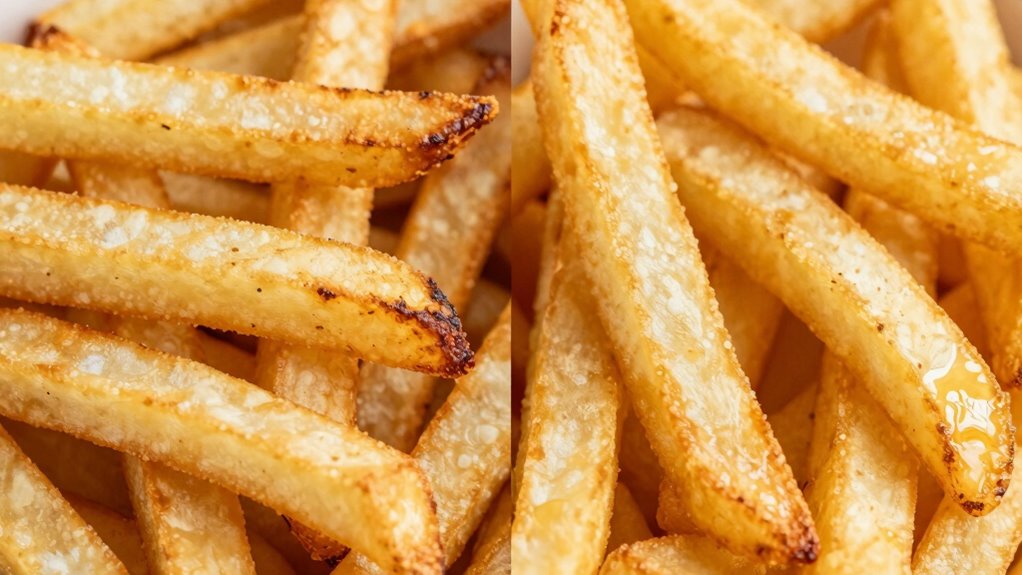
When you cook fries, the starches in the potatoes undergo a transformation that creates their crispy exterior. During heating, starch gelatinization occurs as the starch granules absorb water and swell, forming a gel-like structure. This process helps set the foundation for crispiness by creating a firm surface. As the temperature rises further, the caramelization process begins, where sugars on the potato’s surface break down and brown, adding flavor and color. This browning enhances the crispy appearance and texture. Proper cooking guarantees these processes happen at the right time, resulting in fries that are both crunchy and flavorful. Understanding how starch gelatinization and caramelization work together explains why your fries turn out perfectly crispy when cooked correctly. Starch transformation is a key factor in achieving that ideal crispiness. Additionally, controlling moisture levels during cooking ensures optimal crispiness and texture.

Oven Fry Seasoned Coating Mix, Extra Crispy Chicken, 4.2-Ounce Boxes (Pack of 10)
- Package Size: 8 boxes of 4.2 oz each
- Product Type: Oven Fry Extra Crispy Coating
- Flavor Profile: Homestyle savory spices
As an affiliate, we earn on qualifying purchases.
As an affiliate, we earn on qualifying purchases.
What Makes Air Fryer Fries Crispy So Quickly?
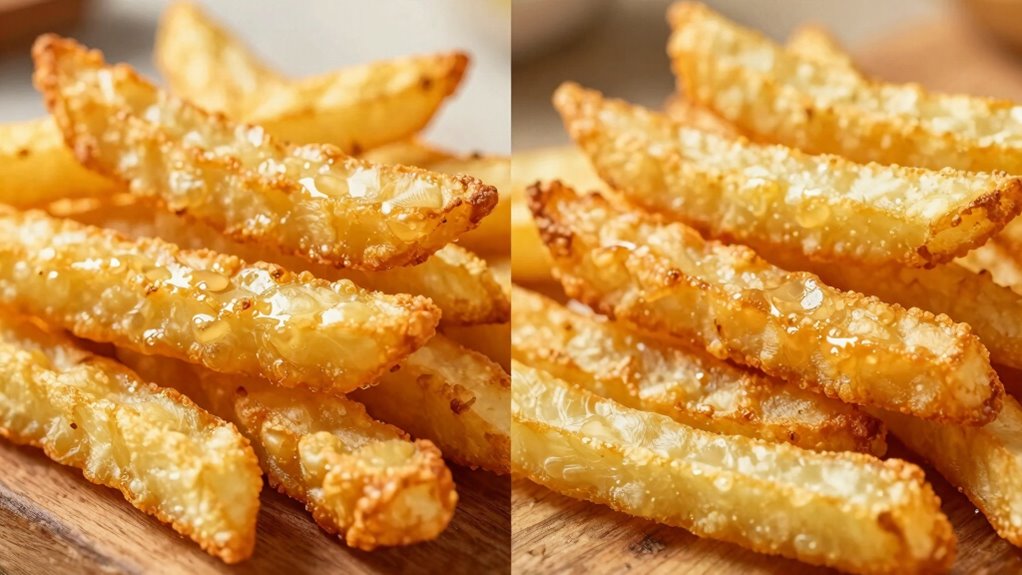
The rapid crispiness of fries in an air fryer primarily comes down to how quickly the device heats and circulates hot air around the food. This rapid airflow promotes starch gelatinization on the surface, forming a firm crust faster than traditional methods. Because the air fryer uses convection, heat penetrates evenly, speeding up the Maillard reaction and creating that appealing crunch. Additionally, the minimal oil absorption in an air fryer limits sogginess, allowing the starches to set quickly into a crispy shell. Unlike deep-frying, which relies heavily on oil, the air fryer’s efficient heat transfer accelerates the formation of a golden, crispy exterior, making your fries satisfyingly crunchy in a fraction of the time. A key factor is the convection technology, which ensures consistent heat distribution and enhances crispiness throughout the fries. Furthermore, the energy-efficient design of air fryers contributes to faster cooking times with less energy consumption, highlighting their advantages over traditional ovens.

Cosori TurboBlaze Air Fryer, 9-in-1, 6 Qt, PFAS-Free Ceramic Coating
- TurboBlaze Technology: Powerful 3600 rpm fan and high temperatures
- Even Cooking System: 5-fan system with precise temperature control
- PFAS-Free Ceramic Coating: Durable, heat-resistant, nonstick ceramic basket
As an affiliate, we earn on qualifying purchases.
As an affiliate, we earn on qualifying purchases.
How Does Oven Heat Help Fries Turn Golden and Crunchy?
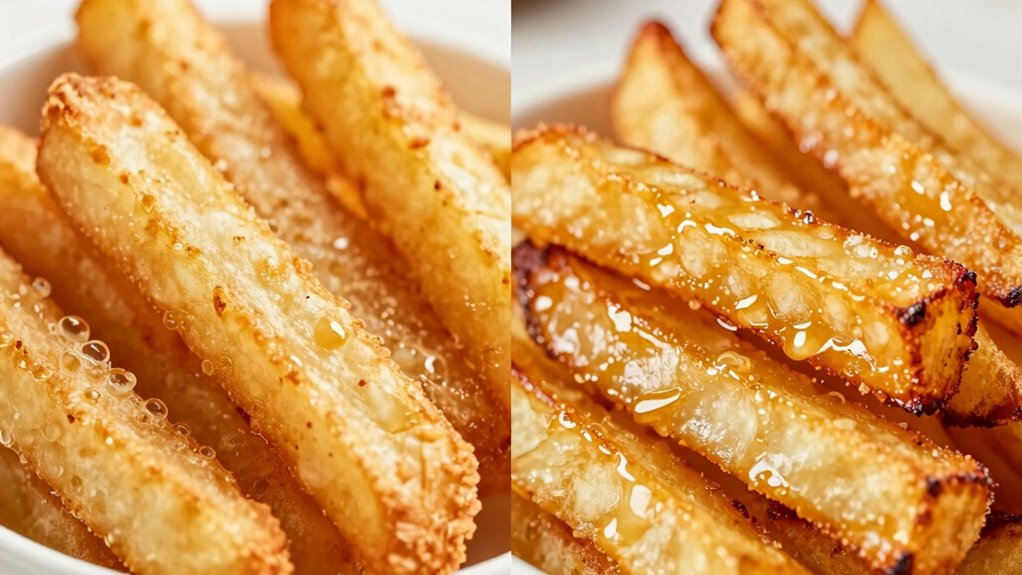
When you use an oven, the heat triggers the Maillard reaction, giving your fries that appealing golden color and complex flavor. It also causes moisture to evaporate from the surface, helping them become crisp. Understanding how heat transfers and interacts with the fries can help you achieve perfectly crunchy, golden results. Proper filtration and pump protection ensure consistent heat distribution and prevent uneven cooking or clogs that might affect the crispiness. Additionally, maintaining precious metals dealer reviews can help ensure your equipment and ingredients are of high quality, contributing to better cooking outcomes. Recognizing the importance of heat transfer methods can further optimize your frying process for ideal texture and color. Being aware of oven heat dynamics can also assist in fine-tuning your cooking technique for consistently crispy fries. Mastering piercing aftercare techniques can prevent irritation and ensure your body jewelry remains comfortable during your cooking experiments.
Maillard Reaction Process
Oven heat triggers the Maillard reaction, a chemical process that transforms the surface of fries into a deliciously golden and crispy layer. This reaction occurs when heat causes sugars to caramelize and proteins to denature, creating complex flavors and appealing color. As your fries heat up, the surface undergoes these changes, resulting in the crispy exterior you crave. Understanding these chemical reactions can help you optimize cooking methods for better crispiness. Additionally, controlling the temperature and cooking time is essential to achieve the perfect balance between tenderness and crunchiness. Here’s a visual to help you understand:
| Stage | What Happens |
|---|---|
| Sugar caramelization | Sugars break down, turning brown and sweet |
| Protein denaturation | Proteins unfold, aiding browning and texture |
| Maillard Reaction | Combines sugars and proteins for flavor |
| Result | Golden, crispy, flavorful fries |
Moisture Evaporation Effect
As heat penetrates the fries, moisture inside begins to evaporate rapidly, leading to a crispier texture. This moisture evaporation reduces water content, helping the fries develop a crunchy exterior while maintaining enough moisture to prevent them from becoming overly dry. During this process, starch gelatinization occurs, where starch molecules absorb water and swell, creating a gel-like structure that supports the crispy surface. The oven’s consistent heat promotes moisture retention in the interior, preventing the fries from drying out completely. By carefully controlling heat and moisture loss, you achieve a balanced texture: a golden, crunchy crust with a tender inside. Additionally, the process of exfoliation enhances the surface texture, making the fries even crispier. This moisture evaporation effect is essential for transforming starchy potatoes into irresistibly crispy fries. Understanding the moisture transfer process helps in optimizing oven settings to achieve the perfect fry texture.
Heat Transfer Dynamics
Heat transfer dynamics play a key role in transforming moisture evaporation into a crispy, golden exterior. When you cook fries in an oven, conduction heat directly transfers from the hot surface to the potato’s surface, helping to brown and crisp the exterior. Simultaneously, convection heat circulates warm air around the fries, ensuring even cooking and consistent heat exposure. This combination accelerates Maillard reactions, which develop the desirable golden color and complex flavors. As moisture escapes, the heat continues to penetrate, creating a dry, crunchy crust. The oven’s steady heat transfer dynamics are essential for achieving that perfect balance of crispiness and tenderness. Efficient heat transfer is crucial for uniform cooking and achieving ideal texture.
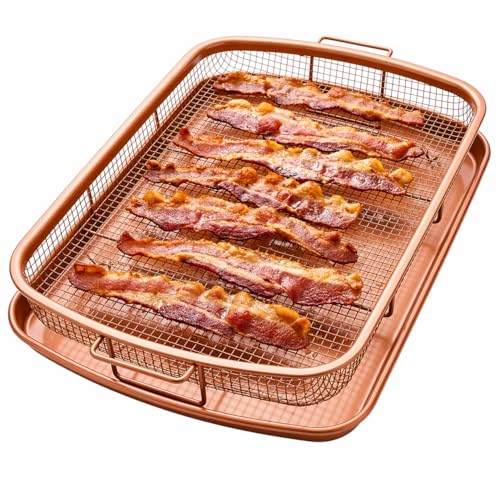
Gotham Steel Air Fryer Basket for Oven – 16.5” x 12.5”
- Durable Aluminum Construction: Made with long-lasting aluminum and copper coating
- Versatile Cooking Options: Suitable for baking, frying, roasting, and crisping
- Large Capacity: 3-quart size for big meals
As an affiliate, we earn on qualifying purchases.
As an affiliate, we earn on qualifying purchases.
How Do Air Fryers and Ovens Transfer Heat Differently?
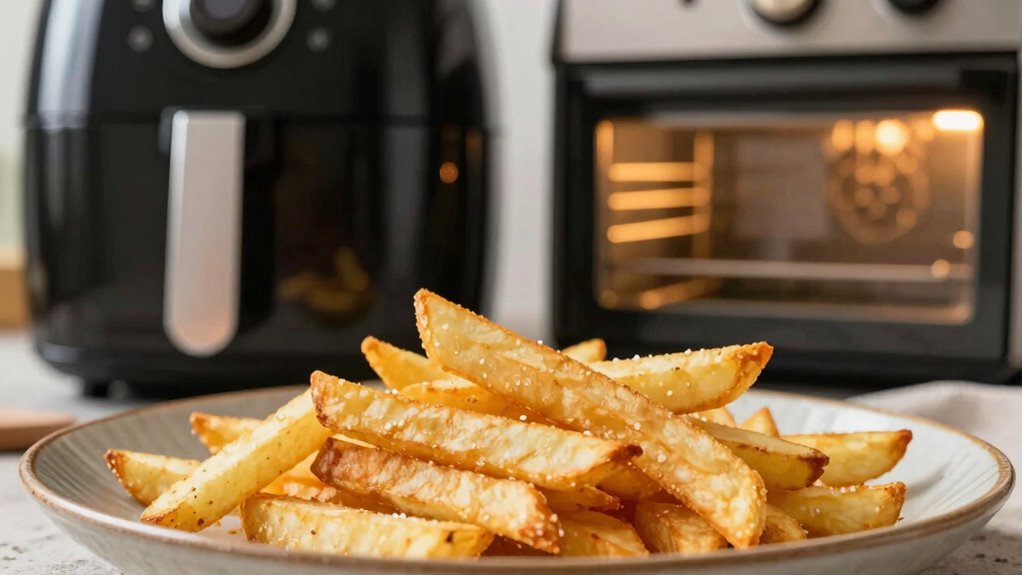
While both air fryers and traditional ovens transfer heat to cook food, they do so in fundamentally different ways. Air fryers primarily use rapid air circulation, creating convection currents that evenly surround your fries with hot air. This process speeds up heat transfer via convection, resulting in quick, uniform crispiness. Ovens rely more on thermal conduction through heated surfaces, with heat gradually spreading from the oven walls to the food’s exterior. This slower process can lead to uneven cooking if not managed properly. The design of an air fryer allows for more efficient heat transfer and often results in a crispier texture compared to conventional ovens.
Why Do Temperature and Cooking Time Matter for Crispy Fries?
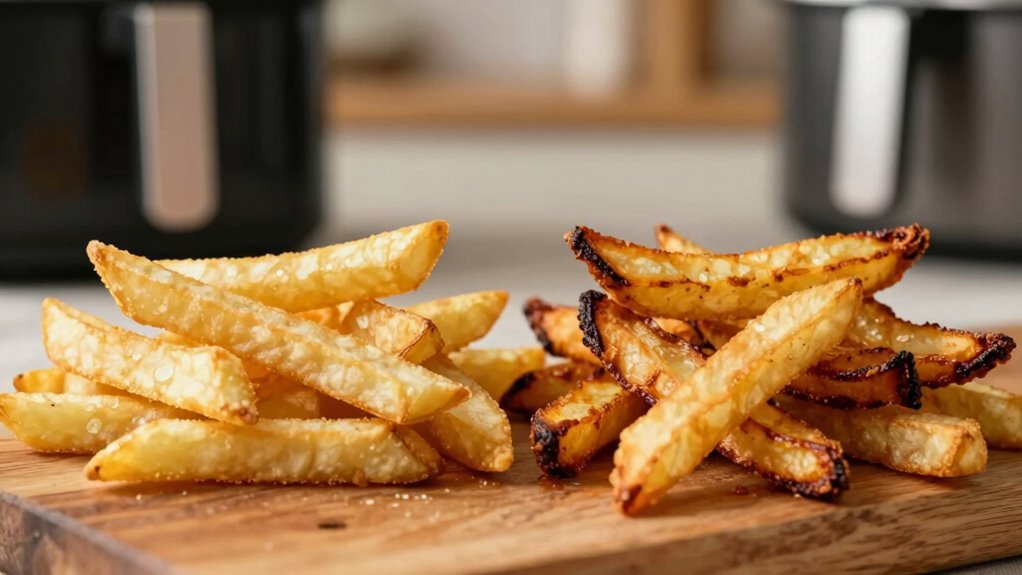
Temperature and cooking time directly affect how evenly your fries crisp up. If the heat isn’t just right, your fries may turn out soggy or burnt, ruining their texture. Understanding how heat transfer works helps you achieve that perfect crispy exterior and tender inside. For optimal results, adjusting your cooking method based on precious metal investments can serve as a useful analogy for fine-tuning heat control. Paying attention to auditory processing cues during cooking, such as sizzling sounds, can help you gauge doneness and prevent overcooking.
Heat Transfer Efficiency
Understanding how heat moves into your fries is essential for achieving that perfect crispy texture. Heat transfer efficiency determines how quickly and evenly heat reaches the starches and moisture inside. Conduction efficiency plays a key role here; it’s how effectively heat moves directly from the hot surface of your air fryer or oven to the fries. Meanwhile, convection flows help distribute heat around the fries, promoting uniform cooking. Higher heat transfer efficiency means your fries will crisp up faster, with a golden exterior and tender interior. If heat transfer is slow or uneven, you risk soggy or undercooked spots. Proper heat distribution is vital for consistent results across different appliances and batch sizes. Additionally, the presence of airflow dynamics can significantly influence how well heat is dispersed during cooking. Understanding heat transfer methods can help you optimize your cooking process for the best crispy fries. Being aware of these factors allows you to adjust cooking parameters to achieve optimal results. By controlling these factors, you can maximize crispiness and achieve a more satisfying texture every time. Adjusting temperature and cooking time guarantees ideal conduction and convection, leading to consistently crisp fries that satisfy every time.
Impact on Texture
Achieving crispy fries hinges on getting both the temperature and cooking time just right. Proper control of these factors drives texture transformation, turning starchy potatoes into irresistibly crispy bites. If the temperature is too low, moisture remains, resulting in a soggy exterior and reduced mouthfeel enhancement. Conversely, excessive heat can burn the surface before the interior cooks fully, compromising the desired crunch. Similarly, cooking time influences how well the moisture escapes, affecting overall texture. Shorter times may leave fries soft and limp, while longer durations promote a golden, crisp exterior. Striking the right balance guarantees the fries develop a satisfying crunch without sacrificing tenderness inside, delivering the perfect mouthfeel and an appealing, crispy texture that elevates your eating experience.
Tips for Perfectly Crispy Fries in Your Oven or Air Fryer
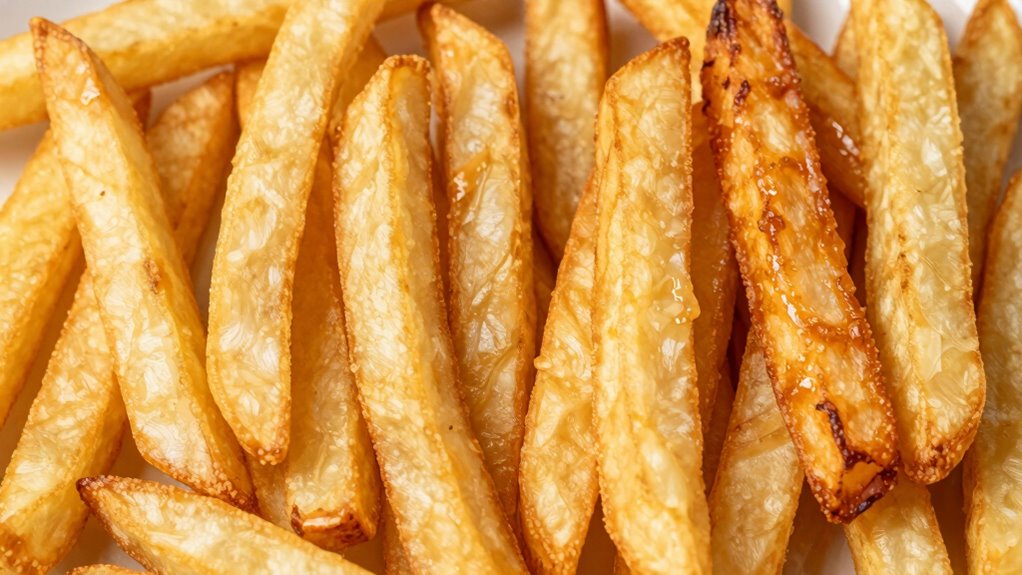
Getting crispy fries in your oven or air fryer is all about balancing the right preparation and cooking techniques. Start with proper seasoning techniques—toss your fries with a small amount of oil to help seasonings adhere better and promote crispiness. Use a light coating; too much oil can make them soggy. Spread the fries in a single layer, ensuring they don’t overlap, which allows hot air or heat to circulate evenly. For oven fries, preheat thoroughly and consider flipping halfway through. In the air fryer, shake or turn the basket during cooking for uniform crispiness. Consistent oil application and careful seasoning are key to achieving that perfect, crunchy exterior while keeping the interior tender. Follow these tips, and you’ll elevate your fry game every time.
Troubleshooting Soggy or Burnt Fries: What Starch Behavior Tells Us
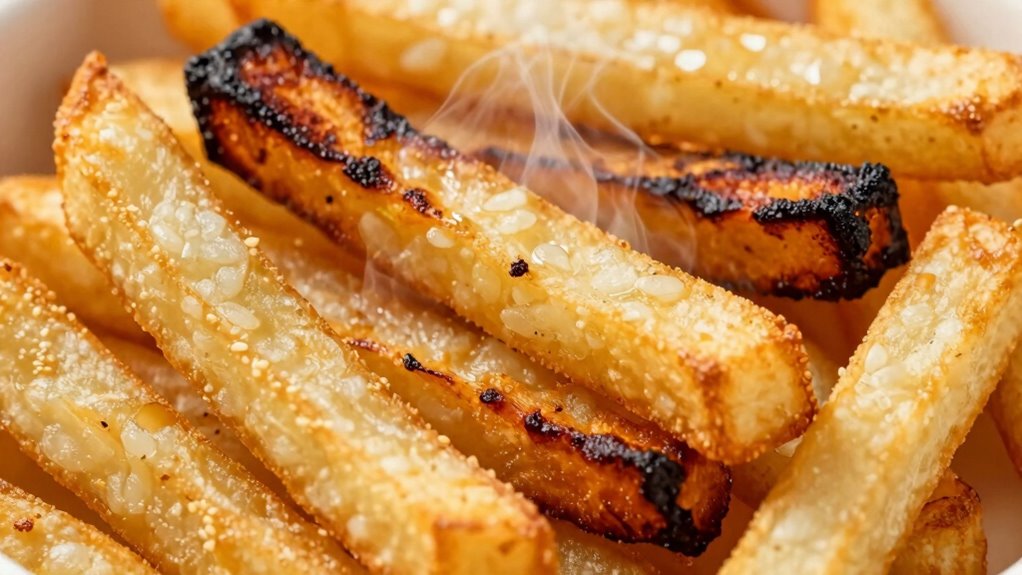
When fries turn out soggy or burnt, focusing on how starch behaves during cooking can reveal the root cause. Sogginess often results from incomplete starch gelatinization, which causes the fries to retain excess moisture and absorb too much oil, leading to limp texture. Overcooking or too high heat accelerates starch gelatinization prematurely, creating a burnt exterior while the interior remains undercooked. Conversely, if the fries are undercooked, the starch hasn’t fully gelatinized, leaving them soggy and lacking crispness. To troubleshoot, ensure you’re cooking at an ideal temperature to promote even starch gelatinization without excessive oil absorption. Monitoring cooking time and temperature helps prevent burnt edges and soggy insides, allowing starch to properly set and achieve the desired crispiness.
Frequently Asked Questions
Can Different Potato Varieties Affect Fry Crispiness?
Yes, different potato varieties can affect fry crispiness because of their genetics and cultivar differences. You’ll notice that some potatoes, like Russets, have a higher starch content, which helps achieve that crispy exterior. In contrast, waxy potatoes with lower starch levels tend to be less crispy. So, choosing the right cultivar impacts the texture, and understanding potato genetics helps you get the perfect fry crispiness every time.
Does Soaking Fries Before Cooking Impact Starch Behavior?
If you soak fries before cooking, you enhance starch gelatinization and improve moisture retention, leading to crispier results. For example, a study showed that soaking potatoes reduces surface starch, preventing excess stickiness and promoting even browning. This process helps create a crispy exterior while keeping the interior tender. Soaking effectively influences starch behavior, ensuring your fries turn out perfectly crisp every time.
How Does Oil Type Influence the Crispiness of Oven and Air Fryer Fries?
The oil type you choose impacts how crispy your fries turn out by affecting oil flavor and cooking temperature. Use oils with high smoke points like avocado or canola for ideal crispiness, especially at higher temperatures. These oils withstand the heat better, giving your fries a crunch without burning or becoming greasy. The right oil and temperature combo ensures your fries stay crispy and flavorful whether baked in the oven or cooked in an air fryer.
Are There Differences in Starch Transformation Between Frozen and Fresh Fries?
Frozen fries favor fast, firm starch granule gelatinization, making them crispier quickly, while fresh fries undergo a slower, softer starch transformation. You’ll notice frozen fries often achieve a crunchier coat because their starches are partially pre-gelatinized, allowing rapid crispiness. Fresh fries, having less processed starch, require more cooking time to reach the same texture, but they can develop a more natural flavor and unique crunch through the gelatinization process.
How Does the Thickness of Fries Affect Their Starch Caramelization?
Fry thickness considerably impacts starch caramelization, with thicker fries taking longer to cook and caramelize their starches properly. As you cook, the heat penetrates more slowly, delaying crispiness. Thinner fries caramelize faster and become crispier sooner, while thicker fries need more time to develop that perfect golden-brown exterior. Adjust your cooking time accordingly to guarantee even starch caramelization, achieving the crispy texture you desire.
Conclusion
Now that you know how starch science influences crispiness, don’t worry if your fries don’t turn out perfect every time. With a few simple tweaks—like adjusting cooking time or temperature—you can master crispy fries in either your oven or air fryer. Remember, patience and experimenting are key. So, go ahead, enjoy your crispy fries without stress, and savor the delicious crunch you’ve just learned to achieve!