When your microwave beeps, residual heat keeps cooking your food because the heat continues to spread inside even after stopping. This happens through conduction and thermal retention, helping distribute warmth evenly but also risking overcooking if you don’t wait the right amount of time. Adjusting standing time based on food type and power level is key to perfect results. Want to understand how to master this process for safer, tastier meals? Keep exploring.
Key Takeaways
- Standing time allows residual heat to continue cooking food after the microwave stops.
- Microwave energy creates hot and cold spots; standing helps even out these temperature differences.
- Residual heat spreads internally, ensuring thorough cooking and preventing cold spots or undercooked areas.
- Proper standing time ensures food safety by completing the cooking process without overcooking.
- Regular maintenance and correct timing optimize residual heat distribution for perfectly heated food.
What Is Microwave Standing Time and Why Does It Matter?
Have you ever wondered why you’re advised to let your food sit after microwaving? That’s because of residual heat, the heat retained in your food after the microwave stops. Microwave standing time allows this heat to distribute evenly throughout your meal, ensuring it’s thoroughly cooked and safe to eat. Without letting your food sit, you risk uneven heating, which can leave cold spots or undercooked areas. Residual heat helps even out temperature differences, making your food more enjoyable and reducing the risk of bacteria growth. This process relies on the principles of heat retention to maximize cooking efficiency. The thermal conductivity of food ingredients influences how quickly heat is evenly spread during standing time. Additionally, heat transfer continues to occur during this period, further enhancing heat distribution. This step is essential for achieving the right texture and doneness. By giving your food a few extra moments, you’re harnessing heat retention to improve flavor, temperature, and safety. Proper temperature distribution during standing time enhances the overall quality of your meal. Recognizing how heat transfer mechanisms function in food can help you optimize your microwave cooking results. Standing time isn’t just a tip—it’s a key part of microwave cooking.
How Residual Heat Keeps Cooking Your Food After the Beep

When the microwave beeps to signal that your food is done, residual heat continues to cook it even after the timer stops. This leftover heat, trapped within the food, maintains temperature and promotes cooking continuity. As the microwave’s energy ceases, the residual heat spreads throughout the food, gradually raising its internal temperature. This process helps ensure even cooking and prevents undercooked spots. It’s why your food can finish cooking during the standing time, even without additional microwave energy. Understanding residual heat helps you avoid overcooking or drying out your meals. It acts as a gentle finish to the microwave process, smoothing out temperature differences and ensuring your food reaches the right consistency. This subtle heat transfer is essential for perfectly cooked dishes. Additionally, awareness of cooking techniques can help optimize microwave use and improve meal outcomes. Recognizing the importance of residual heat also allows you to better time your meals and prevent unnecessary reheating. Being mindful of heat distribution can further enhance your overall cooking results. Moreover, knowing how to manage residual heat enables you to better control cooking processes and achieve consistent results.
The Science of Heat Distribution in Microwave Cooking
When you microwave food, heat doesn’t spread evenly, creating distinct patterns. Hot and cold spots form due to the way microwave energy interacts with your food. Understanding heat transfer dynamics helps you cook more evenly and avoid undercooked or overcooked areas. Additionally, the phenomenon of standing time allows residual heat to continue distributing within the food, ensuring more consistent cooking. This process relies on the natural heat transfer properties within the food, which can be influenced by its composition and shape. Recognizing how vetted wave and wind effects contribute to heat distribution can further improve your microwave results by minimizing uneven heating and ensuring thorough cooking. Moreover, recent AI discoveries could lead to innovations in microwave technology, optimizing heat distribution for even better results and reducing the need for manual stirring during cooking.
Microwave Heating Patterns
Ever wonder how microwave ovens evenly heat your food? It’s all about the heating patterns created by microwave energy. In a microwave, the electromagnetic waves bounce around, forming specific zones of high and low energy. These patterns determine how heat distributes through your food. Visualize this as:
- Bright spots where energy concentrates, cooking faster.
- Darker areas with less energy, heating slower.
- The “standing wave” pattern, which can cause uneven heating.
Understanding these patterns helps you improve microwave safety and guarantees proper appliance maintenance. By stirring or rotating your food, you help even out these hot and cold spots. This keeps your food uniformly heated and prevents overcooking. Recognizing heating patterns ensures you handle your microwave safely and extend its lifespan.
Hot and Cold Spots
Have you noticed that some parts of your microwave-heated food are hot while others remain cold? That’s due to hot and cold spots caused by uneven heat distribution. These spots can compromise food safety by leaving portions undercooked, risking bacteria survival. To minimize this, make sure your microwave is well-maintained; regular appliance maintenance ensures the magnetron and turntable work properly, promoting even heating. Stirring or rotating food halfway through cooking helps distribute heat more uniformly, reducing cold spots. Understanding hot and cold spots empowers you to prepare safer, more evenly cooked meals. Additionally, being aware of microwave power levels and adjusting cooking times accordingly can further improve heat distribution. Proper appliance maintenance not only extends the lifespan of your microwave but also ensures consistent performance, which is essential for even heating. Being mindful of heat distribution patterns can help you identify and correct uneven heating issues, leading to better results. Maintaining your microwave’s components ensures that heat is distributed evenly across the food, preventing cold or hot patches. By keeping your appliance in good condition and adjusting cooking techniques, you enhance both safety and the quality of your microwave-cooked dishes.
Heat Transfer Dynamics
Understanding how heat transfers within your microwave is key to achieving evenly cooked food. In microwave cooking, heat moves primarily through three processes:
- Dielectric heating, where microwaves excite water molecules, generating heat directly inside your food. This process is essential for quick and efficient cooking, but it can also lead to uneven heating if not properly managed.
- Conduction, as heat spreads from warmer to cooler areas, helping to even out temperature differences. Conduction ensures thorough cooking, especially in dense foods where microwave energy might not penetrate evenly.
- Convection, which occurs in some microwave models with fans, circulating hot air for uniform cooking. This method can improve heat distribution in larger or thicker items and is often used in combination with other cooking techniques. Proper understanding of heat distribution helps prevent food safety issues and ensures consistent results. Mastering heat transfer helps you cook food safely and evenly, maximizing microwave safety and ensuring ideal results.
Why Your Food Can Overcook During Standing Time: and How to Prevent It
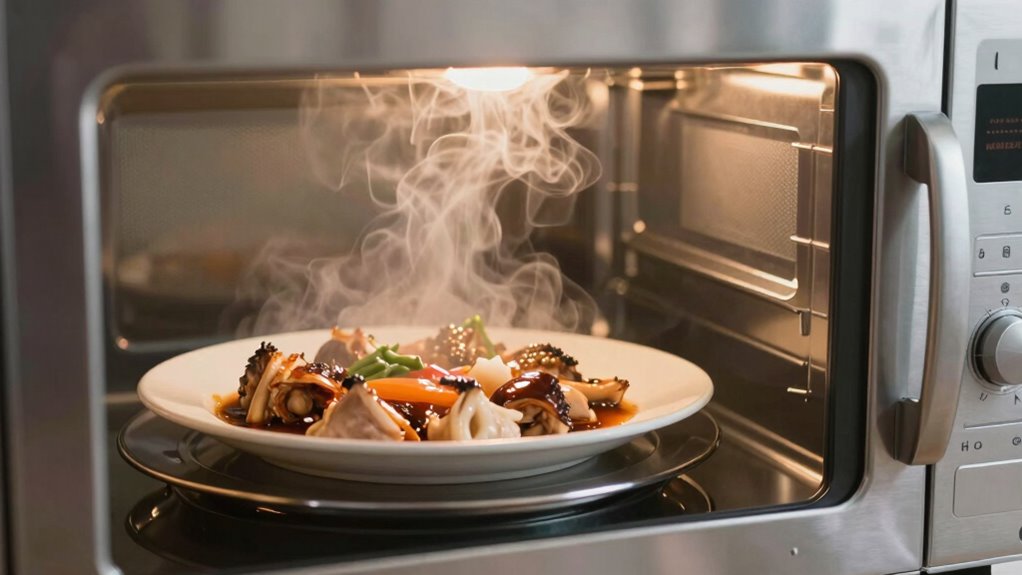
When you remove food from the microwave, residual heat continues to cook it during the standing period, which can lead to overcooking if you’re not careful. This phenomenon occurs because the heat doesn’t stop instantly when the timer beeps. To prevent overcooking, stay attentive and use microwave safety practices, like letting your food rest for the recommended time. Proper appliance maintenance ensures your microwave heats evenly, reducing hot spots that cause uneven cooking and overcooking during standing time. Avoid opening the door prematurely or leaving food to sit too long, as both can impact texture and safety. Remember, understanding how residual heat works helps you achieve perfectly heated meals without risking overdone or unsafe food. Recognizing the role of thermal behavior in microwave cooking can further improve your results. Additionally, being aware of microwave hot spots can help you position food properly to promote even heating. Being mindful of standing time and residual heat effects allows for better control over your cooking process, leading to more consistent and enjoyable results.
How to Use Standing Time for Perfectly Heated Meals
To make the most of standing time, you should strategically use it to guarantee your food reaches the perfect temperature and texture. This pause allows heat to distribute evenly, preventing cold spots and ensuring food safety. To optimize this process, follow these steps:
- Let your food sit, uncovered, in a warm, clean environment to promote uniform heat distribution.
- Avoid disturbing the food during standing to prevent uneven cooling or overcooking.
- Regularly maintain your microwave, including cleaning and checking seals, to ensure consistent performance and prevent uneven heating.
Using standing time properly helps you achieve perfectly heated meals while maintaining food safety standards and prolonging your equipment’s lifespan. Proper equipment maintenance also minimizes the risk of uneven heating or overheating.
Common Mistakes When Relying on Standing Time and How to Avoid Them

Relying solely on standing time without paying attention to common mistakes can lead to uneven heating and compromised food safety. One mistake is poor plate placement; placing food unevenly or overloading the plate can prevent heat from distributing evenly during standing. Always arrange food in a single, shallow layer and avoid crowding the plate’s center. Another mistake is inaccurate timer settings. Relying on a faulty or inconsistent timer can cause under- or over-standing. To avoid this, double-check your microwave’s timer and consider setting it slightly longer if you’re unsure. Remember, standing time isn’t a substitute for proper heating techniques. By paying attention to plate placement and ensuring timer accuracy, you’ll achieve more evenly heated, safer meals.
How Microwave Power Levels Affect Standing Time and Heating
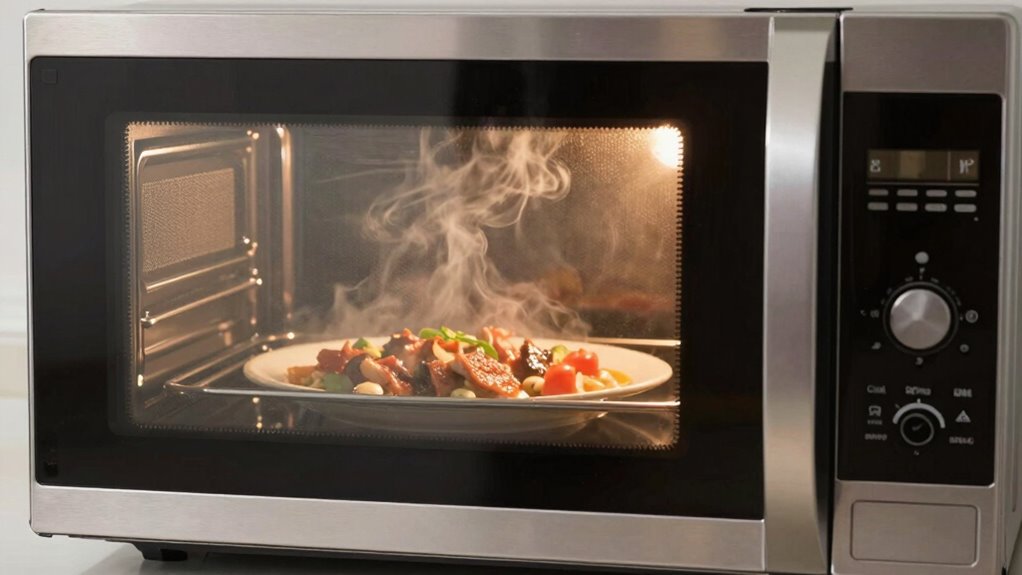
Microwave power levels directly influence how long you should let food stand after heating. Lower power settings generate gentler heat, requiring longer standing times to make certain of even cooking and prevent cold spots. Higher power heats food quickly but risks overcooking or uneven heating if not followed by proper standing time. To visualize, consider:
- A gentle simmer spreading warmth evenly through a thick casserole.
- Rapid boiling causing hot spots in soup that need equalizing.
- A delicate piece of fish that needs a slow, steady finish.
Adjusting power levels is key for microwave safety and energy efficiency. Proper standing time allows residual heat to distribute evenly, reducing risk of burns and ensuring food reaches a safe temperature without wasting energy.
Does Food Type Change How Long It Continues Cooking?
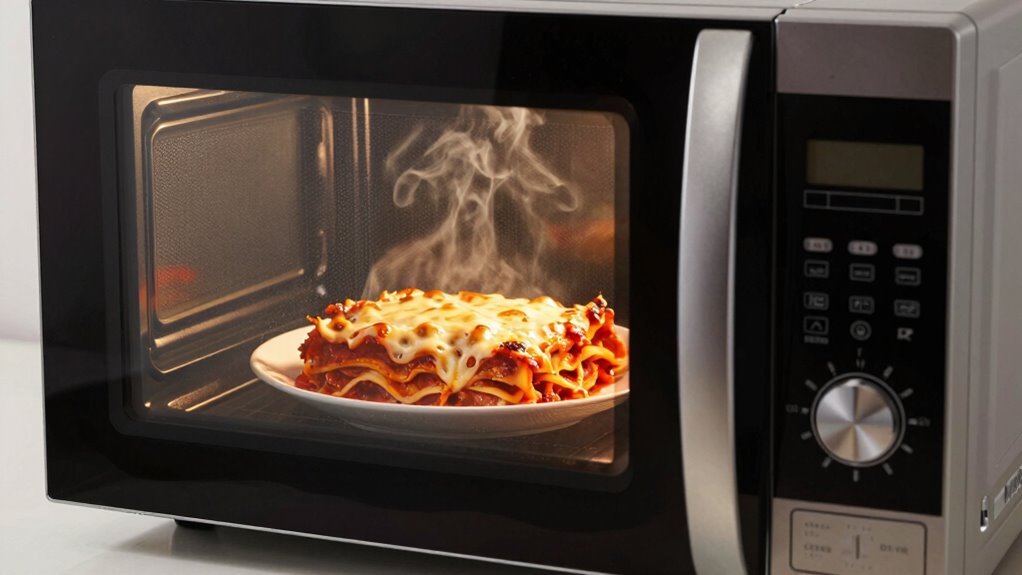
Different types of food require varying standing times after microwave heating because their textures and moisture content influence how they finish cooking. Foods with firmer textures, like potatoes or denser meats, often need longer standing to ensure even heat distribution and thorough cooking. Softer items, such as vegetables or casseroles, may require less time. The food’s texture affects how heat moves within it, impacting flavor retention and preventing overcooking in some areas. Additionally, foods with higher moisture content tend to continue cooking slightly longer as residual heat redistributes, enhancing flavor and juiciness. Recognizing these differences helps you decide the right standing time, ensuring your food is both safely cooked and retains its intended texture and flavor.
Adjusting Cooking Times for Better Results During Standing
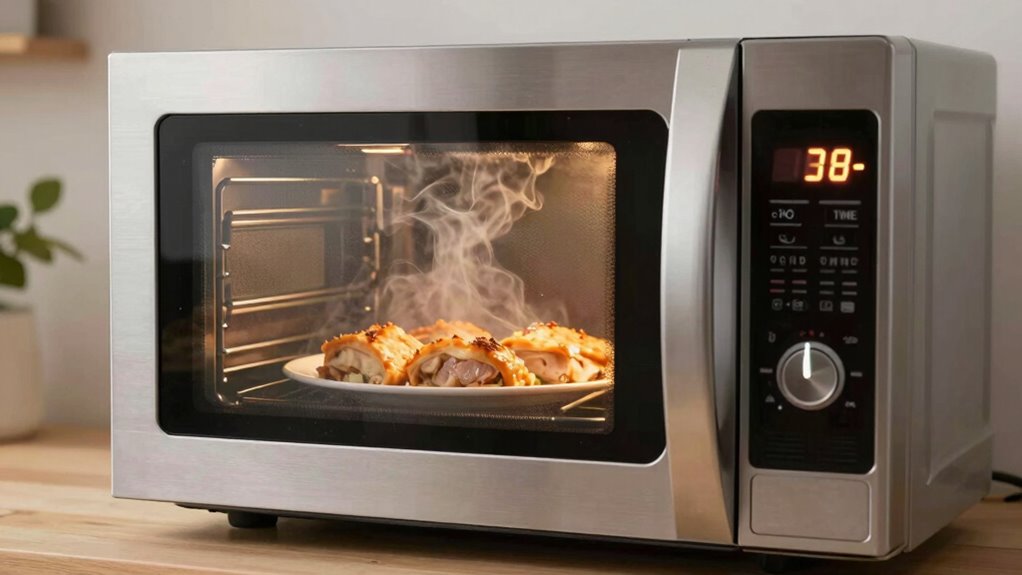
To achieve the best results, it’s important to modify your standing times based on your specific microwave and the food you’re reheating or cooking. Start with small tweaks:
- Monitor the food closely during standing to prevent overcooking or undercooking.
- Increase or decrease standing time by 10-15 seconds if food remains too hot or cool.
- Keep your microwave in good condition through regular appliance maintenance to ensure even heat distribution and safe operation.
Adjusting standing times helps ensure microwave safety and prevents food from becoming unevenly heated. Remember, every microwave behaves slightly differently, so fine-tuning is essential. Properly timed standing also helps maintain appliance longevity and avoids the risk of burns or hot spots.
Tips for Timing Your Microwave Use for Optimal Heating
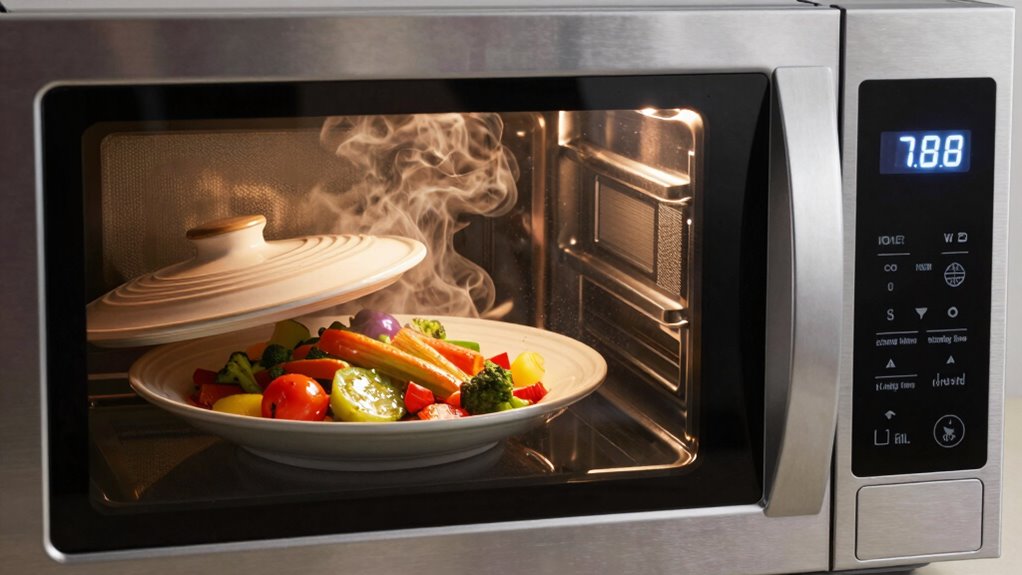
Timing your microwave use precisely can considerably improve how evenly and thoroughly your food heats. To achieve ideal results, always follow the recommended cooking times for your specific kitchen appliances and adjust based on portion size and food type. Avoid overloading the microwave, as it can lead to uneven heating and compromise microwave safety. Stir or rotate food midway through cooking to promote uniform heat distribution. Use microwave-safe containers to prevent accidents and ensure safety. Remember, standing time is essential; it allows heat to distribute evenly, reducing the risk of hot spots or burns. Planning your heating process with these tips helps you avoid under or overcooking, saves energy, and keeps your kitchen appliances functioning properly. Proper timing makes your microwave more effective and safe.
Frequently Asked Questions
How Does Container Material Affect Standing Time Efficiency?
Your container’s material markedly affects standing time efficiency. If it has high conductivity, heat distributes quickly, reducing the time needed for even cooling. Durable materials like glass or microwave-safe plastics withstand heat without warping, guaranteeing consistent results. Conversely, low-conductivity materials may cause uneven cooling and longer standing times. Choosing the right container with good conductivity and durability helps guarantee your food finishes cooking evenly and safely after the microwave stops.
Can Standing Time Vary With Microwave Brand or Model?
Yes, standing time can vary with microwave brand or model because of differences in microwave calibration. Some models might have more precise sensors or power levels, affecting how long you should wait before opening the door. Your user preferences also matter; you might prefer longer or shorter standing times based on your experience. Always follow your microwave’s guidelines, and adjust based on trial to find what works best for your cooking style.
Does Altitude Influence Microwave Residual Heat and Cooking?
Altitude effects can influence microwave residual heat and cooking times. Higher altitudes often mean lower air pressure, which can slightly alter how heat dissipates and how evenly your food cooks. You might notice that residual heat lasts longer or shorter depending on altitude. To guarantee thorough cooking, consider adjusting your microwave time or letting food stand a bit longer after the beep, especially if you’re cooking at markedly higher elevations.
Are There Health Risks Associated With Overcooking During Standing Time?
Overcooking during standing time can pose health risks by increasing nutrient degradation and food spoilage. You might lose essential vitamins and minerals, reducing the nutritional value of your meal. Additionally, extended standing can promote bacterial growth, especially if the food cools slowly or stays at unsafe temperatures. To stay safe, monitor cooking times carefully, and let your food rest just enough to avoid unnecessary nutrient loss or potential foodborne illnesses.
How Does Humidity Impact Heat Retention and Food Safety?
Imagine a Victorian scientist explaining humidity effects—humidity impacts heat retention, making food stay hot longer. When humidity’s high, moisture in the air helps retain heat, ensuring your food stays warm and safe longer. But, low humidity can cause rapid cooling, risking bacteria growth if food isn’t consumed promptly. So, controlling humidity helps maintain proper heat retention, vital for food safety and preventing potential health issues.
Conclusion
So, next time you hear that beep, remember it’s just the encore of your microwave’s performance. Standing time isn’t pause—it’s the final act where residual heat whispers secrets to your food, finishing the job with gentle persistence. Embrace this quiet rhythm, timing your meals with care. Let your patience simmer, and you’ll enjoy perfectly heated bites, each moment a harmonious dance between heat and time, turning everyday meals into culinary symphonies.