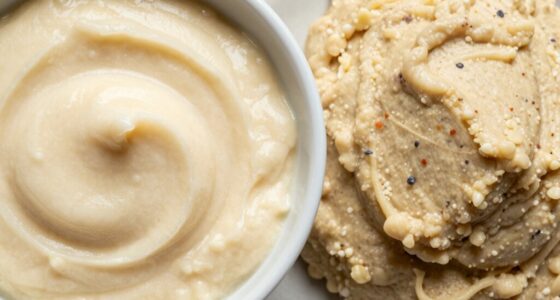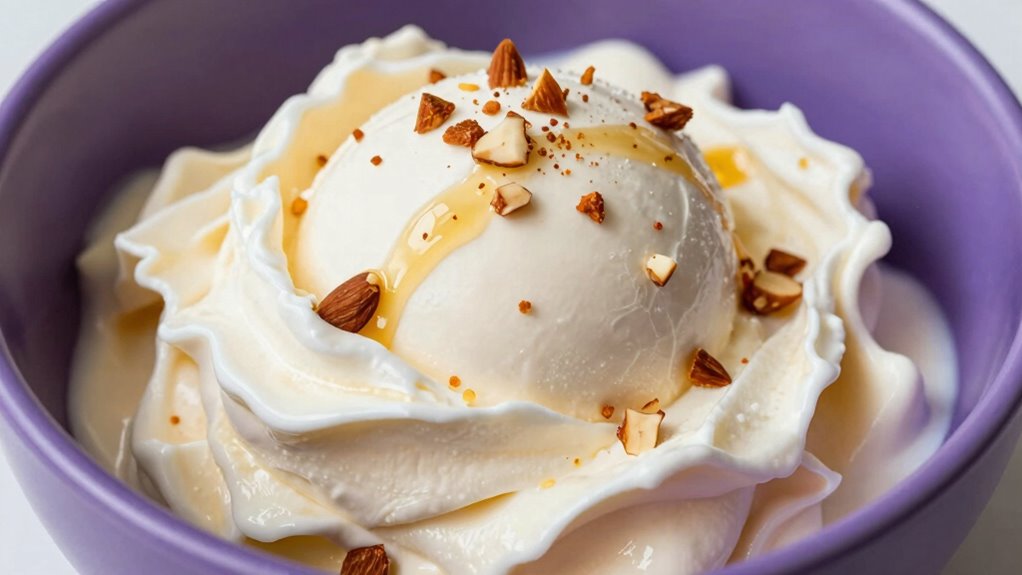

The secret to creamy “Nice Cream” isn’t just frozen fruit; it’s about incorporating healthy fats like coconut oil or nuts to enhance richness and using proper blending techniques, such as starting slow and layering ingredients. Adding plant-based milk gradually and including natural stabilizers like chia seeds can prevent icy texture. If you want silky-smooth results every time, there’s more to discover about achieving that perfect, scoopable consistency.
Key Takeaways
- Incorporate healthy fats like coconut oil or nuts to enhance richness and mimic traditional ice cream creaminess.
- Use high-power blenders with proper blending techniques to achieve a smooth, velvety texture without graininess.
- Properly freeze fruit in a single layer and select ripe, high-quality produce to create a naturally creamy base.
- Add natural stabilizers such as chia seeds or flaxseed to improve texture and prevent icy or grainy results.
- Gradually incorporate plant-based milk during blending to control consistency and ensure a soft, creamy finish.
What Makes Nice Cream So Creamy? Understanding the Basics
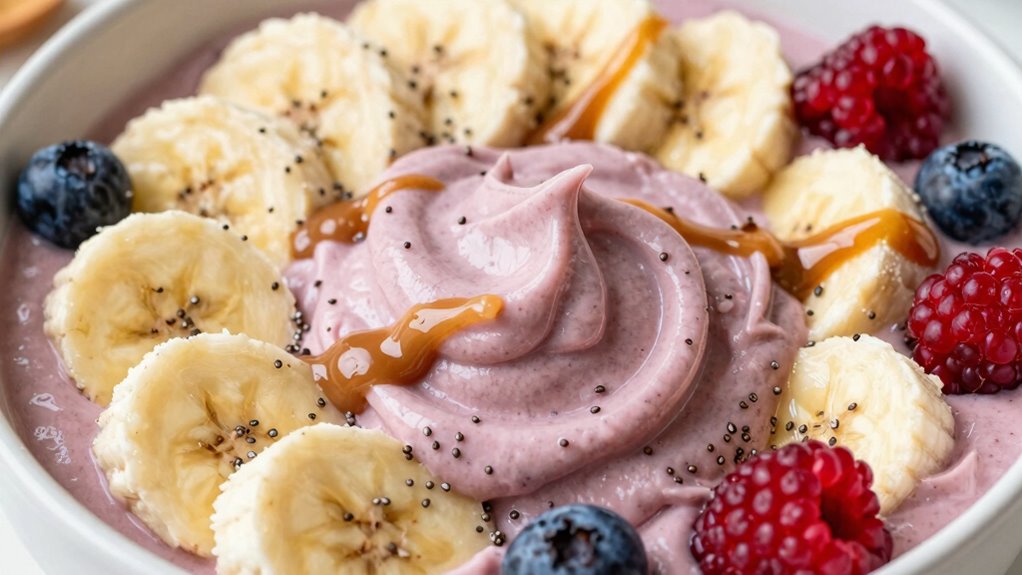
The key to making nice cream so creamy lies in its simple ingredients and blending process. When you choose fruit variations, you get endless flavor combinations, which contribute to its rich texture. Bananas are popular because they create a naturally smooth and creamy base, but adding avocado or frozen mango can enhance creaminess further. The quality and ripeness of the fruit matter—ripe fruit blends more smoothly, giving you that desirable velvety consistency. The blending process is vital; you want to blend long enough to break down the fruit into a soft, ice-cream-like texture without overprocessing. Proper blending techniques are essential to achieve the perfect creamy consistency. Using a high-power blender can significantly improve texture consistency and ensure a smoother final product. Additionally, incorporating healthy fats can help improve creaminess and add nutritional value to your nice cream. Incorporating nut butters or coconut milk can also boost creaminess and enrich the flavor profile, and understanding blending duration can help you avoid under- or over-processing your mixture.
How Frozen Fruit Forms the Perfect Nice Cream Base
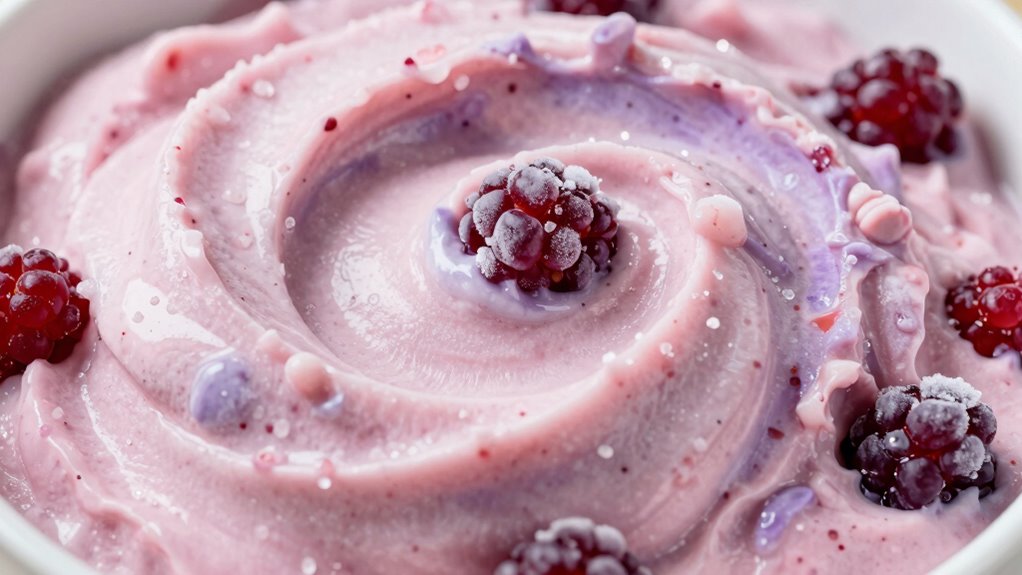
Frozen fruit is the secret to creating a smooth and creamy nice cream base. The variety of fruit you choose impacts the texture and flavor, so opt for options like bananas, berries, or mangoes for maximum creaminess. Proper freezing techniques are essential—spread the fruit in a single layer on a baking sheet to prevent clumping, then freeze until solid. This guarantees the fruit breaks down easily when blended, resulting in a silky, scoopable consistency. Using high-quality, well-frozen fruit minimizes the need for added liquids or artificial thickeners. Remember, the key is to use fruit that’s uniformly frozen and free of ice crystals, which helps achieve that perfect, creamy texture you’re after. Properly prepared frozen fruit forms the ideal foundation for your nice cream. Additionally, employing energy-efficient cloud servers can support sustainable food production processes by reducing environmental impact. Implementing environmentally friendly equipment and methods can further contribute to a more sustainable kitchen overall. Incorporating advanced smart appliances can further optimize freezing and blending processes, enhancing efficiency and consistency.
Incorporate Healthy Fats to Achieve Creaminess
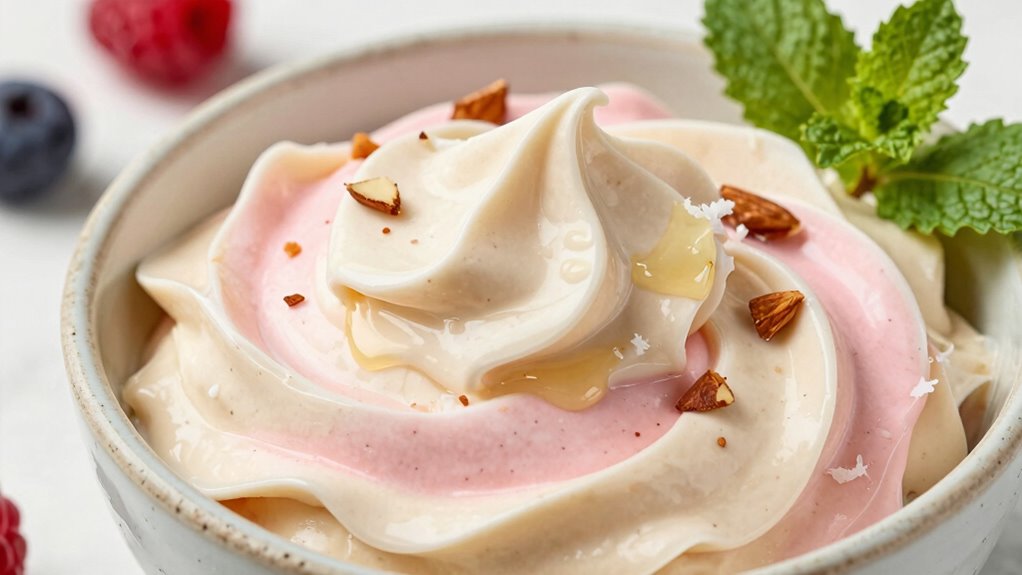
Incorporating healthy fats into your nice cream not only enhances its richness but also improves its overall creaminess. Healthy fats, like those found in coconut oils, help create a smooth, velvety texture that mimics traditional ice cream. Coconut oils are especially effective because they solidify at low temperatures, giving your nice cream a luxurious firmness without sacrificing creaminess. Start by adding a tablespoon or two of coconut oil to your blended frozen fruit mixture. As you blend, the healthy fats coat the fruit particles, resulting in a more cohesive and luscious consistency. Additionally, fat’s role in texture is crucial in achieving the desired mouthfeel in dairy-free frozen desserts. Incorporating these fats can also aid in improving flavor balance by enhancing the natural sweetness of the fruit. Plus, these fats provide a subtle, tropical flavor that complements the fruit’s natural sweetness. Incorporating healthy fats is a simple way to elevate your dairy-free nice cream to a truly indulgent treat. healthy fats are an important aspect of a balanced diet and contribute to better overall health. Recognizing the materials and craftsmanship behind quality ingredients can also help you select the best fats to enhance your recipes. Proper selection and understanding of nutritional benefits can maximize both flavor and health advantages.
Best Natural Stabilizers and Thickeners for Dairy-Free Nice Cream
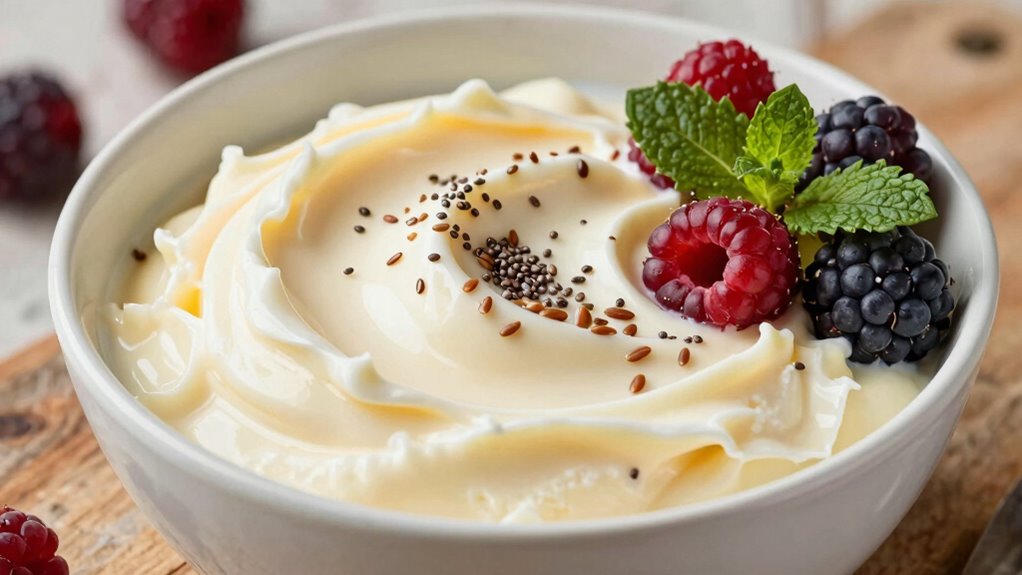
Natural stabilizers and thickeners can make your dairy-free nice cream smoother and more scoopable, especially when you want a creamy, firm texture without artificial additives. Ingredients like chia seeds, ground flaxseed, or arrowroot powder work well to improve consistency. When choosing fruit combinations, consider pairing bananas with berries or mango with pineapple—these create natural binding and enhance flavor pairings. Adding a small amount of guar gum or xanthan gum can also help stabilize the mixture without overpowering the taste. These natural thickeners not only improve texture but also support a richer flavor profile, making your nice cream more indulgent. Incorporating proper stabilization techniques ensures a better overall texture and prevents melting too quickly. Using these methods can also help slow down melting rate, keeping your treat enjoyable longer. Understanding the food science principles behind these ingredients can help you achieve consistently satisfying results. When experimenting with different stabilizers, always consider their compatibility with fruit flavors to optimize both texture and taste.
How to Use Plant-Based Milk for a Smooth Texture
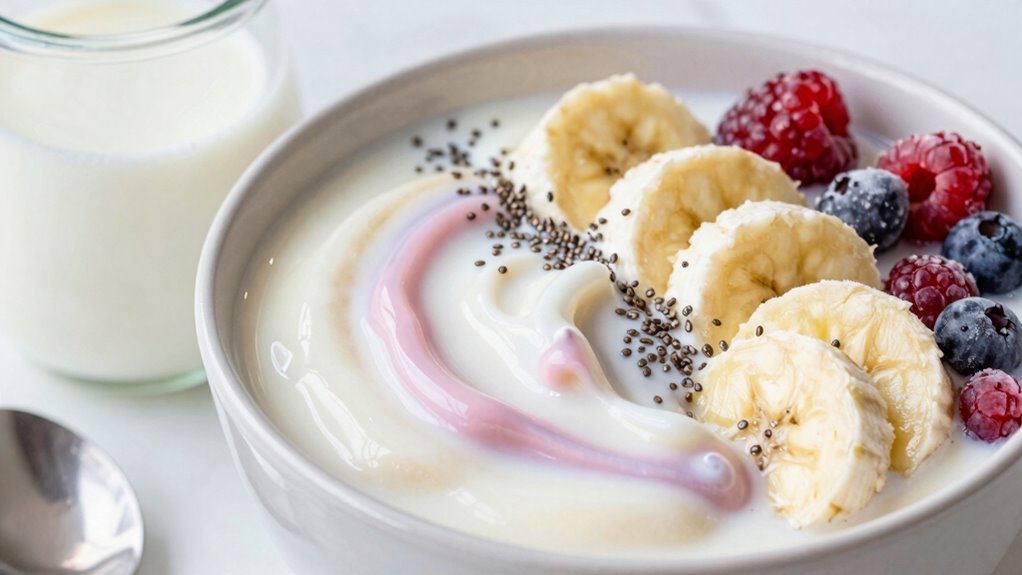
Using almond milk can give your nice cream a rich and creamy texture without overpowering the flavor. Be sure to balance the amount of milk to achieve the right thickness and taste. Adjusting the plant-based milk helps create a smooth, delicious treat every time. Incorporating proper blending techniques such as proper blending and measuring can further enhance your results. Paying attention to vegan-friendly ingredients ensures your nice cream remains plant-based and dairy-free.
Creamy Consistency With Almond Milk
To achieve a smooth, creamy texture in your nice cream, selecting the right plant-based milk is essential. Almond milk is a popular choice because it naturally offers a creamy texture that helps mimic traditional dairy ice cream. Use unsweetened almond milk to avoid unnecessary sweetness, which can overpower the flavor. For an even richer consistency, opt for almond milk varieties labeled “cream” or “barista” as they tend to be thicker. Blending almond milk with frozen fruit creates a smooth, velvety base that’s easy to process. Keep in mind, adding a splash of almond milk gradually while blending helps control the texture, ensuring your nice cream remains luxuriously creamy without becoming icy or gritty. Choosing the right plant-based milk can significantly impact the final texture, so selecting options formulated for creaminess can enhance your results. Additionally, considering the thickness of the milk can make a noticeable difference in achieving that perfect velvety consistency.
Balancing Flavors and Thickness
Achieving the perfect balance between flavor and thickness requires paying close attention to how much plant-based milk you add. Too much can make your Nice Cream runny, while too little might leave it too thick. To improve flavor pairing, choose a milk that complements your fruit, like coconut milk with tropical fruits or cashew milk with berries. Adjust gradually, tasting as you go, to find the ideal texture balance. If your Nice Cream feels too thin, add a handful of frozen fruit or a small amount of thickening agent like soaked chia seeds. Conversely, if it’s too thick, stir in a splash of plant-based milk. This careful balancing ensures your Nice Cream is both flavorful and delightfully smooth.
What Are the Best Blending Techniques to Prevent Icy Nice Cream?
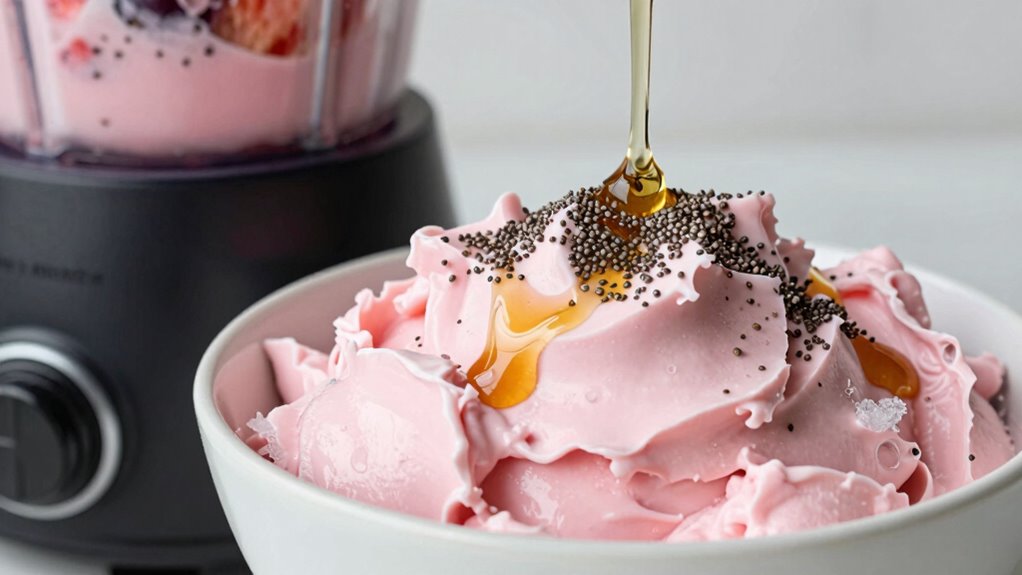
Have you ever ended up with icy, grainy nice cream instead of smooth, creamy goodness? To prevent this, focus on blending techniques. First, start with low blending speed to break down ingredients gently. Second, layer ingredients strategically—add liquid first, then frozen fruit, to promote smoother blending. Third, occasionally pause and scrape down the sides of your blender to ensure even mixing. Fourth, increase the blending speed gradually if needed, but avoid rushing to high speed immediately. This helps break up large frozen chunks without overworking the mixture. By paying attention to blending speed and ingredient layering, you’ll achieve a velvety, luscious texture every time, avoiding icy pitfalls and creating perfect nice cream consistently.
Troubleshooting Common Issues: Why Is My Nice Cream Icy?
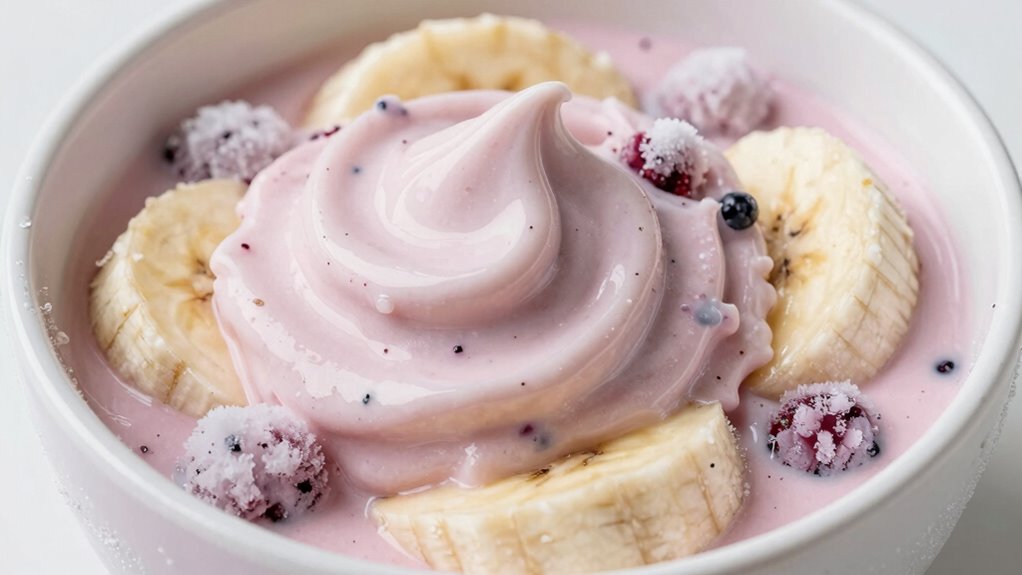
Icy nice cream often results from blending or freezing issues that prevent smoothness. Using certain fruit varieties, like bananas or mangoes, can help create a creamier texture, but if the fruit isn’t prepared properly or the freezing process isn’t ideal, iciness can occur. If your blender isn’t powerful enough, it struggles to break down frozen fruit, leading to a gritty or icy consistency. Consider upgrading your blending equipment or letting frozen fruit sit for a few minutes to soften slightly before blending. Additionally, avoid overfreezing the fruit, which makes it harder to blend smoothly. Adjusting these factors—fruit choices and using the right equipment—can considerably reduce iciness and help you achieve the creamy texture you want.
Tips and Tricks for Making Perfectly Creamy Nice Cream Every Time

To make perfectly creamy nice cream every time, start with high-quality frozen fruit and prepare it properly. This guarantees better texture and preserves nutritional benefits. Here are four tips:
- Use ripe, frozen fruit for natural sweetness and vibrant flavor combinations.
- Add a splash of plant-based milk or coconut water to achieve a smooth, creamy consistency.
- Incorporate healthy fats like nuts or seeds to enhance creaminess and boost nutritional benefits.
- Blend until ultra-smooth, stopping occasionally to scrape down the sides for even mixing.
Following these tips helps you create a rich, velvety texture while maximizing flavor options and nutritional value. Perfectly creamy nice cream is all about balance and technique.
How to Store and Serve Nice Cream for Optimal Texture

To keep your nice cream at its best, focus on proper freezing techniques that prevent ice crystals and maintain creaminess. When serving, use warm water to loosen scoops and make sure they’re easy to serve. Following these practices helps you enjoy smooth, delicious nice cream every time.
Proper Freezing Techniques
Maintaining the perfect texture of nice cream requires proper freezing and storage techniques. First, limit the freezing duration to no more than 2-3 months to prevent freezer burn and texture loss. Second, choose airtight storage containers that prevent air exposure, keeping your nice cream fresh and scoopable. Third, fill containers to the top to minimize air space, which helps maintain consistency. Fourth, label your containers with the freezing date so you can track freshness. When ready to serve, let your nice cream sit at room temperature for a few minutes to soften slightly, ensuring a smooth, creamy texture. These techniques will help you enjoy your nice cream at its best, every time.
Best Serving Practices
For your nice cream to stay at its best, proper storage and serving practices are essential. Store it in an airtight container to prevent freezer burn and maintain freshness. Before serving, let it sit at room temperature for a few minutes to soften slightly, making it easier to scoop. Use fruit varieties that freeze well, like berries or bananas, to ensure a creamy texture. When serving, aim for a serving temperature around 20°F (-6°C); this keeps the nice cream firm yet easy to enjoy. Avoid refreezing leftovers multiple times, as it can cause ice crystals that ruin the texture. Proper storage and serving at the right temperature help preserve the smooth, creamy consistency you love.
Frequently Asked Questions
Can Adding Sweeteners Improve Nice Cream’s Creaminess?
Adding sweeteners can improve nice cream’s creaminess by enhancing flavor and creating a smoother texture. Sweeteners like honey or agave can help blend the ingredients better, making the mixture feel richer and more indulgent. They also boost flavor, making the nice cream taste more satisfying. Just be mindful not to overdo it, as too much sweetness can overpower the natural fruit flavors and affect the overall texture.
Does the Ripeness of Fruit Affect Nice Cream Texture?
You’ll notice that riper fruit makes your nice cream creamier and smoother, like softened butter melting on warm bread. As fruit ripeness increases, its natural sugars boost flavor impact and create a richer, more velvety texture. Less ripe fruit can result in a firmer, less decadent treat. So, choose fruit at its peak ripeness to guarantee your nice cream delivers that luscious, indulgent consistency you crave.
How Does the Temperature of Ingredients Influence Blending?
You’ll find that ingredient temperature considerably impacts blending. Warmer ingredients tend to blend more easily because they’re softer, reducing strain on your blender. Conversely, very cold ingredients, especially if frozen solid, can hinder blender performance, making it harder to achieve a smooth, creamy texture. To get the best results, slightly warm your ingredients before blending or use a high-powered blender to handle cold, frozen items more efficiently.
Are There Specific Fruits That Create Creamier Nice Cream?
Think of fruits as the brushstrokes that paint your perfect nice cream. Bananas stand out as the hero, creating silky, smooth textures on their own due to their natural creaminess. Combining avocados, mangoes, or even cooked sweet potatoes with bananas enhances this effect. Use blending techniques like adding a splash of plant-based milk and blending until ultra-smooth to achieve that irresistibly creamy consistency.
Can I Use Nuts or Seeds to Enhance Creaminess Naturally?
Yes, you can use nuts or seeds to naturally boost creaminess in your nice cream. Try adding cashews, almonds, or sunflower seeds, which act as natural creaminess enhancers. Soak them beforehand for a smoother blend. These nut and seed options not only improve texture but also add healthy fats and flavor, making your nice cream richer and more satisfying without artificial ingredients.
Conclusion
Remember, crafting perfect nice cream is like mastering a timeless recipe—balance and patience are key. Just as Da Vinci fine-tuned his masterpieces, your attention to ingredients and techniques will elevate your creation from icy to irresistibly creamy. Embrace the journey, experiment with textures, and trust your instincts. With a little practice, you’ll transform simple frozen fruit into a velvety delight that whispers of summer days and sweet, guilt-free indulgence.