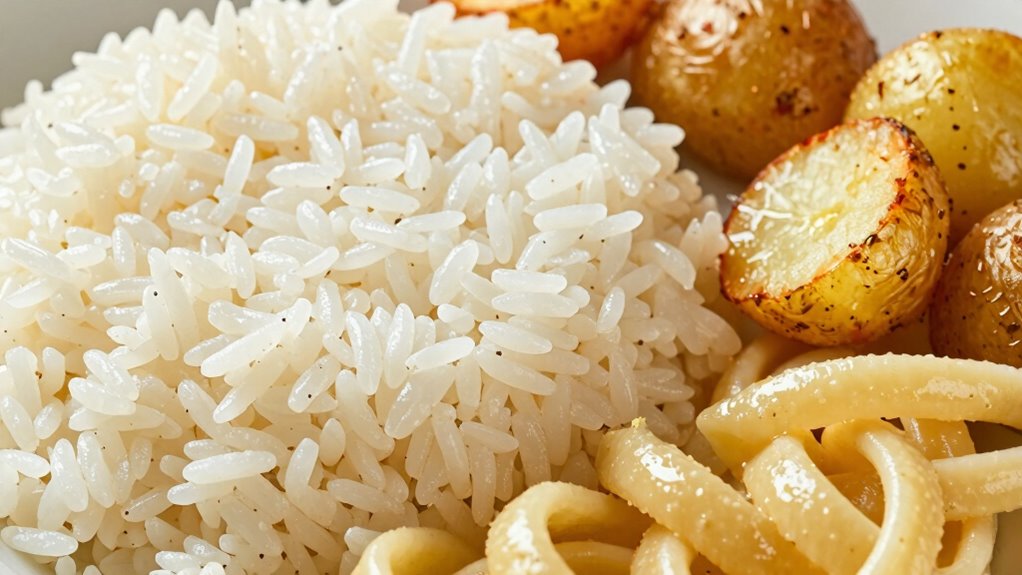

The starch rule that changes rice, potatoes, and pasta textures involves cooking and cooling methods that boost resistant starch. When you boil these foods and then cool them, retrogradation occurs, making the starch less digestible and increasing resistant starch levels. This process results in firmer, chewier textures and slower digestion, helping control blood sugar spikes. If you keep exploring, you’ll discover how to optimize these techniques for better health benefits.

Get kitchen staples and gadgets delivered free — and shop member deals
- Fast, free delivery on millions of items
- Access to Prime Big Deal Days deals on October 6–7
- Prime Video, Amazon Music and more included
Key Takeaways
- Cooking methods like boiling preserve more resistant starch than frying or baking.
- Cooling cooked rice, potatoes, and pasta increases resistant starch through retrogradation.
- Reheating hot foods reduces resistant starch content, affecting texture and glycemic response.
- Cooling foods causes a texture change to firmer or chewier due to starch retrogradation.
- Proper cooking and cooling enhance resistant starch levels, benefiting blood sugar management and nutrition.
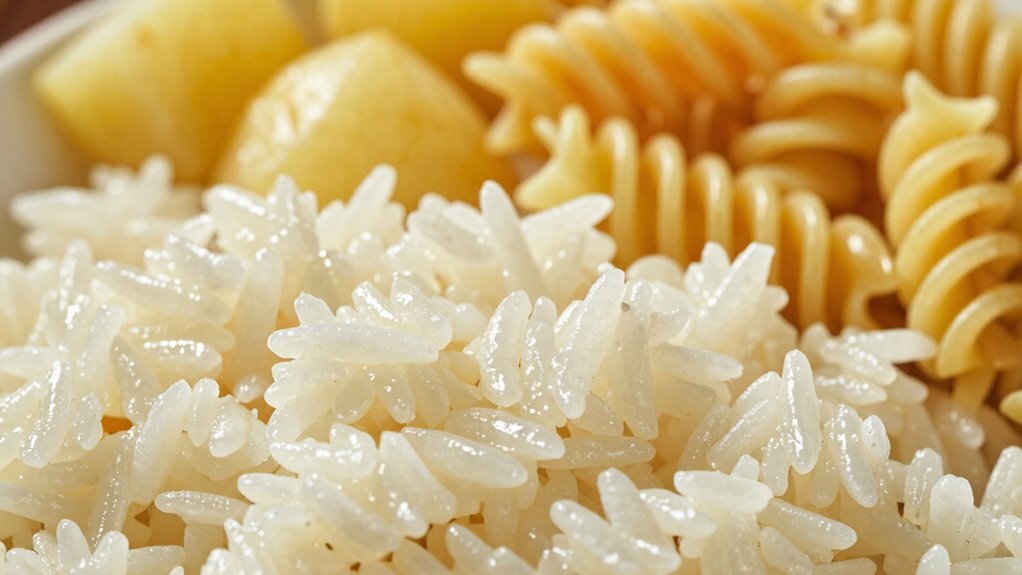
Understanding the starch rule is essential if you want to manage your carbohydrate intake effectively, especially with rice, potatoes, and pasta. This rule revolves around how cooking methods influence the amount of resistant starch in these foods, which directly affects their texture and nutritional impact. When you cook starchy foods properly, you can alter their digestibility and glycemic response, making them better suited for your dietary goals. For example, boiling rice or potatoes and then cooling them down creates resistant starch, which resists digestion, leading to a lower spike in blood sugar levels. This process is simple but powerful, giving you control over how your body processes carbs.
The way you cook these foods determines their nutritional impact significantly. Boiling, for instance, tends to retain more resistant starch compared to frying or baking. When you boil rice or potatoes and then let them cool, the starches undergo retrogradation, forming resistant starch that isn’t broken down in your digestive system. This means fewer calories are absorbed, and your blood sugar response is more stable. Conversely, reheating and eating these foods hot can reduce the resistant starch content, so if you’re aiming for lower glycemic effects, consider eating them cooled or cold. Pasta behaves similarly; cooking al dente and then cooling it boosts resistant starch levels, making it a smarter choice for blood sugar management.
Additionally, understanding retrogradation is key to optimizing resistant starch formation and improving the health benefits of these foods. Your choice of cooking method not only impacts nutritional value but also texture. Cooling cooked rice, potatoes, or pasta changes their consistency—they become firmer or chewier, which might be preferable for certain dishes. This texture change isn’t just about aesthetics; it reflects the increased resistant starch content, which influences how your body processes the carbs. If you’re trying to enjoy these foods without spiking your blood sugar, opting for cooking methods that promote resistant starch formation is key. Additionally, combining these foods with fiber-rich vegetables or proteins can further slow digestion, enhancing their health benefits, especially when fiber intake is optimized.
As an affiliate, we earn on qualifying purchases.
Frequently Asked Questions
Does the Starch Rule Apply to All Types of Rice, Potatoes, and Pasta?
Yes, the starch rule applies to most types of rice, potatoes, and pasta. By adjusting your cooking techniques—like soaking, rinsing, or cooking at specific temperatures—you can effectively modify their texture. This helps you control stickiness, firmness, or creaminess. So, whether you’re working with long-grain rice or starchy potatoes, understanding this starch rule enables you to achieve the desired texture through simple, effective methods.
How Does Starch Affect the Nutritional Value of These Foods?
Starch impacts the nutritional value of rice, potatoes, and pasta mainly through their carbohydrate content, which provides energy. When you cook and cool these foods, resistant starch forms, reducing digestible carbs and helping with blood sugar control. This process can improve your nutritional balance by lowering overall glycemic impact. So, understanding how starch affects these foods allows you to make healthier choices and better manage your carbohydrate intake.
Can the Starch Rule Be Used to Improve Food Safety?
Yes, the starch rule can be used to improve food safety by reducing the risk of starch contamination. By properly controlling starch levels during cooking, you can minimize bacterial growth and prevent foodborne illnesses. Implementing techniques like thorough washing and cooking at correct temperatures helps eliminate excess starch, ensuring safer consumption. This approach boosts overall food safety and reduces potential health hazards related to contaminated starch.
What Are Common Mistakes When Applying the Starch Rule?
You often make mistakes when applying the starch rule by not rinsing enough or using too much water, which hinders starch reduction. Overcooking can also damage texture enhancement, making foods mushy instead of tender. Additionally, rushing the process or skipping steps prevents ideal starch removal. To succeed, balance rinsing and cooking times carefully, ensuring you control starch levels without sacrificing the desired texture of your rice, potatoes, or pasta.
Does Starch Content Influence the Cooking Time of These Foods?
Your question is essential because starch content dramatically influences cooking time. Higher starch levels accelerate starch gelatinization, leading to faster softening of rice, potatoes, and pasta. This process directly affects the cooked texture, making it creamier or softer. So, yes, foods with more starch generally cook quicker, but overcooking can cause excessive stickiness. Pay attention to starch levels to achieve the perfect cooked texture without turning your dish into a gluey mess!
As an affiliate, we earn on qualifying purchases.
Conclusion
Now that you know the starch rule, you hold the key to transforming your favorite carbs. Think of it as a magic wand, turning ordinary rice, potatoes, and pasta into culinary masterpieces with just a simple tweak. Every grain and noodle will dance to your tune, boasting the perfect texture. So, embrace this secret, and watch your dishes become a symphony of delightful bites—your kitchen’s own enchanted garden of flavors.
boiling potatoes for resistant starch
As an affiliate, we earn on qualifying purchases.
As an affiliate, we earn on qualifying purchases.
As an affiliate, we earn on qualifying purchases.
NFL season / tailgating Picks
team gear
As an affiliate, we earn on qualifying purchases.