
Thick sauces break when ingredient interactions become unstable, often due to improper thickener addition, overcooking, or temperature mishandling that causes fats and proteins to split. Thin sauces stay loose because they lack enough fats or proteins to set or thicken, remaining liquid unless intentionally reduced. Controlling heat, adding ingredients gradually, and stabilizers help prevent breakage. Keep exploring these tips to master sauce stability and achieve perfect results every time.

Get kitchen staples and gadgets delivered free with Prime
- Fast, free delivery on millions of items
- Prime Video, Amazon Music and more included
- Member-only deals all year
Key Takeaways
- Thick sauces break due to ingredient interactions, improper thickener addition, or overcooking fats and proteins, causing destabilization.
- Thin sauces remain loose because they lack sufficient fats and proteins to coagulate or thicken.
- Proper temperature control and gradual incorporation of thickeners prevent separation and breakage in sauces.
- Over-reduction or high heat can cause thick sauces to tighten or break, while thin sauces stay liquid.
- Stabilizers, emulsifiers, and ingredient balance enhance sauce stability and prevent breakage or failure to set.
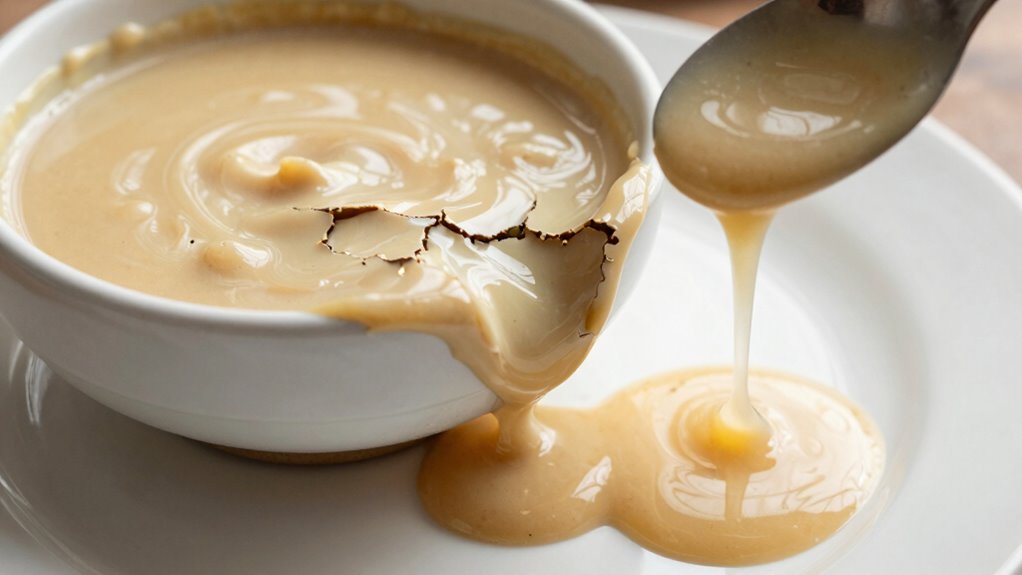
When making sauces, understanding why thick sauces tend to break while thin sauces rarely set can save you from culinary frustrations. Thick sauces often fall apart because of how their ingredients interact during the cooking process. Many cooks don’t realize that ingredient substitutions or improper cooking techniques can destabilize a sauce’s structure, leading to separation or graininess. For example, if you use cornstarch or flour as thickeners, adding them too quickly or at the wrong temperature can cause clumping or breakage. Conversely, thin sauces tend to stay loose because they lack the concentration of fats and proteins that can cause coagulation. Their liquid nature makes them less prone to separation, but it also means they rarely thicken enough to hold a shape or coat food evenly.
The core difference lies in the way the ingredients interact during cooking. Thick sauces rely heavily on proteins, fats, or starches that need careful handling. When you don’t follow proper cooking techniques, such as gradually incorporating thickeners or controlling heat levels, those ingredients can denature or separate. For instance, overcooking a cream-based sauce can cause the fats to split out, making the sauce appear broken. Similarly, if you use ingredient substitutions—like replacing heavy cream with milk or a lower-fat alternative—you risk disrupting the balance that keeps the sauce stable. These swaps may lack the necessary fat or protein content to maintain cohesion, leading to a broken appearance. Additionally, understanding the importance of temperature control during sauce preparation can help prevent these issues. Proper temperature management ensures that proteins and fats do not denature prematurely, which is crucial for a stable sauce. Using emulsifiers or stabilizers can also help create a more resilient sauce, especially when working with delicate ingredients or substitutions.
To further prevent thick sauces from breaking, it’s important to monitor the cooking time and avoid abrupt temperature changes, which can cause destabilization of the emulsion. Paying attention to ingredient ratios is equally important, as an imbalance can cause the sauce to lose its structure. To prevent thick sauces from breaking, you need to pay attention to your cooking techniques. Slowly adding thickening agents while stirring constantly helps ensure even distribution and prevents clumping. Controlling the heat is equally important—cooking too rapidly or at too high a temperature can cause proteins to tighten and separate. When working with ingredient substitutions, it’s wise to adjust the recipe to compensate for differences in fat and protein content. Sometimes, adding a splash of acid or a stabilizer like egg yolk can help maintain the emulsion and keep the sauce smooth. Additionally, using stabilizers or emulsifiers can help maintain a consistent texture, especially when dealing with complex ingredients.
On the other hand, thin sauces are less sensitive to these issues because they don’t rely on complex interactions to set. Their fluid consistency makes them less likely to break, but it also means you need to cook them longer or reduce them to achieve a desired thickness. If your goal is to make a sauce thicker, you may need to use a different technique, such as simmering to evaporate excess water or adding a thickening agent carefully. Understanding these distinctions helps you tailor your approach, whether you’re aiming for a velvety béarnaise or a runny vinaigrette, and ultimately results in sauces that look good and taste even better.
As an affiliate, we earn on qualifying purchases.
Frequently Asked Questions
How Can I Fix a Broken Thick Sauce?
If your thick sauce breaks, you can fix it by gently whisking in a bit of warm liquid like water, stock, or milk to restore the desired consistency. Be sure to maintain flavor balance by tasting and adjusting seasonings afterward. If you lack an original ingredient, try small ingredient substitutions—like adding a dash of cream or butter—to help emulsify and bring the sauce back together.
What Ingredients Prevent Thin Sauces From Setting?
You might think thin sauces never set because they lack thickening agents, but ingredient interactions and emulsification issues play bigger roles. Ingredients like water, vinegar, or oil can prevent the sauce from thickening properly if they don’t emulsify well or if their proportions aren’t balanced. To fix this, guarantee proper emulsification by whisking vigorously or adding stabilizers like egg yolk or mustard to help the sauce set better.
How Does Temperature Affect Sauce Consistency?
Temperature plays a vital role in sauce consistency because fluctuations can cause ingredient interactions to go awry. When you heat or cool sauces unevenly, thick sauces may break, separating into unwanted layers, while thin sauces struggle to set properly. Keeping a steady temperature helps maintain the right balance of ingredients, ensuring your sauce remains smooth and consistent. Avoid rapid temperature changes to prevent undesirable texture shifts.
Can Storage Methods Cause Sauces to Break or Not Set?
You might notice your sauces breaking or not setting due to storage methods, which can cause flavor loss or ingredient separation. For flavor enhancement, store sauces in airtight containers to prevent spoilage, and avoid frequent temperature fluctuations. Substituting ingredients or leaving sauces exposed to air can also impact texture. Proper storage guarantees your sauce maintains its consistency, so you get the best flavor and texture every time.
What Cooking Techniques Improve Sauce Stability?
To improve sauce stability, you should master emulsification techniques, like whisking vigorously or using an immersion blender, to combine fats and liquids smoothly. Incorporate thickening agents such as flour, cornstarch, or egg yolks to give your sauce body and prevent separation. Keep the heat controlled, adding ingredients gradually, and avoid overcooking, which can cause sauces to break. These methods guarantee your sauces stay velvety and well-set.
best sauce thickening stabilizers
As an affiliate, we earn on qualifying purchases.
As an affiliate, we earn on qualifying purchases.
Conclusion
So, savvy sauce enthusiasts, stay sharp and steer clear of sudden stirs or scorching heat. Remember, thick sauces tend to break when overworked or overly heated, while thin sauces refuse to set when undercooked or improperly thickened. With a little patience and precision, you’ll prevent pitfalls and perfect your pours. Practice patience, pay attention, and you’ll produce beautifully balanced sauces every time. Savor the success of your skillful, seamless saucing!
As an affiliate, we earn on qualifying purchases.
As an affiliate, we earn on qualifying purchases.
NFL season / tailgating Picks
team gear
As an affiliate, we earn on qualifying purchases.