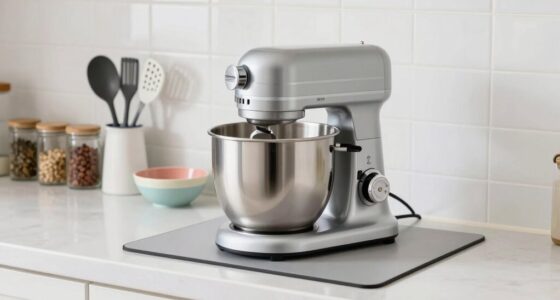
When choosing a stand mixer, consider your typical recipe size and how often you bake. Smaller models with 3.5 to 4 quarts suit light tasks, while 5.5 quarts or larger handle bigger batches or bread dough. Also, think about your kitchen space—compact models save room—and power needs for dense ingredients. Noise levels and extra features also matter. To find the perfect fit, explore more about capacity, footprint, and practical use to make an informed choice.
Key Takeaways
- Match mixer capacity to your typical batch size and recipe types for optimal performance and efficiency.
- Consider the footprint to ensure the mixer fits comfortably on your countertop and storage space.
- Choose a motor with sufficient power for heavy tasks like bread kneading to prevent overload.
- Evaluate noise levels if in a shared or quiet environment, opting for quieter models if needed.
- Prioritize versatile features and ease of cleaning to enhance real-world usability and convenience.
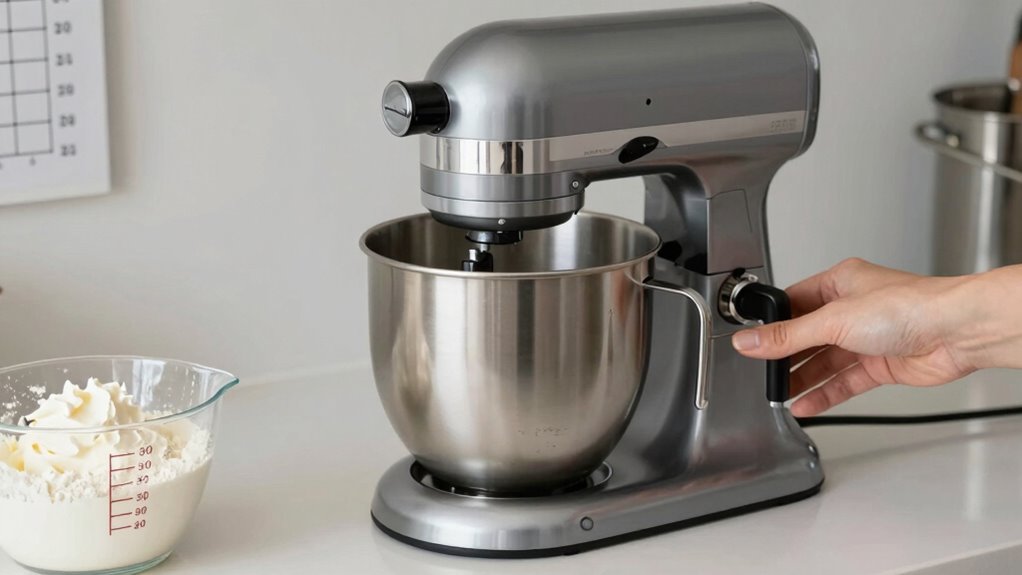
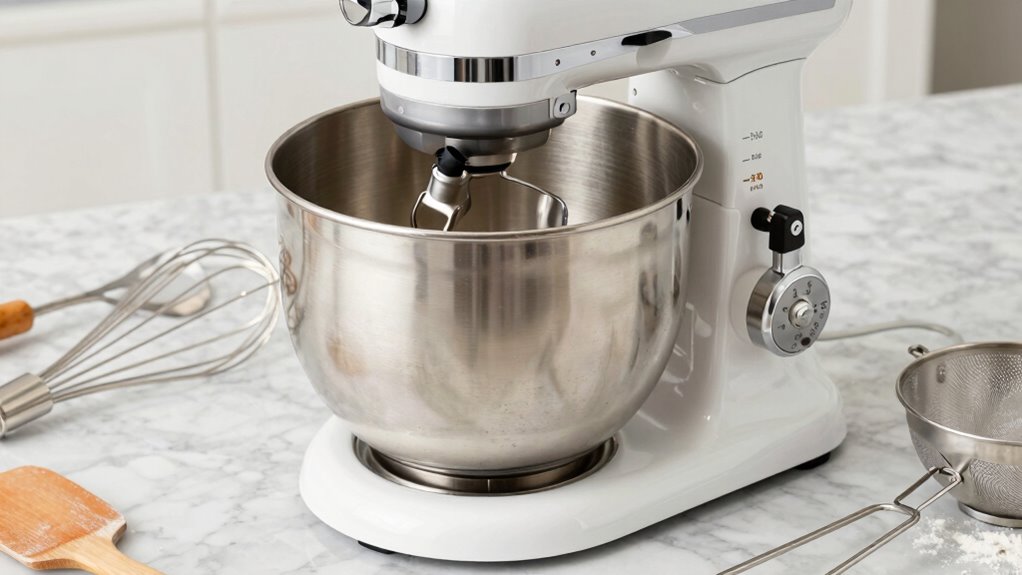
Choosing the right stand mixer size depends on how much you typically bake or cook. If you often prepare small batches, a compact model with a lower capacity might suit you well. However, if you regularly handle large recipes or doughs, a larger mixer with a higher capacity will save you time and effort. The key considerations include not just capacity but also factors like power capacity and noise levels. Power capacity determines how well the mixer can handle dense or heavy ingredients—if you frequently knead bread dough or whip thick batters, look for a model with a robust motor. A higher wattage generally means more power, which translates into smoother operation and less strain on the motor during tough mixing tasks. Noise levels are also worth considering, especially if your kitchen is open-concept or if you prefer to keep the noise down while working early mornings or late nights. Some stand mixers are designed to operate quietly, making them more suitable for shared living spaces or noise-sensitive environments. Additionally, smart appliances can offer features like remote control or app integration to enhance convenience and efficiency. When evaluating different models, also consider the ease of cleaning, since certain attachments and bowls may require more effort to keep spotless.
Choose a stand mixer with appropriate capacity, power, and noise level for your baking habits and kitchen space.
The capacity of the mixer bowl directly impacts how much you can prepare at once, which is especially important for larger families or batch cooking enthusiasts. Footprint, or the physical size of the mixer, directly affects how much space it will occupy on your countertop or storage area. Larger models tend to have bigger bowls and more powerful motors, but they also require more space. If your kitchen counter is limited, a compact or medium-sized mixer might be more practical, especially if you don’t plan to do heavy-duty baking frequently. Keep in mind that a bigger footprint might also mean a heavier unit, which could influence how easily you can move or store it. Furthermore, considering storage options can help you find a model that fits seamlessly into your kitchen setup, especially if space is tight. Additionally, think about whether the mixer has features like foldable parts or compact designs for easier storage, which can be beneficial in smaller kitchens.
Real-world use is an essential factor in choosing the right size. Think about the types of recipes you most often prepare. For small batches like single servings or quick mixes, a smaller mixer with a 3.5 to 4-quart capacity might suffice. For family-sized recipes or frequent bread baking, a 5.5-quart or larger bowl can accommodate bigger batches without splattering or overloading. Also, consider whether you want features like multiple speed settings or attachments, which can influence your choice. Ultimately, balancing capacity, power capacity, noise levels, and footprint helps you select a stand mixer that fits your lifestyle. You want a model that’s powerful enough to handle your typical tasks without being overly bulky or noisy. By evaluating your regular baking or cooking habits, you’ll find a size that offers convenience and efficiency, making your kitchen work smoother and more enjoyable.

Hamilton Beach 4 Qt Electric Stand Mixer With 7 Speeds, Easy-Carry Handle
- Powerful Motor: 300 watt motor for tough mixing
- Complete Bowl Coverage: Planetary mixing for even results
- Includes Essential Attachments: Dough hook, whisk, flat beater, splash guard
As an affiliate, we earn on qualifying purchases.
As an affiliate, we earn on qualifying purchases.
Frequently Asked Questions
How Do I Choose a Stand Mixer for Occasional Baking?
To choose a stand mixer for occasional baking, focus on your needs. Opt for a model with a smaller bowl capacity, like 4-5 quarts, which suits light to moderate tasks. Consider mixer attachments, such as whisks and dough hooks, for versatility. Since you bake occasionally, prioritize a compact footprint, ensuring it fits your space without sacrificing essential functions. This way, you’ll have a reliable, easy-to-use mixer for your baking adventures.
Are Larger Mixers Suitable for Small Kitchens?
Larger mixers aren’t the best fit if you have a small kitchen; they often require more countertop space and can be challenging to store. If you prefer compact storage, consider a smaller or mid-sized mixer that offers enough power without overwhelming your limited space. This way, you get the functionality you need without sacrificing your kitchen’s practicality or cluttering your countertop.
How Noisy Are Different Stand Mixer Sizes During Operation?
Stand mixers hum like a busy bee, with noise levels varying by size. Smaller models operate quietly, around 60-70 decibels, similar to a normal conversation. Larger mixers, however, can reach 80-90 decibels, comparable to city traffic, making them noticeably louder. So, if you prefer a quieter kitchen, choose a smaller model; if power is your priority, be prepared for a louder buzz.
Can I Upgrade Parts of My Stand Mixer Later?
Yes, you can often upgrade parts of your stand mixer later. Many models support attachments compatibility, so you can add new tools for different tasks. Additionally, some mixers offer motor upgrade options, allowing you to boost power for heavier mixes. Before upgrading, check your model’s specifications and manufacturer guidelines to guarantee compatibility and safety. This way, you extend your mixer’s functionality and lifespan effectively.
What Safety Features Should I Look for in a Stand Mixer?
When choosing a stand mixer, prioritize safety features like automatic shut-off, a sturdy locking bowl, and non-slip feet. Check the safety features comparison to guarantee these elements are included. Follow stand mixer safety tips by keeping hands clear of moving parts and unplugging the machine before cleaning or adjusting. These features protect you during use and help prevent accidents, making your baking experience safer and more enjoyable.
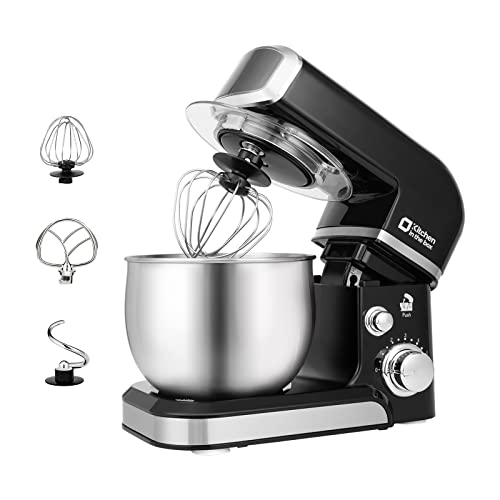
Kitchen in the box Stand Mixer,3.2Qt Small Electric Food Mixer,6 Speeds Portable Lightweight Kitchen Mixer for Daily Use with Egg Whisk,Dough Hook,Flat Beater (Black)
- Compact and Lightweight: Less than 7lbs, space-saving design
- Multiple Color Options: Variety of colors to match kitchen decor
- 3.2Qt Stainless Steel Bowl: Ideal size for small families or couples
As an affiliate, we earn on qualifying purchases.
As an affiliate, we earn on qualifying purchases.
Conclusion
Choosing the right stand mixer size depends on your needs, from capacity to footprint. Remember, a larger bowl is great for big batches, but it takes up more space. Did you know that nearly 60% of home bakers say they wish they had a bigger mixer? By considering your typical recipes and kitchen space, you’ll find the perfect fit. Make an informed choice, and your baking experience will be smoother and more enjoyable.

Kraftsman Stand Mixer Powerful DC Motor, Heavy Duty Dough Mixer 5.3 QT
- Powerful DC Motor: Delivers 30% more efficiency and torque
- Quiet Operation: Operates at ≤68dB for peaceful use
- 4 Stainless Steel Attachments: Includes beater, dough hook, whisk, scraper
As an affiliate, we earn on qualifying purchases.
As an affiliate, we earn on qualifying purchases.
As an affiliate, we earn on qualifying purchases.