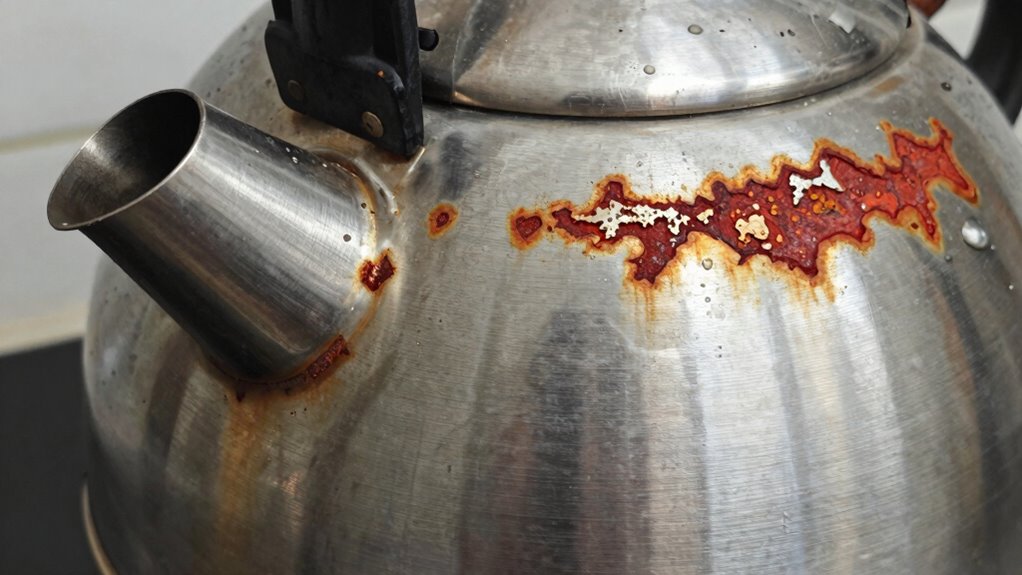

Rust spots on your kettle are signs of metal corrosion, often caused by mineral deposits from hard water, scratches, or moisture buildup. These spots may look reddish-brown and can harm the surface or lead to further damage. To keep your kettle safe and looking good, you should clean and descale it regularly and store it dry. If you want to find out how to treat rust and prevent it, keep exploring.
Key Takeaways
- Rust spots are reddish-brown corrosion patches caused by mineral deposits, scratches, or prolonged moisture exposure inside the kettle.
- They often result from hard water mineral buildup or damage to protective coatings, accelerating metal corrosion.
- Rust inside the kettle can pose health risks from ingesting rust particles and may harbor bacteria or mold.
- To remove rust, soak affected areas with vinegar-water solution, scrub gently, and ensure thorough drying afterward.
- Prevent rust by regular descaling, proper storage in dry areas, and prompt replacement if rust penetrates deeply or affects safety.
What Are Rust Spots in Your Kettle and How Do They Look?
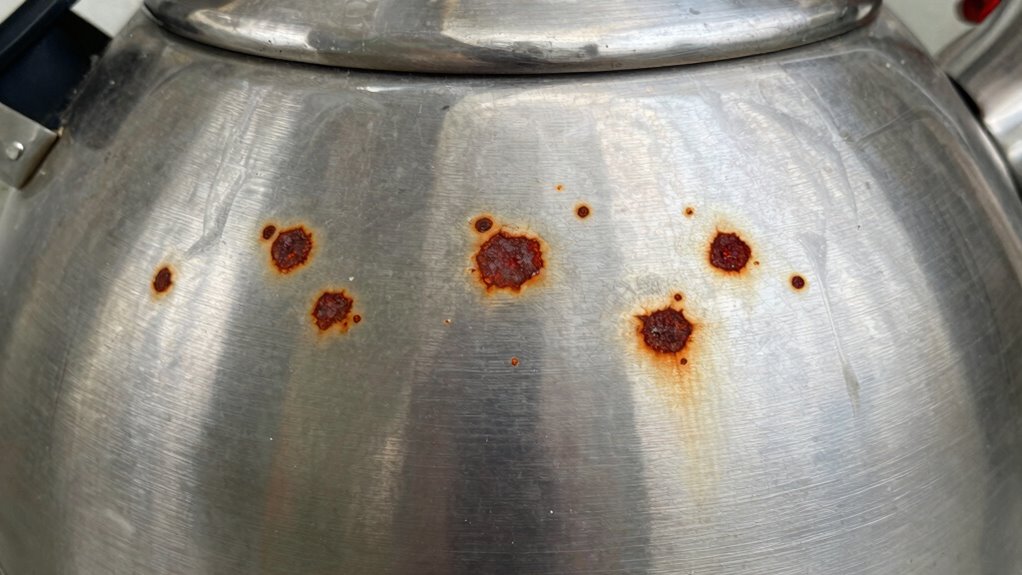
Rust spots in your kettle are small, reddish-brown patches that form on the metal surface. These spots are a sign of metal corrosion, which occurs when the protective layer on the metal breaks down, exposing it to moisture and oxygen. Over time, this process leads to surface discoloration, giving your kettle an uneven, stained appearance. Rust spots often start as tiny specks but can grow larger if left untreated. They typically appear in areas where water tends to collect or where the surface is scratched or damaged. Recognizing these rust spots early helps prevent further corrosion and keeps your kettle looking its best. Regular cleaning and maintenance can minimize the formation of these unsightly patches and extend your kettle’s lifespan. Additionally, understanding the role of corrosion resistance in your kettle’s material can help in choosing models less prone to rust, especially those made with rust-resistant coatings or stainless steel. Being aware of proper cleaning techniques can also help maintain the protective layers and prevent rust development over time.
Why Do Rust Spots Appear Inside Kettles? Common Causes Explained

Inside your kettle, rust spots often appear because of how water interacts with the metal surface over time. Metal corrosion occurs when minerals and impurities in water cause the metal to oxidize, leading to rust formation. Poor water quality, especially high mineral content, accelerates this process. Common causes include prolonged exposure to hard water, scratches removing protective coatings, and using non-appropriate cleaning tools. Here’s a quick overview:
| Cause | Explanation | Prevention |
|---|---|---|
| Hard water | Contains minerals that promote corrosion | Use filtered or softened water |
| Physical damage | Scratches expose underlying metal | Handle with care, avoid abrasive tools |
| Age of kettle | Older kettles have weakened protective layers | Replace when needed |
| Dirty water | Accumulation of impurities speeds up corrosion | Regular cleaning |
| Inconsistent drying | Moisture remains inside, promoting rust | Dry thoroughly after cleaning |
Additionally, water quality plays a crucial role in how quickly rust develops inside your kettle. Corrosion resistance of the metal also determines its susceptibility to rust, making some kettles more prone than others.
Are Rust Spots Inside Your Kettle Safe to Use? Understanding the Risks
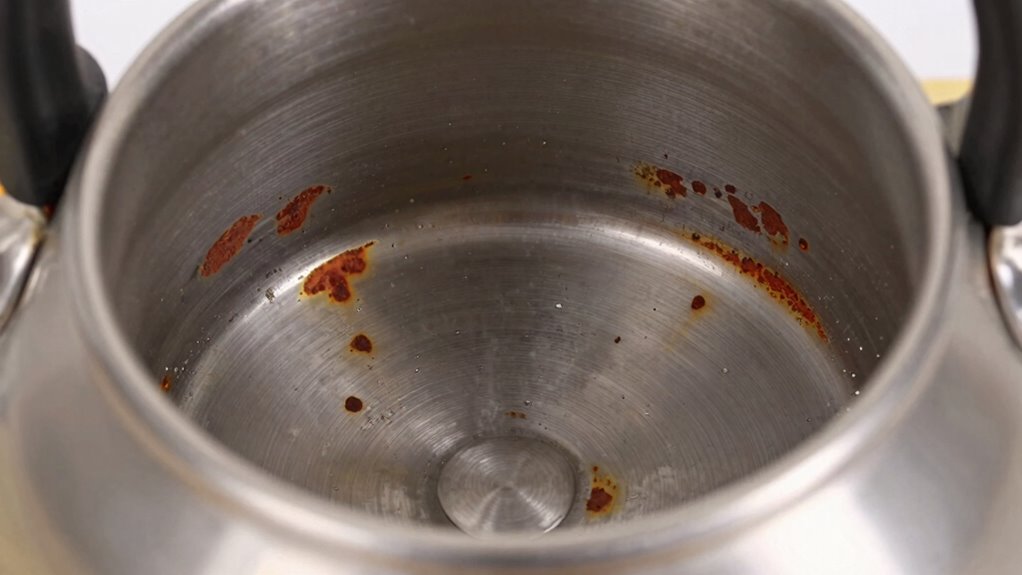
Rust spots inside your kettle can pose health risks if ingested, as rust may contain harmful substances. You should follow safe usage guidelines, such as removing rust and avoiding using a heavily corroded kettle. Understanding these risks helps you decide whether it’s safe to continue using your kettle or if replacement is necessary.
Health Risks of Rust
While a few rust spots might seem harmless, they can pose health risks if you continue to use a kettle with corrosion inside. Rust is mainly iron oxide, which forms from chemical reactions between moisture and metal. Consuming water with rust particles can cause health issues like stomach upset or iron overload in rare cases. Rust can also hide bacteria or mold, risking contamination. To prevent further corrosion, proper cleaning and corrosion prevention steps are essential. Ignoring rust may lead to increased metal leaching, which can affect your health over time. Regularly inspecting your kettle helps identify risks early and ensures safe usage. Additionally, incorporating professional services can help assess and address underlying issues with your appliance. Remember, addressing rust promptly minimizes health dangers associated with ongoing corrosion. Ensuring proper kettle maintenance can extend the lifespan of your appliance and keep your drinking water safe. Being aware of rust formation and taking preventative measures can help you maintain a safer, cleaner appliance. Maintaining regular inspections is also crucial for early detection and avoiding potential health hazards. Keeping your kettle free of rust through preventive care can further reduce health risks and prolong its usability.
Safe Usage Guidelines
Determining whether rust spots in your kettle are safe to use depends on the extent of corrosion and whether rust particles are present in your water. Small, superficial rust spots caused by metal corrosion are usually safe if they haven’t compromised the kettle’s integrity. However, if rust flakes are floating in your water or if corrosion is deep, it’s best to avoid using the kettle to prevent ingestion of rust particles. Regular appliance maintenance helps identify early signs of metal corrosion, allowing you to address issues promptly. When in doubt, replace a heavily corroded kettle to ensure safety. Always clean and inspect your kettle regularly, especially if you notice rust spots, to maintain safe usage and prolong its lifespan. Proper maintenance can help prevent significant corrosion and keep your outdoor kitchen setup safe. Additionally, understanding metal corrosion and its causes can aid in preventing future issues, including early detection of rust. Regular inspection of your appliances is essential for preventing further damage, safeguarding both your health and your investment. Being aware of corrosion prevention techniques can further extend the life of your kettle and ensure safe usage.
How to Remove Rust Spots From Your Kettle Effectively
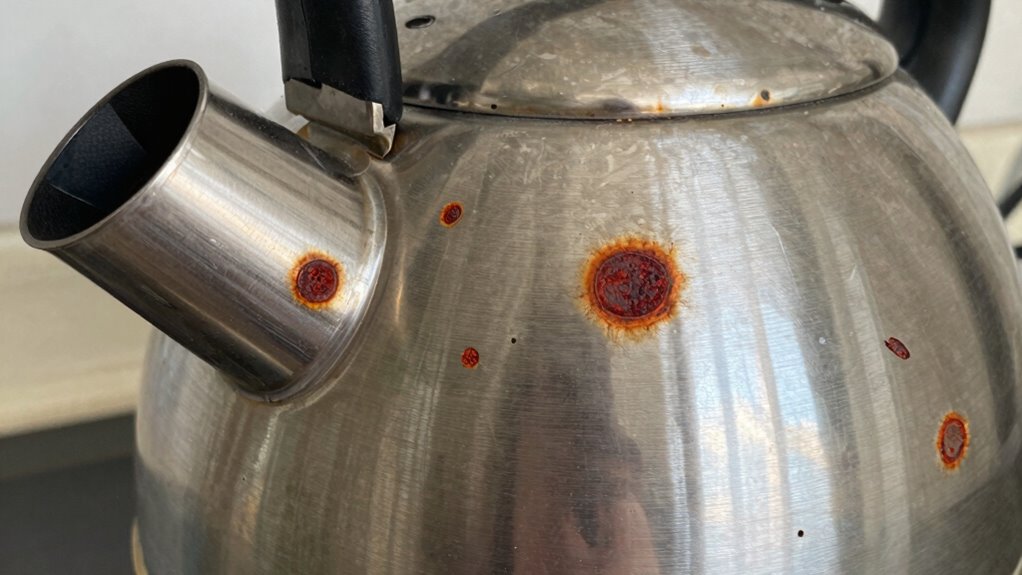
To effectively remove rust spots from your kettle, start by mixing equal parts white vinegar and water to create a natural cleaning solution. This eco-friendly cleaning method is gentle on stainless steel and effective against rust. Soak a cloth or sponge in the solution and apply it directly to the rusted areas. Let it sit for 15-20 minutes to loosen the rust. Then, scrub gently with a soft-bristled brush or non-abrasive pad. For stubborn spots, repeat the process. Remember, regular stainless steel maintenance prevents future rust buildup. Here are additional tips:
- Use a non-abrasive cleaner for routine cleaning
- Wipe dry after each use to prevent moisture buildup
- Avoid harsh chemicals that damage stainless steel
- Store in a dry place to minimize rust formation
- Consider natural lemon juice for spot treatment
- Proper storage and care are essential for maintaining your kettle’s appearance and longevity. Understanding rust formation can help you take proactive steps to prevent future spots and extend the life of your appliance.
Preventing Rust Buildup: Tips to Keep Your Kettle Rust-Free
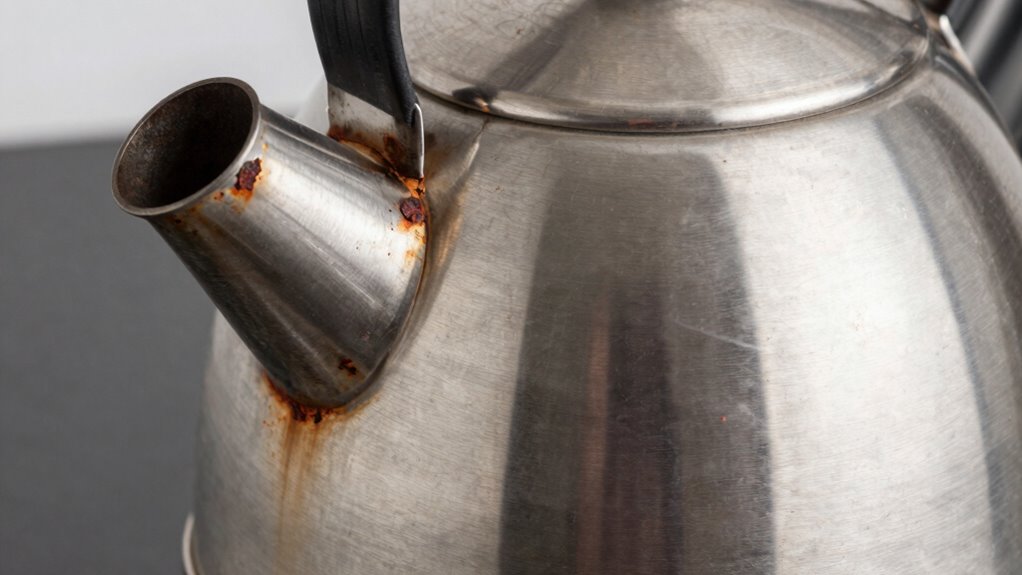
To keep your kettle rust-free, make sure you clean it regularly to remove mineral deposits and prevent buildup. Store your kettle in a dry, well-ventilated place to avoid moisture that promotes rust. Consistently practicing these tips will help maintain your kettle’s condition and extend its lifespan. Additionally, using at-home cleaning devices designed for mineral removal can provide a more thorough and efficient clean. Incorporating proper home maintenance routines can further prevent rust formation and preserve your kettle’s appearance. Understanding grocery savings strategies can also help you allocate funds for proper maintenance tools and cleaning supplies.
Regular Cleaning Practices
Regular cleaning is essential for preventing rust buildup in your kettle. Maintaining the right cleaning frequency and using effective descaling methods help keep your kettle in top shape. Regularly wipe the exterior and interior to remove mineral deposits and prevent corrosion. Consider descaling every month or as needed, especially if you notice lime scale or mineral buildup. Use gentle descaling agents like vinegar or commercially available descalers to dissolve deposits without damaging the metal. Additionally, rinse thoroughly after descaling to remove residues. Proper drying after cleaning helps prevent moisture accumulation, which can also contribute to rust formation. Keeping your kettle dry and stored in a dry environment further reduces rust risk and prolongs its lifespan. Remember, a clean kettle not only prevents rust but also ensures better-tasting water and safer boiling. Staying on top of cleaning is your best defense against rust spots.
Proper Storage Techniques
Proper storage plays a vital role in preventing rust buildup in your kettle. When you store your kettle carefully, you reduce exposure to moisture and air, which are primary causes of metal corrosion. Avoid leaving it in damp or humid environments, as moisture accelerates rust formation. Instead, choose storage solutions that keep your kettle dry and well-ventilated. For example, store it in a cool, dry cabinet or on a shelf away from water sources. Make certain the kettle is completely dry before putting it away, and consider using silica gel packs or moisture absorbers nearby. Proper storage minimizes contact with humid air and prevents rust spots from developing, helping your kettle stay in good condition longer. Consistent, mindful storage is key to maintaining a rust-free kettle. Additionally, understanding the metal composition of your kettle can help you choose appropriate care and storage methods to further prevent corrosion.
When to Replace Your Kettle Due to Rust Damage

Rust damage on your kettle isn’t something to ignore indefinitely. If rust has penetrated deeply or affects the kettle’s structural integrity, it’s time to contemplate replacing it. Check your kettle material—stainless steel or plastic may handle rust differently—and review your warranty coverage. If your kettle is still under warranty, you might get a replacement or repair. However, if the rust has compromised safety or affected performance, replacement is best. Consider these signs:
- Extensive rust that can’t be cleaned
- Rust on critical components like the heating element
- Visible corrosion affecting the kettle’s safety
- Damage beyond surface rust
- End of warranty period
Prioritize safety and performance over prolonging the life of a compromised kettle.
FAQs About Kettle Rust Spots: Troubleshooting and Maintenance Tips
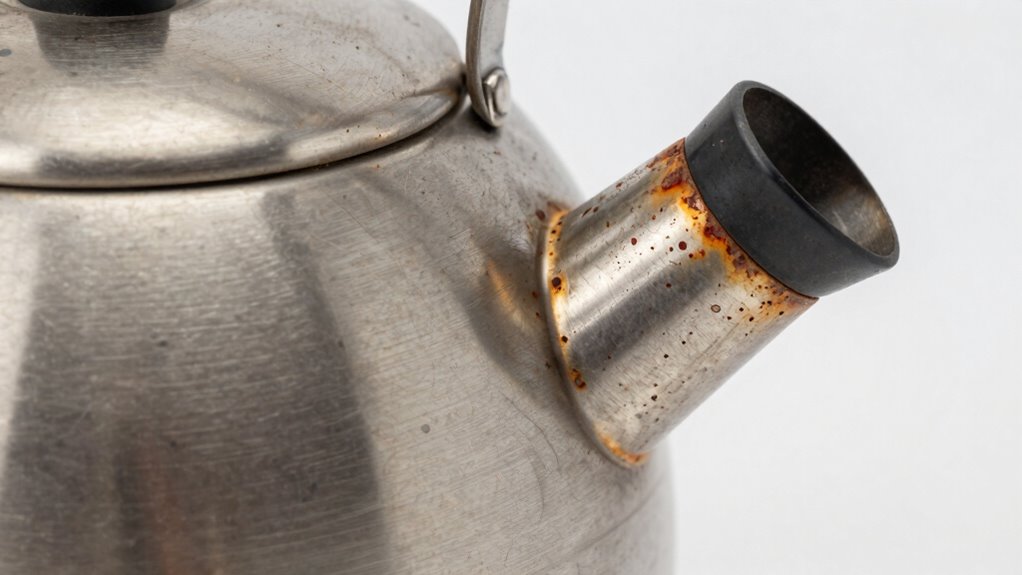
If you notice rust spots forming on your kettle, it’s natural to have questions about what they mean and how to handle them. Rust on stainless steel kettles is often caused by mineral deposits from hard water, which can create spots that look like rust. To troubleshoot, check if the spots are actual rust or mineral buildup—mineral deposits usually appear as chalky or cloudy areas. Regular maintenance helps prevent rust; clean your kettle with vinegar or a mixture of lemon and water to dissolve mineral deposits. Rinse thoroughly and dry after each use. Avoid using abrasive scrubbers that can scratch the surface, making it easier for rust to form. Proper care keeps your kettle looking good and functioning safely.
Frequently Asked Questions
Can Rust Spots Cause Health Problems if Ingested?
Rust spots in your kettle can raise rust ingestion concerns, but small amounts of rust are unlikely to cause serious health implications. When you accidentally ingest tiny rust particles, your body usually handles them without harm. However, repeatedly consuming large amounts might irritate your digestive system or pose other health risks. To stay safe, regularly clean your kettle and avoid using rusted parts, especially if you notice significant rust buildup.
Are There Natural Ways to Prevent Rust in My Kettle?
Yes, you can use natural remedies and rust inhibitors to prevent rust in your kettle. Regularly wipe the interior with a mixture of vinegar and baking soda to remove mineral deposits and inhibit rust formation. Keep your kettle dry after each use, and avoid leaving water sitting inside. Applying natural rust inhibitors like lemon juice can also help protect the metal. These simple steps will help keep your kettle rust-free.
How Often Should I Clean My Kettle to Avoid Rust?
You should clean your kettle at least once a month to prevent rust and maintain its condition. Follow a regular cleaning schedule and include maintenance tips like rinsing thoroughly and drying after each use. Avoid leaving water inside for long periods, which can cause rust buildup. By staying consistent with your cleaning routine, you’ll keep your kettle rust-free and extend its lifespan effectively.
Does Using Vinegar or Lemon Prevent Rust Formation?
Using vinegar or lemon can help with rust prevention in your kettle. Vinegar’s acidity breaks down mineral buildup that can lead to rust, while lemon’s natural citric acid also fights corrosion. Regularly using these natural remedies during cleaning prevents rust formation and keeps your kettle in good shape. Just fill the kettle with a mixture of water and vinegar or lemon, boil it, then rinse thoroughly to maintain a rust-free interior.
Can I Fix a Heavily Rusted Kettle Myself?
You can definitely try a DIY repair on a heavily rusted kettle, but it’s like battling a wildfire—possible, but tricky. Start with rust removal methods like scrubbing with vinegar or baking soda, then sand down the rust spots. If rust has compromised the metal deeply, consider replacing the kettle instead. Always wear gloves and work in a well-ventilated area to stay safe during your rust removal efforts.
Conclusion
Remember, a stitch in time saves nine—address rust spots early to keep your kettle safe and functional. Regular cleaning and proper maintenance can prevent rust buildup, saving you money and hassle down the line. If rust becomes stubborn or widespread, don’t hesitate to replace your kettle. Stay vigilant and treat rust spots like red flags; acting promptly guarantees your kettle stays in top shape for years to come.