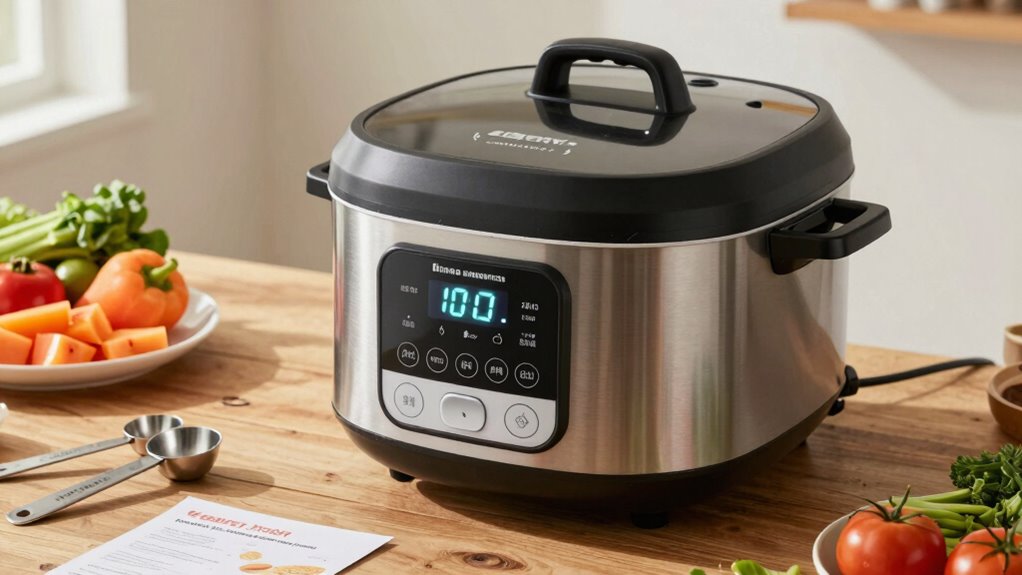

To avoid ruining your slow cooker meals, start by managing your time well—double-check cook times and set timers promptly. Customize recipes to match your taste and ingredient availability, and guarantee proper layering by placing denser items at the bottom and delicate ones on top. Always follow capacity guidelines to prevent spills and uneven cooking. Staying mindful of these basics will help you get consistently delicious results—keep exploring to master more tips.
Key Takeaways
- Double-check recipe cooking times and set timers immediately to prevent overcooking or undercooking.
- Properly layer ingredients, placing denser items at the bottom and delicate ones on top for even cooking.
- Avoid opening the lid frequently, as it disrupts heat and extends cooking time.
- Use the recommended fill lines to prevent spills and ensure even heat distribution.
- Customize recipes by adjusting seasonings and ingredients to suit your taste and ingredient availability.
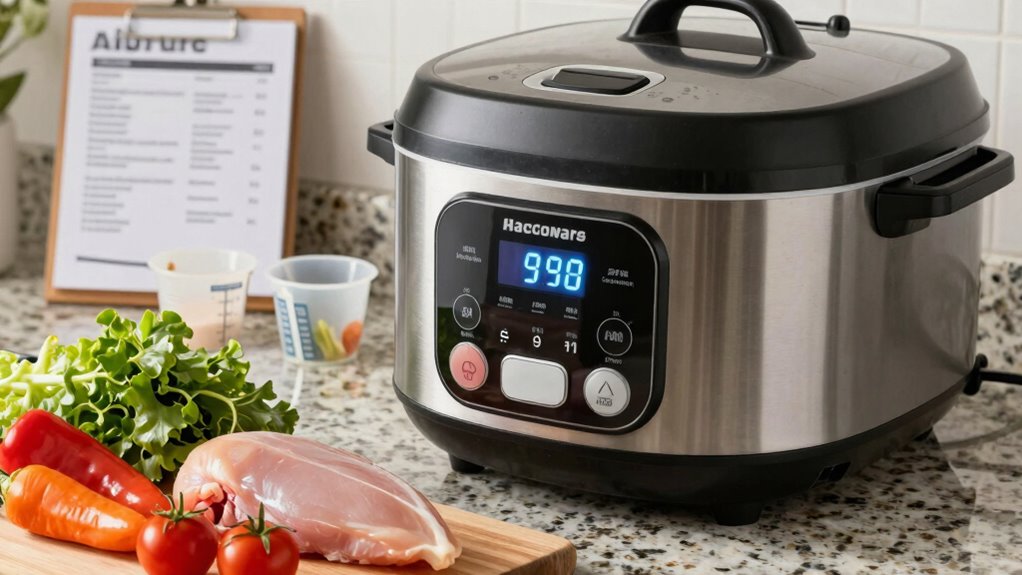
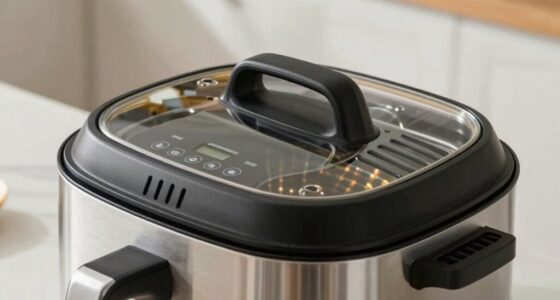
Programmable slow cookers offer convenience and precision, but many users make common mistakes that can affect their results. One of the biggest pitfalls is poor time management. If you don’t plan ahead, your meal can end up overcooked, undercooked, or just plain bland. To avoid this, always double-check your recipe’s recommended cooking time and set your timer accordingly. Remember, slow cookers are forgiving within a certain range, but they aren’t magic; leaving food on the heat for too long can ruin textures and flavors. It’s helpful to get into the habit of prepping ingredients in advance and setting your timer as soon as you start cooking. This way, you won’t forget or get caught off guard, especially if your schedule unexpectedly changes.
Another common mistake involves neglecting recipe customization. Many beginners stick rigidly to recipes without considering their own taste preferences or ingredient availability. Slow cookers excel at flexibility, so don’t hesitate to adapt recipes to suit your needs. For example, if you prefer a milder flavor, cut back on the spices or seasoning. If you’re missing an ingredient, look for suitable substitutions rather than skip it altogether. Customizing recipes not only ensures your meal tastes better to you, but it also helps prevent over- or under-seasoning, which can be a real problem with some dishes. Keep in mind that adjusting the amount of liquids or ingredients can impact cooking times, so be attentive to how your modifications might influence the process.
Customize recipes to suit your taste and ingredient availability for better flavor and consistent results.
Many beginners also underestimate the importance of layering ingredients properly. Placing denser, longer-cooking items at the bottom of the slow cooker and more delicate items on top promotes even cooking. This practice helps prevent some ingredients from becoming mushy while others remain undercooked. Additionally, avoid opening the lid unnecessarily during cooking, as this causes heat loss and extends cooking times. If you need to check on your food, do so quickly and try to limit lid removals. Understanding cooking techniques such as layering and lid management is crucial for consistent results with modern appliances.
Finally, don’t ignore your slow cooker’s capacity. Overfilling can lead to uneven cooking and spills, while underfilling can cause ingredients to cook too quickly or dry out. Use the recommended fill lines, and if you’re making a smaller meal, consider using a smaller cooker to prevent waste and ensure even heat distribution. By managing your time wisely, customizing recipes thoughtfully, and understanding your appliance’s limitations, you’ll set yourself up for success and enjoy delicious, perfectly cooked meals every time.
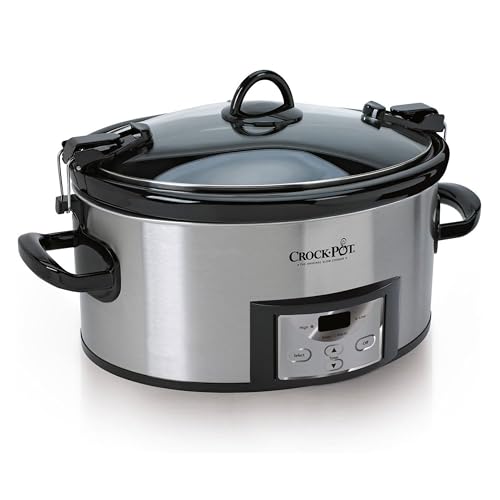
Crock-Pot 6 Quart Cook & Carry Programmable Slow Cooker with Digital Timer Stainless Steel (CPSCVC60LL-S) pack of 1
Programmable Digital Timer: Control cooking times from 30 minutes up to 20 hours
As an affiliate, we earn on qualifying purchases.
As an affiliate, we earn on qualifying purchases.
Frequently Asked Questions
Can I Cook Frozen Ingredients in a Programmable Slow Cooker?
You can cook frozen ingredients in a programmable slow cooker, but safety considerations are vital. It’s best to thaw meats before cooking to guarantee even heat distribution and avoid bacteria growth. If you choose to cook frozen, increase the cooking time to reach a safe internal temperature thoroughly. Always use a food thermometer to verify doneness, and never skip safety steps to prevent foodborne illnesses.
Is It Safe to Open the Lid Frequently During Cooking?
They say, “Don’t count your chickens before they hatch,” but in slow cooking, don’t open the lid too often either. Every time you lift the lid, steam escapes, causing temperature drops and extending cooking time. You should only open it when absolutely necessary, like checking for doneness. Resist the urge to lift the lid frequently, as consistent heat and moisture are key to tasty, properly cooked meals.
How Do I Adjust Cooking Times for Different Slow Cooker Sizes?
To modify cooking times for different slow cooker sizes, you should consider size adjustment and recipe scaling. If you’re using a smaller model, reduce the cooking time slightly since it heats up faster, and increase it for larger ones due to the larger volume. Keep in mind that recipe scaling might be necessary to ensure ingredients cook evenly. Always check for doneness and adjust the time accordingly to prevent under- or overcooking.
Can I Switch Between High and Low Settings During Cooking?
Yes, you can switch between high and low settings during cooking, but use setting adjustments cautiously for consistent temperature control. Changing settings too often can affect cooking times and food texture. If you need to modify, do it gradually and monitor your dish. Remember, sudden temperature changes might impact how well your food cooks, so plan your setting adjustments thoughtfully to ensure your meal turns out perfectly.
What Are Common Signs My Slow Cooker Is Malfunctioning?
Think of your slow cooker as a trusted chef—if it starts acting up, it’s a red flag. Signs of malfunction include sensor issues that cause inconsistent heat or temperature fluctuations, leading to uneven cooking. You might notice the cooker not turning on, overheating, or failing to maintain a steady temperature. These issues suggest your appliance needs attention before it ruins your meal or becomes a safety concern.

ChefAid Slow Cooker Divider Liners with Handle, 100% Silicone Reusable Slow Cooker Liners Compatible with 6-8 Quart Oval or Round Slow Cooker, Fits 7 Quart Crockpot Liners (Black, 2 Pack)
Safe Food-Grade Silicone: Made of 100% food-grade silicone, this silicone slow cooker liner is BPA-free, odorless, and heat-resistant…
As an affiliate, we earn on qualifying purchases.
As an affiliate, we earn on qualifying purchases.
Conclusion
By steering clear of these common mistakes, you’ll turn your slow cooker into a trusted ally, like a seasoned captain guiding a ship through calm and storm. Each step you take is a brushstroke in a masterpiece of flavorful, perfectly cooked meals. Remember, patience and attention are your compass, ensuring your culinary voyage remains smooth. With practice, your slow cooker will transform simple ingredients into a symphony of comfort, proving that even beginner mistakes can become the foundation of culinary mastery.

Plastic Measuring Cup for evoloop 6 egg capacity Egg Cooker, 8 Oz Measuring
OPTIMIZED FOR EVOLOOP EGG COOKING: Features precise water lines for soft, medium & hard-boiled eggs (1-6 eggs), ensuring…
As an affiliate, we earn on qualifying purchases.
As an affiliate, we earn on qualifying purchases.

Silicone Lid Lock Strap for Crockpot Slow Cooker (6/7/8 Quart) – Universal Crockpot Lid Holder & Rubber Strap Alternative | Heat-Resistant, No-Spill Design Transport Accessories (Black)
✅ 【PERFECT COMPATIBILITY】Meticulously designed for most standard oval and round slow cookers (6, 7, and 8 Quart). The…
As an affiliate, we earn on qualifying purchases.
As an affiliate, we earn on qualifying purchases.