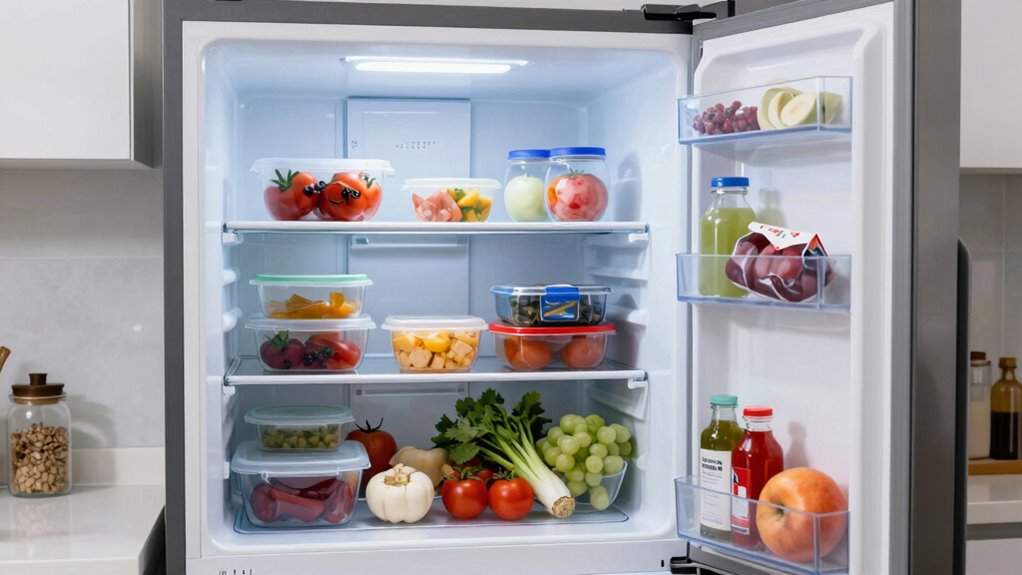

Many people mistakenly store perishable foods in the fridge door, thinking it’s the best spot. However, the door is the warmest zone and experiences frequent temperature fluctuations, speeding up spoilage. Instead, use the middle shelf, which stays cooler and more consistent, ideal for dairy, leftovers, and deli meats. Proper placement helps extend food freshness and safety. Keep exploring to discover more tips on how to organize your fridge effectively.

Get kitchen staples and gadgets delivered free — and shop member deals
- Fast, free delivery on millions of items
- Access to Prime Big Deal Days deals on October 6–7
- Prime Video, Amazon Music and more included
Key Takeaways
- Many people store perishables like dairy on the top shelf instead of the more temperature-stable middle shelf.
- The fridge door is often used for storing dairy and produce, but it’s the warmest zone, risking faster spoilage.
- People tend to place leftovers and deli meats in warmer areas, reducing their shelf life.
- Incorrect organization leads to frequent opening and closing of warmer zones, causing temperature fluctuations.
- Commonly, the top shelf is overused for items that require consistent cold, which can accelerate spoilage.
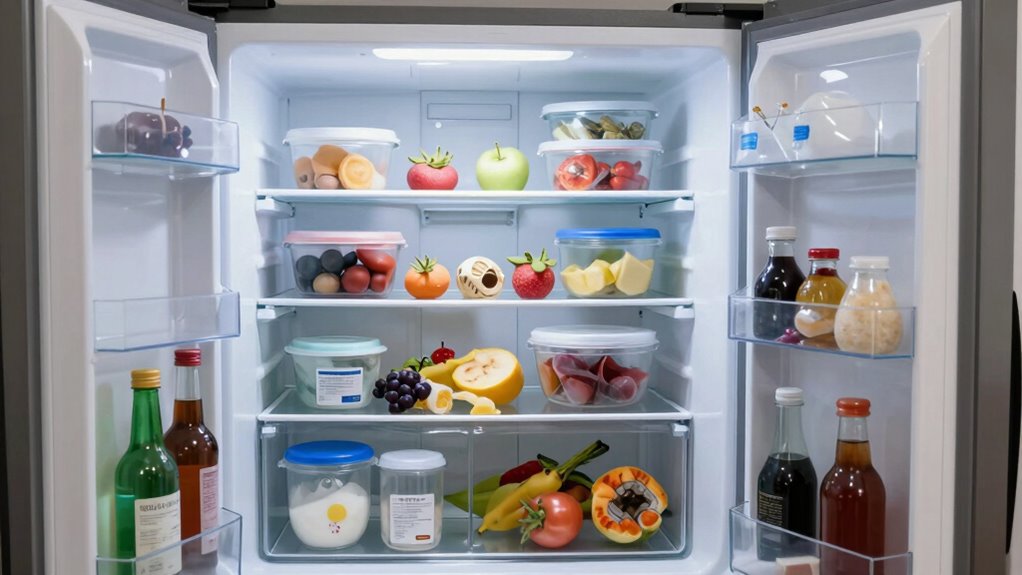
Have you ever wondered if you’re storing your food in the most efficient part of the fridge? Many people don’t realize that the way they organize their fridge can significantly impact how long their food stays fresh. The key lies in understanding the zone that’s often overlooked or misused—the middle shelf. This area is crucial because it plays a major role in temperature regulation, which directly affects food expiration. When you place items here without considering proper storage, you risk exposing them to fluctuating temperatures that hasten spoilage.
Maximize freshness by properly storing food on the middle shelf for consistent, cool temperatures.
The middle shelf tends to have a more consistent and cooler temperature than the door or top shelves. That’s because it’s farther away from the heat generated when you open the fridge and from the warmer air at the top. By storing perishables like dairy, leftovers, and deli meats on this shelf, you give them a better chance at lasting longer. You might think the door is a good spot because it’s easy to access, but it’s actually the warmest part of the fridge, making it unsuitable for items that need stable, cold conditions. Similarly, the top shelf often experiences slight temperature fluctuations, which can accelerate food expiration.
Proper temperature regulation is essential because bacteria multiply rapidly in warm environments. If your food isn’t kept at the right temperature, you risk consuming spoiled items that could cause food poisoning. When you store your food on the middle shelf, you’re more likely to maintain a steady temperature, extending the life of your groceries. This simple shift can save you money by reducing waste and preventing the need to toss out spoiled food prematurely. Understanding fridge zones helps you optimize your storage habits for better freshness. Additionally, knowing the ideal storage temperatures can further improve food longevity and safety. Recognizing the impact of temperature fluctuations is vital for maintaining food quality and safety. Being aware of proper food placement within the fridge can also help prevent cross-contamination and spoilage.
A better understanding of common storage mistakes can help you avoid unnecessary food waste and health risks. In addition, understanding this storage zone helps you plan better. For instance, keep items with shorter shelf lives, like fresh produce or dairy, on the middle shelf. Items that last longer or are less perishable, such as condiments, can go on the door. Being mindful of food expiration dates and where you store your items means you’re not just saving food but also safeguarding your health. Proper organization based on temperature regulation isn’t complicated, but it makes a significant difference in how effectively your fridge preserves your food. When you optimize this key zone, you’re ensuring freshness, reducing waste, and making your grocery budget go further—all by using the right spot in your fridge.
fridge organization storage bins
As an affiliate, we earn on qualifying purchases.
As an affiliate, we earn on qualifying purchases.
Frequently Asked Questions
How Do Temperature Settings Vary Across Different Fridge Zones?
You should set different temperatures for each fridge zone to guarantee temperature consistency and ideal zone-specific storage. The fridge door usually stays warmer, around 40°F, so keep condiments there. The middle shelves should be cooler, about 37°F, ideal for dairy and leftovers. The crisper drawers stay slightly warmer or humidity-controlled for fruits and vegetables. Adjust these zones accordingly to keep your food fresh and prevent spoilage.
Are There Specific Foods Best Stored Outside the Fridge?
You might think all foods belong in the fridge, but some don’t need it. Frozen snacks, like chips or cookies, stay better outside, preserving texture and flavor. Fresh herbs, however, often wilt in the fridge’s humidity; storing them in a glass of water at room temperature keeps them vibrant longer. Trust your senses—sometimes, outside the fridge is the best place, revealing a deeper understanding of proper food storage.
How Often Should I Clean Each Fridge Zone?
You should clean each fridge zone at least once every three to four weeks to maintain food safety and uphold the storage hierarchy. Regular cleaning prevents bacteria buildup and cross-contamination, ensuring your food stays fresh. Focus on wiping shelves, drawers, and door compartments thoroughly. If spills happen or you notice any mold or spoilage, clean immediately. Consistent cleaning keeps your fridge safe, organized, and prolongs the lifespan of your stored foods.
Can Storing Certain Items Together Cause Spoilage?
Storing certain items together can cause spoilage due to cross contamination risks. You might think it’s harmless, but mixing raw meats with produce or dairy increases bacteria transfer, risking health issues. To prevent this, follow ideal storage methods: keep raw meats isolated in sealed containers on the bottom shelf, and store fruits and vegetables separately. Proper organization not only extends freshness but also ensures your fridge remains safe and hygienic.
What Are the Signs of Improper Fridge Zone Usage?
You’ll notice signs of improper fridge zone usage when foods like fruits and vegetables spoil quickly or develop mold, indicating poor humidity control. Freezing foods in the wrong zone can cause freezer burn or spoilage, while overly humid areas may lead to faster decay. Keep an eye out for leaks, bad odors, or slimy textures, as these are clear signs you’re not using the fridge zones correctly.
refrigerator temperature monitor
As an affiliate, we earn on qualifying purchases.
As an affiliate, we earn on qualifying purchases.
Conclusion
Now that you know the secret spot in your fridge, imagine your food as a well-choreographed dance, each item in its perfect place, gliding smoothly without chaos. When you utilize the right zone, you’re the conductor, keeping everything fresh and lively. Don’t let your leftovers become forgotten ghosts; instead, give them a safe, cozy home. With this small change, your fridge transforms into a symphony of order, making your kitchen a more vibrant, welcoming space.
dairy storage containers for fridge
As an affiliate, we earn on qualifying purchases.
As an affiliate, we earn on qualifying purchases.
As an affiliate, we earn on qualifying purchases.
NFL season / tailgating Picks
team gear
As an affiliate, we earn on qualifying purchases.