To avoid a burnt taste when reheating coffee in a microwave, use low or medium power settings and reheat in short intervals, around 20-30 seconds, stirring between each time for even heating. Keep an eye on the temperature, aiming for about 140-150°F, to prevent overheating or burning the delicate flavors. Proper storage also helps retain flavor quality. If you want to learn more tips for perfectly reheated coffee, continue exploring expert recommendations.
Key Takeaways
- Use medium (50-70%) power settings to warm coffee gently and prevent burning flavor.
- Reheat in short intervals (20-30 seconds), stirring between to promote even heat distribution.
- Avoid overheating by checking temperature frequently, aiming for 140-150°F (60-65°C).
- Stir coffee before reheating to prevent hot spots and uneven heating.
- Store coffee properly in airtight containers to maintain flavor before reheating.

LINVIA Classic Mug, 14 oz Large Coffee Mug with Handle, Ceramic Porcelain Tea Cup, Smooth Matte (Sliding Lid, Navy Blue)
Pro-Grade Materials: These mugs are crafted from top-grade porcelain, and the lid is made of food-grade plastic, both…
As an affiliate, we earn on qualifying purchases.
As an affiliate, we earn on qualifying purchases.
Why Reheating Coffee in a Microwave Can Burn Its Flavor
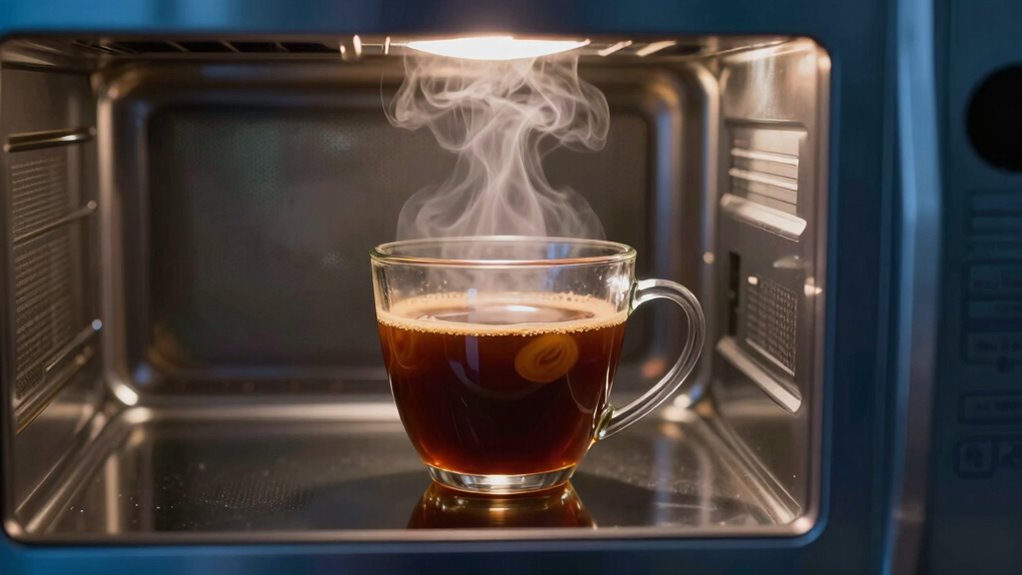
When you microwave coffee, the heat can cause the volatile compounds responsible for its fresh aroma and flavor to break down quickly. Without proper temperature control, the coffee heats unevenly, leading to hot spots that can burn the delicate flavors. Overheating accelerates the degradation of essential oils and aromatic compounds, which compromises flavor preservation. As the temperature rises too high, you risk extracting bitter notes and losing the coffee’s nuanced taste. To prevent this, keep the heating process at a moderate, controlled temperature, avoiding high power settings that cause rapid, uneven heating. Proper temperature management is essential for maintaining the coffee’s original flavor and aroma, reducing the chance of a burnt or flat taste after reheating. Additionally, using microwave-safe containers can help promote even heating and better temperature control. Being mindful of reheating techniques can further help in preserving the quality of your coffee. Using a temperature probe or checking the coffee frequently can help prevent overheating and maintain flavor integrity. By managing the temperature carefully, you help preserve the coffee’s original flavor and aroma, reducing the chance of a burnt or flat taste after reheating. A gentle reheating process can also prevent the loss of aromatic compounds, ensuring your coffee remains flavorful and enjoyable.

Alpha Grillers Meat Thermometer Digital – Instant Read Food Thermometer for Cooking & Grilling – Professional Kitchen Gift for Men, Dad & Mom
Instant Read Food Thermometer | Our instant read thermometer features a temperature probe and advanced, highly accurate technology…
As an affiliate, we earn on qualifying purchases.
As an affiliate, we earn on qualifying purchases.
How to Store Leftover Coffee for Better Reheating Results
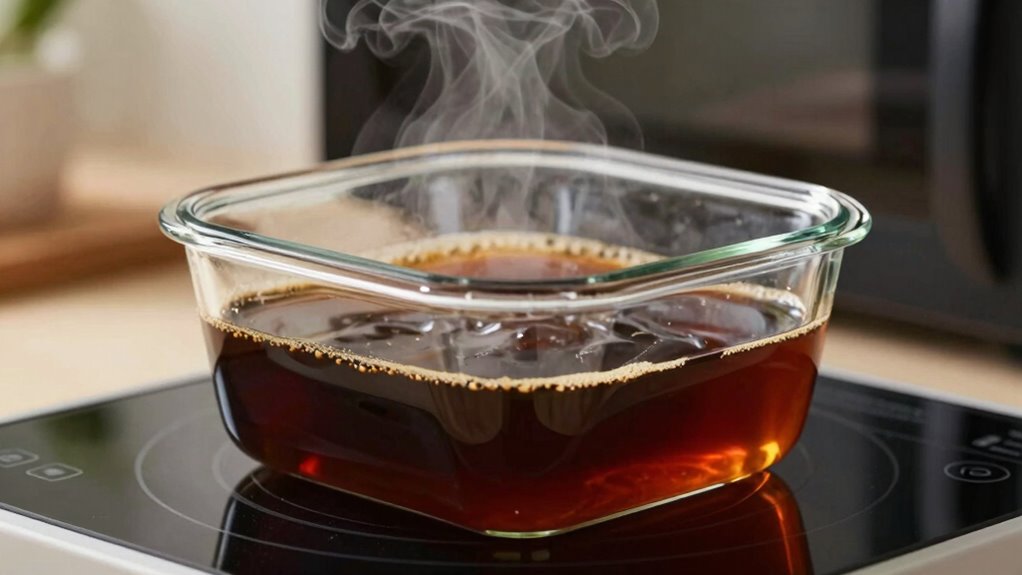
Proper storage of leftover coffee plays a key role in maintaining its flavor and aroma for reheating. To preserve freshness, transfer your coffee to airtight reheating containers immediately after brewing. Use containers made of glass or BPA-free plastic to prevent any unwanted flavors from seeping in. Keep the coffee in the refrigerator and avoid leaving it at room temperature for extended periods, as this can lead to spoilage and off-flavors. When storing, make sure the container is sealed tightly to prevent evaporation and contamination. Properly stored coffee retains more of its original taste and aroma, making reheating more effective and enjoyable. Additionally, understanding the cultural impact of technology on artistic expression can inspire more mindful and creative approaches to everyday routines like reheating coffee. Taking these simple steps ensures your leftover coffee stays fresh and ready for a better reheating experience. To further enhance preservation, consider vacuum sealing your coffee for longer storage periods, which can help lock in freshness and flavor. Implementing proper storage techniques can also minimize oxidation, which is a major factor in flavor degradation over time. Being aware of free floating coffee particles can also help prevent sediment from affecting the quality during reheating.

BOILMERIT 37 oz Coffee Canister with Scoop and Wooden Lids, Airtight Storage Container Sets of 2 for Ground Coffee & Beans, Glass Jars for Coffee Bar Organizer, Kitchen Countertop
ELEGANT WOODEN AIRTIGHT LIDS: Boilmerit coffee storage container has a nature wood lids and scoop that crafted from…
As an affiliate, we earn on qualifying purchases.
As an affiliate, we earn on qualifying purchases.
The Best Ways to Reheat Coffee Without Burning It
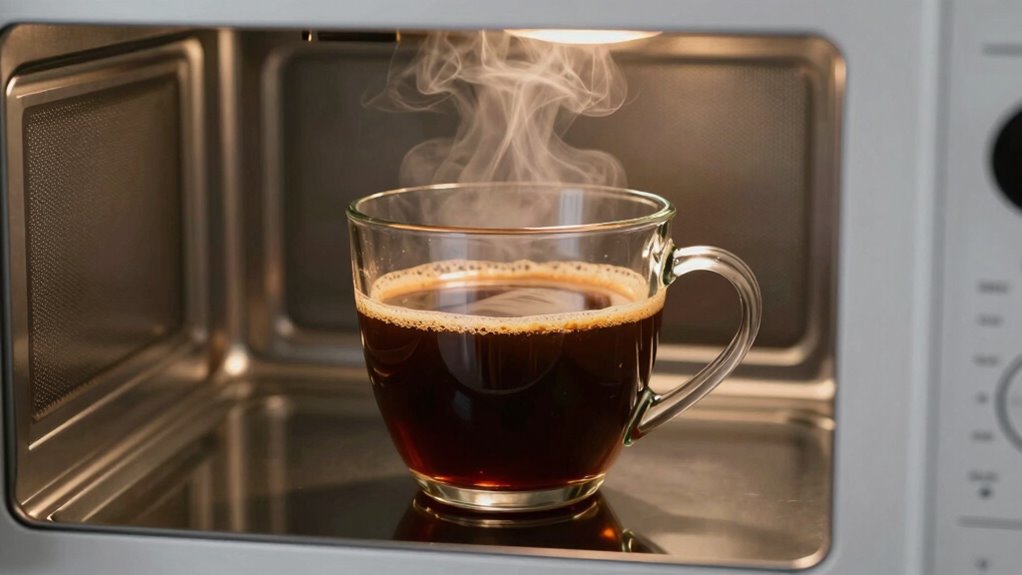
To reheat coffee without burning it, choosing the right method is essential. The key is to preserve coffee bean freshness and avoid overheating, which can ruin the flavor. Here are four ways to reheat your coffee safely:
- Use a microwave at low power (about 50%) to gently warm the coffee, preventing overheating.
- Stir the coffee halfway through reheating to distribute heat evenly.
- Keep the reheating time short—around 30 seconds—then check the temperature.
- Consider reheating in small, measured intervals to avoid exceeding the brewing temperature, which causes a burnt taste.
- Ensuring proper airflow around the unit when using a microwave can also help maintain consistent heating and prevent hot spots that may cause burning.

GoodCook Everyday Microwave Plates set of 4
Reheat and serve leftover meals, snacks and desserts straight from the microwave.
As an affiliate, we earn on qualifying purchases.
As an affiliate, we earn on qualifying purchases.
How to Set Your Microwave for Perfect Coffee Reheating
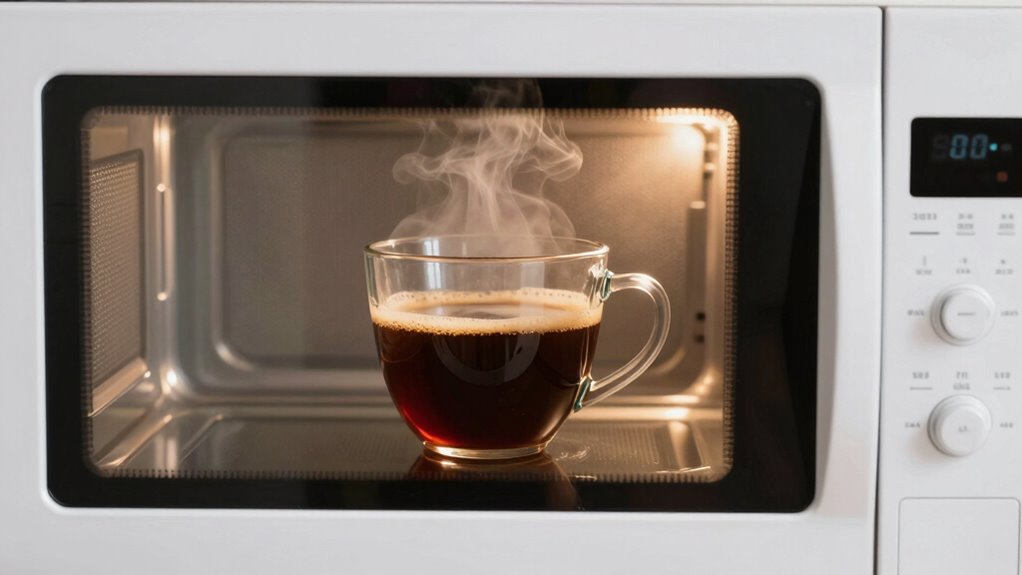
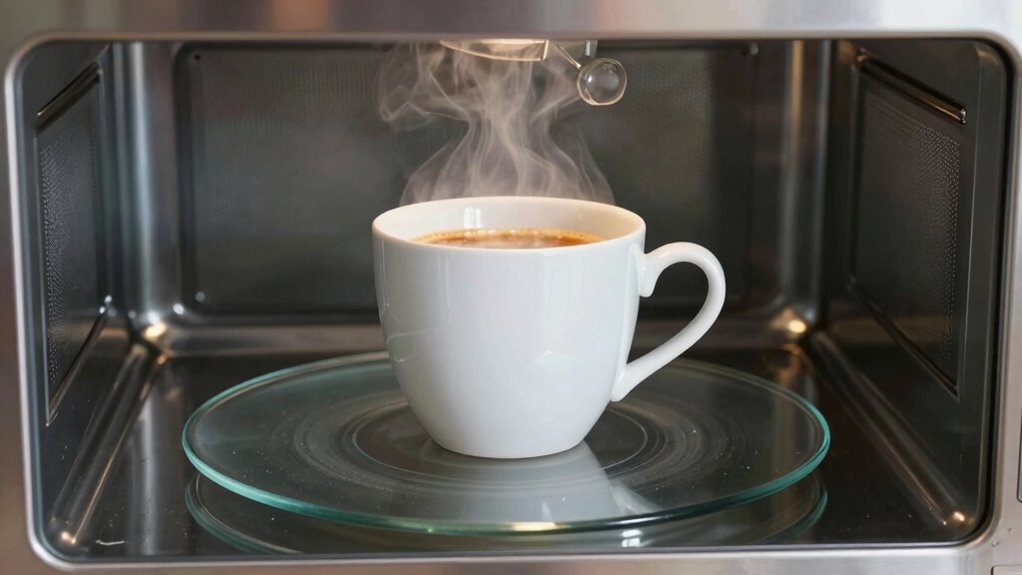
Setting your microwave correctly is essential for reheating coffee without compromising its flavor. To do this, start by adjusting the microwave settings to a low or medium power level—around 50-70%. This gentle heat helps prevent overheating, which can alter the coffee’s aroma and taste. Monitor the coffee temperature closely; aim for about 140-150°F (60-65°C), enough to warm it without burning or making it too hot. Use short intervals, like 20-30 seconds, and stir after each to ensure even heating. If your microwave has a “soft” or “reheat” setting, use it for added control. Properly setting your microwave guarantees your coffee reheats evenly, maintains its flavor, and avoids that burnt or bitter taste. Additionally, being aware of microwave power settings can help you make informed decisions about your kitchen appliances and methods.
Other Easy Methods to Warm Up Coffee Without Scorching
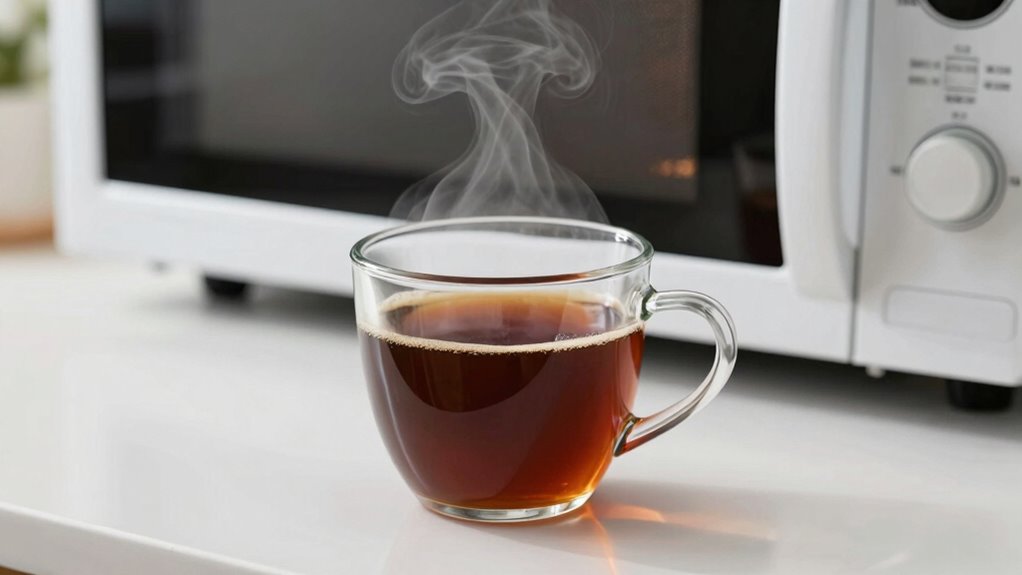
If you want to warm your coffee without risking scorching, there are simple alternatives to the microwave. Using a double boiler gently heats your coffee, while placing it in hot water offers a gentle warm-up. You could also try a coffee warmer to keep your brew at the perfect temperature without overheating. Additionally, modern connected kitchen devices can help monitor and maintain optimal temperatures for your beverages. These devices utilize smart technology to ensure your coffee stays warm without losing flavor or becoming bitter. Incorporating temperature control systems can further optimize your warming process and preserve your coffee’s quality, especially when combined with thermal behavior understanding to prevent uneven heating. Understanding safe heating practices is essential to maintain flavor and avoid overexposure to heat that can degrade the coffee.
Use a Double Boiler
A double boiler provides a gentle way to warm your coffee evenly without risking scorching. By using this method, you prevent the high heat that can burn your brew and alter its flavor. To do it right, follow these steps:
- Fill the bottom pot with water and bring it to a simmer.
- Place your coffee in a heatproof bowl or the top part of the double boiler.
- Set the bowl over the simmering water, ensuring it doesn’t touch the water.
- Stir occasionally, allowing gentle heating to restore warmth without overheating. Temperature control is essential for preserving your coffee’s flavor during reheating. Additionally, understanding the coffee temperature range can help you achieve the best results without compromising taste. This method ensures your coffee warms evenly and maintains its original taste. The key is the gentle heating that a double boiler offers, making it ideal for preserving flavor while reheating.
Warm With Hot Water
Warming your coffee with hot water is an easy and effective way to restore its temperature without risking scorching. To do this, fill a bowl or sink with hot (not boiling) water, ensuring good water quality for the best results. Place your mug of coffee in the water, making sure the water level is below the rim of the mug to prevent spills. The gentle heat from the water will gradually raise the coffee temperature without direct contact, reducing the chance of burnt flavors. This method preserves the original taste and aroma while avoiding overheating. Keep an eye on the coffee, and remove it once it reaches your desired warmth. It’s a simple, clean way to reheat coffee safely and efficiently.
Try a Coffee Warmer
Using a coffee warmer is a convenient way to keep your brew at the perfect temperature without risking scorching. It provides consistent temperature control, ensuring your coffee stays warm without overdoing it. To get the best results, consider these tips:
- Use a sturdy coffee mug compatible with the warmer to prevent spills.
- Set the temperature control to a low or medium setting to avoid overheating.
- Check your coffee frequently to prevent it from becoming too hot.
- Turn off the warmer once your coffee reaches the desired warmth to conserve energy and maintain quality.
- Incorporate at-home beauty tech devices like LED masks or microcurrent tools to enhance your overall self-care routine, making your daily rituals more enjoyable. Additionally, selecting an energy-efficient coffee warmer can help reduce your carbon footprint while keeping your coffee at the perfect temperature.
A coffee warmer is especially useful if you often sip slowly or prefer your coffee at a steady temperature. It’s a simple, effective way to enjoy warm coffee without the burnt taste.
Common Mistakes to Avoid When Reheating Coffee
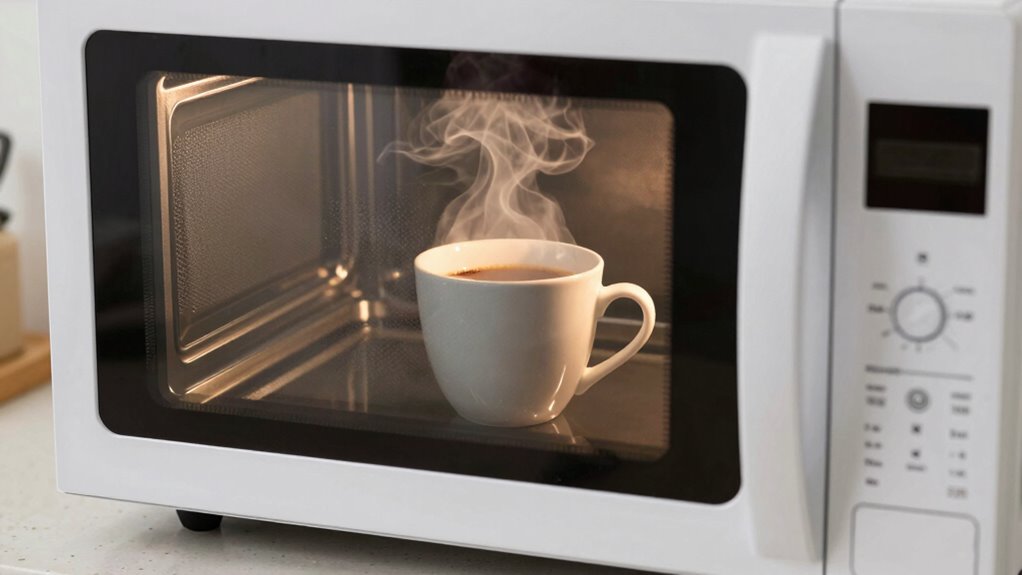
Many people make the mistake of reheating coffee for too long or at too high a power setting, which can lead to burnt flavors and a bitter taste. To preserve your coffee’s flavor and avoid a scorched taste, proper coffee storage is key—refrigerate promptly and use airtight containers. When reheating, use medium power and short intervals to prevent overheating. Be cautious of uneven heating, which can cause hot spots. Additionally, understanding heat distribution in your microwave can help achieve more even warming. Recognizing how microwave oven mechanics work can also improve your reheating results and prevent undesirable flavors.
How to Improve the Flavor of Reheated Coffee and Prevent a Burnt Taste
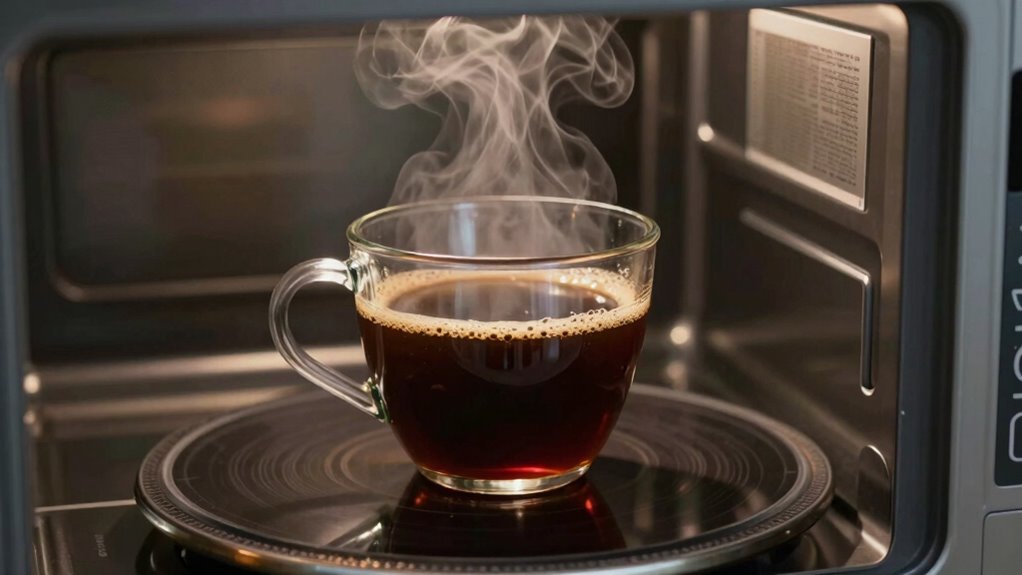
To keep your reheated coffee flavorful, try heating it in shorter intervals to prevent overheating. Stir the coffee before microwaving to distribute the heat evenly and avoid burnt spots. Adding a splash of milk can also mellow the flavor and reduce any bitter or burnt taste.
Use Shorter Intervals
Taking shorter intervals when reheating coffee in the microwave helps prevent it from becoming burnt or overcooked. This method preserves the coffee’s original flavor and avoids the harsh, bitter taste caused by overheating. By reheating in quick bursts, you better control the temperature, reducing the risk of burning the coffee.
Here are some tips:
- Reheat in 15-20 second intervals to maintain flavor preservation.
- Use a microwave-safe container for even heating.
- Check the coffee after each interval to prevent overdoing it.
- Store coffee properly in airtight containers to retain quality before reheating.
Using shorter intervals ensures you won’t have to deal with the burnt taste, and it keeps the coffee tasting fresh as intended.
Stir Before Heating
Stirring your coffee before reheating helps distribute the heat evenly, which can improve the overall flavor and prevent hot spots that might cause burning. Using proper stir techniques ensures the temperature is consistent throughout, reducing the risk of overcooking certain areas and preserving the coffee’s original taste. When you stir, you also help reincorporate any settled grounds or oils, maintaining a balanced flavor. This simple step promotes flavor preservation by preventing uneven heating that can lead to a burnt or bitter taste. Make sure to stir gently but thoroughly, moving the liquid around the cup’s edges and center. By doing so, you achieve a more uniform heat, which results in a better-tasting, evenly heated cup of reheated coffee.
Add a Touch of Milk
Have you ever noticed that adding a splash of milk can transform the taste of reheated coffee? Milk addition not only softens the bitterness but also enhances the overall flavor, making your drink more enjoyable. To maximize flavor enhancement, try these tips:
- Add milk gradually, tasting as you go, to avoid overpowering the coffee.
- Use warm milk to prevent cooling your coffee too much and maintain a smooth texture.
- Stir well to integrate the milk evenly and prevent a burnt or uneven taste.
- Experiment with different types of milk—such as almond, oat, or skim—to find your perfect flavor combination.
Frequently Asked Questions
Can Adding Milk or Sugar Affect Reheating Results?
Adding milk effects can make reheated coffee creamier, but it might cause uneven heating or curdling if not done carefully. Sugar influence can lead to a sweeter taste, but it may also caramelize or burn quickly in the microwave, affecting flavor. To avoid these issues, add milk or sugar after reheating, or reheat in short intervals, stirring well to keep the flavors balanced and prevent burnt tastes.
Is It Safe to Reheat Coffee Multiple Times?
Think of reheating coffee like a delicate dance—repeating it too often can ruin its flavor. It’s safe to reheat coffee multiple times, but beware: each reheating can strip away its rich aroma and deepen the bitterness. To preserve its coffee flavor, keep the reheating temperature moderate, around 165°F, and avoid overheating. Overdoing it risks a burnt taste, turning your once-smooth brew into a less-than-pleasant cup.
How Does the Type of Mug Influence Reheating Outcomes?
Your choice of mug affects reheating results considerably. Ceramic mugs tend to heat evenly, reducing hot spots that cause burnt flavors. Glass mugs heat quickly but may lead to uneven warming if not monitored. Insulated mugs keep coffee warm longer but can sometimes trap heat unevenly, risking a burnt taste. Non-insulated mugs heat evenly but cool faster. Pick the right mug based on your reheating needs for better flavor.
Can Reheating Coffee in a Convection Microwave Differ?
You’re getting the hang of it, so don’t beat around the bush—reheating coffee in a convection microwave does differ from regular reheating. A convection microwave combines microwave and convection heating, which can heat your coffee more evenly and reduce the risk of that burnt taste. Keep in mind, reheating differences mean you might need to adjust time and power settings. Experiment a little to find what works best for your machine.
What Signs Indicate Coffee Has Been Overheated or Burnt?
You’ll notice your coffee has been overheated or burnt when the aroma shifts to a sharp, unpleasant scent and the taste becomes bitter or scorched. Temperature indicators, like steam rising excessively or a bubbling surface, also signal it’s too hot. If your coffee smells off or tastes burnt, it’s a clear sign to stop reheating. Adjust the microwave time to avoid overheating and preserve the best flavor.
Conclusion
Reheating coffee is like walking a tightrope—you need just the right balance to avoid tipping into bitterness. By storing your leftovers properly and choosing the right reheating method, you keep the flavor from burning out like a candle’s flame. Pay attention to your microwave’s settings and avoid rushing the process. With a little care, you’ll keep your coffee warm and flavorful, turning reheating into a smooth dance rather than a fiery stumble.