
To prevent herbs from tasting dusty in your slow cooker, add hardy herbs like rosemary and thyme early so their flavors fully infuse, while delicate herbs like basil and parsley should be added near the end, about 15-30 minutes before serving, to keep their brightness. Adjust timing based on dish length, and remember dried herbs need more time than fresh. Keep these tips in mind—more details will help you perfect your herb timing for flavorful results.
Key Takeaways
- Add delicate fresh herbs like basil or parsley in the last 15-30 minutes to preserve their aroma and brightness.
- Incorporate dried herbs early in the cooking process to allow flavor development without losing potency.
- For hardy herbs such as rosemary or thyme, add earlier to enable slow infusion of their flavors.
- Avoid adding herbs at the very start if they’re delicate; wait until the final stages to prevent flavor dullness.
- Use herb preservation techniques and quality checks beforehand to ensure herbs retain their potency during cooking.
As an affiliate, we earn on qualifying purchases.
Why Timing Matters When Adding Herbs in Slow Cooking
Timing is essential when adding herbs to your slow cooker meals because their flavors can change markedly depending on when they go in. Herb potency diminishes the longer herbs cook, leading to a less vibrant taste. Adding herbs too early, especially delicate ones, risks losing their fresh, aromatic qualities, resulting in dull, dusty flavors. To preserve their natural essence, it’s vital to consider flavor preservation and when herbs will have the most impact. Fresh herbs added at the right moment retain their bright notes, while herbs added too early can become muted or overpowering. Understanding how timing affects herb potency allows you to balance flavors effectively, ensuring your dish is flavorful and fragrant without risking a dusty, overstewed taste. Proper herb timing helps maintain the intended aroma and freshness in your slow-cooked meals. Additionally, being aware of herb stability during cooking can guide you to better decisions about when to add each type of herb. For example, hardy herbs like rosemary and thyme can withstand longer cooking times, whereas delicate herbs like basil or parsley should be added at the end to maximize their aromatic impact. Incorporating knowledge of herb longevity can further enhance your ability to create well-balanced dishes with vibrant flavors throughout the cooking process.
As an affiliate, we earn on qualifying purchases.
When to Add Hardy Herbs (Rosemary, Thyme) for Full Flavor
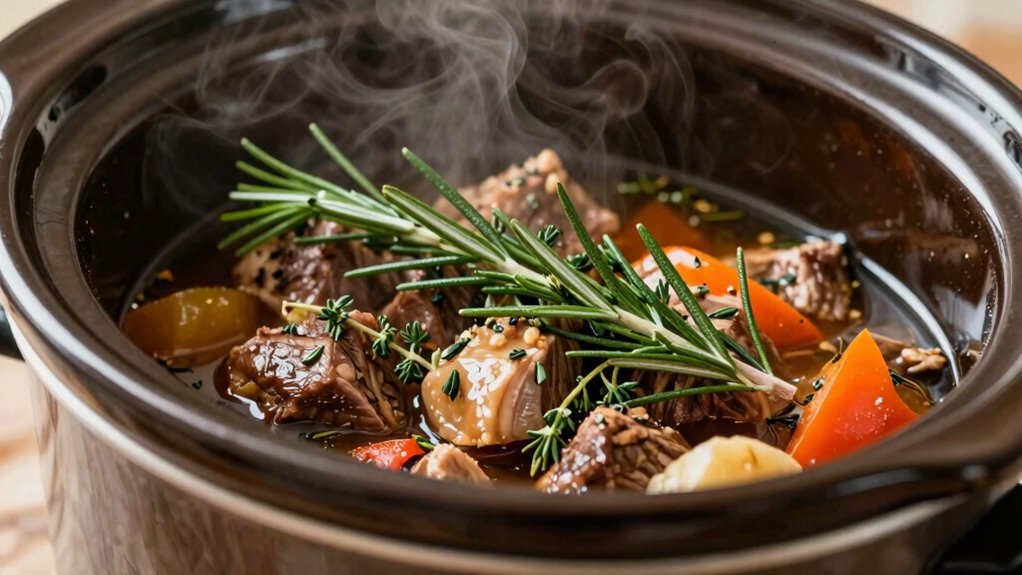
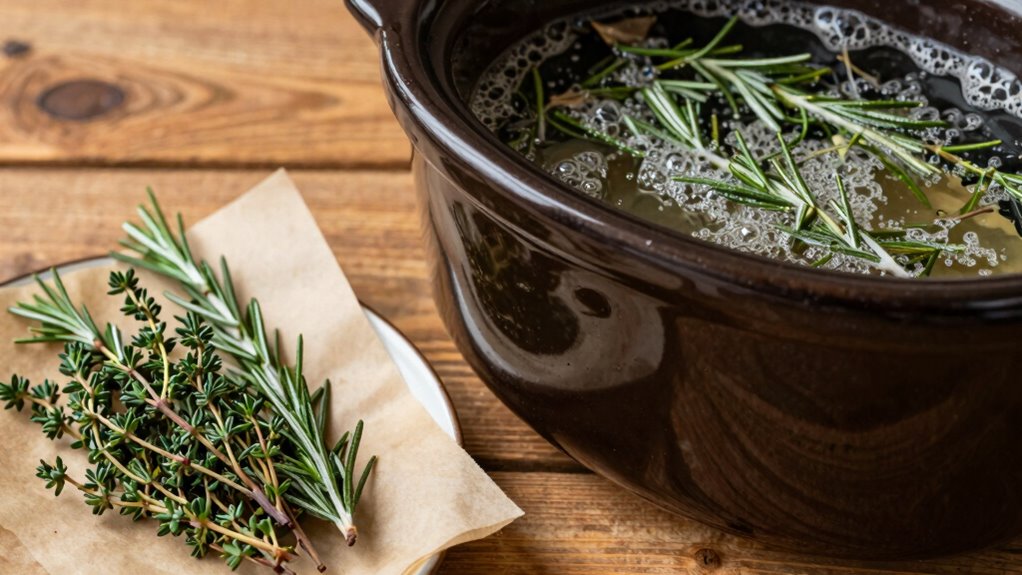
Hardy herbs like rosemary and thyme can withstand longer cooking times without losing their flavor, making them ideal for slow cooker dishes. To maximize herb preservation and flavor enhancement, add these herbs early in the cooking process. Their robust nature allows them to infuse the dish deeply, releasing essential oils that boost overall taste. By incorporating them at the beginning, you give their flavors ample time to meld with ingredients, creating a richer, more aromatic dish. Just be cautious not to overdo it—using too much can overpower other flavors. Since these herbs hold up well, they’re your best choice for long simmering periods, ensuring you enjoy full, vibrant herbaceous notes without risking a dusty or dull taste. Additionally, herb preservation techniques can help maintain their fresh aroma and potency throughout the cooking process, especially when paired with proper storage methods.
As an affiliate, we earn on qualifying purchases.
Best Times to Add Delicate Herbs (Basil, Parsley) for Freshness
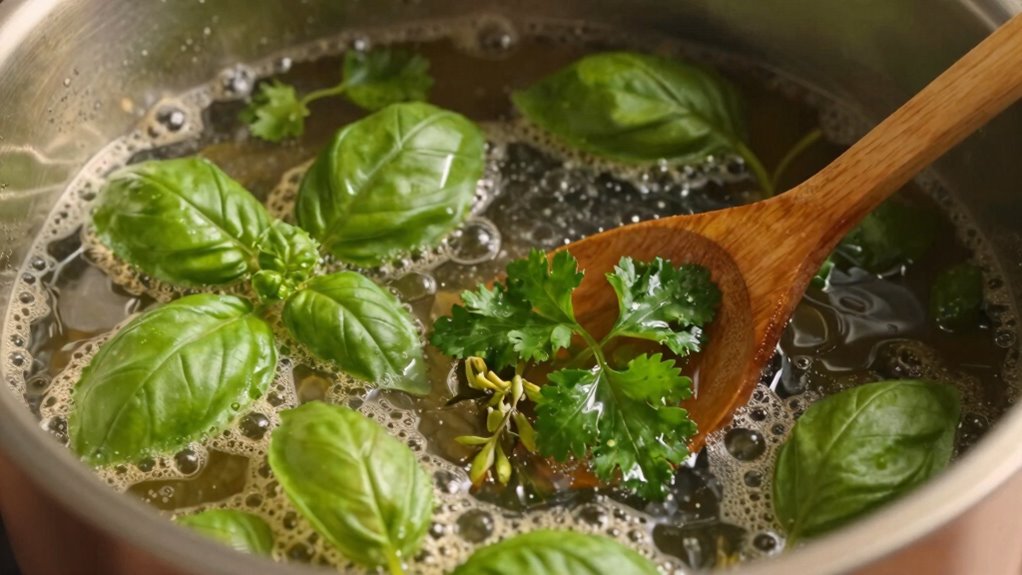
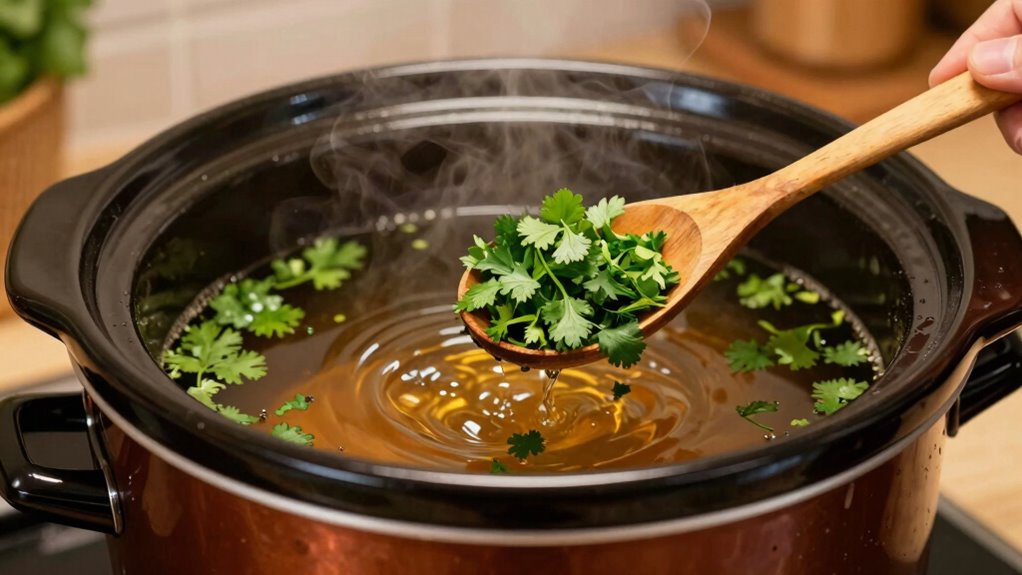
For delicate herbs like basil and parsley, timing is key to preserving their fresh flavor. You should add them toward the end of cooking or toss them in just before serving. This way, you enjoy their vibrant taste without sacrificing their delicate texture.
Add Near End
Have you ever wondered when to add delicate herbs like basil and parsley to preserve their vibrant flavor? Adding these herbs near the end of cooking ensures they retain freshness and aroma. Since delicate herbs can quickly lose flavor with prolonged heat, timing is key. To maximize flavor, add herbs just before serving, so they remain bright and fragrant. Proper herb storage helps maintain their quality before cooking, and if you don’t have fresh basil or parsley, herb substitutions like cilantro or chives work well at this stage. Keep in mind that adding herbs too early can lead to a dusty taste, so timing matters. By adding near the end, you enjoy a fresh, flavorful boost that elevates your dish perfectly.
Toss Before Serving
Adding delicate herbs like basil and parsley just before serving guarantees their bright flavor and vibrant aroma. To maximize flavor preservation, store these herbs properly—preferably in water or wrapped in a damp paper towel in the refrigerator. Tossing them into the dish right before plating ensures they retain their freshness and vivid color. Since these herbs are sensitive to heat, adding them at the end prevents their delicate oils from breaking down, which can cause them to taste dusty or dull. This timing also preserves their texture and aroma, giving your dish a fresh, lively finish. For the best results, chop the herbs just before serving, and sprinkle generously to boost visual appeal and flavor.
As an affiliate, we earn on qualifying purchases.
How to Adjust Herb Timing Based on Dish and Cooking Time
When cooking dishes for a long time, you need to adjust when you add fresh herbs to preserve their flavor. For extended cook times, it’s best to add delicate herbs toward the end, while sturdier herbs can go in earlier. Understanding your dish’s total cooking time helps you time herbs perfectly for the best flavor. Knowing the herb’s resilience can help you determine the optimal addition point to maximize freshness. Additionally, considering the cooking method can influence how herbs release their flavors during the process. Being aware of the herb’s flavor profile can also guide you in selecting the right herbs for each stage of cooking. Recognizing the impact of cooking temperature can further refine when you should incorporate specific herbs for optimal taste. Moreover, understanding the effect of cooking duration on herbs can help prevent over- or under-seasoning your dish.
Timing for Fresh Herbs
The timing of fresh herbs in slow cooker recipes depends largely on the dish’s overall cooking time. To preserve herb freshness and maximize flavor enhancement, add delicate herbs like basil or parsley near the end of cooking. For sturdier herbs such as rosemary or thyme, add them earlier to develop their aroma. Consider the dish’s complexity: quick recipes benefit from herb addition in the last 15-30 minutes, while longer cooking requires herbs earlier. Keep in mind that overcooking herbs can diminish their vibrancy and herbal goodness. Adjust herb timing to balance herb preservation with flavor infusion, ensuring fresh herbs enhance your dish without tasting dusty. Herb preservation is an important factor in maintaining both flavor and visual appeal, especially when considering herb longevity during slow cooking. Additionally, understanding how different herb types respond to heat can help you make better timing decisions. Knowing the herb response to heat can guide you in selecting the optimal time to add each herb for maximum flavor. Being aware of slow cooker herb behavior can also help prevent herbs from losing their aromatic qualities during extended cooking.
Adjusting for Long Cook Time
For dishes with long cooking times, adjusting when you add herbs is essential to maintaining their flavor and freshness. Since herbs can lose their potency if added too early, consider storing dried herbs separately until the last hour of cooking to maximize flavor enhancement. Fresh herbs, on the other hand, should be added toward the end to preserve their vibrant taste and aroma. If your recipe involves extended simmering, you might want to incorporate sturdier herbs like rosemary or thyme earlier, as they can withstand prolonged heat. Proper herb storage also plays a role; keeping herbs fresh and dry ensures maximum potency. Using the right herb preservation techniques can help you better see and judge the herbs’ quality before adding them. Additionally, understanding herb potency and how it diminishes over time can guide you in selecting the best herbs for your dishes. Knowing how herb freshness impacts flavor helps you decide the optimal time to add herbs during cooking. Being aware of herb aging can further improve your herb management and flavor retention. By timing herb addition carefully based on cooking duration, you prevent a dusty taste and ensure your dish remains flavorful and aromatic throughout.
Using Fresh or Dried Herbs: Tips for Maximum Flavor and Freshness

Using fresh herbs can elevate your slow cooker dishes with vibrant flavor, but timing is key to maintaining their brightness. To maximize herb preservation and flavor enhancement, add fresh herbs toward the end of the cooking process, usually in the last 15-30 minutes. Dried herbs, on the other hand, can be added earlier, as their flavors develop over time. Keep in mind that fresh herbs lose potency if cooked too long, so adding them too early can result in a dull taste. Properly balancing when you add fresh versus dried herbs ensures you get the most out of their aroma and flavor. Additionally, herb potency can diminish quickly if not stored properly, so keep herbs fresh and properly stored for the best results.
Common Mistakes to Avoid When Adding Herbs in Slow Cooking
Adding herbs at the wrong moment can quickly undermine the flavor of your slow cooker dish. One common mistake is adding herbs too early, which can diminish herb potency and lead to a dull, dusty taste. Conversely, waiting too long may prevent herbs from imparting their full flavor, missing out on flavor enhancement. Avoid chopping herbs excessively before adding, as this can release their oils prematurely and weaken their impact later. Don’t forget that dried herbs are more potent than fresh, so adjusting quantities is key. Also, adding herbs directly into the slow cooker without considering timing can result in lost aroma and flavor. To maximize herb strength and achieve ideal flavor enhancement, be strategic about when and how you add herbs during the cooking process.
Frequently Asked Questions
Can I Add Herbs at the Beginning and Still Retain Fresh Flavor?
You can add herbs at the beginning, but expect some flavor loss due to herb preservation challenges over slow cooking. Fresh herbs tend to lose their vibrant flavor when cooked for hours, so adding them early might result in a dull taste. To keep that fresh flavor, add delicate herbs like parsley or basil towards the end. For maximum herb preservation, add heartier herbs like thyme or rosemary at the start.
How Does the Size of Herbs Affect Their Timing in Slow Cooking?
Herb particle size markedly impacts herb infusion timing in your slow cooker. Smaller herbs or chopped herbs release flavor quickly, so add them early for a subtle infusion. Larger herb pieces or whole sprigs infuse more slowly, making it better to add them later to prevent bitterness or overpowering flavors. Adjust your timing based on herb size to achieve the perfect balance, ensuring your dish tastes fresh and flavorful without dusty overtones.
Are There Specific Dishes That Require Different Herb Timing Strategies?
Some dishes, like delicate fish or quick stews, need herbs added at specific times to preserve their flavor. For example, fresh herbs work best near the end for bright notes, while sturdy herbs like rosemary can be added early for depth. You should adapt herb timing based on flavor profiles and cooking method variations, ensuring herbs enhance rather than overpower. Think of it as orchestrating a symphony of flavors at just the right moment.
What Are Signs That Herbs Have Been Overcooked or Undercooked?
You’ll notice herb flavor becomes dull or bitter if herbs are overcooked, especially with long cooking durations. Overcooked herbs may turn slimy or look faded, losing their vibrant color. On the other hand, undercooked herbs often taste fresh but lack depth, indicating you should add them later in the cooking process. Pay attention to these signs to balance flavor and avoid dull or overly intense herb notes.
Can I Add Herbs During the Last 10 Minutes for Maximum Flavor?
Think of adding herbs in the last 10 minutes as giving your dish a final splash of color. This herb infusion locks in brightness, ensuring you get maximum flavor retention without turning herbs to dust. You’ll enjoy vibrant, fresh-tasting herbs without the risk of overcooking. So, yes, adding herbs at this stage is perfect for a burst of aromatic freshness, making your dish taste lively and well-rounded.
Conclusion
So, next time you toss herbs into your slow cooker, remember timing is everything—unless you actually want dusty-tasting herbs. It’s funny how a little patience can turn a bland dish into something flavorful, but hey, who needs fresh herbs when you can just add them all at once, right? Just don’t be surprised if your stew ends up tasting like a garden gone stale. Happy herb-hunting!