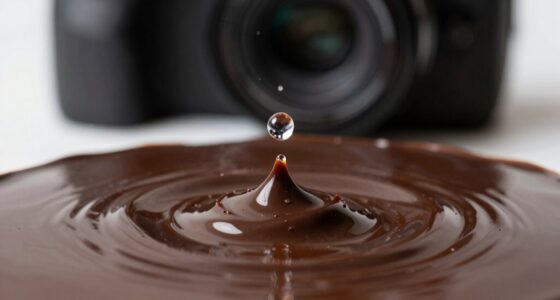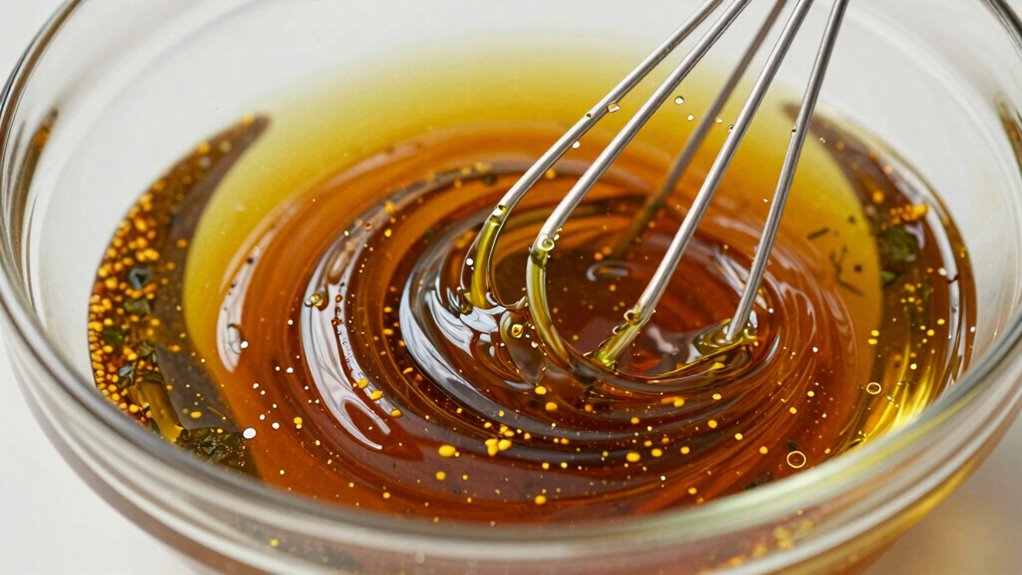

To make your sauces and dressings taste better, master the emulsion trick by slowly adding oil in a thin stream while whisking or shaking vigorously. This technique helps tiny oil droplets suspend in water-based ingredients, creating a smooth, creamy texture and richer flavor. Proper emulsification also guarantees your condiments stay stable and well-blended over time. Keep practicing this simple step, and you’ll discover the secret to velvety, flavorful sauces every time.
Listen free for 30 days with Audible
Thousands of audiobooks and originals — cancel anytime.
As an affiliate, we earn on qualifying purchases.
Key Takeaways
- Slowly adding oil while whisking or shaking creates a stable, creamy emulsion that enhances flavor and texture.
- Proper emulsification melds flavors seamlessly, balancing acidity and oiliness for a more sophisticated taste.
- Gradual oil addition prevents separation, ensuring sauces remain smooth and stable over time.
- Emulsified sauces coat ingredients evenly, improving presentation and mouthfeel.
- Mastering the emulsion technique elevates simple condiments into rich, flavorful culinary staples.
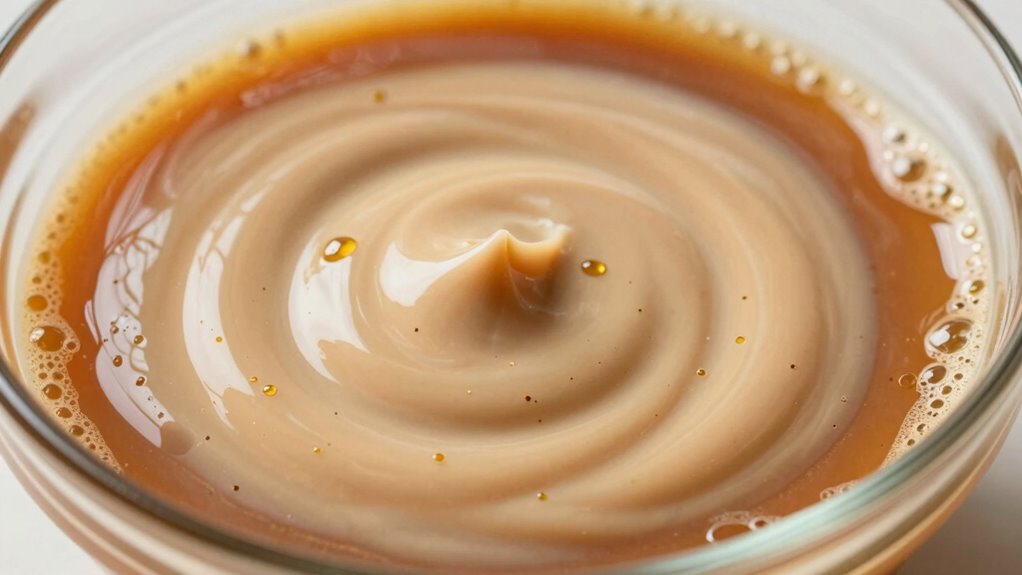
If you’ve ever struggled with sauces or dressings that separate or look unappetizing, mastering an emulsion trick can transform your culinary results. Emulsification is the process of blending two liquids that normally don’t mix well, like oil and vinegar or lemon juice. When done correctly, it creates a uniform, stable mixture that not only looks appealing but also considerably enhances flavor and texture. You’ll notice your sauces become richer and more cohesive, elevating your dishes beyond simple condiments.
Master the art of emulsification to create stable, flavorful sauces that elevate your culinary creations effortlessly.
The key to a good emulsion is patience and technique. Start by combining your liquids in a bowl or jar, but don’t rush the process. Slowly add the oil in a thin, steady stream while whisking vigorously or shaking the jar. This gradual addition allows the liquids to bond properly, forming tiny droplets of oil suspended in the water-based component. As these droplets break apart and redistribute evenly, your sauce or dressing becomes smoother and thicker, improving its texture. The resulting consistency is creamy and velvety, making every bite more pleasurable. Additionally, understanding the science of emulsification can help you troubleshoot and refine your technique for perfect results.
Beyond texture improvement, emulsification also acts as a flavor enhancer. When ingredients are properly emulsified, flavors meld seamlessly, giving your sauce a well-rounded taste. For example, a vinaigrette with an emulsion will have a balanced acidity and oiliness, with no overpowering vinegar or bland oil notes. You’ll find that flavors are more integrated, creating a more sophisticated profile that elevates salads, roasted vegetables, or grilled proteins. This technique also allows you to incorporate additional seasonings, herbs, or garlic more uniformly, ensuring every spoonful delivers a burst of harmonious flavor. Achieving a proper emulsion can also prevent the separation that often occurs with homemade sauces, ensuring a consistent quality throughout and preventing separation over time.
Another advantage is that emulsified sauces tend to be more stable and less likely to separate over time. This means your dressings stay consistent, whether you’re serving them immediately or storing them for later. A well-emulsified sauce also clings better to ingredients, providing a more even coating that enhances both flavor and presentation. Learning to control the emulsification process can help you create sauces that maintain their integrity even after hours or days.
Once you get the hang of the emulsion trick, you’ll realize it’s a simple yet powerful tool in your kitchen arsenal. It transforms basic ingredients into elevated sauces with improved texture and intensified flavors. Whether you’re making a classic mayonnaise, a tangy vinaigrette, or a creamy aioli, mastering emulsification ensures your sauces look more appetizing, taste better, and have a more luxurious mouthfeel. Understanding the science behind emulsification can help you troubleshoot and perfect your technique every time. With just a little patience and the right method, you’ll turn everyday condiments into culinary standouts that impress every time.
stainless steel whisk for emulsifying sauces
As an affiliate, we earn on qualifying purchases.
As an affiliate, we earn on qualifying purchases.
Frequently Asked Questions
Can I Use Non-Traditional Oils for Emulsions?
Yes, you can definitely use non-traditional oils for emulsions. Alternative oil options like avocado, walnut, or sesame oil add unique flavors, enhancing your sauces and dressings. You can also experiment with flavored oil infusions, which bring extra depth and complexity. Just keep in mind that some oils may have stronger tastes or different textures, so adjust your seasonings accordingly to create a perfectly balanced and delicious emulsion.
How Long Can an Emulsion Sauce Be Stored?
You can typically store an emulsion sauce for up to 3-4 days in the fridge. To prevent spoilage, keep it tightly covered and avoid cross-contamination. Proper storage duration is key to maintaining freshness and flavor. If you notice any sour smell, discoloration, or separation, it’s best to discard the sauce. Always use clean utensils when serving to prevent introducing bacteria that could cause spoilage.
What Are Common Mistakes When Creating Emulsions?
You might think that adding ingredients quickly or in the wrong order won’t affect your emulsion, but it really does. Common mistakes include adding oil too fast, which destabilizes the mixture, or not whisking enough, leading to poor emulsion stability. These errors prevent the sauce from thickening properly, compromising flavor enhancement. For a perfect, stable emulsion, add ingredients gradually, keep whisking, and maintain consistent temperature.
Can Emulsions Be Reheated Without Separation?
Emulsions can be reheated, but maintaining emulsion stability is key to preventing separation. Gently warm your sauce or dressing over low heat, stirring constantly to preserve its texture enhancement. Avoid high temperatures, which can break the emulsion. Reheating slowly helps keep the emulsion intact, ensuring your sauce remains creamy and well-textured. Proper reheating techniques allow you to enjoy the same rich flavor and smooth consistency as when first prepared.
Are There Vegan Alternatives to Classic Emulsifiers?
Yes, there are vegan alternatives to classic emulsifiers. You can use vegan stabilizers like lecithin derived from soy or sunflower, which help keep sauces and dressings stable. Plant-based thickeners such as agar-agar, xanthan gum, or arrowroot powder also work well to create smooth, cohesive emulsions. These options are perfect if you’re seeking cruelty-free, natural ingredients to enhance your recipes without sacrificing texture or flavor.
glass jar with lid for salad dressings
As an affiliate, we earn on qualifying purchases.
As an affiliate, we earn on qualifying purchases.
Conclusion
By mastering this emulsion trick, you reveal the secret to sauces and dressings that sing with flavor, much like the alchemists of old transforming base ingredients into gold. Remember, a perfect emulsion isn’t just a culinary skill—it’s your passport to elevate every dish, turning simple ingredients into a symphony of taste. So, embrace this technique, and let your kitchen become the workshop where magic happens, one smooth, flavorful drizzle at a time.
As an affiliate, we earn on qualifying purchases.
handheld immersion blender for sauces
As an affiliate, we earn on qualifying purchases.
As an affiliate, we earn on qualifying purchases.
Flea & tick season Picks
flea and tick prevention
As an affiliate, we earn on qualifying purchases.