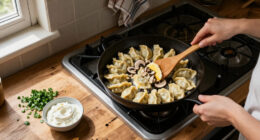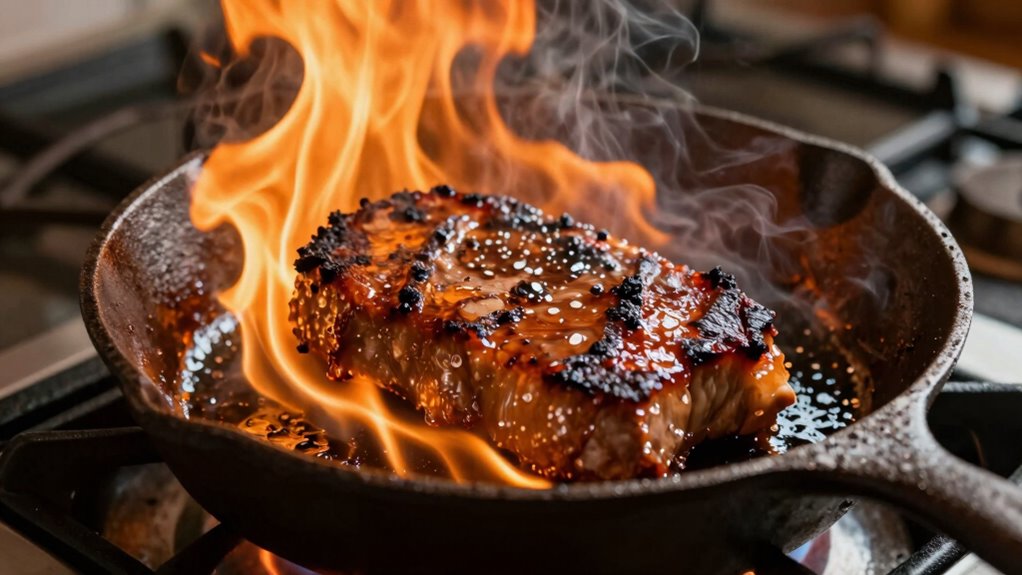
The secret to better searing at home is mastering heat transfer by managing surface moisture and using the right cookware. Pat your steak dry to improve contact with a hot pan, which speeds up browning. Use heavy pans like cast iron that conduct heat well and prevent temperature drops. Avoid overcrowding, as excess moisture cools the surface and hinders crust formation. If you want to unleash the full steps for perfect searing, keep exploring how heat transfer works in detail.

Get kitchen staples and gadgets delivered free with Prime
- Fast, free delivery on millions of items
- Prime Video, Amazon Music and more included
- Member-only deals all year
Key Takeaways
- Pat dry the meat to remove surface moisture, enabling direct contact with the hot pan for efficient heat transfer.
- Use cookware with high thermal conductivity, like cast iron, to improve heat conduction and crust formation.
- Avoid overcrowding the pan to prevent moisture buildup, which lowers temperature and hampers searing.
- Preheat the pan thoroughly to ensure rapid surface heating and promote Maillard browning.
- Manage surface moisture to prevent steam insulation, allowing the exterior to reach high searing temperatures quickly.
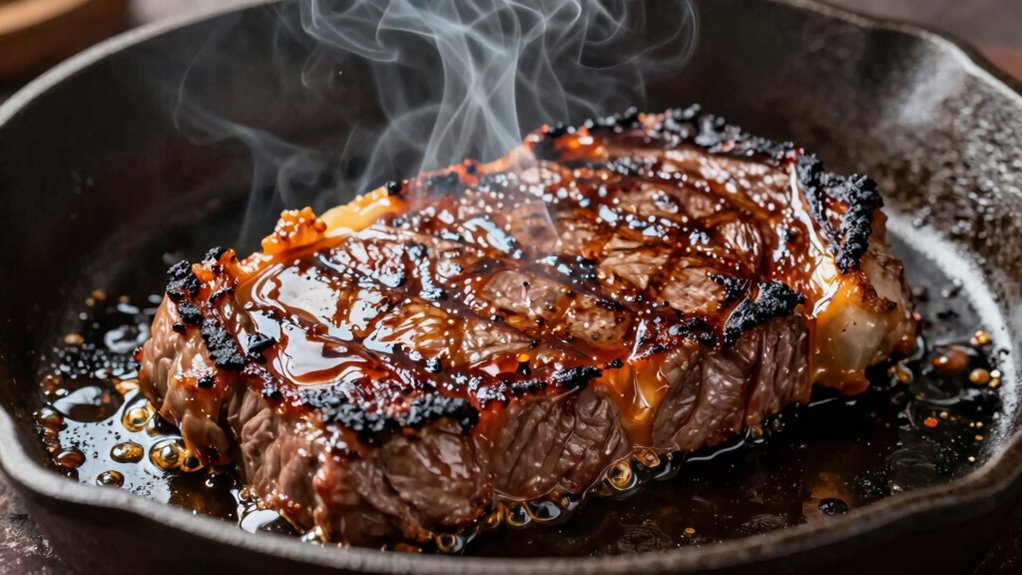
Have you ever wondered what happens at the microscopic level when you sear a steak? It’s a fascinating process driven by cooking thermodynamics, where heat transfer plays an essential role in creating that perfect crust. When you place the meat on a hot pan, you initiate rapid heat exchange, leading to chemical reactions that develop flavor and texture. But understanding how heat moves from your pan into the steak can greatly improve your searing results.
One key aspect is how surface moisture management influences heat transfer. If the steak is wet, the water on its surface absorbs the heat first, causing a slow and uneven temperature rise. This moisture acts as a barrier, preventing the surface from reaching the high temperatures needed for proper Maillard browning. That’s why it’s vital to pat your steak dry before searing. Removing excess surface moisture allows direct contact between the hot pan and the meat, enabling faster, more uniform heat transfer.
Dry your steak thoroughly for better heat transfer and a perfect sear.
Cooking thermodynamics reveals that heat moves from the pan to the steak primarily through conduction. The better the contact, the more efficient this process becomes. Using a heavy skillet, like cast iron, enhances conduction because it retains and distributes heat evenly. When the surface moisture is managed properly, the meat’s exterior quickly heats up, forming a caramelized crust. This crust not only adds flavor but also acts as a barrier, sealing in juices and preventing over-penetration of heat, which could lead to overcooking. Additionally, understanding the thermal properties of different cookware materials can help optimize heat transfer for searing.
Controlling surface moisture also helps with surface moisture management during cooking. As the steak heats, moisture on the surface evaporates, creating steam that can temporarily insulate the meat, slowing further heat transfer. If moisture accumulates or is not managed, it prolongs the searing process and hampers crust formation. To optimize the process, you should pre-dry your steak and avoid overcrowding the pan, which can cause excess moisture from other ingredients or meat juices to accumulate, reducing the pan’s temperature and hindering effective heat transfer. Proper moisture control techniques are essential for achieving consistent searing results. Furthermore, paying attention to the thermal conductivity of your cookware can help you select the best tool for efficient heat transfer. Additionally, understanding the role of biodiversity in culinary practices can inspire more sustainable cooking methods that minimize waste and energy use.
As an affiliate, we earn on qualifying purchases.
Frequently Asked Questions
How Does Pan Material Affect Heat Transfer During Searing?
The pan material impacts heat transfer during searing because of its heat conduction properties and surface emissivity. A good conductor like cast iron or copper quickly spreads heat evenly across the surface, ensuring consistent searing. The surface emissivity affects how much heat radiates from the pan, influencing browning and crust formation. Choosing a pan with high heat conduction and appropriate emissivity helps you achieve better, more uniform searing results.
What Role Does Oil Type Play in Searing Efficiency?
Think of oil as your culinary paintbrush; choosing the right one enhances flavor and guarantees a perfect sear. Your oil’s smoke point influences searing efficiency—high smoke point oils like avocado or refined grapeseed withstand high heat without burning, ensuring even heat transfer. This prevents flavor degradation, maximizes browning, and avoids smoke. So, select an oil that balances flavor enhancement and high smoke point to master a flawless sear at home.
Can Ambient Temperature Influence Searing Quality?
Yes, ambient temperature can influence searing quality. When the surrounding air is warmer, it helps maintain consistent heat transfer, promoting better flavor development and a desirable surface texture. Cooler environments might cause your pan to lose heat quickly, resulting in uneven searing. By controlling your kitchen’s temperature or working in a warm space, you can achieve a more evenly cooked, flavorful crust with ideal surface texture.
How Does Meat Thickness Impact Heat Transfer?
Think of meat thickness as a fortress’s wall—thicker cuts slow heat penetration, requiring patience. Marbling effects and meat aging influence how heat transfers, as well-marbled, aged meat retains moisture and conducts heat more evenly. Thinner cuts sear quickly, but thicker ones need gentle, sustained heat to develop a perfect crust without overcooking the interior. Adjust your technique, considering thickness, marbling, and aging, for ideal searing results.
Are There Optimal Times for Flipping the Meat During Searing?
You should flip the meat only once during searing, ideally after about 2-3 minutes per side, to maximize juice retention and flavor enhancement. This timing allows a proper crust to form, sealing in juices and creating a richer flavor. Avoid flipping too often, as it interrupts heat transfer and can cause uneven cooking. Let each side develop a deep, caramelized surface before turning, ensuring ideal searing results.
As an affiliate, we earn on qualifying purchases.
Conclusion
Now that you know the heat transfer secrets, your next sear could be perfect. But there’s one trick still lurking beneath the surface—something that could make or break your results. Will you discover it and elevate your home cooking? The choice is yours, and the stakes are high. Get ready to experiment, and who knows—your next sear might just change everything. Are you ready to reveal the ultimate secret?
As an affiliate, we earn on qualifying purchases.
As an affiliate, we earn on qualifying purchases.
NFL season / tailgating Picks
team gear
As an affiliate, we earn on qualifying purchases.