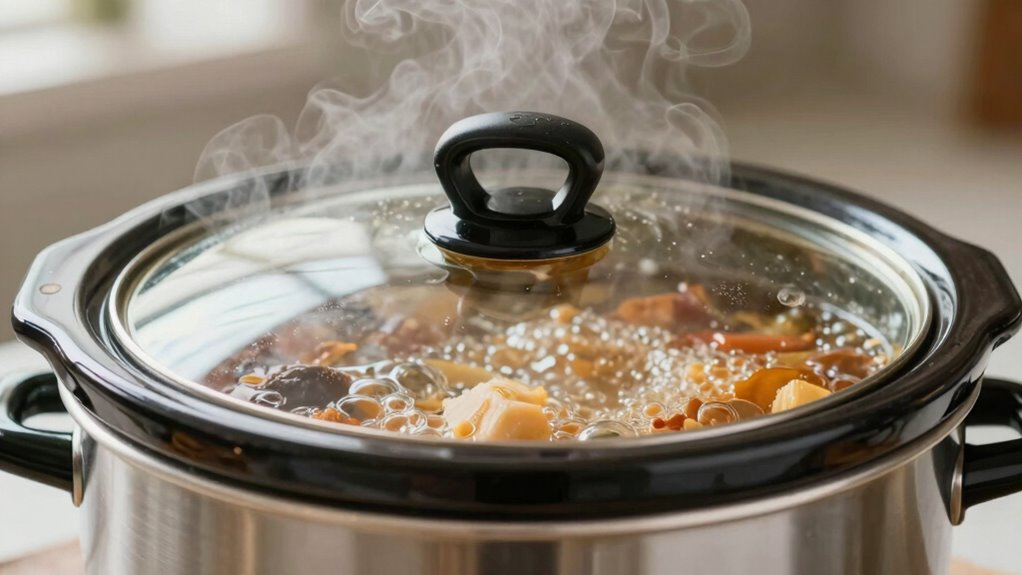

If your slow cooker feels unusually hot, you can test it safely without a thermometer by filling it with water and turning it on to its usual setting. Watch how quickly the water boils or evaporates—fast boiling indicates overheating. Check if the exterior feels very hot or if there’s burning smell. If you notice these signs, there are simple steps you can take to identify the cause and fix the problem. Learn more to keep your cooker safe and effective.
Key Takeaways
- Fill the slow cooker with water and run it on the usual setting to observe how quickly it heats or boils.
- Check if the water boils rapidly or evaporates too fast, indicating excessive heat.
- Carefully feel the exterior and interior surfaces for abnormal warmth or discomfort to assess overheating.
- Monitor cooking times and food quality for signs of overcooking or burning, which suggest high temperatures.
- Listen for unusual odors or leaks around the lid, which can be signs the appliance is running hotter than normal.
Why Do Some Slow Cookers Overheat?
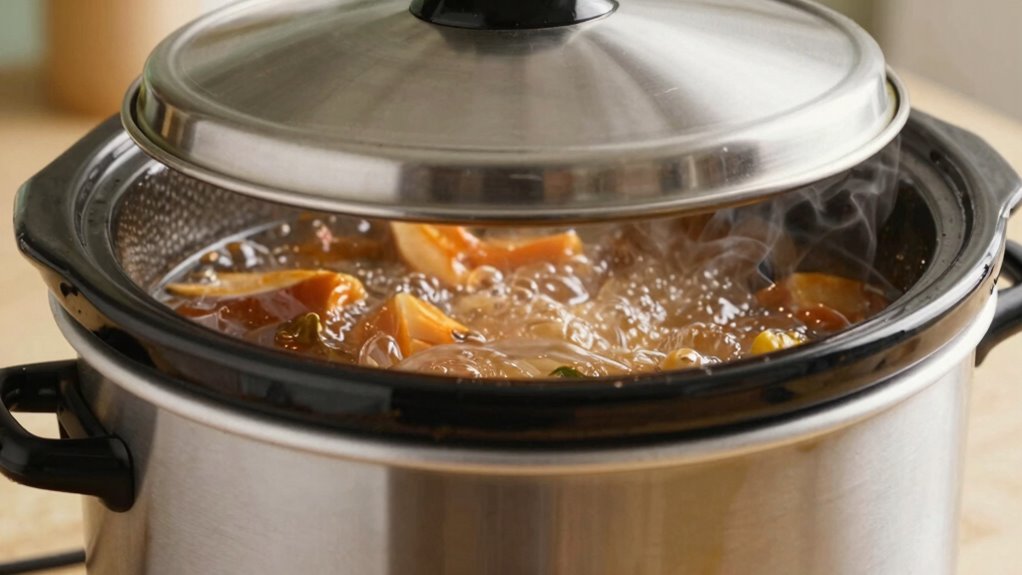
Some slow cookers overheat because their thermostats malfunction or become faulty over time. Electrical faults are common culprits, causing the thermostat to send incorrect signals, leading the cooker to run hotter than intended. Manufacturing defects can also play a role, especially in models with poor quality control or subpar components. These issues disrupt the normal regulation of temperature, making it difficult for the slow cooker to maintain consistent heat levels. Over time, wiring problems or faulty sensors can develop, further contributing to overheating. If your slow cooker has experienced electrical faults or seems to have been affected by manufacturing flaws, it’s more likely to run hot unexpectedly. Addressing these underlying issues early can prevent damage or safety hazards. Proper maintenance and regular inspections can help identify potential problems before they become serious issues, including understanding Electrical faults that may cause overheating. Additionally, ensuring your slow cooker has a reliable thermostat can significantly reduce the risk of overheating and improve safety. Regularly checking and replacing worn or damaged parts is essential for safe operation and prolonging the lifespan of your appliance.
Signs Your Slow Cooker Is Too Hot
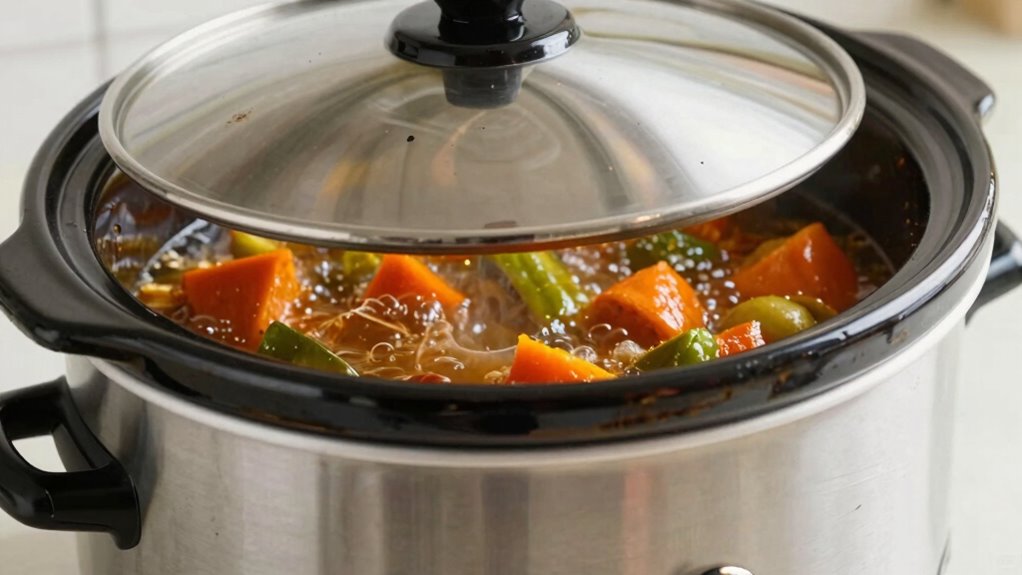
If your slow cooker is running hotter than it should, you’ll notice certain signs that indicate a problem. Ignoring these signs can compromise cooking safety and harm your appliance. Be alert to:
- Overly thick or burnt food that cooks faster than usual
- Excessive condensation or leaks around the lid
- Unusual, strong odors indicating overheating
- The surface feeling abnormally hot to the touch
- Free Floating temperature issues that may cause inconsistent cooking results
These signs suggest your slow cooker may be overheating, which could impact appliance maintenance and cooking safety. Proper maintenance practices, such as regular cleaning and inspection, are essential to prevent overheating and ensure optimal performance. Addressing these issues promptly helps prevent damage and ensures safe operation. Regularly inspecting your device and recognizing these warning signs keeps your slow cooker functioning correctly, maintaining safety and efficiency during meal preparation. Additionally, understanding appliance safety guidelines can help you identify and address potential hazards early, including overheating prevention measures that are vital for safe appliance use. Implementing smart home technology solutions, like monitoring devices or alerts, may assist in early detection of overheating issues for added safety.
How Can I Test My Slow Cooker at Home Safely?
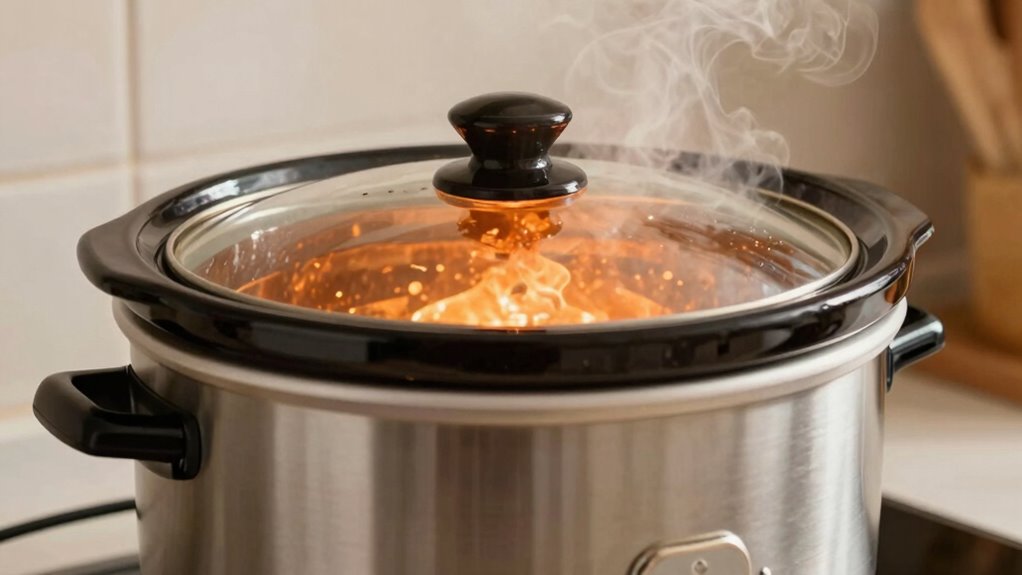
To guarantee your slow cooker is functioning properly and not overheating, you can perform a simple safety test at home. Start by filling it with water up to the recommended level and turn it on to its usual setting. Observe how it heats; if it reaches a boil quickly or the water evaporates faster than expected, it may be running too hot. This quick test helps you assess whether your appliance troubleshooting efforts are needed. Always prioritize cooking safety by avoiding open flames or unsafe conditions. If you notice abnormal heating, consider consulting the manufacturer or a professional. Performing this basic test is a safe, effective way to confirm your slow cooker’s performance without risking damage or injury. Additionally, understanding the energy-efficient design of modern appliances can help you prevent overheating issues in the future. Being aware of appliance safety features can further guide you in maintaining safe operation and avoiding overheating problems. Regularly inspecting your appliance’s temperature regulation features can also help ensure consistent, safe performance over time. Understanding how automatic shut-off mechanisms work can provide extra safety when using your appliance. Moreover, familiarizing yourself with the user manual can provide valuable tips for proper usage and maintenance.
Step-by-Step Method to Check Temperature Without a Thermometer
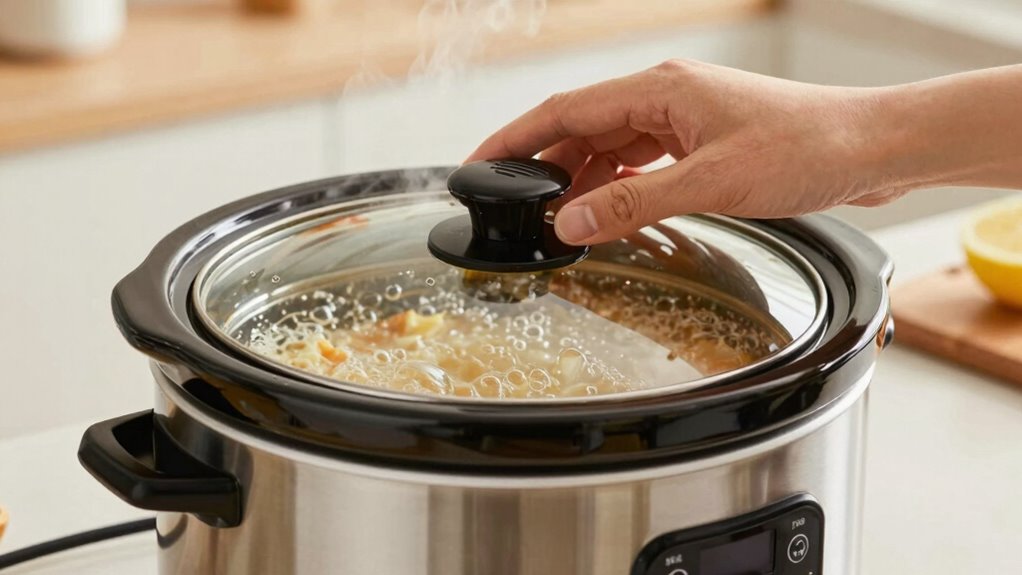
Checking the temperature of your slow cooker without a thermometer is possible by using simple touch and observation techniques. First, observe the exterior: if it feels extremely hot to touch after extended use, it might be running hotter than intended. Second, test the interior surface with your finger: carefully touch a small, inconspicuous area—if it’s uncomfortably hot, it suggests high cooking temperature. Third, monitor the cooking time: overcooked food often indicates excessive heat. Fourth, compare your findings with known standards: most slow cookers operate between low (around 190°F) and high (around 300°F). These thermometer alternatives help you gauge whether your slow cooker maintains safe cooking temperatures without digital tools. Additionally, understanding the water temperature range inside the cooker can provide further clues about its performance. Recognizing the consistent heat output of your appliance can also assist in assessing its safety and efficiency. Being aware of the potential signs of overheating can help prevent food safety issues. Always prioritize safety and accuracy when evaluating temperature.
What Causes Overheating and How Can I Fix It?
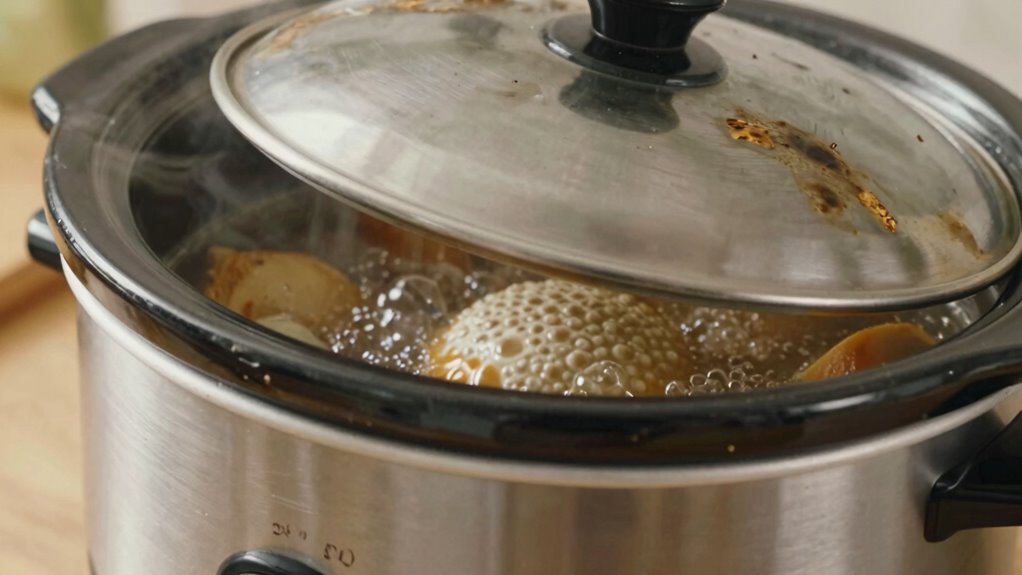
Overheating in your slow cooker often results from faulty components or improper use. Electrical issues, such as a damaged power cord or faulty thermostat, can cause the cooker to run hotter than normal. Material degradation, like worn-out heating elements or cracked interior surfaces, can also lead to uneven or excessive heat. These problems disrupt the normal heating cycle, making your slow cooker overheat and potentially damage food or pose safety risks. To fix this, first unplug the appliance and inspect for visible damage or frayed cords. If you notice signs of material degradation, like cracks or corrosion, replace the faulty parts or consider purchasing a new slow cooker. Regular maintenance and cautious use help prevent overheating caused by these common issues. Additionally, understanding industry trends and proper maintenance techniques can help extend the lifespan of your appliance and ensure safe operation. Being aware of common electrical problems can further aid in troubleshooting and maintaining your slow cooker effectively.
When Should You Repair or Replace Your Slow Cooker?
Deciding whether to repair or replace your slow cooker depends on the extent of its issues and overall condition. Consider these factors:
Assess your slow cooker’s condition to determine if repairs are worth it or if replacement is the smarter choice.
- Warranty expiration: If your unit’s warranty has expired, repairs may not be cost-effective.
- Cost of repairs: If fixing it costs nearly as much as a new one, replacement makes more sense.
- Performance decline: Persistent overheating or inconsistent cooking suggests replacement.
- Age of the appliance: Older models often have outdated components, making repairs less worthwhile.
- Sound healing science research shows that regular maintenance can extend the lifespan of appliances, making repairs more feasible and safe. Additionally, understanding the performance of the heating element can help determine whether repair or replacement is the better choice.
If your slow cooker is still under warranty, repairs are typically covered. Otherwise, assess if repair costs justify prolonging its life, or if buying new offers better value and safety. This approach helps you make an informed, economical decision.
Frequently Asked Questions
Can I Use a Regular Oven Thermometer to Check My Slow Cooker?
Yes, you can use a regular oven thermometer to check your slow cooker. Just place it inside, making certain it doesn’t touch the sides or lid, to get an accurate reading. This helps with cooking safety and appliance maintenance, making sure your slow cooker operates at the right temperature. Regularly testing your appliance like this prevents overheating, ensures safe cooking, and extends its lifespan.
How Often Should I Test My Slow Cooker’s Temperature?
You should test your slow cooker’s temperature every few months—that’s like giving your cooker a health check-up! Regular calibration keeps it running perfectly, preventing overcooking or undercooking. Set testing intervals at least quarterly, especially if you notice inconsistent results or after moving it. Think of it as tuning your favorite guitar—tiny adjustments make a world of difference in performance and safety, ensuring your meals turn out just right every time.
Are There Specific Brands More Prone to Overheating?
Certain brands with questionable reliability or known manufacturing defects tend to overheat more often. You should be cautious with budget or lesser-known brands, as they might not have rigorous quality control. Stick with reputable brands known for safety and durability, and always read reviews before purchasing. Regularly inspecting your slow cooker and performing safe tests can help you spot overheating issues early, regardless of the brand.
What Safety Precautions Should I Take During Testing?
You should prioritize unplugging the slow cooker before testing to prevent accidents, just like handling fire-resistant gloves for safety. Wear gloves to protect your hands and keep a fire extinguisher nearby, even if you think it’s safe. Never leave the appliance unattended during testing, and verify your work area is dry. These precautions keep you safe while you check if your slow cooker runs hot, avoiding burns or fires.
How Do I Know if My Slow Cooker Is Still Safe to Use After Overheating?
If your slow cooker overheats, check for signs like a burning smell, strange noises, or a malfunctioning lid latch. To confirm its safety, unplug the cooker and let it cool completely. Inspect the cord and plug for damage, and ensure the heating element isn’t warped or burned. If you notice any overheating signs or damage, it’s best to replace it to ensure safe use and avoid potential hazards.
Conclusion
Now that you’ve learned how to spot and test your slow cooker’s heat without a thermometer, you hold the power to keep it running smoothly. Think of it as tuning an instrument—small adjustments can restore harmony and prevent overheating. With a little patience and a keen eye, you’ll ensure your cooker stays a reliable partner in the kitchen, simmering flavors perfectly without the worry of fiery surprises. Keep it safe, keep it steady, and enjoy your cooking journey.