
TL;DR
Moving your rig into a closet or another room is the most effective way to cut noise. Acoustic foam and treatment help with reflections but won’t block sound leaks. Proper placement and ventilation are key to a quiet, safe setup.
Ever notice how some closets turn into mini recording studios while others just echo and leak sound everywhere? The secret isn’t just about slapping foam on the walls. It’s about where you place your gear and how you handle heat and sound escape. Acoustic dampening, placement, and the “Rig in the Closet” setup.
If you’re serious about a quiet, effective workspace—whether for podcasts, voice-over, or music—you need a plan. This isn’t just about soundproofing; it’s about smart placement and smart dampening. Let’s break down how to make your closet work for you without turning it into a sauna or a sound leak factory.
Acoustic dampening
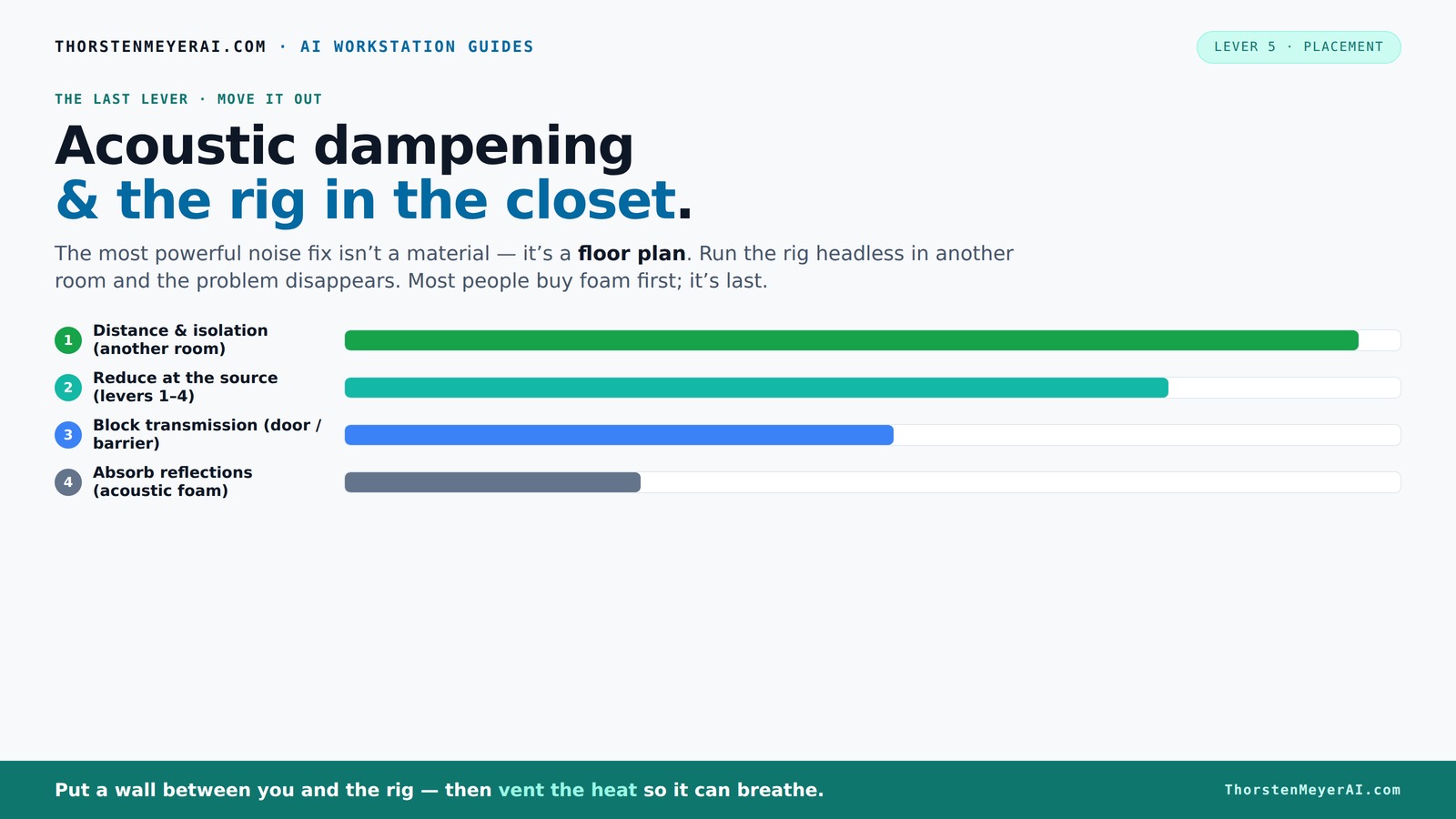
& the rig in the closet.
The most powerful noise fix isn’t a material — it’s a floor plan. A rig you can’t hear because it’s in another room beats any amount of foam. Tap the approaches in Part 1 to see what actually works.
(another room)
(levers 1–4)
(door / barrier)
(acoustic foam)
Contain the noise, not the heat
Key Takeaways
- Moving your rig into another room or closet is the most effective way to silence noise without fuss.
- Ventilation is critical—sealed spaces trap heat, so always provide airflow to keep equipment safe.
- Acoustic foam absorbs reflections inside, but sealing gaps around doors and outlets stops sound leaks.
- Proper placement of panels on reflection points drastically improves sound quality.
- Don’t over-treat or seal too tightly—balance is key for natural sound and heat management.

36 Pack AUSLET Acoustic Panels 12 x 12 x 2 Inches, Pyramid Sound Proof Foam Panels for Wall, High Density Black Acoustic Foam Panels,Soundproof Wall Panels
- Enhances Audio Quality: Absorbs noise, echoes, and reverb
- Easy and Fast Expansion: Quickly expands to full size
- Stylish Pyramid Design: Provides effective sound control
As an affiliate, we earn on qualifying purchases.
As an affiliate, we earn on qualifying purchases.
Why Distance Is Your Best Weapon Against Noise
Moving your rig far away from your workspace is the single most effective way to cut down noise. Think of it like this: a GPU rack in another room is silent to you. You don’t need fancy foam or sealing—just a wired connection and ventilation.
Imagine your high-power AI computer humming away in a closet on the other side of the house. You work in peace, and the noise stays contained. This setup works especially well for those who mainly interface remotely via SSH or API.
According to recent tech setups, this simple move can cut perceived noise by over 80% compared to trying to dampen sound at the source.

Sound Addicted - Studio Monitor Isolation Pads for 5 Inch Monitors, Pair of Two High Density Acoustic Foam which Fits Most Speaker Stands | SMPad 5
- Material: High-density acoustical foam (50kg/m^3)
- Dimensions: 7.5'' x 11'' x 1.6''
- Weight Capacity: Holds up to 24 lb per pad
As an affiliate, we earn on qualifying purchases.
As an affiliate, we earn on qualifying purchases.
The 'Rig in the Closet' Setup — How to Do It Without Melting
Placing your noisy, heat-generating rig into a closet sounds perfect—until heat turns your quiet space into a sauna. The key is ventilation. You need a way for hot air to escape without letting sound leak out.
Passive vents are a start, but active exhaust fans are better. They pull hot air out and draw cooler air in, maintaining safe temperatures while keeping noise contained. For more advanced setups, consider soundproof cabinets with ducted airflow and cooling systems.
One clever trick is to use a quiet, thermostatically controlled fan that kicks in only when temperatures rise. This keeps your rig cool and your room silent.

HomeProtect Door Draft Stopper 36 Inch Under Door Draft Blocker Door Sweep for Bottom of Door Reduce Cold Air, Soundproof, Light, Odor, Weather Stripping Door Seal Strip Fit for Interior/Exterior
- Cost-effective draft stopper: Affordable single-side door draft blocker
- Easy installation: Simple to measure, cut, and stick
- Fits doors up to 36 inches: Suitable for large gaps below 1.5 inches
As an affiliate, we earn on qualifying purchases.
As an affiliate, we earn on qualifying purchases.
How to Damp Realistically — Inside and Out
Acoustic dampening inside your closet is about softening reflections and reducing echo, not soundproofing. Foam panels, blankets, and rugs absorb internal reflections and harshness. But beware—these won't stop sound from leaking in or out.
For actual soundproofing, focus on sealing gaps around the door, outlets, and wall edges here. Weatherstripping, acoustic sealant, and even moving blankets glued around the door help contain sound leaks.
Here’s a key insight: internal absorption reduces echo and makes your recordings clearer, but without sealing gaps, external noise will still sneak in. Combining both approaches creates a more balanced environment—internal treatment improves clarity, while sealing prevents leaks, ensuring your sound stays contained and your recordings are crisp.

Portable Recording Booth for Home Studio, Soundproof Vocal Booth with Travel Bag for Voiceovers, Podcasts, Streaming and Music Recording
- Superior Sound Isolation: Absorbs up to 90% of noise
- Spacious One-Person Design: Fits creators up to 6.4 ft tall
- Quick Setup: Unfolds in 60 seconds
As an affiliate, we earn on qualifying purchases.
As an affiliate, we earn on qualifying purchases.
Where to Place Acoustic Panels for Best Results
Positioning panels is about understanding where sound bounces and reflects. In a closet, the main reflection points are typically the wall behind your mic and the ceiling. Placing panels there minimizes harsh echo.
For example, if your mic faces a blank wall, put foam panels on that wall at head level. Add ceiling panels to reduce flutter echoes. Avoid lining every surface—overdamping can deaden your sound and make your recordings unnatural.
Think of your setup like tuning a guitar: only treat the spots that cause unwanted reflections. Proper placement ensures you’re not over-treating, which can make your recordings sound dull or unnatural. It’s about finding the right balance between absorbing enough to reduce echo and maintaining some room liveliness for natural sound.
The Critical Role of Door and Gap Treatments
Gaps around your closet door are the biggest leaks. Tiny cracks let sound escape and ruin your efforts. Sealing gaps and leaks are your friends here. For a quick fix, hang a moving blanket over the door.
For a long-term solution, consider a door sweep and sealing all gaps around outlets and vents. These leaks can reduce your soundproofing gains by over 50% if left untreated.
Remember, acoustic foam isn’t a magic bullet—gaps are often the weak link. Sealing these leaks prevents sound from bypassing your treatments, making your efforts much more effective. It’s a tradeoff: the better your seals, the more your internal treatments work as intended, without external noise sneaking in.
Treating the Floor and Ceiling — Small Changes, Big Impact
Hard floors and ceilings in tiny rooms bounce sound like crazy. Adding a rug or thick blanket on the floor can absorb some of that bounce. Ceiling-mounted panels or foam tiles also help tame flutter echo.
In a tiny closet, bass traps are usually overkill unless you notice booming low frequencies. Instead, focus on soft furnishings and strategic panel placement.
For example, a thick, plush rug can cut down on footstep and bouncing sounds, making your recordings clearer. These small changes can significantly improve sound clarity without requiring extensive modifications or expensive equipment. They help reduce unwanted reflections and echoes, creating a more controlled environment.
Avoiding Common Closet Recording Mistakes
Many DIY closet booths fall into traps like over-treating with foam, blocking airflow, or sealing too tightly without ventilation. These mistakes turn a quiet space into a heat trap or produce unnatural sound. Learn more about acoustic treatment.
Don’t forget that sound leaks through gaps and vents—treat those first. Also, don’t overdo absorption; a room that’s too dead sounds unnatural and can cause fatigue.
For example, adding too many foam panels on every surface can deaden your voice and make it sound muffled. Balance is key. Over-treating can also cause your space to sound unnaturally dead, leading to listener fatigue or unnatural recordings. Recognizing the importance of natural acoustics and avoiding excessive absorption helps maintain a balanced sound while still controlling reflections.
Budget-Friendly DIY Materials and Mounting Hacks
You don’t need expensive studio gear to make a decent closet booth. DIY solutions include using thick blankets, moving blankets, and even old mattresses for absorption. Mounting can be as simple as tacking panels with thumbtacks or using command strips.
For example, a few moving blankets hung over the door and on side walls can cut echo and sound bleed. Foam panels can be bought cheaply online and stuck with double-sided tape or velcro.
Pro tip: stuff clothing or towels around gaps and cracks for extra sealing without breaking the bank. These low-cost materials, when used thoughtfully, can provide a surprisingly effective barrier against echo and leaks, especially when combined with proper sealing and placement.
Managing Vents, Outlets, and Other Leaks
Vents, electrical outlets, and even tiny gaps are major sound leaks. Seal outlets with acoustic putty or foam gaskets. Cover vents with soundproof covers or ducting that dampens noise while allowing airflow.
For example, a small vent in the closet can be wrapped with acoustic foam or a duct muffler. Outlets behind a thick blanket or acoustic sealant help cut noise leaks.
Remember, every crack or gap adds up. Seal everything before adding more treatment. Proper sealing of these small leaks prevents sound from bypassing your treatments, ensuring your space remains as quiet as possible.
When a Closet Turns into a No-Go Zone
If your closet is tiny, poorly ventilated, or has too many leaks, it might not be worth the effort. Small rooms can create standing waves and bass buildup that are tough to tame, especially with limited space for treatment.
In these cases, consider a dedicated, ventilated sound booth or moving your setup to a larger, better-ventilated room. Sometimes, the best solution is a bigger project.
For example, a 2x3 foot closet with parallel walls often causes bass issues that simple panels won’t fix. Better to invest in a proper space.
Frequently Asked Questions
What is the difference between acoustic dampening, soundproofing, and acoustic treatment?
Acoustic dampening reduces echo and reflections inside a room, making sound clearer and less harsh. Soundproofing blocks sound from entering or leaving a space, sealing gaps and barriers. Acoustic treatment combines both, focusing on internal reflection control and external noise isolation.
How do I stop echo in a closet recording booth?
Use foam panels or blankets on the walls, ceiling, and door to absorb reflections. Place panels at reflection points, especially behind the microphone and on side walls. Avoid lining every surface—target the main reflection areas for natural sound.
Should the microphone face the door or a treated wall?
Ideally, direct your mic away from the door and toward a treated wall or reflection-free zone. This reduces unwanted noise and reflections, giving you a cleaner recording. Use a reflection filter or shield if needed.
Do foam panels actually soundproof a closet?
No, foam panels mainly absorb internal reflections and echo—they don’t block sound from escaping or entering. For real soundproofing, sealing gaps and using barriers are necessary.
How much treatment do I need before the space becomes too dead?
It varies, but in small closets, a handful of panels on reflection points is enough. Too much deadening can make your recordings sound muffled or unnatural. Balance absorption with some natural room acoustics.
Conclusion
Creating a quiet, effective closet workspace hinges on smart placement, sealing leaks, and managing heat. Moving your rig away from your main area often beats any foam or treatment—distance truly is your best friend.
Remember, a well-ventilated, sealed closet can become your perfect audio hideaway. Think of it as tuning your space like a guitar—balance and placement make all the difference.